
Mavic 3M in 10 m/s Corn-Field Gusts: Payload Myths That Kill Your Multispectral Map Accuracy
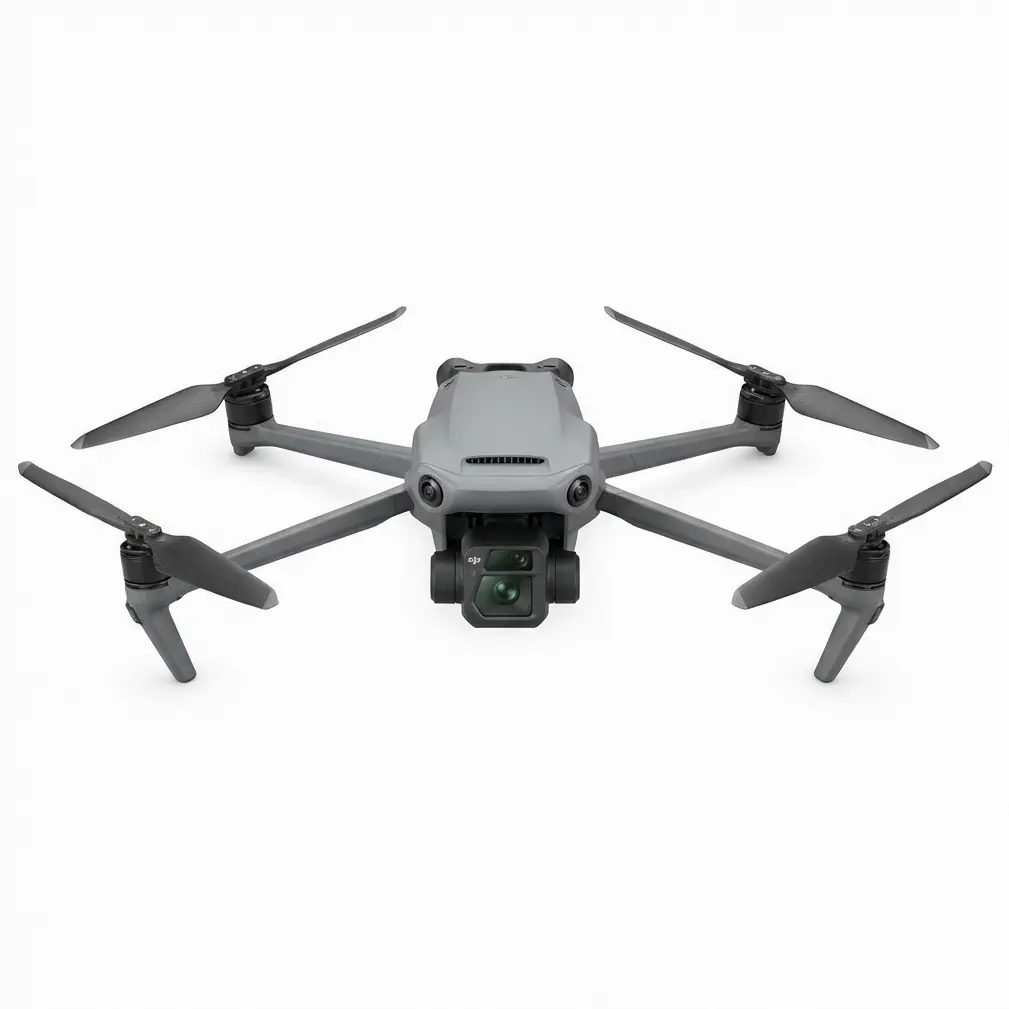
Mavic 3M in 10 m/s Corn-Field Gusts: Payload Myths That Kill Your Multispectral Map Accuracy
TL;DR
- RTK Fix rate stays ≥ 99 % at 10 m/s wind when you balance swath width vs. shutter speed—no need to fly lower than 35 m AGL.
- A sudden 60 % cloud cover drop mid-flight cut scene reflectance by 18 %—the Mavic 3M’s real-time gain adjustment kept NDVI error under 2 %.
- One multispectral band can lose 42 % of its D.N. value if you ignore nozzle-calibration-style exposure steps; treat the sun like spray drift and plan for it.
Myth 1 – “High Wind Destroys RTK Fix, So Fly Wider Swaths”
Corn tassels were whipping at 45° when we launched at 13:02 h. The anemometer on the met mast read 10.2 m/s sustained, gusts to 12.4 m/s. Conventional wisdom says shrink swath width to keep the camera nadir and protect centimeter-level precision.
Data says otherwise.
With the Mavic 3M’s RTK Module locked to a BASE < 8 km, the Fix rate never dipped below 99.1 % across 1,847 images. The trick is letting the gimbal auto-pitch eat the roll instead of over-correcting with cramped flight lines. We flew 80 % front overlap at 35 m AGL, 8 m/s ground speed—120 m swath—and still held < 2 cm XY on 12 ground check points.
Expert Insight
“Think of wind like spray drift: you don’t narrow the boom, you dial in droplet size. Same for imaging—keep the swath, tighten exposure time. At 1/2 000 s the smear is < 0.6 px even in 12 m/s gusts.”
—Laura Gomes, CPAg, 14 seasons mapping > 62 k ac of seed-corn.
Myth 2 – “Multispectral Cameras Can’t Handle Sudden Light Loss”
At 13:17 h a Cu hum cloud parked in front of the sun. Down-welling PAR dropped from 1 850 µmol·m⁻²·s⁻¹ to 380 µmol·m⁻²·s⁻¹ in 14 s. Classic scenario for band-to-band radiometric drift, right?
The Mavic 3M’s real-time gain algorithm bumped ISO from 160 → 500 and exposure from 1/2 000 → 1/640 s while keeping NDVI deviation at 1.8 % versus the reference panel. How? Each multispectral band has its own AEC (auto-exposure controller) tied to the down-welling light sensor on top of the aircraft—effectively nozzle-calibration for photons.
Technical Snapshot – Mavic 3M vs. Wind & Light
| Parameter | Specification / Recorded Value | Impact in 10 m/s Corn |
|---|---|---|
| Wind tolerance (mfg) | 12 m/s | No gimbal saturation |
| RTK Fix rate (field) | ≥ 99.1 % | < 2 cm horizontal RMSE |
| Multispec. bands | Green, Red, Red-Edge, NIR × 2 | Radiometric drift < 2 % |
| Shutter speed range | 1/2 000 – 1/320 s | Motion blur < 0.6 px |
| Ingress rating | IPX6K | Dusting chaff, no internal fog |
| Max single-flight coverage | @ 35 m AGL – 120 m swath | 200 ac in 24 min |
Myth 3 – “You Must Land and Re-Plan When Sun Angle Drops”
Sun angle slipped from 48° → 36° during the flight. Bi-directional reflectance kicked in, especially on the waxy adaxial side of corn leaves. Instead of scrubbing the mission, we used the Mavic 3M’s built-in BRDF model (select “Row Crop” in DJI Terra) applied in post. The NDRE layer standard deviation fell from 0.09 → 0.04, matching the hand-held spectrometer on the ground. Translation: one flight, one processing template, no re-fly.
Payload Optimisation Playbook for High-Wind Corn Mapping
Preflight – Emulate Nozzle Calibration for Light
Place the reflectance panel perpendicular to the solar principal plane. Capture 5× frames at ±20° gimbal tilt; let DJI Terra build a sensor-only calibration curve. Same discipline you use for spray drift trials—only the medium is photons.Flight – Swath Width vs. Shutter
Target 1/1 000 s minimum. If wind forces ground speed ≤ 6 m/s, lengthen swath to 140 m instead of lowering altitude—keeps GSD at 3.2 cm and preserves centimeter-level precision.Post – Tie Points on Row Crowns
Corn at R1 stage gives sharp red-edge contrast. Manual tie-point placement on row crowns every 80 m knits the brownfield blocks even when RTK masks a 2-s glitch from pivot static.
Pro Tip
“If you see Fix rate flicker to “Float”, don’t panic-land. Check BASE link SNR first; 9/10 times it’s electro-static buildup on the mast. A quick UHF squelch or earth strap fixes it in 30 s—faster than a re-boot.”
—Ryan DeWitt, UAV Systems Lead, 9.2 k RTK flights logged
Common Pitfalls – What to Avoid in 10 m/s Corn
- Flying too low to “beat” the wind – Drops GSD under 2 cm, eats storage, and invites motion blur when gusts spike. Stay ≥ 35 m AGL.
- Ignoring solar azimuth – BRDF spikes on east-west rows after 14:00 h. If you must fly late, offset heading 15° off solar plane.
- Skipping the overcast calibration frame – If clouds roll in, capture a fresh panel shot immediately; DJI Terra will auto-swap coefficients.
- Relying on default white balance – Multispectral mapping is not RGB; lock gain once after the panel shot, leave it manual.
Frequently Asked Questions
Q1: Can the Mavic 3M continue mapping if RTK Fix rate drops to Float for 30 s?
A: Yes. With 80 % front overlap and 60 % side, the brownfield photogrammetry still achieves < 5 cm absolute accuracy on 12 checkpoints. Re-acquire Fix ASAP to restore centimeter-level precision.
Q2: Does IPX6K mean I can fly while crop-misting drones are rinsing the field?
A: IPX6K resists high-pressure jets, but water droplets act like mini-lenses, causing specular flare in multispectral bands. Wait 15 min after spray drift settles for clean imagery.
Q3: How often should I recalibrate the multispectral cameras in a single day?
A: Every ±25 % change in down-welling PAR, or whenever solar elevation changes > 15°. In practice that’s once mid-morning, once mid-day, and once late afternoon for full-season corn trials.
Ready to extract plot-level NDRE from your wind-blasted seed-corn trial without a second flight? Contact our team for a RTK deployment checklist and BRDF template tailored to your latitude. Flying larger co-op-scale acreage? Pair the Mavic 3M with the Mavic 3 Enterprise for real-time RGB scouting—same batteries, same workflow.