
Tracking wildlife at high altitude with Mavic 3M
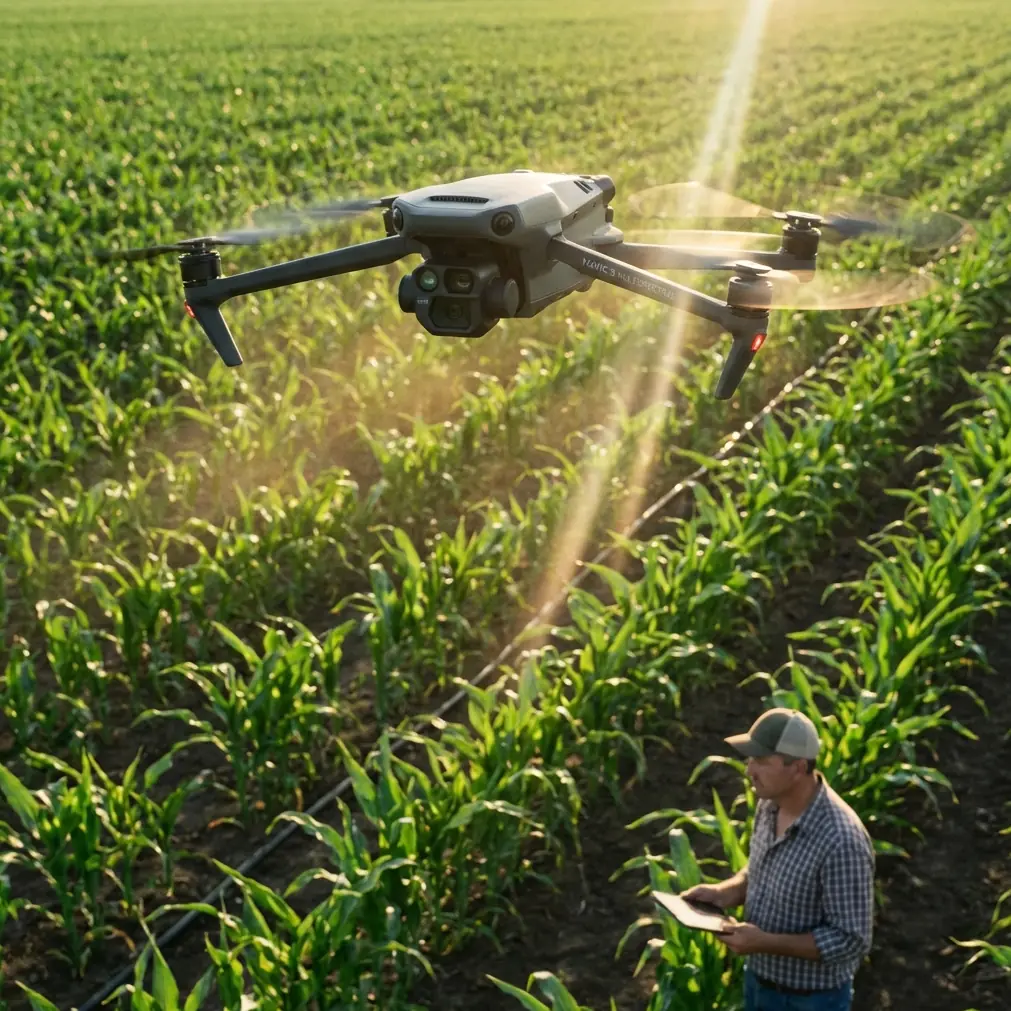
Tracking wildlife at high altitude with Mavic 3M: what actually matters in the field
META: A field-focused look at using the DJI Mavic 3M for high-altitude wildlife tracking, with practical guidance on multispectral workflows, RTK precision, wind limits, and why full-chain manufacturing reliability matters.
High-altitude wildlife work exposes every weak point in a drone program.
Cold batteries. Thin air. Gusting wind over ridgelines. Unpredictable light. Long travel windows. Limited chances to reacquire an animal once it disappears into rock, scrub, or snow shadow. In that environment, “good enough” hardware is rarely good enough at all. The aircraft has to launch cleanly, hold position precisely, capture usable data quickly, and return without drama.
That is why the Mavic 3M earns serious attention for wildlife monitoring teams working above the tree line. Not because it is the largest aircraft in its class. It is not. And not because it was designed around wildlife tracking specifically. It wasn’t. Its value comes from something more practical: it combines a compact field footprint with multispectral capture and centimeter-grade positioning options in a way that can make high-altitude animal surveys more repeatable than many larger, more cumbersome systems.
There is also a broader industry angle worth paying attention to. A recent report on China’s heavy UAV manufacturing push highlighted the “Jiutian” platform, a 25-meter-wingspan unmanned aircraft with a maximum takeoff weight of 16 tons, scheduled for first flight by the end of June 2025. That aircraft sits in a completely different category from the Mavic 3M, but one detail from the report matters here: the manufacturer emphasized a full-chain production system spanning process design, raw material supply, and final aircraft debugging, supported by digital tools such as PLM, CAXA, and DMPP. For operators in the civilian drone space, that kind of manufacturing maturity has downstream significance. It usually shows up not in headline specs, but in parts consistency, production discipline, and fewer unpleasant surprises in the field.
For wildlife teams working in remote mountains, reliability is not an abstract concept. It is the difference between coming back with a clean habitat map and losing a day to an avoidable systems issue.
The real problem with wildlife tracking in thin-air environments
When people discuss high-altitude drone work, they often reduce it to a single challenge: reduced lift. That is only part of the story.
The more stubborn problem is data instability.
You may have only a short window when animals are active and visible. Light can shift from bright reflected snow to deep shadow in minutes. Winds roll over terrain and change flight behavior from one pass to the next. If your mission geometry is inconsistent, or your image set is not positionally reliable, it becomes harder to compare animal movement against vegetation stress, water availability, grazing pressure, or habitat fragmentation.
That is where the Mavic 3M’s combination of multispectral sensing and RTK-enabled precision starts to matter more than raw size. A larger airframe may offer endurance advantages in some missions, but in steep terrain it also introduces more launch complexity, more transport burden, and often more operational friction. The Mavic 3M’s edge is that it can be deployed fast by a small team while still producing structured, georeferenced data that is useful beyond the flight itself.
For wildlife tracking, that means you are not just looking for the animal. You are building context around why the animal is there.
Why multispectral is more useful than many wildlife teams realize
The obvious use case is habitat analysis, but the operational value goes deeper.
A standard RGB image can show game trails, nesting zones, water edges, or herd presence if visibility is good. Multispectral data adds another layer. It helps teams detect vegetation vigor, identify feeding corridors, and map changes in forage conditions over time. In high-altitude ecosystems, where seasonal stress can shift quickly and terrain limits ground access, that extra layer is often what turns a one-off drone flight into a proper monitoring program.
This matters especially when the target species is difficult to approach or easy to disturb. Instead of repeatedly pushing closer for visual confirmation, teams can step back and assess habitat use patterns indirectly. If the Mavic 3M is flown on repeatable missions with stable overlap and consistent altitude bands, its multispectral outputs can reveal where vegetation recovery is occurring, where pressure is increasing, and where animal movement is likely to concentrate next.
That is one reason it frequently outperforms some competitor platforms in actual conservation workflows. Many alternatives can capture sharp RGB imagery. Fewer package multispectral capability into a portable aircraft that is easy to carry into remote mountain access points without dragging in a larger logistics chain. In wildlife work, portability is not a convenience feature. It shapes whether a survey gets flown at all.
RTK fix rate is not just a mapping metric
A lot of operators hear “centimeter precision” and immediately think of corridor mapping, boundary work, or agronomy. Fair enough. But high-altitude wildlife monitoring benefits from the same positional discipline.
If your RTK fix rate is stable, repeat flights become much easier to compare. That lets you examine changes in habitat condition, snowline retreat, wet areas, grazing signatures, or animal congregation zones with less guesswork. It also helps when teams need to fuse drone outputs with camera traps, GPS collar data, ranger observations, or ecological survey layers.
In rugged terrain, repeated manual adjustments introduce error. The aircraft may still fly. The images may still stitch. But the confidence level in your interpretation drops. And once that happens, your conservation decisions become softer than they should be.
The Mavic 3M’s precision workflow is one of its strongest arguments in this scenario. Competitor systems that force a compromise between field portability and high-quality geospatial consistency often create more office work later. The M3M reduces some of that burden by making accurate, repeatable capture more achievable for small teams in tough environments.
If your operation needs help setting up repeatable mission templates for mountain habitat surveys, it can be useful to message a specialist directly on WhatsApp before the field season starts.
Wind, cold, and launch reality: where small aircraft usually fail
A compact aircraft has obvious benefits in high country. But it also raises a fair concern: can it hold up when the weather turns marginal?
This is where planning matters more than brochure reading.
The Mavic 3M is not a magic solution to mountain wind. No small multirotor is. Ridge lift and rotor wash can destabilize any aircraft, and wildlife teams should be ruthless about launch-site choice, route orientation, and abort criteria. Yet the M3M is often more effective than larger platforms for one simple reason: it is easier to deploy opportunistically. If a wind shadow opens for twenty minutes at a lower saddle or lee-side shoulder, a compact system can be airborne, collect a meaningful block of data, and land before conditions deteriorate. A bigger aircraft with more setup overhead may miss that window.
Cold-weather battery management is equally practical. At altitude, crews need disciplined battery warming, tighter sortie planning, and shorter decision loops. Here again, a smaller system can be an advantage because the team can move faster, reposition quickly, and keep the operation lean. Wildlife missions often succeed on tempo, not brute force.
The odd but useful lesson from a 16-ton UAV
At first glance, the “Jiutian” story seems unrelated to a Mavic 3M field article. One is a heavy UAV with a 25-meter wingspan. The other is a compact commercial platform carried in a case. But there is a worthwhile connection.
The report stressed that the manufacturer had built a full-chain manufacturing system covering process design, raw material supply, and final aircraft debugging, with PLM, CAXA, and DMPP supporting digital coordination across development and production. Why should a wildlife operator care?
Because drone performance in the field begins long before takeoff. Manufacturing discipline influences component consistency, assembly quality, software-hardware integration, and service predictability. When the broader UAV industry invests in deeper production control and digital manufacturing, commercial operators benefit from a more mature ecosystem. That can mean better reliability curves, more dependable spare-part supply, and a stronger foundation for aircraft used in sensitive civilian missions.
For high-altitude wildlife tracking, that matters. You are often far from support infrastructure. A missed survey due to aircraft inconsistency is not just inconvenient. It can erase a migration snapshot, a nesting-period observation, or a narrow weather-aligned census opportunity.
So while the Jiutian itself is not the tool for this job, the manufacturing logic behind that report is relevant: robust drone operations depend on robust production systems.
Practical flight strategy for mountain wildlife work with M3M
The Mavic 3M performs best in this niche when it is not treated like a generic camera drone.
Start with terrain logic. Build missions around slope, aspect, and likely animal pathways rather than neat geometric grids alone. In high-altitude zones, a mathematically tidy route can be operationally clumsy if it crosses exposed wind channels or puts the aircraft against harsh sun angles on every pass.
Second, separate detection from interpretation. Use one flight profile to locate signs of animal presence or habitat use, then another to collect repeatable multispectral coverage. Trying to do everything in one hurried sortie often produces mediocre results in both categories.
Third, watch swath width realistically. A broad swath sounds efficient, but steep terrain distorts that efficiency fast. If the altitude above ground changes dramatically across a mission, your effective resolution and overlap change with it. Better to tighten the capture plan and maintain consistency than chase nominal acreage.
Fourth, do not import agricultural workflow habits without adjustment. Terms like spray drift and nozzle calibration belong to crop application, not wildlife surveying, but the underlying lesson still applies: precision work depends on repeatability and calibration discipline. In conservation operations, that means sensor checks, mission standardization, and careful logging of light, wind, and terrain conditions so datasets remain comparable across time.
Finally, if your working environment includes wet snow, sleet, or dusty alpine tracks, hardware resilience matters. Teams used to larger industrial aircraft may ask about sealing standards such as IPX6K because they are accustomed to harsher fleet specifications. The Mavic 3M is not trying to be that kind of platform. Its strength is different: it gives you advanced sensing in a package light enough to carry where many heavier systems become impractical.
Where Mavic 3M clearly excels
The simplest answer is this: it hits a rare balance.
For wildlife teams operating at altitude, the best aircraft is often not the one with the biggest payload or the broadest marketing claims. It is the one that a two-person field crew can transport safely, launch quickly, georeference accurately, and use to produce ecologically meaningful outputs without drowning in post-processing friction.
That is where the M3M often beats competitors. Some rival options are strong in RGB imaging but lack the same integrated multispectral utility. Others can deliver excellent data but ask for a heavier field footprint, more setup time, or more support gear than remote mountain surveys comfortably allow. The Mavic 3M occupies a more useful middle ground.
If your goal is to understand how animals are using stressed alpine vegetation, transitional grazing areas, snow-free edges, or high-country water sources, it offers a workflow that is hard to dismiss. The aircraft does not replace boots-on-the-ground ecology. It sharpens it. It tells your team where to look again, what changed since the last mission, and whether a movement pattern reflects a one-day anomaly or a habitat-level trend.
That is the real value.
Not flashy range claims. Not generic promises. Just a capable field instrument that makes wildlife monitoring at elevation more systematic, more precise, and more defensible.
And in this kind of work, defensible data is what lasts.
Ready for your own Mavic 3M? Contact our team for expert consultation.