
Tracking wildlife in shifting wind with the Mavic 3M
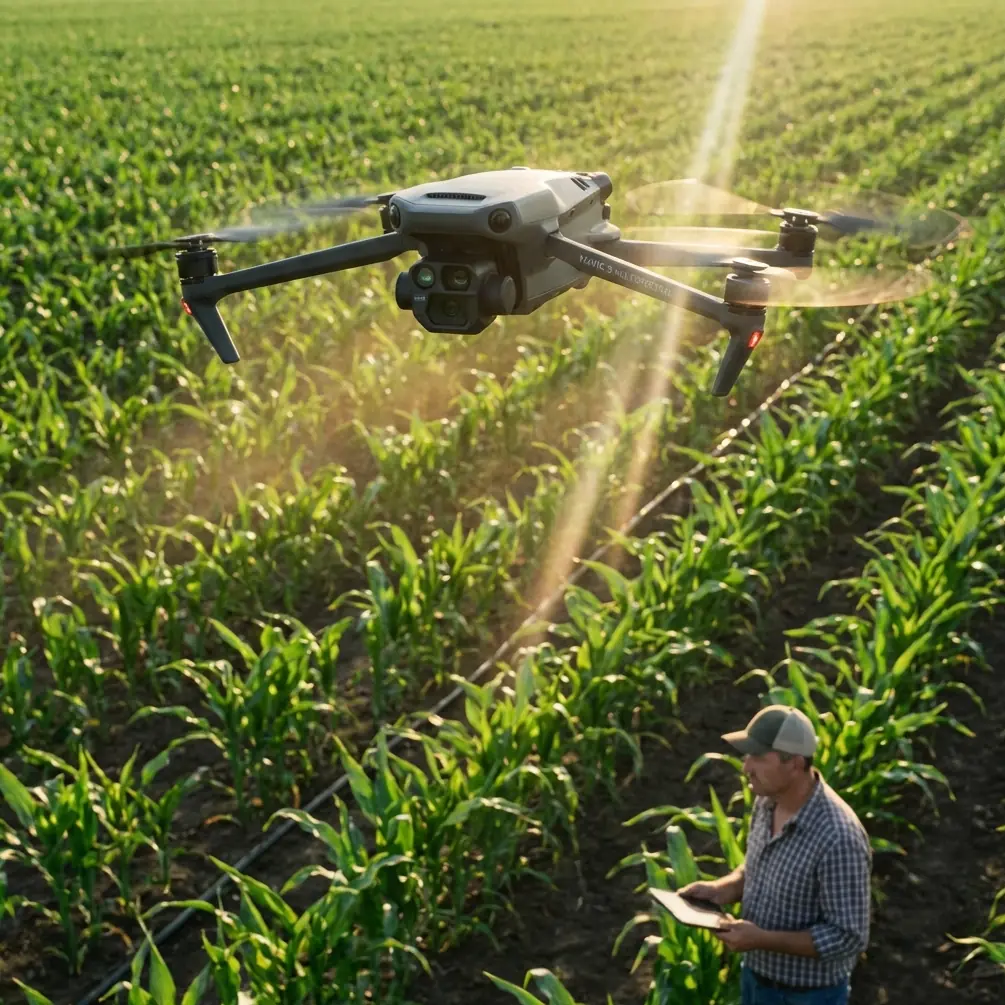
Tracking wildlife in shifting wind with the Mavic 3M: what a spring farming headline really teaches
META: A practical expert tutorial on using the DJI Mavic 3M for wildlife tracking in windy conditions, drawing lessons from a recent Shandong drone operations story and broader real-world UAV deployment trends.
When a spring field report from Shandong says fertilizer application can come in at just 9 yuan per mu, most readers see an agriculture efficiency story. I see something else too: proof that drone operations are being judged where they always are in the field, by output per acre, timing, repeatability, and how well the aircraft holds up when conditions stop being polite.
That matters if your drone is a Mavic 3M and your mission is not crop spraying but tracking wildlife in windy conditions.
On paper, those are different jobs. In practice, they share the same operational pressures. You need stable positioning, predictable swath planning, fast deployment, and reliable data collection while the weather shifts and the ground team keeps moving. The Shandong report is useful precisely because it is not marketing copy. It frames drones as the “absolute main role” in spring field management, inside a service model that covers land stewardship, mechanized operations, plant protection, input supply, and broader farm services. That scale tells us something important: drones are no longer specialty tools pulled out for edge cases. They are becoming core infrastructure for time-sensitive fieldwork.
For wildlife professionals using the Mavic 3M, that same mindset is the difference between collecting useful habitat intelligence and coming home with pretty but thin data.
Why this farming story matters to Mavic 3M users
The Shandong example gives us two grounded details worth translating directly into wildlife operations.
First, there is the number: 9 yuan per mu for fertilizer application. Whether your own mission economics are measured in acreage, staff hours, battery cycles, or survey windows, the lesson is not about spreading fertilizer cheaply. It is about the value of repeatable aerial coverage at low marginal mission cost. Wildlife teams often underestimate this. They still think in terms of one-off flights rather than structured aerial programs. The Mavic 3M becomes much more valuable when you use it as a repeat survey instrument, not just a flying camera.
Second, the company in the report is described as an agricultural service organization that combines technology demonstration, coordinated plant protection, machinery and input transactions, and integrated agricultural services. Operationally, that means the drone sits inside a system, not on its own. Wildlife tracking works the same way. The aircraft is only one node. You need a flight plan, site access, weather read, observer coordination, image review workflow, and a method for turning spectral signatures into decisions.
That is where the Mavic 3M earns its place. Its strength is not spectacle. It is that multispectral capture can reveal patterns in vegetation stress, water use, trampling, nesting pressure, feeding corridors, and habitat boundary changes that standard RGB imagery can miss.
If you are tracking deer movement along field edges, nesting birds in transitional marsh, or larger mammals across mixed agricultural land, your job is often indirect. You are not always spotting the animal itself. You are reading the habitat and the disturbance signals around it. That is a multispectral problem as much as an observation problem.
The windy-day reality most tutorials skip
Let me put this in a real field frame.
You launch in the morning with a steady breeze and a conservative route over scrubland bordering managed farmland. The air is workable. The light is clean enough for a useful multispectral pass. Twenty minutes later, conditions change. Gusts start rolling over an open section, and the wind direction shifts just enough to push the aircraft off its nicest lines.
This is where weak flight planning shows up immediately.
A lot of operators assume wildlife tracking in wind is mainly about whether the drone can stay in the air. That is too basic. The real question is whether it can maintain consistent overlap, stable geometry, and usable geospatial accuracy when the weather moves against your original assumptions.
The Mavic 3M is not a spray platform, so terms like spray drift and nozzle calibration belong to a different mission class. But the logic behind them still matters. In spraying, bad calibration and drift destroy precision at the application point. In wildlife mapping, the equivalent problem is poor route calibration and wind-induced inconsistency destroying precision at the data layer. You do not lose droplets. You lose confidence in the map.
When the wind changed mid-flight, the correct response was not to push stubbornly through the original route. It was to adjust the mission around data integrity.
Here is the practical method I recommend.
A field tutorial for tracking wildlife with the Mavic 3M in wind
1. Build the mission around habitat questions, not aircraft capability
Before takeoff, define what you are trying to verify.
Are you looking for:
- game trails emerging near field margins
- bedding zones in taller cover
- disturbed vegetation near water
- nesting activity in sensitive buffer areas
- seasonal movement between feeding and shelter zones
This sounds obvious, but it changes altitude, speed, and route design. If the target is subtle vegetation pressure, your multispectral pass needs consistency more than cinematic variety. In wind, disciplined routes win.
2. Prioritize RTK stability if your workflow depends on repeat passes
One of the most overlooked metrics in serious Mavic 3M work is RTK fix rate. If you are returning to the same corridor or habitat patch over days or weeks, centimeter precision matters because small habitat changes can be drowned out by sloppy positional variance.
A good fix rate is not just a technical brag. It is what lets you compare one flight to the next with confidence. In wildlife monitoring, that can mean distinguishing actual movement patterns from alignment noise.
If the wind builds and your RTK solution becomes less trustworthy because you are rushing setup or forcing bad geometry, you are introducing uncertainty right where the Mavic 3M is supposed to be strongest.
3. Narrow your swath when the weather deteriorates
This is one of the easiest wins.
Operators love wide area coverage because it feels efficient. But in gusting conditions, a broad swath width can become a trap. The aircraft may still complete the route, yet edge consistency degrades, overlap suffers, and fine habitat signatures become harder to trust.
When the wind picked up in my scenario, the right move was to reduce the effective swath and tighten line spacing. Yes, it costs more time and battery planning. It also protects your dataset.
The Shandong story is helpful here because it reminds us that real field drone work is measured by useful output, not nominal coverage. Cheap, fast, and wrong is never operationally cheap.
4. Adjust ground speed before you adjust ambition
In wildlife work, people often respond to tightening weather by trying to “get it done” faster. That can be the worst choice.
If the wind changes mid-flight, reduce ground speed first. Give the aircraft more room to maintain capture consistency. The Mavic 3M handles field conditions well when you respect the mission envelope. It performs poorly only when operators ask it to outrun atmospheric reality.
That day, slowing the route down did more than improve image consistency. It also reduced the need for aggressive corrective motion, which helped preserve smoother data collection over uneven terrain and patchy vegetation.
5. Use multispectral outputs to track habitat use, not just presence
The Mavic 3M’s multispectral system is often underused by teams that still think visually. Wildlife tracking in windy field conditions rewards a different mindset.
Instead of asking, “Can I see the animal?” ask:
- Where is vegetation repeatedly compressed?
- Where are moisture and plant vigor changing near movement paths?
- Which edge zones show pressure between two flight dates?
- Where do thermal assumptions fail, but spectral patterning still reveals use?
This is especially useful in mixed agricultural landscapes. The Shandong report describes drones embedded in a full-service agricultural framework. That matters because many wildlife missions occur in exactly those managed environments. Animals move through working land. Understanding crop edge health, trampling signatures, and seasonal access points can reveal more than waiting for direct visual sightings.
6. Respect weatherproofing, but do not mythologize it
Field operators love ruggedness ratings. And yes, durability matters. If your kit or support gear is built for harsher field use, you gain flexibility. Terms like IPX6K show up in discussions because people want confidence in wet, dirty, high-pressure field conditions.
But weather tolerance should never become permission to ignore weather planning.
The drone handling a mid-flight weather shift is not about heroics. It is about margin. The Mavic 3M can remain composed in changing conditions if you launched with a disciplined route, stable positioning, realistic battery thresholds, and a willingness to shorten the mission when needed.
That distinction matters. Professionals survive more field days because they abort well.
The bigger signal behind this news cycle
The second news item, about the National League of Cities and BRINC launching a program to help cities deploy drones to 911 calls, seems unrelated at first glance. It is not.
It points to the same larger trend: drones are moving from specialist deployments to institutionalized response systems. In one case, cities are building drone support into emergency workflows. In the other, Shandong field operations treat drones as a central tool in spring management. Different sectors, same direction.
For Mavic 3M users, this has a practical meaning. Your flights need to be planned and documented like professional operations, not hobby sessions with extra paperwork. Wind logs, route notes, environmental context, repeatability, and data interpretation all matter more now because the standard is rising across the UAV industry.
Wildlife tracking especially benefits from that discipline. Agencies, land managers, conservation groups, and private operators all want something more defensible than “we flew around and saw a few things.” They want trend evidence.
That means:
- repeatable flight lines
- consistent capture parameters
- geospatially trustworthy results
- interpretable habitat indicators
- clean field notes about changing conditions
If you build your Mavic 3M work that way, one windy mission becomes part of a credible monitoring record instead of an isolated anecdote.
What I would do differently after a wind shift
If I had to compress the field lesson into a post-flight debrief, it would sound like this:
The weather changed. The drone did fine because the operator changed too.
That means revising line orientation to reduce crosswind exposure where possible, trimming the mission footprint, tightening swath width, preserving RTK quality, and accepting that partial high-quality coverage beats full low-confidence coverage every time.
It also means reviewing the imagery with the original wildlife question in mind. Do not grade the sortie by flight completion alone. Grade it by whether the data supports a decision: identifying movement corridors, refining ground patrol routes, isolating sensitive habitat zones, or scheduling another pass under better conditions.
If you are building a field workflow for this kind of mission and want a second set of eyes on route design, sensor use, or weather contingencies, you can reach me through this quick field consultation link: https://wa.me/example
Final takeaway for serious Mavic 3M operators
The Shandong spring management report is easy to dismiss as a regional farming story. That would be a mistake.
Its real value is operational. It shows drones being trusted at scale because they deliver measurable work under real seasonal pressure. The figure of 9 yuan per mu represents efficiency, yes, but also confidence in repeatable aerial execution. The broader service model behind that report shows what mature drone adoption looks like: the aircraft is integrated into decisions, timing, logistics, and outcomes.
That is exactly how you should approach the Mavic 3M for wildlife tracking in wind.
Not as a gadget. Not as a flying camera. As a precision field instrument whose usefulness depends on how well you adapt when the weather stops cooperating.
And when that mid-flight wind shift hits, as it often does, the operator who understands route discipline, multispectral purpose, RTK reliability, and data quality thresholds will still come back with something that matters.
Ready for your own Mavic 3M? Contact our team for expert consultation.