
Mavic 3M in Remote Solar Farm Tracking: What
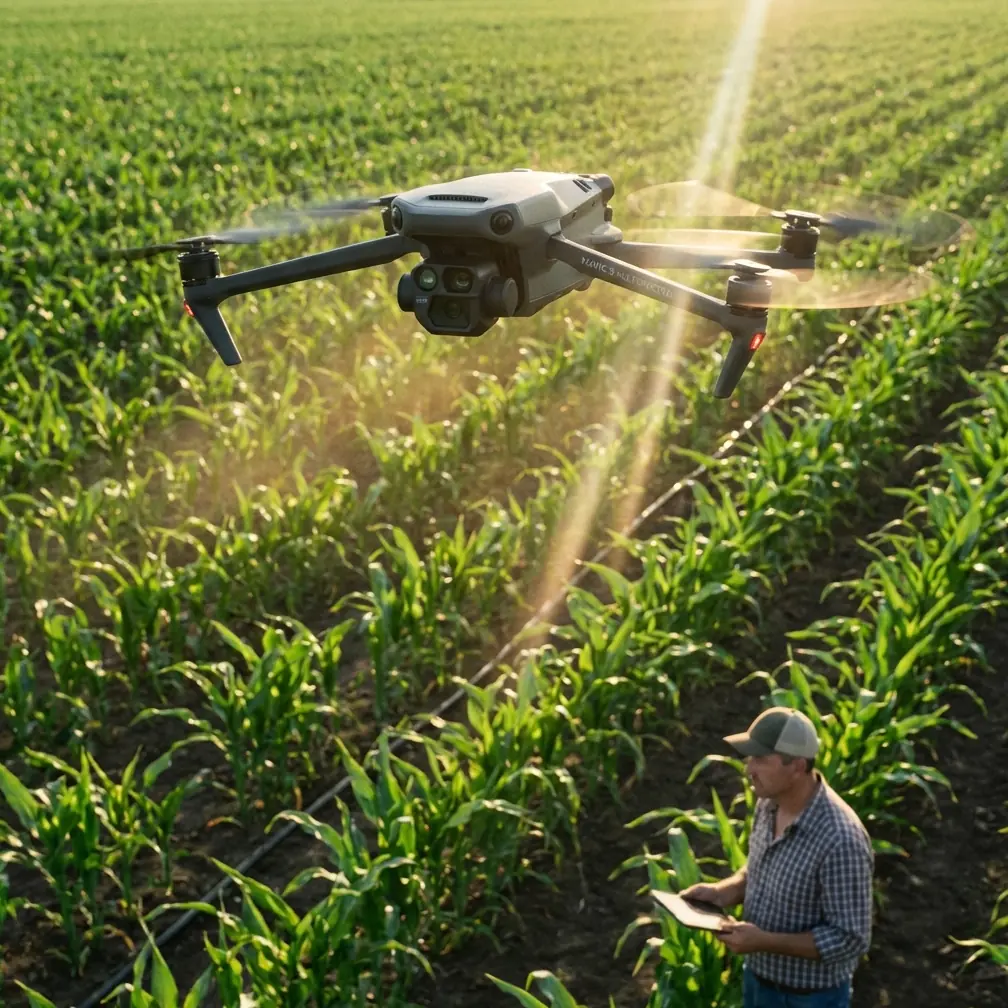
Mavic 3M in Remote Solar Farm Tracking: What an Agricultural Survey Workflow Teaches Us
META: A field-based case study on using Mavic 3M principles for remote solar farm tracking, with practical insight from Chinese UAV pilot rules and low-altitude survey workflows.
Remote solar farm tracking sounds, at first glance, like a different universe from crop investigation. Different assets. Different imagery goals. Different stakeholders. Yet the operational backbone is surprisingly similar: safe low-altitude flying, disciplined data capture, careful battery planning, and pilots who understand that a drone mission succeeds long before takeoff.
That is where the Mavic 3M becomes interesting.
Most people hear “Mavic 3M” and think only of multispectral agriculture. Fair enough. But if you are monitoring a remote solar site, especially one spread across uneven land with long panel rows, access roads, drainage edges, fencing, and vegetation pressure around the array, the lessons from agricultural remote sensing carry over almost perfectly. Add the Mavic 3M’s multispectral capability, centimeter-leaning mapping workflows when paired with proper positioning methods, and a compact platform suitable for repeated field deployment, and the aircraft starts to look less like a niche agronomy tool and more like a serious data-collection platform for distributed energy infrastructure.
The field problem: solar farms are large, repetitive, and easy to underestimate
A remote solar farm creates a paradox for inspection teams. The site looks simple from the road. Once you start tracking conditions over time, it is anything but simple.
You need to watch vegetation encroachment around rows and perimeter zones. You need to identify drainage or erosion patterns after heavy rain. You may want recurring surface models for access routes and undeveloped sections. In some projects, you also need to correlate visible signs of shading risk with biological growth patterns that are hard to quantify from standard RGB imagery alone.
This is where a multispectral workflow earns its keep. Not because every solar project suddenly becomes an agriculture project, but because the same spectral logic used for crop differentiation can help classify vegetation vigor, stress, regrowth, and change over time around energy assets.
The Mavic 3M fits that kind of recurring mission well when the operator is disciplined. And discipline, more than airframe specs, is what the reference material keeps pointing back to.
What Chinese UAV regulation tells us about real-world Mavic 3M operations
One of the supplied documents is the Civil Aviation Administration of China’s pilot management circular, AC-61-FS-2016-20R1, issued on 2016年7月11日. On the surface, it is a regulatory text. In practice, it explains why serious commercial drone work cannot be reduced to “the drone flies itself.”
The document states that civil unmanned aircraft applications have grown quickly and that pilot numbers have increased alongside them. That matters for Mavic 3M operations because remote solar farm tracking often gets treated as routine. It is not. Repetition can hide risk.
The circular also lays out classification bands by weight and notes that when classifications overlap in actual operation, the higher requirement applies. That single detail has operational significance far beyond paperwork. On a remote site, your mission profile matters as much as the aircraft itself. Once you change operating conditions, payload assumptions, or flight profile complexity, compliance thinking has to rise with the mission rather than stay anchored to the marketing category of the drone.
Another overlooked point in the circular is its explicit scope over pilot qualification management, including systems without onboard crew and even aircraft that can be fully controlled externally by a remote pilot. In plain language: authorities are focused on the human control chain. For a Mavic 3M team running repeated solar farm surveys, that means the pilot, observer, and data manager are not peripheral. They are the system.
That becomes obvious the moment conditions stop being perfect.
A real field moment: the bird that changed the flight line
On one remote solar property, the challenge was not the panels. It was the land around them.
A section of the site bordered scrub growth and a shallow drainage cut. During a mid-morning pass, a pheasant burst out from low vegetation near a row edge just as the aircraft was transitioning between survey segments. Nothing dramatic happened. No collision. No emergency descent. But it forced a pause, a hold, and a revised line before resuming capture.
That tiny incident says more about competent Mavic 3M work than a hundred glossy spec sheets. Sensors and flight planning matter, but so does operator judgment. Wildlife, wires, berms, ditch lines, and uneven terrain are the real texture of remote infrastructure work. The best flights are often the ones where the team noticed the hazard early enough that there was no story to tell afterward.
The agricultural survey document in the reference set describes exactly this kind of low-altitude caution in another context. It recommends flying at about 40 meters as a safe transit height, then descending to 15 to 20 meters over the target area for vertical image capture. It also explains why the aircraft should climb before moving horizontally to the next point: low-level horizontal flight can tangle with wires or strike embankments and buildings.
That guidance was written for crop survey sample points, but it translates cleanly to solar farms. Around remote energy sites, low obstacles are everywhere: perimeter fencing, cable routes, weather stations, CCTV poles, small service structures, and terrain breaks that do not look dangerous until you are flying laterally at the wrong height. The “go up, move, come down” habit is not inefficiency. It is professionalism.
Why the “dragonfly touch” method still matters for Mavic 3M
The farm-survey document uses a vivid phrase for manual sample capture: “蜻蜓点水”, essentially a “dragonfly touching the water” style. The aircraft approaches, dips in for a brief vertical collection, then lifts and moves on.
For remote solar tracking, this is more useful than many operators realize.
An orthomosaic mission can cover the whole site. That gives you broad context. But broad context alone often misses the small but consequential details: early regrowth around inverter pads, sediment fans near drainage channels, ponding signatures, disturbed soil around maintenance access, or recurring hotspots of vegetation pressure at perimeter edges.
A Mavic 3M workflow becomes stronger when the team separates two mission types:
- Structured mapping flights for orthomosaic baselines and repeatable site-wide comparison.
- Short, targeted dips for high-value sample capture over suspect areas.
The reference document says one sample plot’s automatic orthomosaic acquisition consumed one battery, while manual collection of interpretation sample points required at least another battery. It also notes that with skilled operation, two to three batteries, each with roughly 30 minutes of flight time, could complete one plot’s field collection.
That battery planning detail is operational gold. Many solar teams still budget flights as if one launch equals one dataset. In reality, a useful remote monitoring day often includes both full-site mapping and selective revisit work. If you allocate power only for the wide-area mission, your data quality drops the moment something unexpected appears on screen. With the Mavic 3M, battery planning should reflect mission layering, not just mission distance.
Multispectral significance at solar sites: not just “green stuff detection”
The Mavic 3M’s multispectral value around solar farms is easy to oversimplify. It is not just there to show that vegetation exists. Anyone can see weeds in RGB.
Its value is in repeatable differentiation.
At remote sites, the question is often not “Is there growth?” but:
- Where is growth accelerating?
- Which perimeter sections are likely to become shading or access problems first?
- Which drainage areas are retaining moisture and driving regrowth cycles?
- Which restored or disturbed surfaces are stabilizing, and which are slipping back into maintenance burden?
Multispectral data adds depth to that answer. It helps teams distinguish stressed vegetation from vigorous vegetation, patchy regrowth from established cover, and subtle land-surface change that plain visual review can miss. For infrastructure managers, that can support a tighter vegetation control schedule and better contractor targeting.
This is also where traceable data handling matters.
The quiet part of drone work: folder discipline and metadata
The ArcGIS-based reference workflow is unusually honest about something drone teams often ignore in public discussions: file handling breaks projects.
The document recommends separating orthomosaic photos and sample-point images into different folders, and specifically warns that paths and filenames should not contain Chinese characters or spaces, otherwise software processing may fail. It then describes using an “Add Folder” step in Drone2Map, where the software reads the image metadata automatically.
That sounds mundane until you have 6,000 images from a remote solar site, half from a repeated survey and half from spot checks around vegetation trouble zones.
On a Mavic 3M project, metadata consistency is what turns field collection into usable operational intelligence. If your files are mixed, mislabeled, or scattered across ad hoc folders, repeat-comparison loses credibility. The image itself may be sharp. The project can still be weak.
For organizations building a solar tracking program, this is one of the first maturity tests: can your team recover last month’s orthomosaic set, isolate today’s targeted sample captures, and process both without manual chaos? If the answer is no, the aircraft is not the bottleneck. The workflow is.
If your team is refining this kind of field-to-processing pipeline, a quick technical discussion through our Mavic 3M workflow channel is often more useful than another generic product brochure.
The Mavic 3M advantage is not speed alone. It is repeatability.
Drone racing headlines get attention. One of the references simply notes that a world drone competition has started and attracted many skilled pilots. Fair enough. High-performance flying has its place, and elite stick skills are always impressive.
But remote solar tracking is won by a different kind of expertise.
You do not need race reflexes. You need consistency. The best Mavic 3M operator for a solar portfolio is not the most aggressive flyer. It is the pilot who can return to the same site on a different day, under changing seasonal conditions, and produce comparable data with minimal procedural drift.
That is why the regulatory reference and the field-survey reference complement each other so well. One emphasizes managed pilot competency in a growing civil UAV ecosystem. The other shows how mission design, altitude discipline, battery allocation, and image organization create reliable outputs. Put those together and you get the real formula for productive Mavic 3M work.
Not glamour. Repeatability.
A practical case-study model for remote solar farm tracking with Mavic 3M
If I were designing a recurring Mavic 3M program for a remote solar asset, I would structure it around five layers.
1. Baseline orthomosaic capture
Use repeatable automated flights to create a clean, site-wide orthomosaic. This is your visual backbone for panel-adjacent land, roads, berms, drainage paths, and perimeter conditions.
2. Targeted low-altitude sample collection
Borrow the 40-meter transit and 15-to-20-meter descent logic from the agricultural field method when capturing higher-detail samples. This reduces obstacle exposure while preserving precise vertical imagery where needed.
3. Multispectral change detection
Prioritize recurring vegetation-risk zones rather than trying to over-interpret every spectral variation across the entire property. Focus on actionable edges: perimeter, drainage, panel-row margins, and maintenance corridors.
4. Battery planning by mission type
Assume that a full mapping sortie and a manual revisit segment are separate energy demands. The reference finding that one task consumed one battery and the second required another should reset expectations for anyone planning real field days.
5. Metadata and folder governance
Separate orthomosaic imagery from spot-inspection imagery from the start. Standardize names. Preserve metadata. Build processing consistency before volume increases.
That kind of framework is not flashy, but it scales. And it lets the Mavic 3M do what it does best: produce coherent, repeatable field intelligence rather than isolated pretty maps.
Where Mavic 3M fits best in solar monitoring
The Mavic 3M is strongest when the site owner needs more than occasional aerial photos but less than a full enterprise aircraft stack. It makes sense in programs where teams want to revisit the same remote assets often, watch environmental changes around infrastructure, and feed imagery into a disciplined mapping process.
Its multispectral role is especially compelling when vegetation is not just a cosmetic issue. At many remote solar farms, vegetation affects access, maintenance rhythm, surface stability, drainage interpretation, and long-term site housekeeping. Those are not side issues. They are operational cost drivers.
And while the aircraft itself draws the attention, the references here point to a more grounded truth: the quality of the result depends on pilot governance, flight geometry, battery realism, and processing hygiene. A Mavic 3M in careless hands is still careless data. A Mavic 3M in a structured workflow becomes a reliable remote tracking instrument.
That is the difference worth paying attention to.
Ready for your own Mavic 3M? Contact our team for expert consultation.