
Mavic 3M for Urban Solar Farm Tracking: Why Flight Height
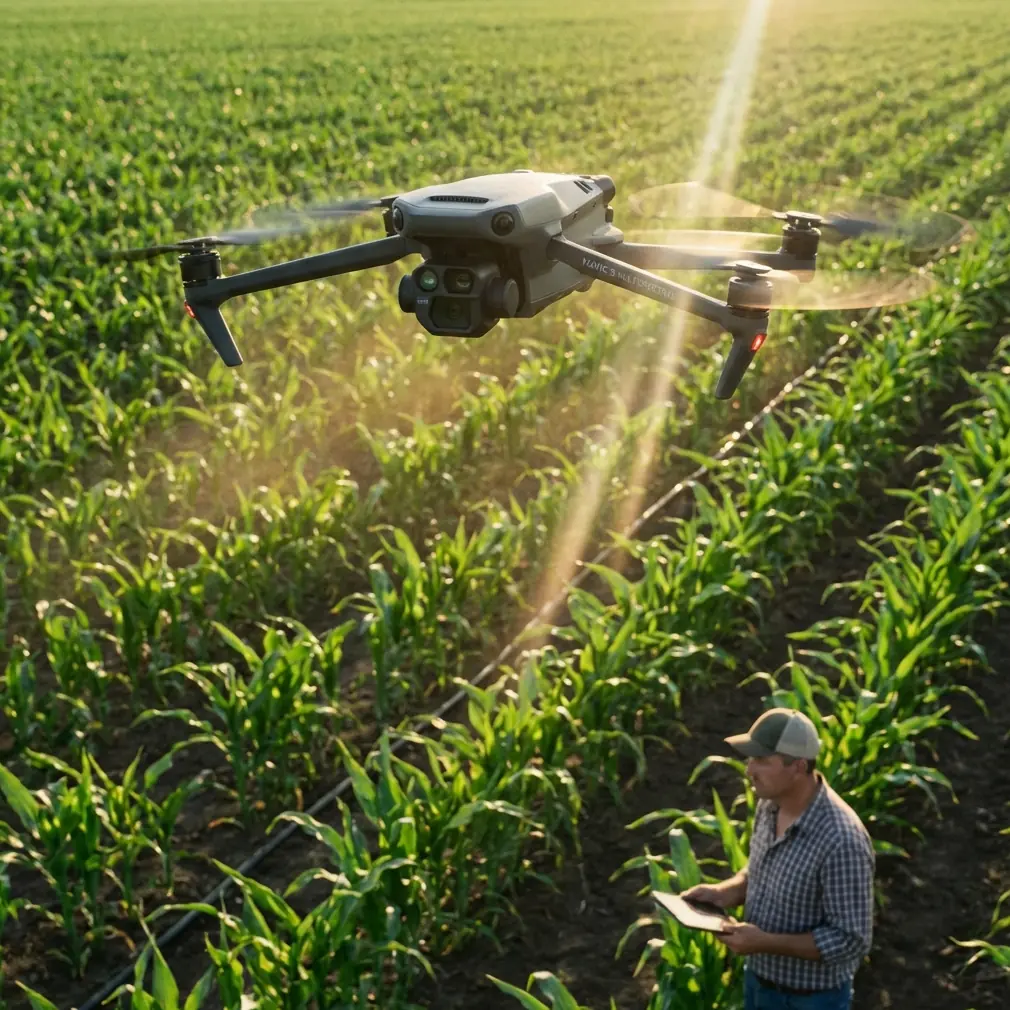
Mavic 3M for Urban Solar Farm Tracking: Why Flight Height Matters More Than Digital Zoom
META: Practical Mavic 3M tutorial for tracking urban solar farms, with flight altitude advice, multispectral workflow insights, and image-quality lessons drawn from real camera behavior.
Urban solar sites ask a lot from a drone pilot. Roof geometry changes block by block. Glare shifts by the minute. HVAC units, parapet walls, cable trays, and nearby structures break up what should be simple panel rows. On paper, the DJI Mavic 3M looks like an easy fit because it combines compact deployment with multispectral capability and centimeter-grade positioning when RTK is working well. In the field, though, one variable quietly decides whether your data will be useful or frustrating: flight altitude.
That sounds basic, but it is where many operators lose image quality before processing even starts.
I want to frame this around a deceptively simple camera lesson from outside the drone world. A recent photography piece aimed at beginners made a sharp point: better images do not always come from obsessing over terms like ISO, aperture, and shutter speed. The author said that after testing a simpler approach for about half a month, photos looked noticeably better. That matters for Mavic 3M work because solar monitoring missions also go off track when pilots overcomplicate the wrong settings while ignoring the practical ones that shape usable data.
The same source highlighted another issue that is even more relevant here: pushing smartphone zoom too far creates blur and strange artifacts, including colored edges. It noted that most phones only have one or two true optical zoom levels, and beyond that the image is often being stretched by software. One example mentioned 3.5x and 5x advertised zoom levels on popular phones, but also warned that once you go too far, the image can break apart into a low-quality mosaic.
That lesson translates directly to Mavic 3M solar inspection, especially in urban environments where pilots are tempted to stand off farther from obstacles and “zoom in later.” If your goal is to track panel condition, vegetation encroachment near perimeter zones, drainage patterns, heat-linked anomalies from complementary inspections, or multispectral variation across a constrained site, digital enlargement is a weak substitute for proper altitude planning and overlap.
The mistake: treating altitude like a safety-only setting
Most operators think about altitude in two separate buckets. The first is compliance and obstacle clearance. The second is image resolution. In reality, altitude is the control point that ties together image sharpness, swath width, mission duration, ground sampling detail, and the stability of your downstream interpretation.
For urban solar farms, flying too high usually causes three problems at once:
- Small defects and edge conditions become less distinct.
- Reflective surfaces produce more mixed pixels, especially around panel frames and rooftop infrastructure.
- The operator starts relying on digital magnification during review, which can mimic detail without actually preserving it.
That last problem is the drone version of over-zooming a phone camera. The picture looks closer. It does not become more informative.
With the Mavic 3M, this matters more because multispectral work is only valuable when the spatial detail supports the interpretation. If a suspect area spans only a handful of pixels, your confidence drops fast. You may still generate clean maps, but the operational value of those maps falls when technicians need precise locations for field checks.
A better way to think about flight altitude
For urban solar tracking, I recommend starting with this principle:
Fly as low as you can safely and legally while still capturing the full operational pattern you need in a stable mission.
That is different from chasing the widest possible swath width. Wide swaths are efficient, but efficiency can become expensive if you need repeat flights because the first mission lacked enough detail around strings, panel edges, inverter pads, drainage paths, or vegetation boundaries.
In practical terms, many urban solar monitoring jobs with the Mavic 3M work best when you begin with a lower-altitude baseline mission for high-confidence mapping, then only raise altitude if the site layout and line-of-sight constraints justify it. The optimal number will depend on roof height changes, nearby obstructions, and the size of the array, but the logic stays consistent: altitude should be chosen for data quality first, not just coverage speed.
If you are tracking performance patterns over time, consistency beats heroic one-off settings. A repeatable altitude profile gives you cleaner temporal comparisons. That is where centimeter precision from RTK becomes operationally significant. Good RTK Fix rate supports repeat-path reliability, which means your datasets line up more cleanly across inspection cycles. For solar asset managers, that reduces ambiguity when they are trying to determine whether a change is real or simply a product of slightly different geometry.
Why this matters specifically for Mavic 3M
The Mavic 3M sits in a useful middle ground. It is portable enough for dense urban deployment, yet capable enough for serious multispectral collection. That combination can tempt teams to use it like a “solve everything from farther away” platform. I would resist that.
Its strength is not pretending to be a long-range zoom system. Its strength is producing structured, repeatable aerial data with enough precision to support real maintenance decisions. That includes vegetation monitoring around ground-mounted urban edge sites, drainage and runoff pattern observation, construction-phase progress checks, and multispectral comparisons across panel blocks where subtle variation can point to conditions worth investigating.
This is also where the beginner photography advice becomes surprisingly relevant. You do not need to drown in technical jargon to improve output. The photography author essentially said: stop worshipping the parameter list and pay attention to what your eyes are telling you. For Mavic 3M operators, that means watching for conditions that visibly degrade useful detail:
- Excessive glare on panel glass
- Strong shadow transitions from nearby buildings
- Rooftop thermal turbulence later in the day
- Missed edge clarity on strings and mounting boundaries
- Overreliance on enlarged previews instead of true captured detail
A mission that looks acceptable at normal map scale can fall apart during analysis if image sharpness was sacrificed at capture.
My altitude workflow for urban solar tracking
Here is the process I use when advising teams.
1. Start with the maintenance question, not the aircraft limit
Ask what the site team actually needs to see. Is the goal broad multispectral trend tracking? Encroaching vegetation? Construction verification? Drainage around supports? Dust accumulation patterns inferred through repeated imaging? Different objectives support different altitudes.
If the client needs actionable follow-up points, do not default to a high survey altitude just because it covers more in one pass.
2. Build a “no digital rescue” rule
Assume that if you need to zoom aggressively in post to verify something, you flew too high or too fast. This rule comes straight from the phone-camera lesson. Once software starts pretending to recover detail, you are often looking at artifacts rather than evidence. The source example described colored edges and image breakup when zoom goes too far. In drone data, the equivalent is false confidence from enlarged pixels.
3. Use lower-altitude benchmark runs
On the first visit, capture a smaller benchmark block at a lower altitude than your expected mission height. Compare the interpretability. Can you clearly separate module boundaries? Can you trust edge transitions? Do shadows interfere with classification? That quick benchmark often saves a full inefficient mission.
4. Let swath width serve the mission, not dominate it
Yes, swath width affects efficiency. But wider is not automatically better on constrained urban sites. A narrower swath at a more appropriate altitude can produce cleaner mosaics and fewer interpretation errors, especially around roof obstacles and array edges.
5. Watch RTK behavior before trusting repeatability
Mavic 3M users often focus on the promise of centimeter precision. The real field question is whether your RTK Fix rate is stable enough through the mission environment. Urban canyons, reflective surfaces, and partial sky obstruction can all reduce confidence. When RTK behaves well, change detection becomes far stronger because your future flights can align more closely with the baseline. When RTK is inconsistent, even good-looking data can become harder to compare over time.
A note on multispectral value in solar environments
The LSI term “multispectral” gets thrown around loosely, but in solar contexts it is useful only when paired with disciplined capture geometry. Urban sites are messy. Reflections from glass, neighboring façades, and rooftop hardware can contaminate interpretation if altitude and timing are not chosen carefully.
A lower, cleaner flight path can improve your ability to isolate meaningful variation. It also reduces the temptation to infer too much from weak data. That restraint is part of professional operation.
And if your work touches surrounding grounds or vegetation buffers, this is where Mavic 3M can pull double duty. You can monitor plant stress or growth around the solar site perimeter while still maintaining a consistent geospatial record of the asset itself. For teams managing urban-adjacent solar installations, that integrated view can be more valuable than a single-purpose flight.
What not to borrow from agricultural drone habits
Some operators come into Mavic 3M workflows from spray operations, where terms like spray drift, nozzle calibration, and IPX6K matter a lot. Those are critical in the right context, but they should not distract from the imaging priorities of a solar tracking mission.
For example, in crop protection work, altitude decisions may be tied heavily to drift management, coverage behavior, and nozzle performance. In urban solar inspection, your altitude decision is more about preserving spatial truth, reducing reflective confusion, and making repeat surveys analytically comparable. Different mission class, different hierarchy of priorities.
That distinction matters because mixed-operation teams often carry over the wrong instincts.
The operational sweet spot
So what is the best altitude?
There is no honest one-line answer, because site geometry decides too much. But there is a reliable rule: the optimal altitude for urban solar tracking with the Mavic 3M is the lowest repeatable altitude that gives you full target coverage, safe clearance, stable overlap, and analysis-ready detail without depending on digital enlargement.
That definition is more useful than any generic number copied from a checklist.
When operators follow it, a few things usually improve fast:
- Fewer ambiguous findings
- Cleaner repeat surveys
- Better alignment between field team and analyst
- Less time wasted reviewing enlarged but low-value imagery
- Stronger confidence in maintenance prioritization
If you want help pressure-testing an altitude plan for a dense solar site, send the mission outline through this direct WhatsApp channel and I can tell you where image quality usually breaks down before you commit aircraft time.
Final field advice
Do not let the Mavic 3M’s intelligence create lazy capture habits. Smart platforms still obey optical reality. The photography source I referenced made that obvious with a simple warning: beyond one or two true zoom stages, software starts inventing closeness. In the author’s example, pushing to 5x turned fine detail into mush, complete with greenish edges. On a solar site, the equivalent is believing you captured actionable detail when you actually captured a polished illusion.
The better habit is simple.
Plan lower when detail matters.
Use RTK well when repeatability matters.
Treat multispectral data as measurement, not decoration.
And never assume post-flight zoom can replace disciplined capture.
That is how the Mavic 3M becomes genuinely useful for urban solar farm tracking.
Ready for your own Mavic 3M? Contact our team for expert consultation.