
Tracking Power Lines in Remote Areas with the Mavic 3M
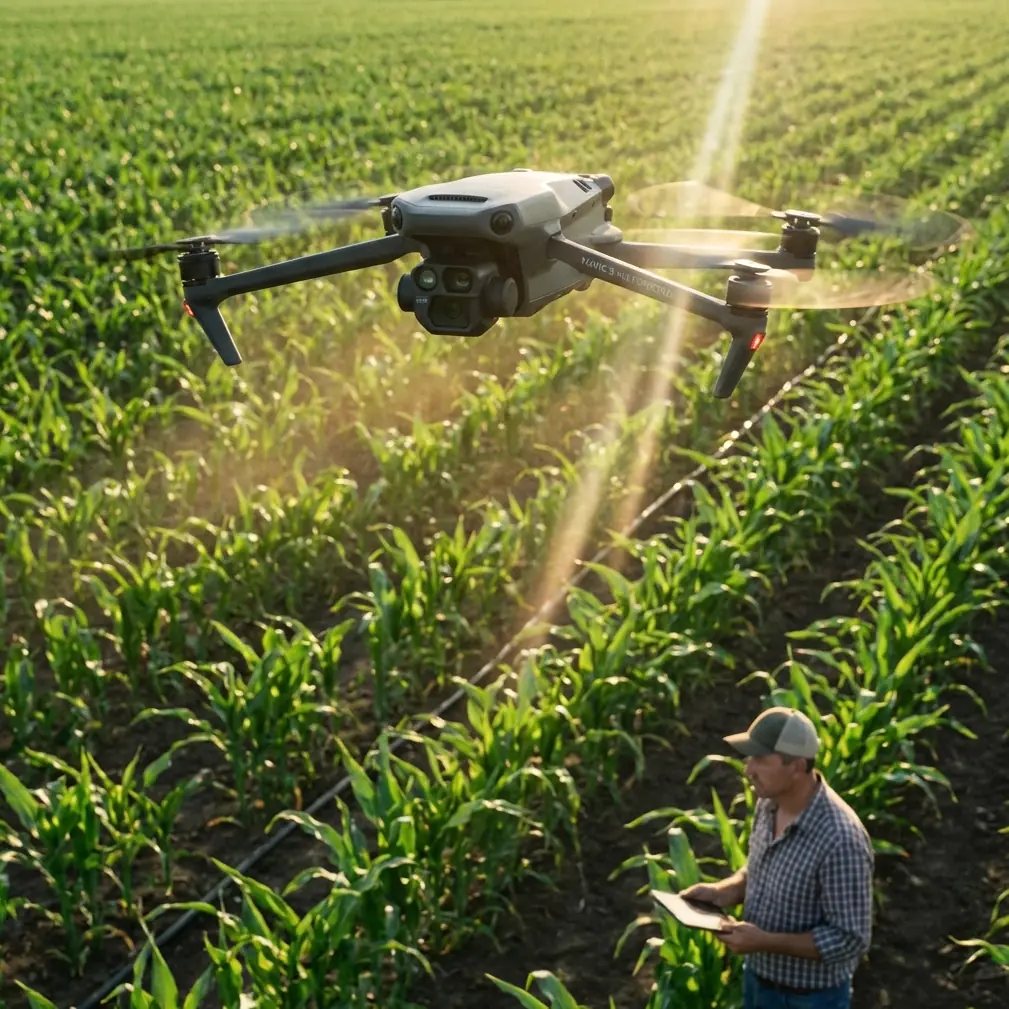
Tracking Power Lines in Remote Areas with the Mavic 3M: What Actually Matters in the Field
META: A technical review of using the DJI Mavic 3M for remote power-line corridor work, with field lessons on multispectral workflows, RTK discipline, pilot training, and accessory choices that improve results.
Remote utility work has a funny way of exposing weak assumptions.
On paper, a drone mission for power-line tracking sounds simple: launch, follow the corridor, collect imagery, build a map, identify vegetation pressure and access issues, then move to the next segment. In real terrain, none of that stays simple for long. Wind shifts through valleys. GNSS quality fluctuates. Repetitive corridor geometry makes pilot drift harder to spot. And if your data handling is sloppy, the aircraft can perform flawlessly while the final deliverable still falls apart.
That is exactly where the Mavic 3M earns attention. Not because it is a magic solution, but because it sits in a very useful middle ground: portable enough for remote deployment, specialized enough for serious multispectral capture, and mature enough to fit utility inspection workflows that require repeatability rather than spectacle.
For operators tracking power lines in isolated regions, the question is not whether the Mavic 3M can fly the route. The real question is whether it can produce dependable, decision-grade outputs under field constraints. That depends on three things: sensing, positioning, and pilot method.
The Mavic 3M is Strongest When the Mission Is More Than Visual Inspection
Many teams first look at the Mavic 3M because they want a compact aircraft for line-adjacent mapping. That is reasonable, but it undersells the platform.
The “M” matters. Multispectral capability changes the value of a corridor flight because it helps separate what merely looks green from what is actively growing, stressed, or moisture-affected. For utility vegetation management, that distinction matters. A visual image may show canopy encroachment. Multispectral data can help prioritize which sections deserve closer attention first, especially in long stretches where field crews cannot physically walk every meter with equal intensity.
This is where terms like multispectral, swath width, and centimeter precision stop being brochure language and start affecting operations. If your route covers remote right-of-way segments, a wider effective capture path and stable overlap planning reduce the number of launches needed. That saves battery cycles, daylight, and crew movement across rough access roads. If your positioning holds to centimeter-level expectations, repeat missions over the same corridor become much more useful. You are no longer just documenting a place. You are measuring change.
For power-line tracking, that is the difference between a nice map and a maintenance tool.
RTK Discipline Matters More Than Most Teams Admit
A lot of operators talk about RTK as if it were a simple on/off benefit. In practice, RTK fix rate is a field discipline issue as much as a hardware feature.
When you are following linear assets through remote areas, you often cross zones with inconsistent satellite visibility, terrain masking, or signal interruptions. A strong RTK workflow helps the Mavic 3M maintain the positional consistency needed for corridor mosaics and comparative vegetation analysis. But the aircraft cannot compensate for careless mission habits. If crews do not monitor fix status, log signal quality, or account for sections where corrections degrade, the resulting map can look clean while hiding alignment errors that matter later.
That is why I advise utility teams to think about RTK in operational terms rather than marketing terms. The question is not “Does this aircraft support RTK?” The better question is “What was our RTK behavior across the entire corridor, and where did the fix quality change?”
On a power-line route, those changes affect more than map elegance. They affect whether a tree line flagged this month is genuinely moving toward a clearance threshold, or whether the apparent movement is partly an artifact of positioning inconsistency. In vegetation management, a few centimeters can be the line between a watch item and a work order.
A Good Power-Line Workflow Looks More Like Programming Than Flying
One of the more useful reference ideas here comes from an unlikely place: a DJI education document about basic programming logic. In that material, a simple exercise stores the result of 2+3 in a variable called “结果,” converts it into a string variable called “显示结果,” and scrolls “2+3=5” across a dot-matrix display. It sounds elementary. It is also a surprisingly good model for utility drone work.
Why? Because the point is not arithmetic. The point is structure.
You do not just calculate a result. You store it in the right container, convert it into the right format, then display it in a form humans can use. Remote power-line tracking with the Mavic 3M works the same way. Raw multispectral capture is not the result. It is the input. The useful result emerges only after that capture is stored correctly, aligned with precise positioning, converted into a vegetation or corridor analysis layer, and presented in a form that planners and field crews can act on.
Teams that skip this logic chain usually blame the aircraft for what is really a data architecture problem.
That same educational source also highlights different module types beyond simple calculation: comparison, random numbers, logic operations, and character processing. In corridor inspection terms, that maps cleanly onto real tasks. Comparison becomes change detection between mission dates. Logic operations become threshold rules for vegetation proximity or access-route classification. String handling becomes report labeling, asset naming, and exception tagging. The Mavic 3M becomes far more valuable when it feeds a structured decision pipeline instead of a folder full of images.
Flight Technique Still Matters, Even on a Smart Platform
One of the biggest mistakes I see in utility operations is assuming that advanced automation removes the need for training fundamentals. It does not. It simply changes where the errors show up.
A radio-control training reference in the source material makes an excellent point: before a fast roll maneuver, maintaining stable level flight is essential, and the pilot should avoid “passive reaction” during the maneuver itself. The advice is to reflect after the action, not flail during it. That was written for aerobatic training, but the principle transfers directly to commercial corridor flying.
Power-line tracking missions are not aerobatics, obviously. But they do involve moments where pilots are tempted to chase the aircraft instead of flying a preplanned method: adjusting line tracking on the fly, compensating for terrain visually, reacting late to wind, or overcorrecting after noticing a slight path deviation. Those little “passive reaction” behaviors degrade consistency. Over a long corridor, small inconsistencies stack up.
The training text also stresses that fast actions should be analyzed afterward rather than emotionally corrected in the middle of the movement. That is exactly how serious Mavic 3M crews improve repeatability. They complete the pass safely, review the track, compare overlap and heading stability, examine RTK behavior, and then adjust the next segment. The pilots who improve fastest are rarely the ones making dramatic stick saves. They are the ones running calm post-flight review.
For remote power-line work, the operational significance is obvious. Stable entry into each capture leg matters. Consistent heading matters. Predictable speed matters. If the aircraft begins a segment from a poorly settled state, that instability ripples through image overlap, georeferencing quality, and final corridor reconstruction.
A Third-Party Accessory Can Expand the Mavic 3M’s Practical Utility
The Mavic 3M is already capable, but one third-party addition often makes a noticeable difference for remote corridor work: a high-visibility landing pad and portable field station kit with weather shielding and tablet sun hood support.
That is not glamorous. It is also the kind of accessory decision that improves mission outcomes.
Remote power-line environments are often dusty, uneven, and bright. A stable launch surface reduces contamination during takeoff and landing. Better screen visibility helps crews verify route lines, telemetry, and RTK status without second-guessing. If your team is reviewing multispectral capture, edge overlap, or vegetation target placement on location, the difference between a readable field display and a washed-out one is not trivial.
I have also seen teams benefit from third-party antenna mounting or communications support kits when they are operating in sparse infrastructure zones, although those should always be chosen with compatibility and regulatory discipline in mind. The broad lesson is this: accessories that strengthen launch consistency, screen readability, and field workflow often do more for utility performance than flashy add-ons.
If you are comparing corridor setups or trying to tailor an M3M package to remote utility work, this direct field contact can help: message a specialist familiar with the platform.
Why Multispectral Matters Along Utility Corridors
There is a tendency to talk about utility inspection as if every task revolves around visible defects on poles, conductors, or towers. In remote corridor management, vegetation often drives the bigger planning burden.
This is where the Mavic 3M can produce operational value beyond ordinary photo capture. Multispectral imagery helps teams assess plant vigor and variability across a corridor rather than merely documenting shape and height. That supports smarter prioritization. A section with moderate encroachment but aggressive active growth may deserve attention before a section with similar visual appearance but slower biological momentum.
That logic also intersects with adjacent use cases such as spray drift assessment and nozzle calibration in utility vegetation programs that rely on targeted treatment. The Mavic 3M is not a spraying platform, but its data can still support the planning side of vegetation control. Multispectral outputs can help define where intervention is needed, while subsequent corridor flights can document treatment consistency and regrowth patterns. If a utility contractor is trying to tighten treatment zones and reduce unnecessary application outside the intended swath width, better aerial analysis upstream helps.
In other words, the aircraft does not need to carry the chemical load to improve the chemical decision.
Remote Power-Line Tracking Rewards Methodical Operators
The most useful thing about the Mavic 3M in this setting is not raw capability. It is the way the platform rewards disciplined teams.
If you launch with a clean plan, maintain strong RTK habits, fly each corridor leg from a settled and repeatable state, and process the data with logic instead of improvisation, the aircraft can produce highly reliable corridor intelligence. If you skip those habits, the same aircraft becomes an expensive way to generate uncertainty.
That is why the two reference themes in the source material matter more than they first appear. The programming document is really about structured data handling: store the result, convert it, display it clearly. The flight training document is really about stable setup and reflective improvement: establish control before the action, then analyze after the action instead of reacting blindly during it. Together, they describe the exact mindset that makes a Mavic 3M deployment effective in remote utility work.
There is also a useful side lesson in the unrelated mobile photography source. It describes how two people can use the same phone yet get very different image results simply because one camera setting was enabled and the other was not. The article never identifies the exact switch, but the principle lands. Hardware parity does not guarantee output parity. Configuration matters. Workflow matters. Small settings matter.
The same truth applies to Mavic 3M operations. Two contractors can fly the same corridor with the same aircraft model and come back with very different products. One may deliver coherent, geospatially trustworthy vegetation intelligence. The other may deliver imagery that looks fine at first glance but fails when used for repeat comparison or field execution. The difference is rarely just the drone. It is usually the setup.
That is the real technical review of the Mavic 3M for remote power-line tracking. Not a recital of features, but a judgment about where the platform proves itself: in structured, repeatable, field-tolerant work where multispectral sensing and centimeter-oriented positioning actually get used properly.
Ready for your own Mavic 3M? Contact our team for expert consultation.