
Mavic 3M for Highway Tracking in Extreme Temperatures
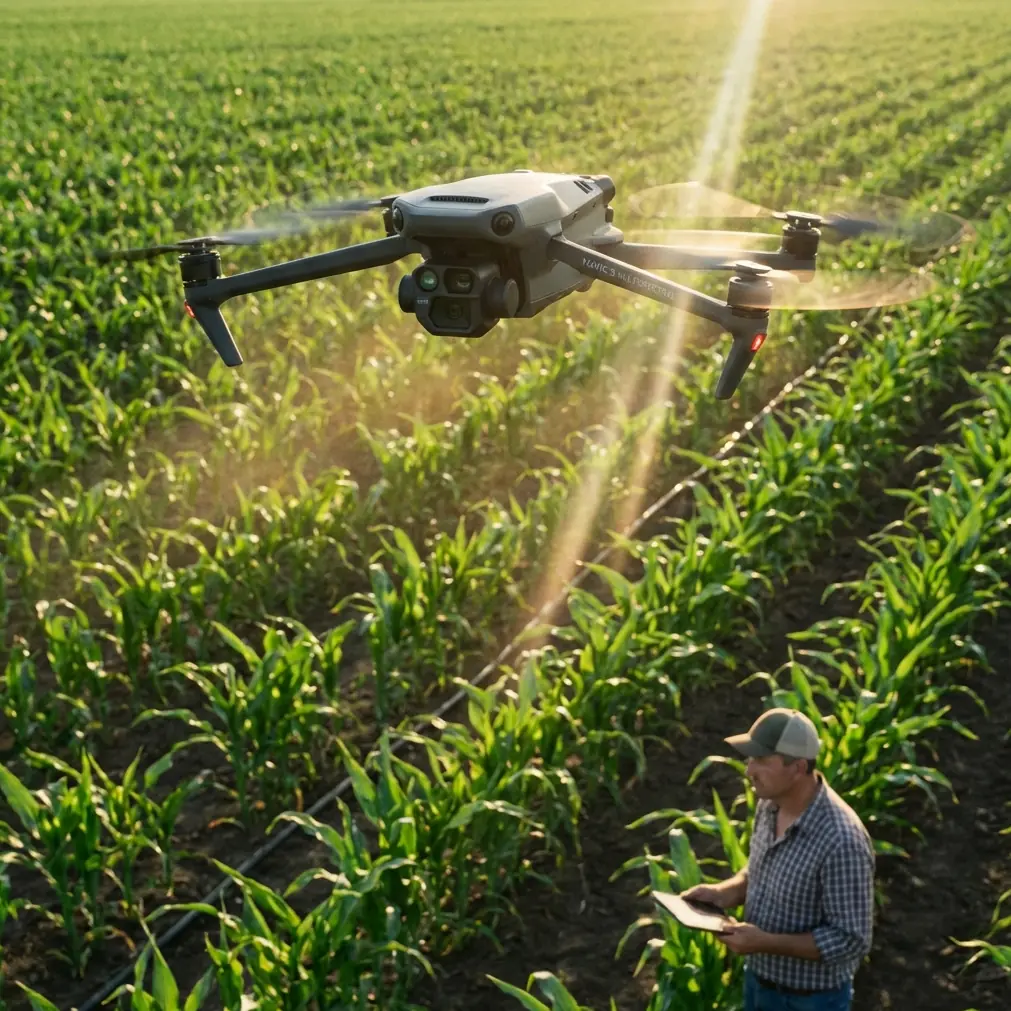
Mavic 3M for Highway Tracking in Extreme Temperatures: A Field Tutorial Built Around Stability, Precision, and Workflow
META: A practical tutorial on using the DJI Mavic 3M for highway tracking in extreme temperatures, with lessons drawn from DJI training and engineering solution references on flight geometry, obstacle sensing, display visibility, and reliable field operations.
Highway work exposes a drone system in ways office demos never do. Long heat shimmer over asphalt. Crosswinds around overpasses. Reflective glare at midday. Narrow operating windows when crews need data before traffic patterns change. If the aircraft is a Mavic 3M, the real question is not whether it can fly a corridor. The real question is how to structure the mission so the data stays usable when the environment gets ugly.
That is where a disciplined workflow matters more than marketing shorthand.
I want to frame this around two reference points from DJI material that, on the surface, are not about the Mavic 3M at all. One is an education document showing a simple square-route exercise at 120 centimeters altitude with a 100-centimeter side length. The other is an engineering solution sheet describing a portable mapping platform with five-direction sensing, four-direction obstacle avoidance, a 1000 cd/㎡ high-bright display, and up to 30 minutes of flight time. Neither document names the Mavic 3M as the main subject. Both are still useful because they reveal how DJI thinks about control, route geometry, visibility, and field practicality. Those same principles become especially relevant when you are tracking highways in extreme temperatures.
Start with the geometry, not the payload
A lot of corridor mistakes begin before takeoff. Operators focus on the sensor and forget the route.
The training document’s small square exercise looks basic: climb first to 80 cm, then rise another 40 cm to reach 120 cm, wait 1 second, then fly a square with 100 cm sides. In a classroom, that is a beginner program. In real highway work, it teaches something fundamental: altitude transitions, hover confirmation, route initiation delay, and path shape all affect data consistency.
That matters for the Mavic 3M because multispectral work is unforgiving when the aircraft is not settled before acquisition starts. If you begin a corridor pass while the drone is still correcting for drift, your overlap quality suffers. On pavement, shoulder vegetation, drainage strips, and heat-stressed roadside plants, that can distort the comparison between one pass and the next. For a highway operator monitoring edge-of-road vegetation stress, erosion zones, or revegetation success near infrastructure, the first few seconds of stable flight are not dead time. They are insurance.
So my first field rule is simple:
- Climb to mission altitude.
- Pause briefly to confirm stable hover.
- Check heading and crosswind correction.
- Only then begin the run.
The training reference uses a 1-second wait before route execution. On a real Mavic 3M highway mission in extreme heat or cold, I usually treat that idea as a checklist discipline rather than a literal number. You are waiting for the aircraft, GNSS condition, and live image to look settled.
Why route orientation matters more in extreme temperatures
The same training document also mentions that the square trajectory can be parallel to the ground, vertical to the ground, or at another angle. That small point has surprising operational significance.
Highway tracking is a corridor problem. But a corridor is never just horizontal distance. In hot conditions, thermal turbulence rising from the road surface can create subtle instability at low altitude. In cold conditions, battery behavior and wind near embankments become the bigger issue. If you always fly the same orientation and altitude profile regardless of the environment, your data quality will drift more than your flight logs suggest.
For Mavic 3M operators, this means route design should respond to the surface conditions:
- Over dark asphalt in high heat, increase margin above the surface to reduce the effect of rising air.
- Near retaining walls or sloped cuttings, plan lines that account for vertical relief instead of treating the corridor as perfectly flat.
- At interchanges with signage, barriers, and poles, maintain enough lateral spacing to avoid aggressive obstacle avoidance interventions that can alter line fidelity.
The educational square-flight example also distinguishes between flying without turning and flying with the aircraft nose always facing the direction of motion, using 90-degree rotation at each side. That is not just a teaching trick. It maps neatly onto a real Mavic 3M decision: should you prioritize a fixed heading for repeatability, or let the aircraft yaw with the path?
For highway tracking, fixed heading often gives cleaner repeatability in multispectral comparison runs, especially when you want consistent sun-angle relationships across multiple dates. If the mission includes tighter structures or directional visual inspection tasks, heading changes may be justified. The point is to choose deliberately. Do not let the route planner decide by default.
Extreme temperatures punish weak field visibility
A drone may fly well and still fail the mission if the operator cannot interpret the screen quickly in bright, reflective conditions.
The engineering solution reference highlights a controller/display setup with a 5.5-inch screen, 1920×1080 resolution, and 1000 cd/㎡ brightness for use under strong light. Even though that document describes another platform, the lesson transfers directly to the Mavic 3M workflow: if your display setup is not sunlight-capable, highway missions become slower and riskier.
On hot days, concrete and asphalt throw light back at you. You are often standing in open, unshaded shoulders or service areas. Screen visibility affects more than comfort. It affects whether you can verify overlap, identify route deviations, confirm obstacle warnings, and catch image issues while there is still time to re-fly the segment.
This is where a third-party accessory can genuinely improve capability. One of the most useful upgrades I have seen for Mavic 3M highway work is a high-quality controller sun hood with anti-glare screen protection. It sounds minor. It is not. In extreme heat, especially around midday, this can be the difference between trusting your framing and guessing at it. I would rank it higher than many cosmetic add-ons because it directly supports mission quality.
If your team is evaluating practical field accessories for corridor operations, a quick way to discuss real setups is through this field support chat for Mavic 3M operators.
Obstacle sensing is not a substitute for corridor planning
The engineering document also specifies five-direction sensing and four-direction obstacle avoidance. For highway tracking, that kind of sensing logic matters because the operating environment is cluttered in a very specific way: gantries, poles, signs, bridge members, sound barriers, cable crossings, and occasional tree lines.
Here is the operational takeaway. Obstacle sensing is there to protect the mission envelope, not to rescue poor route design.
If your corridor line runs too close to roadside structures, the aircraft may brake, reroute, or hesitate. Those automatic corrections can compromise data uniformity. For multispectral corridor analysis, that inconsistency often shows up later as variable overlap or irregular alignment in stitched outputs. Operators sometimes blame software when the real cause was a path that invited repeated avoidance events.
For Mavic 3M work, especially in extreme temperatures, leave more margin than you think you need. Hot wind can nudge the aircraft. Cold gusts near cut sections can do the same. Stable mapping comes from conservative planning.
Flight time is only useful if you budget for weather penalties
The engineering sheet mentions 30 minutes of flight time and a maximum horizontal speed of 20 m/s on the referenced platform. Those are not Mavic 3M specs to copy blindly, but they are a reminder that nominal endurance never equals practical endurance in hard field conditions.
Extreme temperatures cut into your margin in different ways:
- Heat increases stress on electronics and can force more cautious pacing.
- Cold reduces effective battery performance and can shorten productive mission windows.
- Wind along open highway corridors increases energy demand and complicates return planning.
For that reason, do not build your Mavic 3M corridor plan around brochure endurance. Build it around reserve discipline. In practice, divide long highway segments into smaller logical blocks with clean restart points: bridge to interchange, interchange to culvert zone, culvert zone to maintenance laydown area, and so on.
This also improves data management. If one segment suffers from glare, vehicle intrusion, or unexpected wind, you re-fly a block, not the entire corridor.
Multispectral value on highways is often misunderstood
The reader scenario here is highway tracking in extreme temperatures, which sounds at first like a surface-inspection task. But the Mavic 3M becomes especially useful when the corridor includes vegetation, drainage behavior, restoration zones, and right-of-way management.
This is where your LSI ideas become practical rather than abstract.
Multispectral
Along highways, multispectral data is less about pretty false-color maps and more about identifying stress patterns before they become maintenance issues. Edge vegetation affected by heat, poor drainage, salt exposure, or compaction can reveal trends that standard RGB review may miss early on.
Centimeter precision and RTK fix rate
If you are comparing the same corridor over time, positional consistency matters. A good RTK Fix rate reduces ambiguity when you need to align repeat missions against previous data. That is especially valuable for narrow highway shoulders, median plantings, and drainage channels, where small spatial errors can blur change detection.
Swath width
A corridor is an efficiency problem. Wider swath can reduce passes, but only if altitude, overlap, and wind allow the dataset to stay consistent. In extreme temperatures, chasing efficiency too aggressively often backfires. Fewer passes are not helpful if image quality or registration suffers.
Spray drift and nozzle calibration
These sound more at home in agriculture, but they still belong in a highway vegetation management discussion. Departments and contractors managing roadside growth often need to evaluate treatment effectiveness and off-target effects. Mavic 3M data can support post-treatment assessment by showing whether plant stress patterns are contained within the intended corridor. In that context, spray drift is not a drone spraying topic here; it is a monitoring topic. Nozzle calibration enters the conversation because if application equipment is being evaluated, the aerial dataset becomes one layer in confirming whether field results match intended ground settings.
A practical Mavic 3M workflow for extreme-temperature highway tracking
Here is the tutorial version I would hand to a field team.
1) Define the corridor objective before opening the planner
Are you tracking vegetation stress, shoulder recovery, drainage impacts, or general right-of-way condition? The answer changes altitude, overlap, and revisit frequency.
2) Break the highway into repeatable segments
Avoid one oversized mission. Use short operational blocks with obvious start and end landmarks.
3) Establish a stable start profile
The training reference’s climb logic is worth borrowing conceptually: ascend, stabilize, then begin. Do not trigger image collection during climb-out if consistency matters.
4) Choose heading strategy deliberately
Fixed heading helps temporal comparison. Dynamic yaw helps some visual inspection tasks. For multispectral tracking, fixed heading is often cleaner.
5) Plan around structures, not through them
Use obstacle sensing as a backstop. Leave clearance from poles, signs, barriers, and overpass elements so the aircraft does not keep correcting itself.
6) Manage for thermal and wind effects
In high heat, avoid the most severe midday surface shimmer when possible. In cold weather, watch battery behavior closely and shorten segment length.
7) Upgrade the operator interface
A good sun hood or anti-glare setup is not optional in exposed highway work. Better screen readability means fewer preventable mistakes.
8) Review data block by block on site
Do not assume the mission is complete because the aircraft landed. Check consistency while you are still in the field.
What these references really tell us about Mavic 3M use
The two DJI references provided are modest documents, but together they reveal something useful. The education material shows that precise aerial work begins with route discipline, altitude control, and intentional movement. The engineering sheet shows that field success depends on practical factors like obstacle awareness, portability, flight endurance, and display visibility in strong light.
That combination is exactly how the Mavic 3M should be approached for highway tracking in extreme temperatures.
Not as a magical sensor package. As a measurement tool that performs best when the operator respects geometry, visibility, margins, and repeatability.
If you get those right, the aircraft’s multispectral capability becomes more than a checkbox. It becomes a way to track subtle corridor change with confidence over time, even when the environment is trying to degrade every part of the workflow.
Ready for your own Mavic 3M? Contact our team for expert consultation.