
Mavic 3M Field Report: Coastal Highway Tracking When
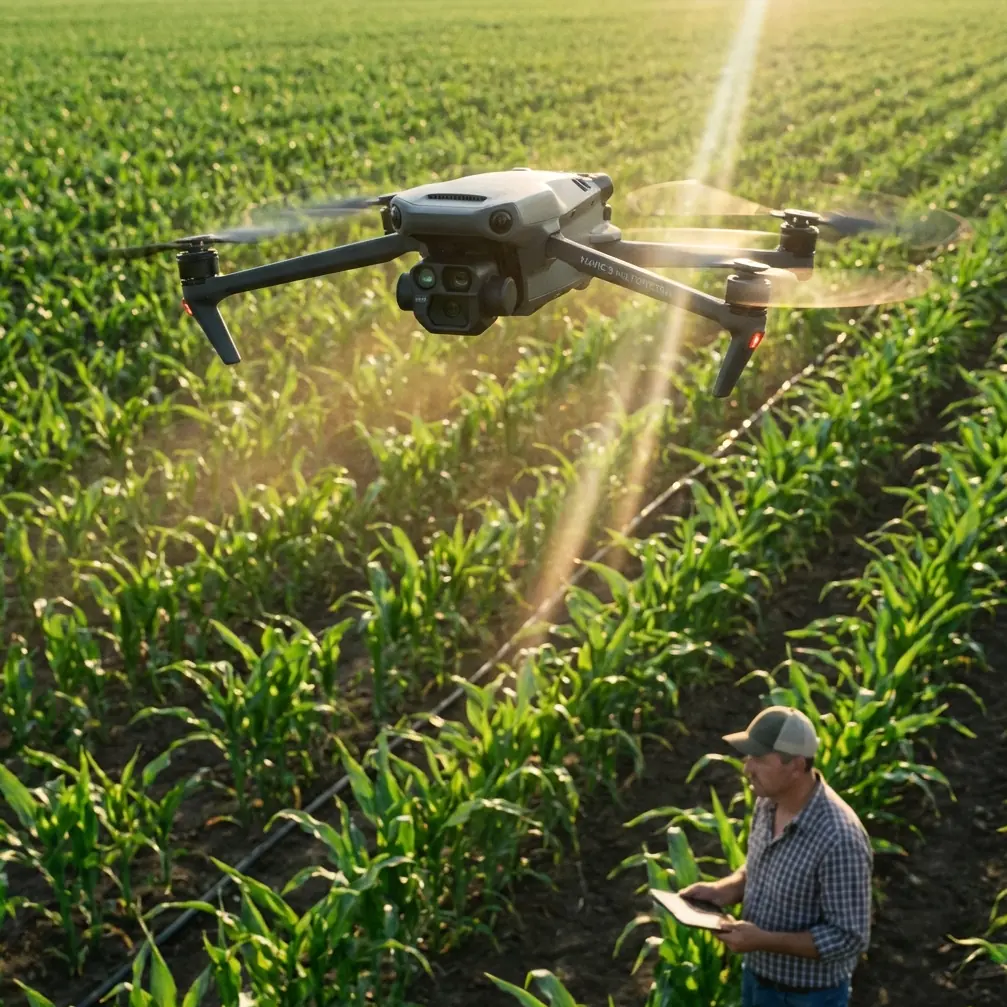
Mavic 3M Field Report: Coastal Highway Tracking When Conditions Turn Mid-Flight
META: A field-based expert look at using the Mavic 3M for coastal highway tracking, with practical insight on multispectral data, RTK precision, shifting weather, and why low-altitude industry partnerships matter.
I spent the day tracking a coastal highway corridor with the Mavic 3M, and the flight told a bigger story than a simple mission log.
This was not farmland, even though the aircraft is usually discussed through an agriculture lens. The assignment was linear infrastructure tracking near the coast: long pavement stretches, drainage shoulders, salt exposure, vegetation creep along embankments, and a weather pattern that refused to stay stable. That mix matters because coastal roads change quickly. Water pools where it should not. Edge growth thickens after humidity spikes. Surface temperatures shift. Drainage behavior can look normal at one kilometer and problematic at the next.
The Mavic 3M handled that kind of corridor work better than many teams expect, especially when the job requires repeatable positioning and more than ordinary RGB visuals.
What stood out most was not only the aircraft. It was the timing. Recent developments around China’s low-altitude economy add useful context for anyone deploying compact professional UAVs in real projects. At the 2026 Low-Altitude Industry Development Conference in Hengqin, multiple cooperation projects were signed during the event. That is not background noise. It signals a practical transition from policy language to operational buildout. When larger industry players say low-altitude activity is a strategic direction and emphasize technology innovation, industry cultivation, ecosystem building, system-level planning, and market orientation, that translates directly into field realities: better workflows, more standardized deployment models, and a stronger service environment for aircraft like the Mavic 3M.
For teams responsible for coastal highway monitoring, that matters. A drone is only as useful as the surrounding ecosystem that supports data handling, training, mission design, and repeat deployment.
Why the Mavic 3M makes sense for highway tracking
The Mavic 3M is commonly associated with multispectral crop analysis, but that narrow framing misses a useful truth. A multispectral platform can be valuable anywhere surface condition, moisture variation, plant encroachment, and repeatable corridor comparison are part of the mission.
Along a coastal highway, the most obvious need is visual inspection. Standard imaging still matters. You need to identify shoulder degradation, blocked drainage paths, unstable roadside growth, sediment movement, and changes around culverts and medians. But ordinary imagery only gets you so far when environmental conditions are changing rapidly.
That is where multispectral capability starts becoming operationally meaningful rather than technically interesting.
In a corridor environment, multispectral data helps separate surface categories that can blend together in visible imagery. Damp soil beside drainage channels, stressed vegetation on embankment slopes, standing water influence, and areas of growth that indicate persistent moisture can be easier to interpret when the sensor suite gives you more than a standard photo. You are not using the drone to “do agriculture” on a highway. You are using the same sensing advantage to understand vegetation vigor, moisture-linked anomalies, and roadside change with more confidence.
For coastal operators, that can improve maintenance prioritization. Instead of sending teams to inspect every suspicious green patch or dark shoulder edge, you can isolate stretches that deserve immediate on-site review.
The mission setup: long corridor, shifting air, reflective surfaces
The route I flew had the usual coastal complications. Morning conditions looked manageable. Winds were active but steady. Visibility was acceptable. By the middle of the operation, cloud cover shifted, brightness flattened, and crosswind behavior became less predictable as the route opened closer to exposed sections.
That kind of mid-flight change is exactly where a platform either keeps the mission coherent or forces compromises.
The Mavic 3M remained stable enough to preserve mission continuity without turning the operation into a constant manual correction exercise. For corridor tracking, that is not a luxury. It is fundamental. A highway mission depends on overlap quality, positional consistency, and repeatability from one pass to the next. If weather starts nudging the aircraft off line and your image geometry drifts too much, your comparison value drops.
This is where RTK-related thinking becomes relevant, even when users casually reduce the topic to a checkbox spec. In practical survey and inspection work, a strong RTK fix rate is not just about bragging rights or map neatness. It is about confidence that the same road edge, drainage feature, or vegetation margin will line up with prior datasets closely enough to support real decisions. When you are evaluating recurring conditions along a linear corridor, centimeter precision is what turns a drone flight into an operational record rather than a visual diary.
For highway authorities, contractors, or consultants working near coastal zones, repeatability is the whole point. You are not simply documenting what the road looked like once. You are building a timeline of how it is changing.
What the weather shift revealed
Mid-flight, the weather changed in the least helpful way. Wind did not spike into a dramatic event. It became inconsistent. Anyone who works coastal corridors knows that can be worse. Gusty, uneven air along embankments and open water edges forces subtle stability corrections. Add changing light conditions and reflective road surfaces, and data quality can become uneven if your setup is weak.
The Mavic 3M’s value here was composure. The aircraft maintained mission discipline as the atmosphere became less cooperative. That reduced the need to break the run into fragmented retries. In field terms, that means fewer gaps, less post-processing frustration, and less uncertainty when comparing one section of the route against another.
This is where a lot of buyers misunderstand professional drone performance. They focus on the headline sensor and forget the mission chain. A useful aircraft for coastal highway tracking must do three things well at the same time:
- Hold a reliable route under uneven wind conditions.
- Produce data that supports comparison over time.
- Keep the workflow manageable enough that teams actually repeat the mission.
The Mavic 3M does that combination unusually well for a compact platform.
Multispectral value outside the farm gate
There is another reason the Mavic 3M deserves a closer look in this use case. Coastal highways are living edges. The road is fixed, but the environment around it is not. Salt exposure, runoff, drainage imbalance, and seasonal growth all create change at the margins first.
That is where multispectral sensing becomes more than a specialist feature.
Vegetation along medians, shoulders, retaining slopes, and drainage channels often reveals hidden conditions before visible damage is obvious. A stressed patch may point to poor soil stability. Aggressive growth can suggest consistent moisture retention where drainage is underperforming. Uneven roadside plant response can help maintenance teams identify sections that deserve closer hydrological review.
In other words, the Mavic 3M can support infrastructure intelligence by reading the environmental signals wrapped around the road.
That kind of crossover use is exactly why broader low-altitude industry development matters. The recent Hengqin conference, with multiple project signings, showed how quickly the conversation is moving beyond isolated drone applications. When senior leadership from a major aviation group says low-altitude industry development should be driven through technology innovation, ecosystem construction, industrial cultivation, and system-oriented planning, professionals in the field should pay attention. Those are the conditions that make specialized UAV deployment more scalable.
For end users, it means a future with better integration between hardware, service networks, data standards, training pipelines, and sector-specific deployment models. A coastal highway operator does not need abstract policy enthusiasm. They need a field-ready ecosystem. That is what these signals point toward.
Why corridor tracking is a strong fit for compact UAVs
Large industrial drones have their place, but coastal highway tracking often rewards compact efficiency. Access points can be awkward. Roadside staging areas may be limited. Weather windows can be short. Missions may need to be repeated after rain, after maintenance work, or after visible vegetation change.
A compact aircraft that can be deployed quickly and still deliver high-value data often wins in the real world.
The Mavic 3M fits that pattern well. It is practical enough for repeat corridor runs and sophisticated enough to support data-driven maintenance logic. That balance matters. If a platform is too cumbersome, teams delay flights. If it lacks usable sensor depth, the collected data does not justify repeat deployment. The Mavic 3M sits in a productive middle ground.
For consulting teams, this also improves communication with clients. It is easier to explain the value of a repeated monitoring program when the aircraft can capture both visual condition evidence and multispectral clues tied to vegetation and moisture behavior. Clients do not have to guess why a specific section needs attention. The imagery helps show the pattern.
A note on the keywords people misuse
The broader UAV market has a habit of dragging unrelated terms into every conversation. Spray drift, nozzle calibration, swath width, and IPX6K all have their place in the right product category, but not every mission needs them. For a Mavic 3M coastal highway tracking operation, the decisive terms are not spray-system metrics. They are route repeatability, multispectral interpretation, RTK fix reliability, and centimeter-level positional consistency.
That distinction matters because it keeps teams focused on operational fit rather than generic drone jargon.
If your job is to monitor linear infrastructure near the coast, your success will not be determined by whether a platform resembles an agricultural spraying aircraft. It will be determined by whether you can safely and repeatably capture corridor data that reveals maintenance issues early.
What I would tell a highway operator considering the Mavic 3M
Do not evaluate this aircraft only as a crop-analysis drone.
Evaluate it as a compact multispectral corridor tool.
If your network includes coastal roads, embankments, drainage lines, bridge approaches, or vegetation-sensitive shoulders, the Mavic 3M can fill an important role between basic visual inspection and more expensive survey deployment. It is especially useful where change detection matters and where environmental stress around the road tells you something before the pavement itself visibly fails.
Also, pay attention to the market context. The fact that the 2026 low-altitude industry conference in Hengqin featured concentrated project signings is more than ceremonial. It suggests the sector is maturing through real cooperation. Pair that with the stated emphasis on technology innovation, industrial nurturing, ecosystem construction, and market-oriented planning, and you get a clearer picture of where UAV operations are heading: more structured, more integrated, and more useful to infrastructure operators.
That benefits Mavic 3M users directly. Better ecosystem maturity means better support around the aircraft, not just the aircraft itself.
Final field takeaway
The mission started as a routine coastal highway tracking run and ended as a reminder of what separates a capable UAV from a merely popular one.
The Mavic 3M proved useful because it stayed composed when weather softened and shifted mid-flight, because its multispectral capability added context that ordinary imagery often misses, and because RTK-centered repeatability gives highway teams a stronger basis for comparison over time. Those are not abstract advantages. They affect whether a maintenance team catches a drainage problem early, whether vegetation encroachment is properly mapped, and whether repeat flights create a trustworthy dataset.
If you are building a civilian corridor monitoring program in a coastal environment, this aircraft deserves to be judged on that basis.
If you want to discuss a similar workflow in more practical terms, you can message Marcus directly here: share your corridor details on WhatsApp.
Ready for your own Mavic 3M? Contact our team for expert consultation.