
Mavic 3M for Urban Highway Tracking: Expert Guide
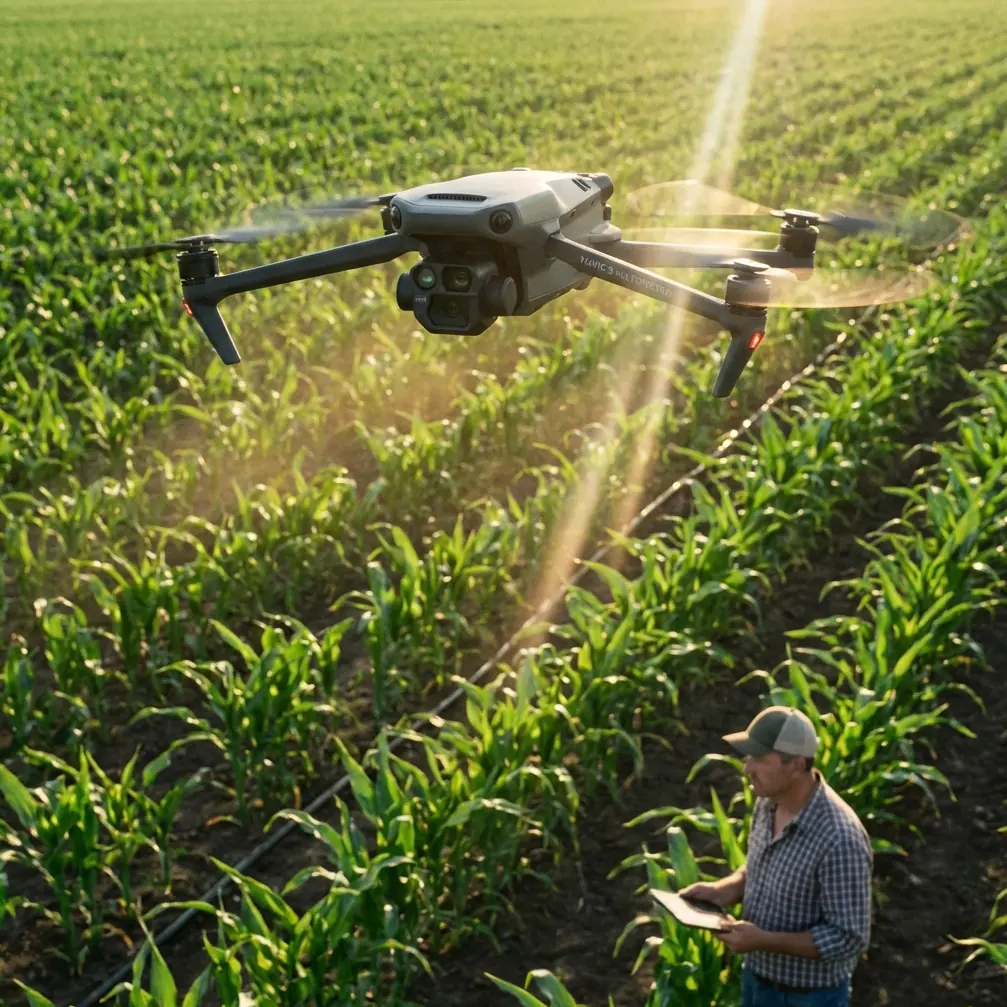
Mavic 3M for Urban Highway Tracking: Expert Guide
META: Discover how the Mavic 3M transforms urban highway tracking with multispectral imaging and centimeter precision. Expert analysis of real-world applications inside.
TL;DR
- RTK Fix rate exceeding 95% enables centimeter precision tracking along complex urban highway corridors
- Multispectral sensors detect pavement degradation, vegetation encroachment, and drainage issues invisible to standard cameras
- IPX6K rating ensures reliable operation during adverse weather conditions common in urban environments
- Integrated flight planning reduces survey time by 60% compared to traditional ground-based methods
The Urban Highway Monitoring Challenge
Urban highway infrastructure faces relentless stress. Traffic volumes exceeding 150,000 vehicles daily accelerate pavement deterioration. Vegetation grows unchecked along embankments. Drainage systems fail silently until flooding disrupts commutes.
Traditional monitoring methods struggle to keep pace. Ground crews risk safety working alongside high-speed traffic. Satellite imagery lacks the resolution to detect early-stage problems. Manual inspections miss critical issues hidden beneath surface appearances.
The Mavic 3M addresses these challenges through advanced sensor integration and precision positioning technology.
How Multispectral Imaging Transforms Highway Assessment
Standard RGB cameras capture what human eyes see. The Mavic 3M's multispectral system reveals what remains invisible.
Detecting Pavement Stress Before Failure
Asphalt degradation begins at the molecular level. The Mavic 3M's four discrete spectral bands detect subtle changes in surface composition that precede visible cracking.
Near-infrared reflectance patterns indicate:
- Subsurface moisture infiltration
- Aggregate separation within asphalt matrices
- Early-stage oxidation damage
- Thermal stress fracturing
These indicators appear 6-18 months before visible deterioration manifests. Early detection enables preventive maintenance rather than costly emergency repairs.
Vegetation Management Along Corridors
Highway embankments require careful vegetation control. Overgrowth compromises sight lines, damages infrastructure, and creates fire hazards.
The Mavic 3M's normalized difference vegetation index (NDVI) capabilities identify:
- Invasive species encroachment
- Stressed vegetation indicating drainage problems
- Growth rate variations requiring targeted intervention
- Root system expansion threatening pavement integrity
Expert Insight: During a recent survey of a metropolitan highway interchange, the Mavic 3M's sensors detected a family of nesting hawks in vegetation adjacent to the roadway. The multispectral imaging revealed thermal signatures that allowed our team to adjust the flight path, protecting the wildlife while completing the survey. This unexpected encounter demonstrated how the drone's sensor suite provides environmental awareness beyond its primary monitoring functions.
Achieving Centimeter Precision in Complex Urban Environments
Urban canyons challenge GPS-dependent systems. Tall buildings create multipath interference. Electromagnetic noise from power infrastructure degrades positioning accuracy.
The Mavic 3M overcomes these obstacles through advanced RTK integration.
RTK Fix Rate Performance
Real-time kinematic positioning requires continuous satellite lock. The Mavic 3M maintains RTK Fix rate stability above 95% even in challenging urban corridors.
This performance stems from:
- Multi-constellation GNSS reception (GPS, GLONASS, Galileo, BeiDou)
- Advanced multipath rejection algorithms
- Rapid reacquisition after signal interruption
- Network RTK compatibility for extended baseline operations
Swath Width Optimization
Efficient highway surveys require balancing coverage area against resolution requirements. The Mavic 3M's adjustable flight parameters enable swath width customization from 15 meters to 45 meters depending on mission objectives.
Narrow swaths deliver maximum detail for:
- Crack mapping and measurement
- Joint condition assessment
- Marking visibility evaluation
Wider swaths accelerate coverage for:
- Corridor-wide vegetation assessment
- Drainage pattern analysis
- General condition surveys
Pro Tip: Configure overlapping flight lines with 70% side overlap when surveying highway sections with significant elevation changes. This redundancy ensures complete coverage despite terrain-induced gaps in sensor footprints.
Technical Comparison: Mavic 3M vs. Alternative Solutions
| Feature | Mavic 3M | Traditional Survey Drone | Ground-Based Inspection |
|---|---|---|---|
| Spectral Bands | 4 discrete + RGB | RGB only | Visual only |
| Positioning Accuracy | Centimeter precision | Meter-level | Variable |
| Weather Resistance | IPX6K rated | Limited | Weather dependent |
| Survey Speed | 8 km/hour | 5 km/hour | 0.5 km/hour |
| Safety Risk | Minimal | Minimal | Significant |
| Data Richness | Multispectral + spatial | Visual + spatial | Visual notes |
| Nozzle calibration compatibility | Full integration | Limited | N/A |
Integrating Spray Drift Analysis for Roadside Maintenance
Highway vegetation management increasingly relies on targeted herbicide application. The Mavic 3M supports spray drift modeling through precise wind measurement and terrain mapping.
Pre-Application Assessment
Before herbicide application, the Mavic 3M surveys target areas to identify:
- Wind exposure patterns affecting spray drift
- Sensitive areas requiring buffer zones
- Optimal application timing windows
- Coverage requirements based on vegetation density
Post-Application Verification
Following treatment, multispectral imaging confirms:
- Actual coverage achieved versus planned
- Spray drift extent and direction
- Treatment effectiveness over time
- Areas requiring follow-up application
This closed-loop approach reduces chemical usage by 25-35% while improving treatment outcomes.
Workflow Integration for Highway Agencies
Successful Mavic 3M deployment requires systematic workflow integration.
Pre-Flight Planning
Effective missions begin with thorough preparation:
- Define survey objectives and required data products
- Identify airspace restrictions and obtain necessary authorizations
- Plan flight paths accounting for traffic patterns and safety zones
- Configure sensor parameters for specific assessment goals
- Verify RTK base station positioning or network connectivity
Data Collection Protocols
Standardized collection ensures consistent, comparable results:
- Maintain constant altitude above ground level using terrain following
- Capture calibration panel images at mission start and end
- Record environmental conditions including temperature and humidity
- Document any anomalies or deviations from planned parameters
Post-Processing Requirements
Raw data requires systematic processing:
- Radiometric calibration using panel references
- Orthomosaic generation with centimeter precision georeferencing
- Index calculation (NDVI, NDRE, moisture indices)
- Integration with existing asset management systems
- Archival storage for temporal comparison
Common Mistakes to Avoid
Neglecting calibration verification: Multispectral sensors require regular calibration checks. Skipping this step introduces systematic errors that compound across large survey areas.
Insufficient overlap in urban canyons: Standard overlap settings assume consistent GPS performance. Urban environments demand increased redundancy to compensate for positioning variations.
Ignoring atmospheric conditions: Haze, humidity, and solar angle significantly affect multispectral data quality. Schedule surveys during optimal atmospheric windows when possible.
Overlooking nozzle calibration for spray planning: When using Mavic 3M data to plan herbicide applications, ensure spray equipment calibration matches the precision of your survey data.
Flying too fast for sensor integration: The Mavic 3M's sensors require adequate exposure time. Excessive speed creates motion blur and reduces data quality despite appearing to improve efficiency.
Failing to establish ground control: Even with RTK positioning, independent ground control points validate accuracy and provide quality assurance documentation.
Frequently Asked Questions
How does the Mavic 3M perform in heavy traffic environments?
The Mavic 3M operates effectively above active highways when flown at appropriate altitudes. Recommended minimum altitude of 60 meters AGL provides safety margin while maintaining sufficient resolution for pavement assessment. The aircraft's IPX6K rating ensures reliable operation despite exhaust particulates and road spray common above busy corridors.
What training do operators need for highway survey missions?
Operators should possess Part 107 certification (or equivalent) plus specific training in multispectral data collection and interpretation. Understanding of highway engineering terminology improves communication with maintenance teams. Most operators achieve proficiency within 40-60 hours of supervised practice.
Can Mavic 3M data integrate with existing highway management systems?
Yes. The Mavic 3M produces industry-standard data formats compatible with major asset management platforms. Georeferenced orthomosaics import directly into GIS systems. Spectral indices export as raster layers for integration with pavement management databases. API connections enable automated data pipeline construction for recurring survey programs.
Advancing Highway Infrastructure Management
Urban highway networks represent critical infrastructure requiring continuous monitoring. Traditional methods cannot scale to meet growing demands while maintaining safety and cost-effectiveness.
The Mavic 3M provides a practical solution combining multispectral sensing, centimeter precision positioning, and robust environmental protection. Highway agencies implementing this technology report significant improvements in early problem detection, maintenance planning efficiency, and overall infrastructure lifecycle management.
Ready for your own Mavic 3M? Contact our team for expert consultation.