
Mavic 3M Guide for Mountain Forest Tracking
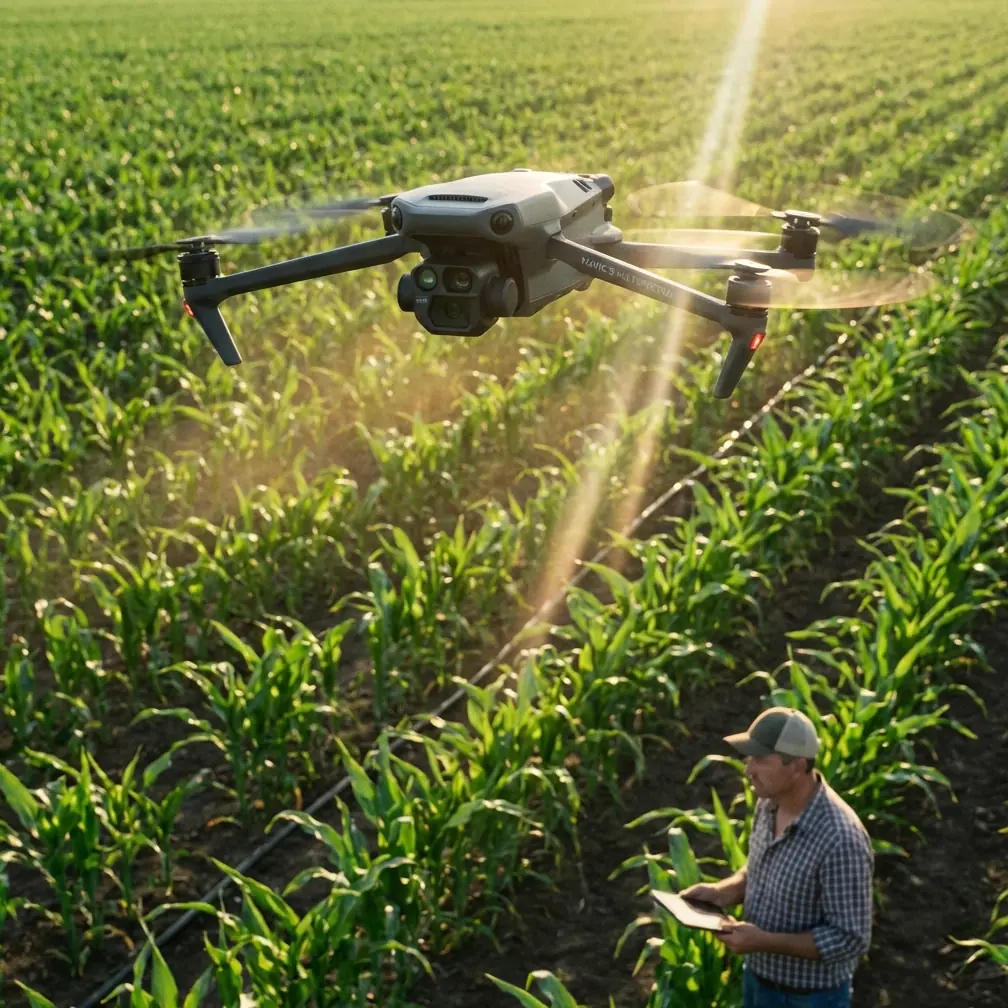
Mavic 3M Guide for Mountain Forest Tracking: What China’s Low-Altitude Shift Means in the Field
META: A practical Mavic 3M tutorial for mountain forest tracking, connecting China’s low-altitude economy push, 2026 scenario validation, drone insurance, and multispectral field operations.
If you track forests in steep, signal-challenging terrain, broad policy news can feel distant from the work that actually matters: holding RTK, keeping flight lines clean over broken canopy, and returning usable multispectral data before weather closes in. Yet the latest low-altitude developments out of China are more relevant to Mavic 3M operators than they first appear.
Two recent signals stand out. First, major official reporting says China’s low-altitude economy is expected to move from “pilot flying” toward “scenario validation” by 2026, supported by finer airspace management, stronger core equipment innovation, and a maturing infrastructure network. Second, Chongqing has already issued a first compulsory liability insurance pilot policy for unmanned aircraft, with 18 insurers involved and coverage applied to 194 drones. Put together, those details point to something very concrete: drone work is being treated less as a novelty and more as operational infrastructure.
For Mavic 3M users working in mountain forests, that shift changes the way missions should be planned. It pushes the aircraft from a simple imaging platform into a documented, repeatable sensing tool expected to perform inside real workflows. In other words, if you are mapping forest health, spotting canopy stress, or tracking post-disturbance recovery, the standard is no longer “did the drone fly.” The standard is “did the mission produce defensible, repeatable evidence under difficult conditions.”
That is the right lens for using the Mavic 3M.
Why this news matters to a Mavic 3M operator
The official low-altitude narrative highlights three drivers: more refined airspace management, continued innovation in core equipment, and the gradual buildout of infrastructure networks. On paper, that sounds abstract. In mountain forest tracking, it translates into practical expectations.
Refined airspace management matters because forest operations often sit near fragmented administrative zones, utility corridors, scenic areas, or protected land. A Mavic 3M mission that was once treated as a one-off survey is increasingly part of a regulated operating environment. That means better mission logs, clearer geofencing awareness, cleaner documentation of who flew, where, and why.
Core equipment innovation matters because a forest mission is only as good as the reliability of the sensor package and positioning stack. The Mavic 3M’s appeal in this context is not merely that it flies. It is that multispectral capture can support vegetation analysis in terrain where ground sampling is slow, expensive, and sometimes unsafe. When official reporting says low-altitude activity is moving toward “scenario validation” by 2026, that is essentially a warning to operators: stakeholders will expect the workflow to prove itself in real deployment settings, not just in demonstration footage.
Infrastructure networks matter because mountain forest tracking depends on more than the aircraft. It depends on battery logistics, terrain access, communications, base maps, correction services, and post-processing discipline. A more mature low-altitude ecosystem should gradually reduce friction around those dependencies. But it also raises the bar for operators. If the surrounding system improves, sloppy field methods become more visible.
The right way to frame the Mavic 3M in forests
A lot of people approach the Mavic 3M as if it were just a camera drone with extra bands. That mindset leaves value on the table. In forest tracking, the aircraft is better understood as a repeat-survey instrument. The real advantage is not a single flight. It is the ability to revisit the same stand, slope, or disturbance zone and compare like with like.
Mountain forests are harsh on consistency. Sun angle shifts fast in valleys. Ridge lines cast long shadows. Moisture, haze, and wind all distort the quality of captured data. Electromagnetic interference can show up near transmission infrastructure, communications sites, and metal-heavy terrain installations. Dense relief also complicates link stability and route geometry.
That is why repeatability matters more than visual drama.
For readers coming from agricultural UAV operations, some of the familiar vocabulary still helps as a mental model. Terms like swath width, centimeter precision, and RTK fix rate remain relevant because the mission still depends on controlled coverage and spatial confidence. Even hints like nozzle calibration and spray drift, while designed for spraying workflows, teach the same operational lesson: performance depends on calibration, environment, and disciplined setup. In forest monitoring, the equivalent is sensor consistency, overlap discipline, and line planning over canopy.
A field tutorial for mountain forest tracking with Mavic 3M
1. Start with the mission question, not the flight route
Before opening the flight app, define what you are trying to detect.
Are you monitoring pest stress along an elevation band? Checking regeneration after fire or landslide? Comparing moisture response across slope aspects? Looking for edge effects near roads or power corridors? Each objective changes altitude, overlap, revisit interval, and acceptable lighting conditions.
A weak mission question produces attractive but unusable maps. A strong mission question narrows the data requirements and prevents overflying difficult terrain without analytical payoff.
For most forest tracking tasks, write down three things before departure:
- the target indicator you want to observe
- the geographic unit of comparison
- the acceptable revisit standard
This sounds academic because it is. And that is exactly the point. If the low-altitude sector is moving toward scenario validation by 2026, then forest drone work must become more evidence-driven. The Mavic 3M performs best when the operator behaves less like a hobby pilot and more like a field researcher.
2. Plan for terrain, not just area
In mountain forests, a mission block drawn on a flat map is misleading. Elevation variance can wreck consistency in ground sampling distance and viewing geometry. If one portion of the route sits much closer to the canopy than another, your comparisons become less clean.
Use terrain-aware planning where possible, and if terrain following is limited by the local workflow, split the mission into elevation-consistent segments. That often produces better results than forcing one giant route over a mixed mountain face.
This is where swath width needs to be treated carefully. A broad effective footprint may look efficient, but in broken terrain it can hide data quality variation. Narrower, more controlled passes often produce better analytical integrity than maximum theoretical coverage.
3. Protect your RTK fix rate in difficult environments
Centimeter precision is only meaningful if you can actually sustain positional quality during the mission. In forested mountains, RTK performance is frequently stressed by canopy structure, sky obstruction, and local interference.
The simplest field mistake is assuming a clean takeoff equals clean positioning for the entire route. It does not.
Monitor your RTK fix rate and watch for terrain sections where status degrades repeatedly. If you see a pattern, do not just rerun the same route and hope for better luck. Reposition your takeoff point, adjust your timing for better satellite geometry, and consider the influence of nearby electromagnetic sources.
One practical technique that deserves more attention is antenna adjustment when interference is suspected. In mountain environments, operators often focus on tree cover and forget man-made sources. Communications towers, repeater sites, high-voltage infrastructure, and even improvised field electronics can affect link quality. If you notice inconsistent signal behavior or unstable corrections in a repeatable area, change your controller orientation and antenna angle deliberately rather than casually. Small adjustments can improve line-of-sight alignment and reduce the impact of localized electromagnetic clutter. That is not magic. It is disciplined radio handling.
If your forest route crosses near power infrastructure, treat that as a separate operational layer. The source text behind the broader low-altitude story specifically notes that drones are already being used in high-altitude and high-cold regions for grid maintenance coverage in places such as Yunnan and Tibet. That matters because it confirms something experienced operators already know: mountain operations increasingly intersect with utility environments. Your antenna setup, route offset, and positioning checks need to reflect that reality.
4. Build your capture standard around light discipline
A recent photography note making the rounds focused on sharpness and warned against over-sharpening because halos and jagged edges can degrade a natural image. On the surface, that sounds like consumer camera advice. For Mavic 3M work, the deeper lesson is still useful: image quality should serve interpretation, not vanity.
Forest multispectral work suffers when operators chase visually punchy output instead of stable data capture. Avoid making decisions based on previews that simply look crisp. Keep your standard tied to consistent light, sufficient overlap, and repeatable acquisition settings. If your workflow includes RGB context capture alongside multispectral passes, resist aggressive sharpening in post. Artificial edge enhancement can mislead visual interpretation around canopy boundaries, road cuts, and disease margins.
The goal is not prettier maps. It is more reliable comparison.
5. Treat weather sealing and exposure realistically
Mountain forests create wet branches, sudden mist, and blown debris. If your equipment stack includes field gear with strong ingress protection expectations, remember that ratings such as IPX6K are meaningful only when the total workflow is equally disciplined. An aircraft may tolerate a demanding environment better than a casual user expects, but sensors, batteries, ports, landing choices, and transport cases remain weak points in the chain.
Do not launch simply because the aircraft can probably cope. Launch because your capture conditions still support good data.
6. Document the mission like an asset-backed operation
The insurance development in Chongqing is one of the most revealing drone news items in recent months. A first compulsory liability policy has already been issued in a pilot setting, signed jointly with 18 insurance institutions, and tied to 194 aircraft. That is not a small symbolic gesture. It suggests that regulators and operators are moving toward normalized accountability at fleet scale.
For a solo or small-team Mavic 3M forest operator, the lesson is straightforward: document everything as if external review is inevitable.
That means:
- flight purpose
- route boundaries
- crew roles
- weather notes
- positioning status
- anomaly logs
- maintenance notes
- data handling chain
When forest data informs management decisions, restoration choices, or compliance reporting, defensibility matters. Insurance pilots and scenario validation both point in the same direction. Drone operations are entering an era where procedural discipline carries real weight.
What “low-altitude plus” means in forest work
One of the stronger details in the policy coverage is the emphasis on “low-altitude plus” integration with traditional industries. This is exactly where Mavic 3M sits when used well. It is not just aviation. It is aviation plus forestry, ecology, watershed management, emergency response, and infrastructure oversight.
The examples cited in the broader low-altitude discussion are telling: tethered drones for emergency lighting, transport drones moving agricultural harvests, swarm drones creating urban aerial displays, and large-scale agricultural plant protection in provinces such as Shandong, Henan, and Sichuan. Those are very different missions, but they all show the same pattern. The aircraft becomes valuable when it is embedded in a larger task chain.
Forest tracking should be treated the same way. The Mavic 3M is not the endpoint. It is the sensing node inside a larger monitoring system that may include field plots, GIS layers, terrain history, pest records, and restoration planning. Once you think like that, flight choices improve immediately.
A practical mission mindset for the next two years
From now to 2026, expect more scrutiny, more normalization, and better alignment between drone capability and real operating scenarios. For mountain forest users, that is good news. It favors disciplined operators over casual ones.
If I were setting a standard operating routine for a Mavic 3M team tracking forests in rugged terrain, I would keep it simple:
- define the ecological question first
- divide routes by terrain logic
- protect RTK fix rate actively
- adjust antennas intentionally near interference
- capture under repeatable light
- keep post-processing conservative
- document every mission thoroughly
That combination does more for data quality than any headline feature ever will.
If you are refining your own forest workflow and want to compare field setups, mission planning logic, or interference-handling habits, you can send a quick note here: message me directly.
The larger industry story is no longer just about drones doing unusual things in the sky. It is about low-altitude systems proving they belong inside serious work. For Mavic 3M operators in mountain forests, that means the bar is rising in exactly the right way. Better airspace structure, stronger institutional backing, and clearer risk frameworks all reward the same thing: reliable data captured with method, not improvisation.
That is where the Mavic 3M earns its place.
Ready for your own Mavic 3M? Contact our team for expert consultation.