
Mavic 3M in Dusty Fields: A Practical Guide to Stable RTK
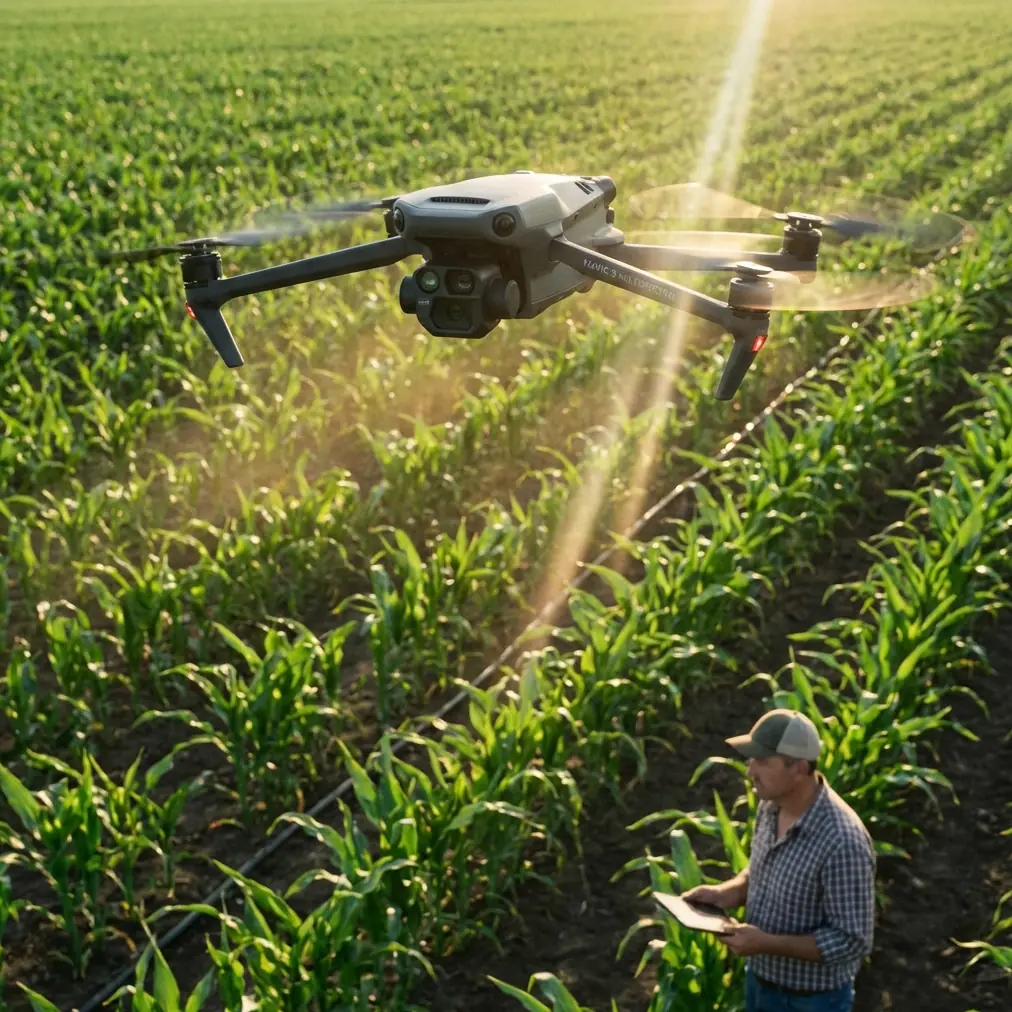
Mavic 3M in Dusty Fields: A Practical Guide to Stable RTK, Better Multispectral Data, and Smarter Spray Decisions
META: A field-tested Mavic 3M tutorial for dusty farm conditions, covering RTK fix stability, antenna adjustment under electromagnetic interference, multispectral capture quality, and how better data supports spray drift control and nozzle calibration.
Dust changes everything.
Not just visibility. Not just maintenance cycles. In agricultural mapping, suspended dust can quietly distort the workflow from takeoff to prescription planning: weaker visual cues, more unstable GNSS conditions near machinery, noisier field edges, and slower confidence when you are trying to decide whether a patch is real crop stress or just bad data. For operators using the Mavic 3M in active farm environments, especially around pumps, power lines, irrigation controls, metal sheds, and moving equipment, the aircraft is only part of the system. The real job is producing trustworthy field intelligence under imperfect conditions.
That is where disciplined setup matters more than marketing claims.
This guide is built for a specific scenario: tracking fields in dusty conditions with the Mavic 3M, while keeping an eye on multispectral quality, RTK fix rate, spray drift decisions, and the subtle problem of electromagnetic interference. I’ll also connect a few reference points from outside row-crop mapping that are surprisingly relevant. One comes from hyperspectral remote sensing research on water and oil detection. Another comes from logistics drone operations in constrained environments. Both help explain why Mavic 3M users should care less about “flying the mission” and more about controlling the quality of what the mission means.
Why dusty-field Mavic 3M work is really a data-quality problem
When growers ask for a field map, they usually want an action: check irrigation uniformity, isolate emergence issues, verify treatment performance, or reduce unnecessary chemical application. The Mavic 3M is valuable because its multispectral workflow can reveal spatial patterns that are easy to miss from the ground. But in dusty conditions, the challenge is not simply getting airborne. It is protecting the chain of evidence from sensor to agronomic decision.
That chain has weak points:
- RTK fix instability around electrically noisy farm infrastructure
- Disturbed takeoff zones that kick dust onto optics and airframe surfaces
- Inconsistent overlap caused by wind shifts or abrupt obstacle corrections
- Spectral confusion along roads, bare soil transitions, and stressed border rows
- Overconfidence in maps built from poor environmental discipline
The operational standard should be simple: if the data will influence spray timing, nozzle calibration checks, or follow-up scouting routes, then every setup choice needs to support consistency.
Start with the hidden enemy: electromagnetic interference
Dust gets blamed for a lot of problems that are actually RF or GNSS problems.
If you launch beside a metal barn, generator trailer, irrigation controller, transformer, or parked machinery cluster, you can see a decent satellite count and still fight unstable positioning. The symptom in practice is often a weaker RTK fix rate, longer convergence time, or positional inconsistency between passes and repeat missions. That matters when you want centimeter precision for stand counts, treatment comparisons, drainage line checks, or progress mapping over time.
The first correction is physical, not software-based: move your setup point.
I teach operators to treat antenna orientation and launch location as one combined decision. If you suspect electromagnetic interference, do three things before takeoff:
- Shift away from concentrated metal and powered equipment. Even a short relocation can improve signal cleanliness.
- Adjust antenna orientation deliberately rather than leaving it as an afterthought. Small changes in angle and the relationship between controller, aircraft path, and suspected interference source can help stabilize reception.
- Watch RTK behavior before committing to the full mission. Don’t confuse “connected” with “reliable.”
This sounds minor until you compare maps over multiple dates. A stable RTK fix rate supports cleaner georeferencing and more dependable comparison between early stress signals and later treatment outcomes. In dusty fields, where visual interpretation is already harder, positional confidence becomes even more valuable.
Why multispectral operators should learn from hyperspectral research
A useful lesson comes from remote sensing work outside farming. In the reference material on the Gaiasky mini hyperspectral imaging system, one point stands out: inland water monitoring remains difficult because optical properties are affected by multiple factors at once, including phytoplankton, suspended inorganic matter, yellow substances, and even bottom material in shallow water. In plain terms, the signal is messy because several things can alter reflectance simultaneously.
That exact mindset belongs in field mapping.
A dusty field also produces mixed signals. Crop stress may be real, but reflectance patterns can also be influenced by bare soil exposure, wheel tracks, recent disturbance, residue, shallow canopy, or particulate film on leaves. The reference also notes that hyperspectral sensing can obtain nearly continuous reflectance spectra, which helps distinguish targets based on spectral differences. The Mavic 3M is not a hyperspectral platform, but the operational lesson still applies: the more complex the scene, the more cautious you should be when interpreting a “hotspot.”
In other words, don’t let a clean-looking map trick you into a sloppy diagnosis.
If a zone appears stressed in a dusty field, ask:
- Is the pattern aligned with topography, irrigation, or traffic?
- Does it repeat on multiple missions?
- Is it strongest at field edges where dust deposition is heavier?
- Does the RGB context support what the multispectral layer suggests?
- Does ground truth confirm plant response, or are you seeing exposed soil and canopy thinning?
This is especially important when your output may influence spray drift mitigation or nozzle calibration follow-up. A false stress zone can trigger the wrong response. A reliable zone map, by contrast, helps crews focus on whether the issue is plant health, distribution uniformity, coverage loss, or drift movement.
Build a takeoff routine for dust, not against it
Many pilots focus on in-flight settings and ignore the first thirty seconds. In active farm environments, those thirty seconds often do more harm than the rest of the mission.
Use a hard, clean launch surface whenever possible. If the field road is loose and powdery, bring a pad or use the bed platform of a vehicle only if you are clear of magnetic interference and metal-induced compass issues. The goal is to limit rotor wash from lifting debris into the aircraft and onto optical surfaces.
Before launch, inspect:
- Camera and sensor windows for fine dust film
- Air intakes and body seams
- Propeller condition after transport on rough roads
- Gimbal freedom of movement
- RTK status and home point confidence
The Mavic 3M’s weather resistance profile helps in agricultural work, but no ingress rating eliminates the practical effects of dust accumulation on image quality or thermal behavior over a long day. Dusty conditions call for shorter loops with inspection breaks rather than one long “set it and forget it” mission sequence.
Mission planning: overlap is not the only number that matters
Agricultural pilots love percentages. Front overlap, side overlap, battery remaining, acres per sortie. Useful, yes. Sufficient, no.
In dusty fields, mission design should also consider the direction of travel relative to dust sources and wind. If trucks, sprayers, or tillage equipment are moving nearby, you want to reduce the chance that suspended material changes scene conditions partway through the map. Keep your mission blocks clean and intentional. If the field is large, divide it into logical sections rather than pushing one long route through changing air and ground activity.
Swath width matters here too, but not just for efficiency. A wider effective coverage plan may reduce the number of turns and shorten time spent over disturbed field margins. Fewer interruptions often mean more consistent capture conditions. The ideal mission is not merely fast; it is repeatable.
For growers comparing before-and-after treatment performance, repeatability is the whole business case.
Mavic 3M data and spray decisions: where people rush too quickly
The Mavic 3M is often pulled into spray-related decisions after a visible problem appears: skipped strips, uneven vigor, edge stress, or suspected drift. That is fine as long as the workflow remains disciplined.
Here is the sequence I recommend:
1. Map first, interpret second
Do not decide “drift” just because the pattern looks directional. Dusty conditions can create visually persuasive but incomplete clues.
2. Compare against known application conditions
If the timing lines up with a spray event, check wind records, boom height, nozzle type, travel speed, and any notes on pressure changes or refills. A map is stronger when paired with application context.
3. Use the imagery to narrow field scouting
Mavic 3M output is best used to focus boots-on-the-ground inspection. If a suspected drift zone appears, inspect symptom consistency and border behavior before adjusting future operations.
4. Tie findings back to nozzle calibration and drift control
If the pattern suggests coverage variability rather than off-target movement, the next step may be calibration review, not chemistry blame. Nozzle wear, pressure inconsistency, and section control timing can all leave signatures that multispectral imagery helps prioritize for inspection.
That is where the aircraft becomes more than a mapping tool. It becomes a quality-control instrument for the broader crop care workflow.
Logistics drone lessons that matter more than most pilots realize
One of the reference documents discusses delivery-drone development and gives a useful operational clue: companies testing transport missions often focused on remote mountainous areas to reduce risk, and regulators imposed route constraints such as avoiding homes and conflicts with manned aviation. Another reference point is even more striking: industry advocates cited a daily economic loss of 27 million dollars per day in the US when drone legislation lagged. Leave the number aside and focus on what it tells you—serious drone operations are shaped by operational discipline, not just airframe capability.
That lesson applies directly to Mavic 3M field work.
The best operators reduce variables. They don’t launch from the most convenient spot. They launch from the cleanest, quietest, most repeatable spot. They don’t improvise around interference if they can relocate. They don’t capture data in the middle of active dust plumes and hope software will rescue the output later.
This is the same maturity seen in logistics testing: choose the environment carefully, constrain the mission, and remove avoidable risk first.
A practical field sequence for dusty Mavic 3M missions
If you want a compact routine, use this one.
Pre-field
- Review the field boundary and identify metal structures, power corridors, pumps, and likely interference zones.
- Plan for a launch area upwind of vehicle movement if possible.
- Prepare sensor cleaning tools appropriate for optical surfaces.
On site
- Pause before powering on near heavy equipment.
- If the controller or aircraft behaves inconsistently, relocate before troubleshooting menus.
- Adjust antenna orientation with intention, especially if RTK lock is slower than expected.
- Wait for a stable RTK state rather than chasing schedule pressure.
During mission
- Monitor dust-generating activity in and around the field.
- Avoid mixing field blocks captured under materially different visibility conditions.
- Watch for wind changes that can affect both aircraft stability and agronomic interpretation of spray drift patterns.
After each sortie
- Inspect sensor windows and airframe surfaces.
- Confirm image consistency before moving to the next block.
- Flag suspect areas for repeat capture if the environment changed mid-mission.
During analysis
- Use RGB context to challenge multispectral assumptions.
- Treat edge anomalies carefully.
- Compare against ground truth before making recommendations tied to application performance.
If you need a second opinion on antenna setup, RTK behavior, or mission planning logic in a dusty farm environment, send the field details here: message Marcus directly on WhatsApp.
What separates a decent Mavic 3M operator from a useful one
A decent operator completes the mission.
A useful one understands what can corrupt meaning before corruption becomes obvious.
That is the real value of experience with the Mavic 3M in difficult agricultural environments. The aircraft can generate strong crop intelligence, but only if the operator respects signal integrity, environmental consistency, and the limits of remote sensing interpretation. The hyperspectral reference on difficult water scenes makes this clear in another domain: when multiple physical factors shape reflectance, extraction gets harder and false confidence gets easier. The logistics-drone reference reinforces the operational side: constraints, route discipline, and risk reduction are what make drone systems practical in the field.
For farm users tracking dusty fields, these ideas come together in one place. Protect RTK stability. Take electromagnetic interference seriously. Adjust antenna position deliberately. Keep the optics clean. Design repeatable missions. Then interpret multispectral output like evidence, not decoration.
That is how the Mavic 3M becomes genuinely useful for spray drift investigation, nozzle calibration follow-up, crop stress scouting, and repeatable agronomic mapping with centimeter precision.
Ready for your own Mavic 3M? Contact our team for expert consultation.