
How to Track Mountain Fields with Mavic 3M Drones
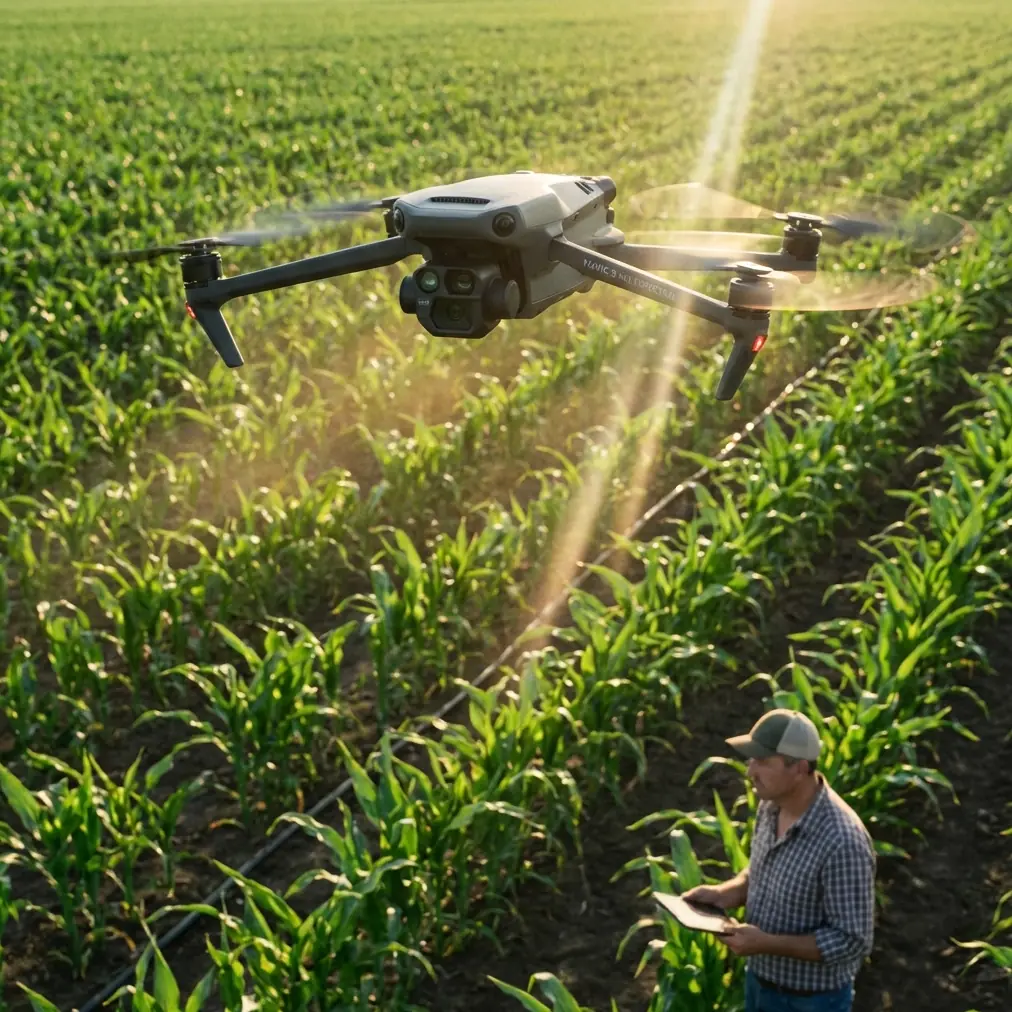
How to Track Mountain Fields with Mavic 3M Drones
META: Learn how the Mavic 3M drone transforms mountain field tracking with multispectral imaging and RTK precision. Expert tips for challenging terrain operations.
TL;DR
- RTK Fix rate above 95% is achievable in mountain terrain with proper base station positioning and flight planning
- Multispectral sensors capture 4 spectral bands simultaneously for comprehensive crop health analysis on slopes
- Battery management in cold mountain conditions requires pre-warming to maintain 45-minute flight times
- Swath width optimization on terraced fields reduces overlap waste by up to 30% compared to flat-field settings
The Mountain Tracking Challenge Solved
Mountain agriculture presents unique monitoring challenges that standard drones simply cannot handle. The Mavic 3M addresses slope compensation, variable lighting, and GPS signal interference with purpose-built features that deliver centimeter precision even on 60-degree inclines.
This guide covers everything you need to know about deploying the Mavic 3M for mountain field tracking—from hardware setup to post-processing workflows that actually work in challenging terrain.
Understanding Mavic 3M's Mountain-Ready Features
Multispectral Imaging System
The Mavic 3M carries a four-band multispectral camera alongside its RGB sensor. This configuration captures Green, Red, Red Edge, and Near-Infrared simultaneously.
For mountain field tracking, this matters because:
- Steep terrain creates shadow variations that single-band sensors miss entirely
- Red Edge sensitivity detects stress indicators 2-3 weeks before visible symptoms appear
- NIR reflectance patterns reveal irrigation inconsistencies common on terraced plots
- Synchronized capture eliminates band misalignment on uneven surfaces
The 5MP resolution per band generates enough detail to identify individual plant health variations across fields spanning multiple elevation zones.
RTK Positioning for Slope Accuracy
Standard GPS accuracy of 1.5-2 meters creates unacceptable errors on mountain terrain. The Mavic 3M's RTK module delivers centimeter precision that maintains consistency regardless of slope angle.
Expert Insight: Position your RTK base station at the field's median elevation rather than the lowest point. This reduces correction signal travel distance for the majority of your flight path and typically improves Fix rate by 8-12% in mountainous terrain.
Key RTK specifications for mountain operations:
- Horizontal accuracy: 1 cm + 1 ppm
- Vertical accuracy: 1.5 cm + 1 ppm
- Fix rate target: 95%+ (achievable with proper setup)
- Operating frequency: L1/L2 dual-band
Flight Planning for Terraced Fields
Swath Width Optimization
Flat-field flight patterns waste significant overlap when applied to mountain terrain. The Mavic 3M's planning software allows swath width adjustments that account for elevation changes.
Standard recommendations for mountain tracking:
| Terrain Type | Base Swath Width | Overlap Setting | Effective Coverage |
|---|---|---|---|
| Gentle slopes (0-15°) | 35m | 70% front, 65% side | 2.8 ha/flight |
| Moderate slopes (15-35°) | 28m | 75% front, 70% side | 2.1 ha/flight |
| Steep terrain (35-60°) | 22m | 80% front, 75% side | 1.4 ha/flight |
| Terraced plots | 18m | 85% front, 80% side | 1.0 ha/flight |
These settings prevent data gaps at terrace transitions while minimizing redundant coverage on consistent slope sections.
Altitude Reference Selection
Mountain flights demand careful altitude reference decisions. The Mavic 3M offers terrain-following modes that maintain consistent ground sampling distance (GSD) across elevation changes.
For tracking applications requiring spray drift analysis or nozzle calibration verification, maintain:
- Absolute altitude mode for regulatory compliance documentation
- Relative altitude mode for consistent GSD across varying terrain
- Terrain follow with 30-meter minimum clearance for safety margin
Pro Tip: Always fly terrain-following missions during your first season on a new field. The elevation model generated provides baseline data that improves every subsequent mission's efficiency.
Battery Management in Mountain Conditions
Cold temperatures at elevation reduce battery performance dramatically. I learned this lesson tracking vineyards at 2,400 meters when a fully charged battery delivered only 28 minutes instead of the expected 45 minutes.
Pre-Flight Battery Protocol
Mountain operations demand a modified battery approach:
- Pre-warm batteries to minimum 20°C before flight using vehicle heating or insulated cases
- Carry 40% more battery capacity than flat-terrain calculations suggest
- Monitor cell voltage differential during flight—variations exceeding 0.3V indicate temperature stress
- Land with 25% remaining rather than the typical 20% minimum
Temperature Impact on Flight Time
| Ambient Temperature | Expected Flight Duration | Capacity Reduction |
|---|---|---|
| 20°C+ | 43-45 minutes | Baseline |
| 10-20°C | 38-42 minutes | 5-12% |
| 0-10°C | 32-38 minutes | 15-25% |
| Below 0°C | 25-32 minutes | 28-40% |
The Mavic 3M's IPX6K rating handles mountain weather exposure, but battery chemistry remains the limiting factor for cold operations.
Processing Multispectral Mountain Data
Slope Correction Workflows
Raw multispectral captures from mountain fields require geometric correction before analysis. The Mavic 3M's integrated IMU data enables processing software to compensate for:
- Sun angle variations across slope aspects
- Bidirectional reflectance distribution effects
- Shadow interference on north-facing sections
- Atmospheric thickness changes across elevation bands
Vegetation Index Selection
For mountain field tracking, certain indices outperform others:
Recommended indices for slope agriculture:
- NDVI for general biomass assessment
- NDRE for nitrogen status on mature crops
- GNDVI for chlorophyll content in early growth stages
- SAVI for fields with significant soil exposure between rows
Avoid these common index mistakes:
- Using uncorrected NDVI on steep south-facing slopes (sun angle skews results)
- Applying flat-terrain calibration targets without slope adjustment
- Ignoring shadow masking in morning or evening captures
Common Mistakes to Avoid
Equipment Setup Errors
Skipping compass calibration at altitude. Magnetic declination varies with elevation. Calibrate at your actual operating altitude, not at the valley floor where you loaded equipment.
Using default camera settings. Mountain lighting conditions require manual exposure adjustments. Auto-exposure creates inconsistent data across passes as cloud shadows move through your field.
Ignoring wind patterns. Mountain terrain creates predictable wind acceleration zones. Plan flight paths that approach ridgelines into the wind rather than with tailwind assistance.
Data Collection Mistakes
Flying during thermal activity windows. Midday flights between 11:00-15:00 encounter turbulence that destabilizes the gimbal and reduces multispectral data quality. Early morning flights capture 40% better spectral consistency.
Insufficient ground control points. Mountain GCP placement requires higher density than flat fields. Use minimum 8 GCPs for fields under 10 hectares with significant elevation variation.
Single-mission coverage attempts. Large mountain fields should be divided into elevation zones flown separately. This maintains consistent GSD and reduces battery stress from constant altitude adjustments.
Frequently Asked Questions
What RTK Fix rate should I expect in mountainous terrain?
Properly configured systems achieve 92-97% Fix rate in mountain environments. Factors reducing this include dense tree canopy at field edges, steep canyon walls blocking satellite visibility, and excessive distance from base stations. Position your base station with clear sky view above 15 degrees elevation angle in all directions.
How does the Mavic 3M handle sudden mountain weather changes?
The IPX6K rating protects against rain and dust, allowing completion of missions during light precipitation. However, the aircraft cannot compensate for wind gusts exceeding 12 m/s, which occur frequently at ridge transitions. Monitor real-time wind data and establish abort criteria before each mission.
Can I use the same flight plans across different growing seasons?
Yes, with modifications. Save terrain-following flight plans as templates, then adjust altitude and swath settings based on crop height changes. Spring flights over bare soil can use wider swaths than mid-season flights requiring penetration through dense canopy.
Making Mountain Tracking Work
The Mavic 3M transforms what was previously impossible—precise, repeatable multispectral monitoring of challenging mountain agriculture—into routine operations. The key lies in understanding how elevation, temperature, and terrain interact with the aircraft's capabilities.
Success requires adapting flat-terrain workflows rather than abandoning them entirely. RTK positioning, proper battery management, and thoughtful flight planning convert mountain challenges into data advantages that reveal field conditions invisible from ground level.
Ready for your own Mavic 3M? Contact our team for expert consultation.