
Tracking Coastlines in Complex Terrain with the Mavic 3M
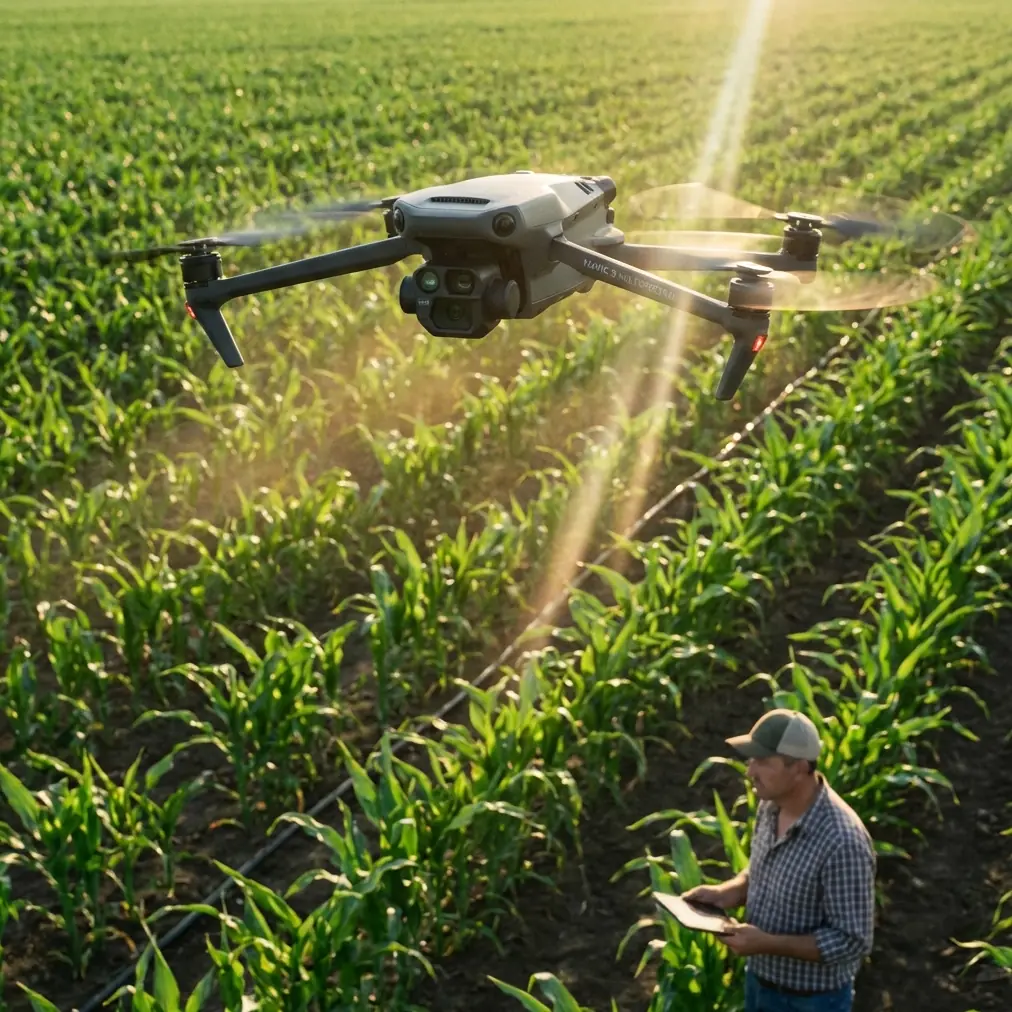
Tracking Coastlines in Complex Terrain with the Mavic 3M: Practical Field Habits That Matter
META: A field-focused how-to for using the Mavic 3M in complex coastal terrain, with operational lessons drawn from high-altitude drone testing and data-driven flight control principles.
Coastline work looks simple on a map. In the field, it rarely is.
Headlands distort wind. Salt mist settles where you do not expect it. Elevation can change abruptly between beach, bluff, access road, and cliff edge. If you are flying a Mavic 3M to document shoreline vegetation stress, erosion patterns, drainage influence, or habitat transitions, success depends less on broad marketing claims and more on disciplined field procedure.
That is the frame I use when teaching coastal survey teams. The Mavic 3M is often discussed for its multispectral value, and rightly so. But on difficult coastlines, the quality of a mission often comes down to pre-flight discipline, telemetry awareness, and a sober understanding of what environmental stress does to aircraft performance and data consistency.
A useful way to think about this came from a recent high-altitude test campaign in Yunnan. At Laping Fenghua General Airport, a site sitting at 2524.8 meters above sea level, six drones of different classes were flown in structured trials after 11 days of closed testing. The program did not just showcase takeoff and landing. It examined image/data transmission, detection and positioning, maximum takeoff weight, level-flight speed, hover ceiling, and endurance. Those categories matter far beyond plateau logistics. They are exactly the same performance buckets that decide whether a coastal mapping mission is clean, repeatable, and trustworthy.
For Mavic 3M users tracking coastlines in complex terrain, the lesson is straightforward: treat every shoreline mission like an environmental validation exercise, not a casual photo flight.
1) Start with cleaning, not calibration
Before you think about RTK fix rate, swath width, or waypoint spacing, clean the aircraft.
This sounds basic. It is not optional.
Coastal work introduces salt particles, fine grit, and moisture residue that can interfere with vision systems, body vents, prop balance, and sensor windows. My preferred sequence is simple:
- Wipe the airframe with a clean, non-abrasive cloth
- Inspect propeller leading edges for chips or salt buildup
- Check sensor windows and camera glass carefully
- Clean landing surfaces and folding arm joints
- Confirm battery contacts are dry and free of residue
Why begin here? Because the safety stack on a modern aircraft depends on unobstructed sensing and stable mechanical behavior. Even a slight film on a vision sensor or residue around a moving component can complicate low-altitude recovery near rock walls or scrub-covered slopes.
This is also where many teams make a category error. They assume cleaning is about appearance; in reality, it protects flight stability and data integrity. If you are trying to compare multispectral passes over the same shoreline corridor week after week, tiny avoidable inconsistencies add up.
2) Read terrain the way an aircraft “feels” it
On a coast, the pilot sees scenery. The aircraft experiences gradients.
A mission that begins from a sheltered turnout can move within seconds into accelerated crosswind, rotor turbulence off a cliff face, and changing lighting over reflective water. That is why the Yunnan test categories are so relevant. Testing level-flight speed, hover limits, and endurance under environmental stress is not just for large industrial platforms. It mirrors the practical questions every Mavic 3M operator should ask before starting a coastal run:
- Will the aircraft hold a consistent line as wind shifts around terrain?
- Is the planned groundspeed still realistic once headwind increases?
- Will hover performance remain stable at a cliff-edge waypoint?
- Does battery planning include a margin for difficult return legs?
In complex terrain, the return is often harder than the outbound leg. A route that looks efficient in mission planning software may become inefficient once the aircraft encounters sidewash along a bluff or has to climb over uneven relief on the way home.
For that reason, I advise dividing a long shoreline into shorter, environmentally coherent segments rather than one ambitious continuous pass. This often improves data consistency more than trying to maximize area in a single sortie.
3) Build a verification hop before the real mission
One of the best training references in the source material is surprisingly modest: a DJI education exercise where the aircraft lifts off, rises another 50 centimeters to about 130 centimeters above ground, then gradually increases forward pitch in a loop, updating the variable every 0.05 seconds until maximum programmed value is reached, before hovering and landing.
That is not a coastal mapping workflow by itself, of course. But it contains a principle many professional teams underuse: verify response progressively and observe live data before committing to the full mission.
For Mavic 3M shoreline operations, I recommend a short verification hop with the same logic:
- Take off and hold a stable hover.
- Climb to a modest safe altitude clear of spray and obstacles.
- Advance slowly into the intended track direction.
- Watch aircraft response, live transmission quality, and positioning stability.
- Pause in hover and assess drift, correction behavior, and pilot workload.
This miniature test tells you a great deal. If the aircraft is already working harder than expected to maintain line, your planned swath width or speed may be too aggressive. If your RTK fix rate is slow to stabilize, do not assume it will improve once you are farther downrange beside a rock face or embankment.
The teaching document also highlights the value of real-time access to variables and onboard data such as battery status, TOF height, temperature, and acceleration. That mindset translates directly to professional fieldwork. Do not just launch and hope. Observe. Let the aircraft tell you what the environment is doing.
4) Protect positional accuracy where the coast is least forgiving
Centimeter precision is one of the reasons teams select the Mavic 3M for corridor-style environmental work. But coastal terrain creates several subtle traps.
First, irregular topography can degrade geometry for positioning if you fly too close to steep faces for too long. Second, reflective water surfaces and narrow ledges can make altitude judgment less intuitive for pilots, especially in mixed light. Third, access sites are often compromised launch points: small, uneven, or exposed.
This is where a strong RTK fix rate discipline matters. Do not treat RTK as a checkbox. Confirm stability before the mission leaves the immediate launch envelope. If the fix quality is inconsistent, the error can ripple through shoreline edge interpretation, vegetation boundary analysis, and repeatability across survey dates.
A practical rule: if the mission objective depends on comparing change over time, postpone rather than accept weak positional confidence. The cost of a delayed mission is usually lower than the cost of bad baseline data.
5) Match swath width to terrain complexity, not convenience
Many operators set swath width for efficiency, then try to force the terrain to fit the plan. Coastlines punish that habit.
A wide swath can be reasonable over open, uniform sections. It becomes risky when the route includes coves, sea walls, dune breaks, steep access paths, or broken vegetation zones. In those places, tighter swath planning usually gives cleaner overlap and fewer interpretation gaps, especially in multispectral analysis.
The operational significance is simple: a shoreline is not one landscape. It is a chain of micro-environments. Treating it as a uniform corridor may save minutes in the field and cost hours in processing or reflight later.
If your mission includes adjacent agricultural land near the coast, the same logic overlaps with spray drift analysis and vegetative stress review. Buffer zones between crop edge and shoreline are often where multispectral data becomes most useful. But only if the track design respects the actual shape of the land-water interface.
6) Think about endurance the way test engineers do
The MIT “Jungle Hawk” story in the source material is about a very different aircraft class: a 68-kilogram platform with a 7.3-meter wingspan, powered by a 5-horsepower gasoline engine, built to remain airborne for 5 days at around 4500 meters. That aircraft is not relevant to the Mavic 3M as a direct comparison.
Its design lesson is relevant, though.
The team moved away from solar because seasonality, latitude, and battery burden made the concept less dependable for the mission. They prioritized what would work consistently in real operating conditions, not what sounded elegant on paper.
That is a useful reminder for Mavic 3M coastal operators. Endurance planning should be based on environmental realism, not brochure optimism. Headwind on the return leg, vertical relief, repeated turns around irregular shore features, and hover pauses for assessment all reduce practical mission time.
So when you calculate battery needs, build around actual route friction:
- climbing segments
- wind exposure
- relines and partial re-runs
- conservative reserve for recovery
This sounds obvious, but many failed coastal missions start with a hidden assumption that the site will behave like an inland open field.
It will not.
7) Use multispectral intentionally, not decoratively
The Mavic 3M earns its place in coastal work when the mission has a real analytical question. Examples include:
- tracking salt stress gradients in shoreline vegetation
- identifying drainage-driven plant vigor changes
- monitoring disturbed strips along access paths
- comparing sediment-affected wet areas over time
That is where multispectral capture stops being a nice add-on and becomes the core of the operation. But analytical value depends on repeatability. The route must be flown in a way that controls enough variables to make one survey comparable to the next.
This is why the high-altitude Yunnan tests are such a useful reference point, even though they were not about a Mavic 3M specifically. A serious flight program examines stability, positioning, speed envelope, and endurance under stress before scaling deployment. Coastal practitioners should adopt the same attitude at a smaller operational scale.
8) Keep your launch-and-recovery area boring
When terrain is dramatic, your launch zone should be the opposite.
Avoid unstable cliff edges, loose sand with rotor wash issues, or cramped ledges where rapid recovery becomes awkward. If the only available site is exposed, reduce mission ambition and tighten your safety margins. If your team is training newer pilots, this is one area where discipline matters more than confidence.
The Mavic 3M may be compact, but shoreline recovery errors often happen at the most routine moment: the flight is essentially done, battery is lower, attention relaxes, and the wind near the ground is less predictable than expected.
A boring takeoff area is an advantage.
9) Train the mission before you need the data
One final point from the educational programming reference deserves more attention than it usually gets: the benefit of viewing data in real time while a flight logic sequence runs. That habit creates better operators because it shifts focus from stick movement to aircraft behavior.
For coastline teams, training should include:
- short acceleration-and-hover drills
- controlled line tracking in crosswind
- repeated waypoint entry and exit near elevation change
- post-flight review of battery draw and stability patterns
This is not glamorous training. It is useful training.
And if your team needs a field checklist tailored to shoreline multispectral work, you can request one here: message the operations desk.
A practical workflow for Mavic 3M coastal tracking
If I had to compress all of this into one working sequence, it would look like this:
Pre-flight
- Clean aircraft surfaces, sensors, and propellers
- Confirm battery contacts and folding parts are free of salt or grit
- Review wind against terrain, not just regional forecast
- Verify RTK readiness and mission geometry
On-site validation
- Launch
- Hover and assess positional stability
- Run a short forward verification segment
- Watch live transmission and response before full mission start
Mission execution
- Fly in shorter coastal segments where terrain changes sharply
- Adjust swath width to shoreline complexity
- Preserve battery margin for difficult return conditions
- Pause when data or aircraft behavior suggests environmental stress
Post-flight
- Inspect for salt deposition and abrasive residue
- Review route consistency, battery behavior, and overlap quality
- Refine the next mission from actual site behavior, not assumptions
Good coastline work with the Mavic 3M is less about pushing limits than respecting them. The strongest operators are not the ones who make the aircraft look effortless. They are the ones who notice early signs of environmental friction, adapt route logic, and protect data quality from preventable errors.
That is what turns a flight into a defensible survey.
Ready for your own Mavic 3M? Contact our team for expert consultation.