
Mavic 3M for Dusty Coastal Mapping: What Actually Matters
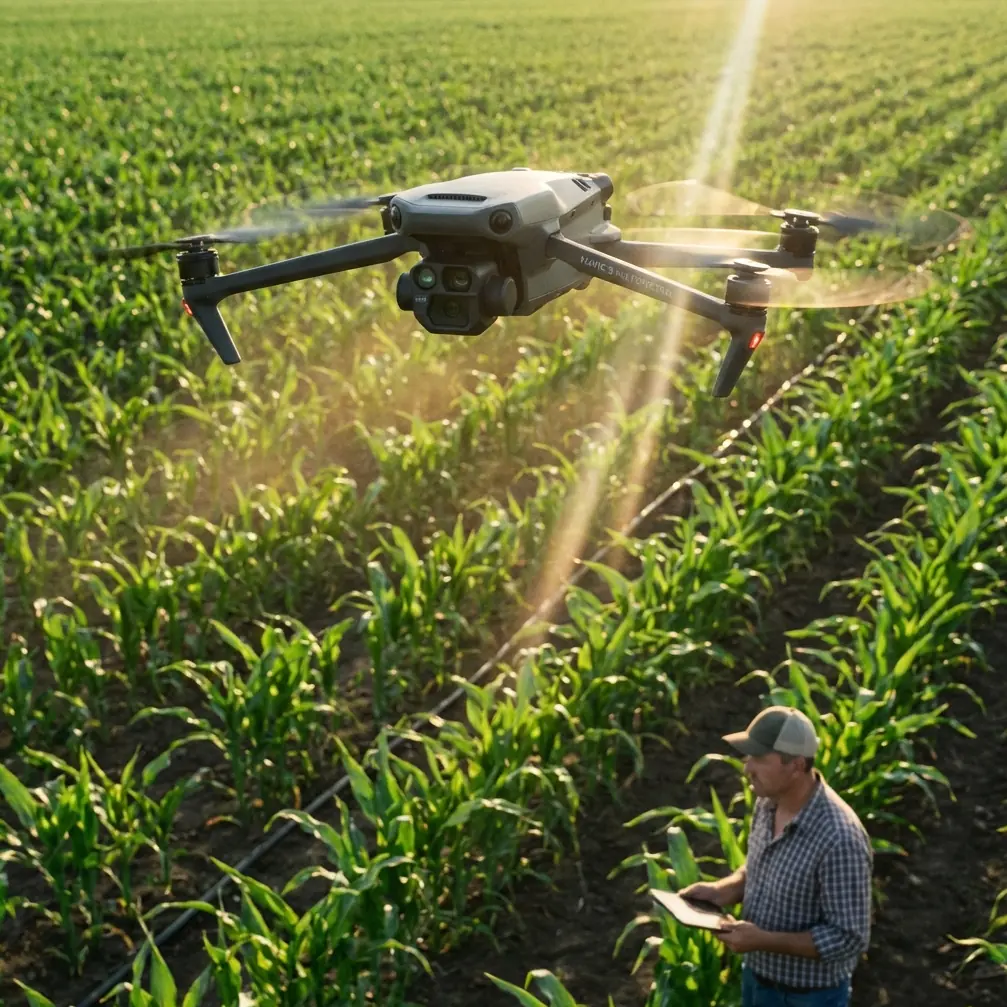
Mavic 3M for Dusty Coastal Mapping: What Actually Matters in the Field
META: A technical review of Mavic 3M best practices for dusty coastal mapping, with field workflow insights on training, logistics, multispectral operations, RTK reliability, and interference handling.
The Mavic 3M often gets discussed as a sensor platform. That is only half the story.
For coastal work in dusty environments, the aircraft is really part of a system: pilot skill, crew coordination, battery turnover, route planning, and the ability to diagnose small faults before they become a wasted field day. If you are tracking shoreline change, dune health, sediment movement, or stressed vegetation near exposed coastal corridors, the practical question is not whether the Mavic 3M can capture useful data. It can. The more useful question is whether your operating method is strong enough to keep data quality consistent when the site is abrasive, windy, and electrically messy.
That is where the reference material points in a surprisingly clear direction. One source centers on youth UAV education and emphasizes hands-on disassembly, assembly, soldering, circuit layout, and computer-based flight data analysis. Another focuses on agricultural drone operations and argues that mission success depends on support structure: clear pre-job communication, a three-person team, disciplined preflight checks, and enough battery and charging capacity to avoid constant stoppages. These are not abstract ideas. They map directly onto how a Mavic 3M should be deployed for repeatable coastal survey work.
Why the Mavic 3M fits coastal environmental work
The Mavic 3M is most interesting when the mission depends on more than visual imagery. In shoreline management, visible-light orthomosaics are useful for documenting erosion edges, debris lines, access paths, and infrastructure exposure. But multispectral capture adds a different layer. It can help operators monitor vegetation vigor in dune systems, saltmarsh margins, restoration plots, and buffer zones where plant health indicates changing salinity, burial, stress, or disturbance.
That matters because coastal change is rarely just about sand lines. Vegetation response is often one of the earliest operational indicators that a site is shifting. A multispectral workflow gives environmental teams a way to compare repeat missions over time instead of relying on impressionistic site visits.
Still, sensor capability alone does not protect a mission from field problems. Dust, glare, unstable GNSS conditions, and intermittent electromagnetic interference can quietly degrade outputs long before the aircraft raises a major warning.
The real bottleneck is usually not the aircraft
One of the most useful facts in the source material comes from the agricultural operations document: one aircraft is typically best supported by three people—a pilot, a logistics support person, and an observer. That recommendation was written for plant protection work, but the logic holds beautifully for Mavic 3M coastal surveys.
For a dusty shoreline mission, the roles translate like this:
- Pilot: manages aircraft status, airspace decisions, mission parameters, and contingency response.
- Observer: watches for birds, walkers, vehicles, cables, changing gust patterns, and launch/landing hazards.
- Support lead: handles batteries, storage media discipline, lens and airframe cleaning, waypoint file management, and mission notes.
Small teams often try to compress all of that into one or two people. The result is predictable: battery swaps get rushed, logs become incomplete, lens contamination gets missed, and a weak RTK fix or inconsistent image overlap is only discovered back in processing.
Coastal mapping rewards boring discipline. The crew model matters because it preserves attention.
The same source also states that agricultural operators often recommend at least 8 battery sets, 3 charging stations, and 1 generator to sustain efficient electric aircraft fieldwork. A Mavic 3M will not require that exact support footprint in every mapping job, but the operational lesson is sharp: energy logistics determine productivity. On a remote coast, especially where vehicle access is poor or road conditions are inconsistent, your output rate is constrained by charging and transport long before it is constrained by camera performance.
If you are covering several shoreline segments in a day, battery rotation planning is not a side issue. It is part of survey design.
Dust changes your maintenance rhythm
Dusty coastal sites are mechanically deceptive. They do not look like inland quarries or desert construction zones, so crews sometimes underestimate contamination risk. But fine salt-laden particles can settle on motor housings, fold joints, landing surfaces, gimbal interfaces, and optics. Repeated takeoffs from loose ground make it worse.
The agricultural reference stresses meticulous checks before launch and again during battery and payload servicing intervals: motors, propellers, GPS installation status, battery levels, controller power, and abnormal heating in cables and power components. For Mavic 3M operators, this mindset is exactly right.
A proper dusty-shoreline rhythm should include:
- visual inspection of propeller edges after every few sorties;
- quick cleaning of the body and sensor area before relaunch;
- confirmation that vent areas are not accumulating fine debris;
- thermal check by touch and telemetry review after repeated flights;
- verification that image sharpness and exposure consistency have not shifted due to residue on optics.
This is not glamorous work. It is what preserves data integrity.
A surprising number of multispectral problems blamed on processing are really field contamination issues. A slightly compromised optical path can quietly reduce consistency across a long dataset.
Training quality matters more than many teams admit
The youth UAV education document includes a detail that deserves more attention in commercial operations: students learn by physically taking systems apart, assembling mechanical components, soldering circuits, designing wiring layouts, and analyzing flight data with computers. The point is not that every Mavic 3M pilot should become a bench technician. The point is that hands-on technical literacy produces better judgment under pressure.
That source also mentions a parent organization with more than 40 patents and recognition as an AOPA-China approved civil UAV pilot training institution in Shenzhen. Operationally, that signals a training philosophy built around structured competence rather than just basic stick time.
For Mavic 3M coastal mapping, this has direct significance. Crews who understand system architecture usually troubleshoot faster when they see anomalies such as:
- unstable compass behavior near steel railings, seawalls, or utility boxes;
- reduced RTK fix reliability near communications infrastructure;
- inconsistent telemetry after a hurried antenna setup;
- repeated warnings caused by poor ground station positioning rather than aircraft failure.
In other words, field resilience starts with technical understanding, not just licensing.
Handling electromagnetic interference with antenna adjustment
Dust is visible. Electromagnetic interference is not. Along coastlines, you can encounter it around ports, telecom sites, coastal roads, fences, navigation aids, rooftop survey starts, and utility corridors running parallel to the shore.
This is where crews can lose time chasing the wrong problem.
If your Mavic 3M is showing weak link quality, erratic telemetry confidence, or a stubbornly inconsistent RTK Fix rate, do not start by assuming the aircraft is at fault. First evaluate the ground setup. Antenna orientation is a practical first-line adjustment. The aim is simple: maintain a cleaner communication geometry between controller, aircraft, and any RTK-related support workflow while reducing the chance that the antenna is poorly aligned or partially shadowed by the operator’s body, vehicle roofline, or nearby metallic structures.
In practical terms:
- Move the pilot station away from vehicles, guardrails, and electrical cabinets.
- Re-orient controller antennas deliberately rather than casually unfolding them.
- Keep the controller at a stable chest-height working position instead of low at the waist.
- Avoid launching right beside steel barriers or reinforced concrete edges if there is a better option.
- If RTK behavior remains erratic, relocate the takeoff point rather than forcing the mission from a compromised spot.
That last decision is often the difference between a clean centimeter-precision dataset and a frustrating afternoon of inconsistent georeferencing.
Centimeter precision is one of the major reasons teams choose the Mavic 3M for mapping. But precision is not a permanent property that travels with the aircraft no matter what the site is doing. It is a field condition you earn through setup discipline.
Pre-mission communication is not paperwork
Another detail from the agricultural document deserves to be borrowed outright: before arriving at a work site, operators should confirm acreage, terrain, obstacle density, access conditions, and local support for charging and task flow. Replace acreage with shoreline length or survey blocks, and you have the same planning model for coastal mapping.
For Mavic 3M projects, the equivalent pre-brief should confirm:
- total coastline length to be captured;
- launch and recovery locations;
- obstacle concentration, including poles, signage, towers, cables, and vegetation;
- ground access for equipment transport;
- dust severity and expected wind windows;
- whether local facilities can support battery charging or sheltered staging.
When crews skip this stage, they often discover too late that the elegant mission plan in the office does not fit the site. Maybe the beach access gate is farther from the work zone than expected. Maybe the road into the dune edge is too soft for normal vehicles. Maybe the strongest interference source is right at the chosen launch point. Maybe the observer cannot maintain line of sight from the intended route.
Pre-mission communication is operational design, not administration.
What multispectral users should watch in coastal runs
Because the focus here is the Mavic 3M rather than a general drone article, it is worth calling out where coastal conditions specifically stress a multispectral workflow.
First, repeatability matters more than raw image volume. If you are monitoring vegetation response over time, keep altitude, overlap, solar timing, and route logic as consistent as possible across visits. Dust and haze can change contrast quickly, so recording ambient conditions matters.
Second, protect your RTK Fix rate. A visually acceptable map can still be a weak analytical product if geospatial consistency drifts between missions.
Third, think about swath width operationally, not just geometrically. A wider route pattern may look efficient on paper, but along irregular shorelines it can increase turning exposure, crosswind correction demands, and missed edge detail. Coastal surveys often benefit from mission segmentation rather than one oversized block.
Fourth, keep sensor cleanliness under control. A multispectral mission compromised by residue is not rescued by good intentions in processing.
Lessons from an imaging contest that still apply to technical operations
The DJI Sky City imaging contest may seem unrelated to survey work at first glance. It announced winners for Best Aerial Video, Best Handheld Video, and Best Photo of the Year, with top-category prize packages valued at more than 100,000 yuan, including platforms such as the Inspire 3 and Mavic 4 Pro. That is obviously an imaging and creative milestone, not a mapping manual.
Yet it still offers a useful signal for Mavic 3M operators.
DJI’s ecosystem keeps rewarding image quality, mission execution, and operator craftsmanship. Even when your end product is not cinematic work but coastal environmental intelligence, the same discipline applies: framing becomes flight line design, consistency becomes data repeatability, and craft becomes operational rigor. The best outputs rarely come from simply owning advanced hardware. They come from repeatable method.
That principle is easy to overlook in commercial settings where teams are under pressure to capture more ground each day.
A field-ready operating model for Mavic 3M on the coast
If I were building a repeatable Mavic 3M workflow for dusty coastal tracking, I would keep it simple and strict:
- Use a three-person team whenever the site is large, windy, or logistically awkward.
- Conduct pre-site calls that confirm access, obstacles, power availability, and transport limitations.
- Build battery turnover around the day’s route instead of improvising in the field.
- Inspect motors, props, batteries, and optics at every sensible interval.
- Treat antenna orientation and launch-point selection as part of interference management.
- Protect RTK consistency and document any degraded fix conditions.
- Standardize multispectral mission timing to preserve comparability over time.
- Train crews beyond flight basics so they can interpret faults rather than merely react to alerts.
If you are developing a site protocol and need a second set of eyes on mission planning, crew structure, or interference mitigation, you can message a field workflow specialist here.
The Mavic 3M is not hard to fly. That is not the challenge. The challenge is producing survey-grade, repeatable coastal intelligence when dust, access friction, and subtle interference conspire to degrade quality one small mistake at a time.
Teams that perform well in this environment tend to share the same habits. They prepare more than they think they need to. They assign roles clearly. They know their aircraft deeply enough to solve small problems on site. They respect battery logistics. And they understand that data quality starts before takeoff, not in the software after landing.
Ready for your own Mavic 3M? Contact our team for expert consultation.