
Mavic 3M for High-Altitude Coastline Tracking
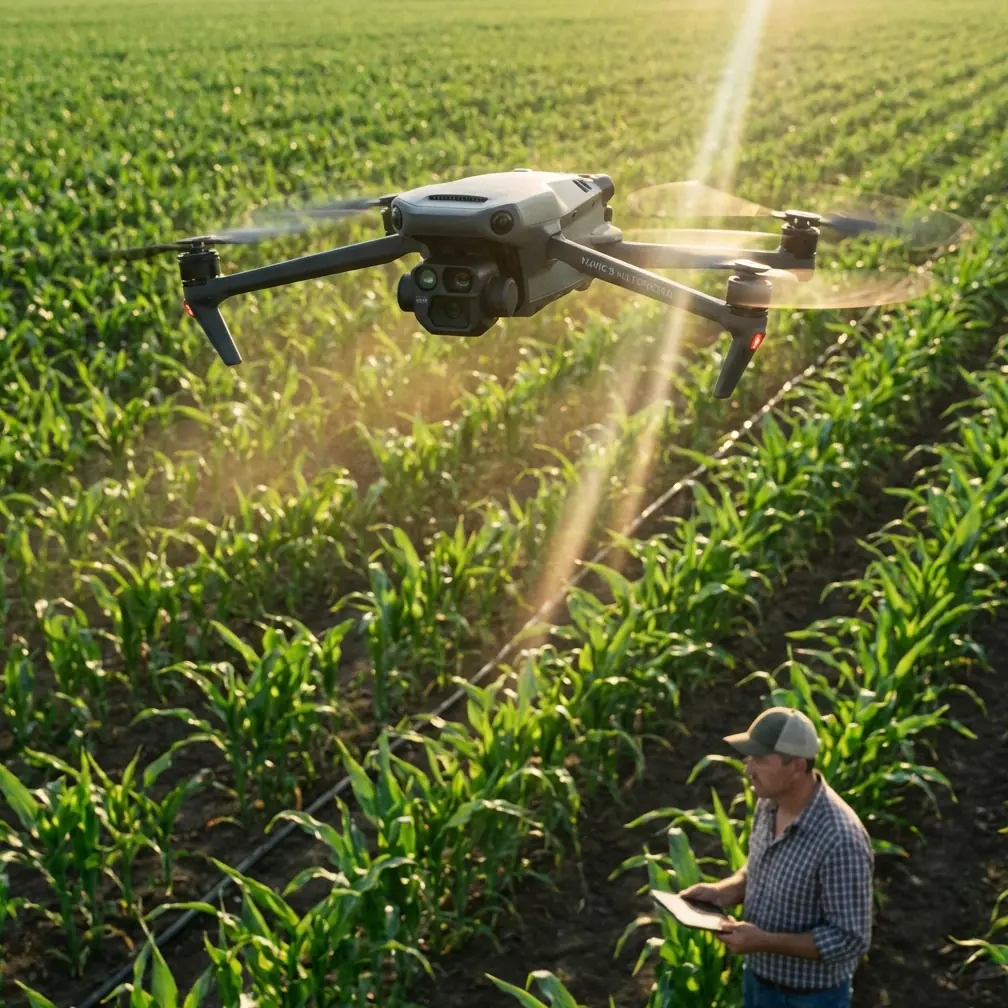
Mavic 3M for High-Altitude Coastline Tracking: What Field Operators Are Actually Teaching Us
META: A practical, field-led tutorial on using the DJI Mavic 3M for high-altitude coastline tracking, with antenna positioning, RTK considerations, multispectral workflow insights, and operator-focused planning.
If you want to understand how to use a Mavic 3M for coastline tracking at altitude, the most useful starting point is not a spec sheet. It is operator experience.
That matters more than ever right now. Commercial UAV Expo has already signaled where the industry conversation is heading for 2026 with its opening keynote, “The View From the Field: What Operators, Pilots, and…”. The reason behind that choice is revealing: the session is built around an industry survey focused on real-world challenges and opportunities in commercial drone operations. In plain terms, the market is tired of polished claims detached from field conditions. Operators are being put at the center of the discussion because they are the ones dealing with signal stability over cliffs, wind shear above the shoreline, shifting light on water, and the practical limits of data collection.
For Mavic 3M users working coastlines, that operator-first shift is exactly the right lens.
The Mavic 3M is usually discussed through an agriculture frame because of its multispectral payload. That is fair, but too narrow. In coastal work, its value shows up in repeatable data capture over long, irregular corridors where the ground is reflective, access is limited, and conventional inspection routes can be slow or unsafe. If you are tracking vegetation stress near dunes, erosion boundaries, saltwater intrusion zones, or shoreline change over time, the aircraft’s multispectral capability becomes less of a niche sensor and more of a measurement tool that helps you see patterns hidden from standard RGB alone.
The challenge is that high-altitude coastline work exposes every weak point in your workflow. Range discipline gets sloppy, positioning errors compound, and even a strong mission plan can break down if your antenna orientation is wrong. Let’s walk through a practical setup that reflects how experienced commercial teams actually operate.
Start with the mission objective, not the aircraft
A coastline mission can mean several very different jobs.
You might be documenting dune vegetation health, building a change-detection baseline, checking marsh stress after storm surge, or creating a repeatable corridor map for an environmental client. The Mavic 3M is strongest when the mission requires consistent multispectral collection tied to location accuracy. That is why terms like RTK fix rate and centimeter precision are not technical decoration. They directly affect whether you can compare today’s flight with next month’s and trust the differences you see.
This is also where the industry survey angle from Commercial UAV Expo matters operationally. A keynote built on field feedback suggests something many consultants already know: the obstacle in commercial drone work is rarely “Can this drone fly?” It is “Can this workflow survive the site conditions and still produce defensible data?” On coastlines, that distinction is huge.
A clean demo flight over a beach is easy. A repeatable high-altitude tracking program that holds alignment over multiple sorties is the real job.
Why the Mavic 3M fits coastline tracking better than many expect
The phrase multispectral tends to push people toward crop analytics. But coastlines present their own spectral questions. Plant vigor in dune systems, moisture transitions in tidal margins, and stressed vegetation along saline intrusion boundaries can all become more visible when you move beyond conventional imagery.
That is where the Mavic 3M earns attention. The operational benefit is not simply “more data.” It is better separation between visually similar surfaces. A shoreline can hide subtle changes in RGB imagery, especially under harsh midday glare or after atmospheric haze softens contrast. Multispectral capture gives you another layer to track those changes with more discipline.
For high-altitude work, this matters because you are often balancing swath width against detail. Flying higher increases coverage and can simplify long corridor planning, but every gain in efficiency introduces tradeoffs in ground sampling and interpretability. The right answer is rarely to fly as high as possible. It is to fly high enough to produce a practical swath width while preserving the consistency needed for trend analysis.
If your client needs a broad environmental overview, a wider swath can make sense. If they need to verify edge movement or stress boundaries, you may need lower passes to preserve confidence in the data. The aircraft can support both. The operator has to choose.
High-altitude coastline planning: what changes from inland mapping
Coastal air behaves differently. Wind can rise sharply as you move from inland staging to open water exposure. Cliffs and bluffs introduce turbulence. Sun angle off water can affect image quality. GNSS conditions may be strong in open areas, but communications discipline becomes more critical because there are fewer natural references for line-of-sight judgment.
A few practical adjustments help.
1. Build for repeatability first
If the mission is monitoring change over time, lock your route logic early. Use the same launch area when possible, preserve consistent track direction, and document altitude, speed, overlap, and timing conditions. A coastline map collected at one altitude and one tide state may be hard to compare with another if the field procedure changes too much between missions.
2. Respect RTK behavior, don’t just enable it
Centimeter precision is only useful when the fix is stable. Teams sometimes treat RTK like a box to tick. On a dynamic coastal site, that is a mistake. Watch RTK fix rate throughout setup and the opening phase of the mission. If the aircraft is not holding a reliable solution before your mapping run begins, your downstream alignment work gets harder fast.
This is especially relevant on long shoreline tracks where small positional inconsistencies can become visible over distance. If you are trying to measure movement at the edge of dunes or vegetation bands, the difference between a stable RTK workflow and a weak one can determine whether your map supports a decision or just creates argument.
3. Think about altitude in relation to shoreline shape
Straight coastlines are forgiving. Broken edges, inlets, rocks, and slope changes are not. At altitude, a wider swath width helps with coverage efficiency, but coastline geometry can create blind assumptions about overlap near the edges of your corridor. Review your mission footprint carefully where the coast bends or elevation shifts.
4. Use environmental timing strategically
The best time to fly is not always the first calm window. Light angle, tide level, and surface reflectivity can all influence multispectral interpretation. If the mission is about comparing vegetation condition over time, consistency in acquisition conditions may matter more than squeezing in a flight at the earliest opportunity.
Antenna positioning advice for maximum range
This is where many otherwise skilled pilots leave performance on the table.
For high-altitude coastline tracking, antenna positioning is not a minor detail. It directly affects signal quality and link stability, especially when you are running long linear missions where the aircraft may stay far out in one direction for an extended period.
The simplest rule: do not point the antenna tips directly at the aircraft. The strongest part of the signal pattern is typically broadside to the antenna faces, not straight off the ends. In practice, that means orienting the controller antennas so their flat sides face the drone’s operating area. If the aircraft is high and far along the coast, tilt the antennas to keep that broadside relationship as the mission progresses.
A few operator habits help here:
- Stand where your body is not blocking the controller.
- Avoid staging immediately behind vehicles, guardrails, or wet concrete structures that can complicate signal behavior.
- If the coastline rises into cliffs or drops away sharply, reposition yourself so the aircraft remains in a cleaner line of sight rather than trying to force the link from a convenient but compromised launch point.
- For long corridor work, pre-walk the pilot station if necessary. A better antenna position can matter more than a few extra meters of nominal altitude.
This is one of those field details that belongs in the same category as the Commercial UAV Expo keynote theme: the real lessons come from operators. Manuals tell you the basics. Repeated coastal missions teach you what actually holds up.
If your team needs a quick field checklist for controller setup and antenna orientation before a shoreline run, send a note here: message our operations desk.
Multispectral workflow tips specific to coastal monitoring
The Mavic 3M becomes more useful when you stop thinking of it as a flying camera and start thinking of it as a repeatable sensing platform.
For coastline work, I recommend a three-layer workflow.
Layer one: broad corridor capture
Use a mission that covers the full shoreline segment with enough overlap to support coherent mosaics and repeat surveys. This creates your baseline. Keep speed conservative enough to protect image quality in wind. The temptation to rush is strong on open stretches, but blur and inconsistent coverage are expensive problems later.
Layer two: targeted anomaly passes
After the main route, fly shorter segments over areas where multispectral contrast suggests stress or change. Dune breaks, marsh transitions, runoff discharge points, and damaged vegetation zones often deserve tighter passes. This gives you context before you reach for a separate site visit.
Layer three: ground truth integration
Even with strong spectral data, do not skip field notes. Coastal environments produce confusing signals. Surface moisture, sand reflectivity, tidal residue, and seasonal growth patterns can all shift the look of the imagery. A few well-documented observations on site can save hours of second-guessing in processing.
What not to borrow from agricultural operations
Some of the common search language around drones includes terms like spray drift, nozzle calibration, and IPX6K because many operators come from agricultural workflows. Those concepts have value in their own context, but they should not be pasted blindly into a Mavic 3M coastline workflow.
Spray drift and nozzle calibration are relevant when discussing application aircraft, not a multispectral mapping mission over coastal terrain. The useful takeaway is methodological, not literal: agriculture has trained drone teams to care deeply about repeatability, environmental conditions, and sensor consistency. Those habits transfer well. The hardware assumptions do not.
IPX6K-style ruggedness language can also distract from the real issue. Coastline operations are hard less because of abstract durability labels and more because salt, wind, glare, and landing surface quality punish sloppy procedures. You protect mission continuity with preparation: clean launch zone, controlled handling, disciplined battery swaps, and post-flight inspection for salt exposure.
A practical field sequence for a high-altitude coastal sortie
Here is the workflow I give teams running first-phase shoreline monitoring with the Mavic 3M.
Before arrival
Define whether the mission is change detection, habitat assessment, erosion tracking, or general reconnaissance. That determines your altitude, overlap, and revisit frequency.
On site
Check wind not just at launch level but visually along the cliff line, beach edge, or exposed water side. Coastlines can hide stronger upper-layer movement than the ground suggests.
Controller setup
Face the anticipated route. Set your position for uninterrupted line of sight. Align antennas so the broad faces, not the tips, are oriented toward the aircraft’s working zone.
Positioning check
Confirm RTK status and give it time to stabilize. Watch the fix rather than assuming it will remain solid because the area is open.
Test leg
Fly a short outbound segment and verify signal quality, image behavior, and aircraft response before committing to the full route.
Main mission
Maintain discipline on speed and route consistency. If conditions shift, stop and relaunch with a revised plan rather than forcing a compromised dataset.
Post-flight
Review a sample of imagery immediately. On coastal jobs, discovering a reflectivity problem or overlap issue back at the office is an avoidable mistake.
Why the industry’s operator-first turn matters for Mavic 3M users
The most interesting part of the 2026 Commercial UAV Expo keynote announcement is not just the title. It is the premise. An industry survey about real-world challenges and opportunities is shaping a keynote designed to center operators in the conversation. That should tell every Mavic 3M user something valuable.
The commercial drone sector is maturing past surface-level product talk. The differentiator is increasingly workflow quality under actual site conditions. For high-altitude coastline tracking, that means the winning teams are not the ones with the loudest claims. They are the teams that know how to hold RTK reliability, manage swath width intelligently, orient antennas for consistent range, and capture multispectral data in a form that can be defended months later.
That is the real field view.
And if you are building a coastline monitoring program around the Mavic 3M, that is exactly the perspective worth following.
Ready for your own Mavic 3M? Contact our team for expert consultation.