
Mavic 3M Tracking Tips for Coastlines: A Field Case Study
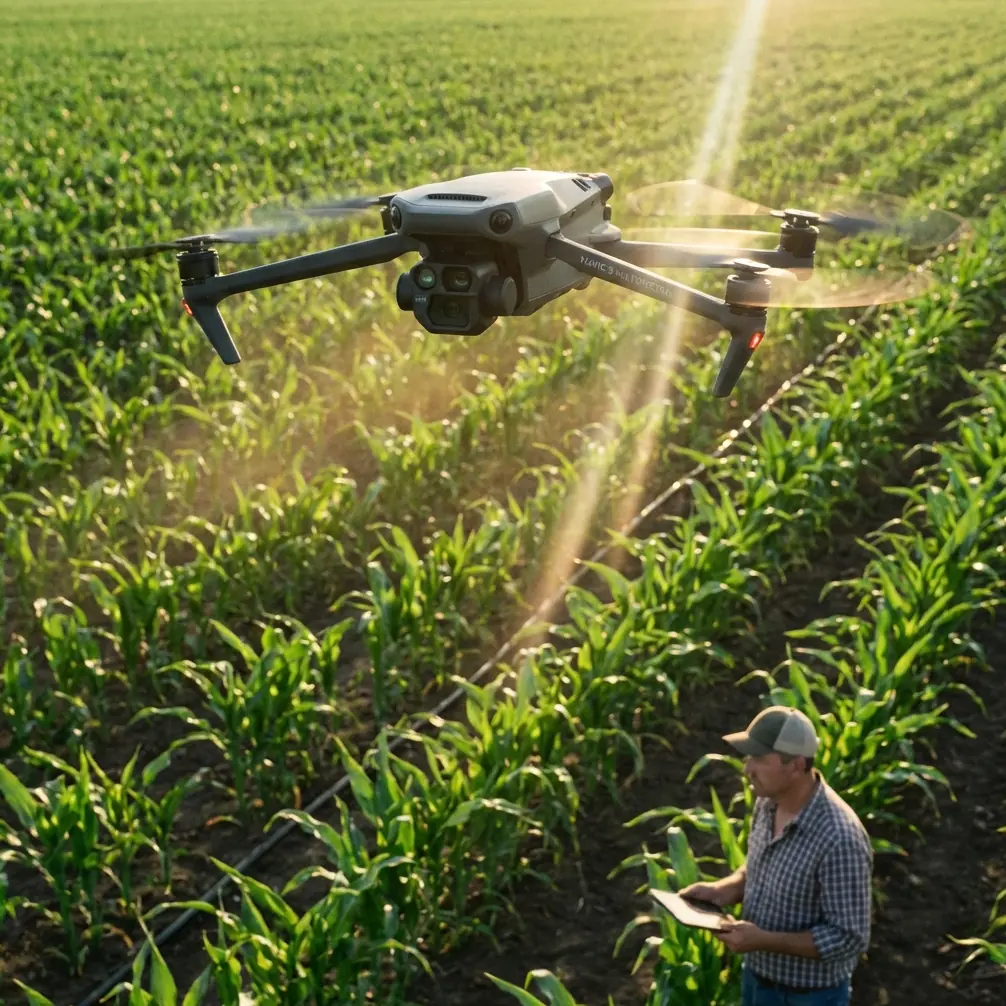
Mavic 3M Tracking Tips for Coastlines: A Field Case Study in Complex Terrain
META: A field-based case study on using DJI Mavic 3M for coastline tracking in complex terrain, with practical insights on multispectral capture, RTK fix rate, centimeter precision, and workflow decisions that matter.
By Dr. Sarah Chen
Coastlines are awkward places to map well. The shoreline itself is unstable. Light shifts off water and wet sand. Cliffs block satellite geometry. Salt mist punishes exposed equipment. And if your job is not just to make a pretty orthomosaic, but to track change over time, small inconsistencies compound fast.
That is where the Mavic 3M starts to separate itself from aircraft that look similar on a spec sheet but behave very differently in the field.
I recently worked through a coastline monitoring scenario involving mixed terrain: rocky outcrops, tidal flats, low vegetation, access roads, and steep embankments with partial GNSS obstruction. The brief was straightforward on paper: produce repeatable, georeferenced data that could support shoreline movement analysis, vegetation health checks, and drainage pattern interpretation. In practice, the site exposed every weakness a mapping workflow can have.
The Mavic 3M handled it well, not because it can stay in the air for extreme durations, but because civilian coastal monitoring rarely rewards brute endurance alone. That distinction matters. Some larger unmanned aircraft used in conflict environments are built around staying aloft for more than 24 hours, carrying sophisticated surveillance payloads and even guided munitions. That operating logic belongs to a completely different class of platform. For coastal surveying, the question is not how long an aircraft can remain airborne in the abstract. The real question is whether each flight delivers precise, consistent, decision-ready data in difficult local conditions. The Mavic 3M is strong precisely because it is optimized for that kind of work.
Why coastline tracking is a better test than a flat farm field
Agricultural mapping is often used as the default proof case for multispectral drones. Coastlines are tougher.
A farm gives you more predictable surfaces, cleaner flight corridors, and often better satellite visibility. A rugged shore gives you reflective water, hard elevation changes, irregular edges, unstable access points, and wind coming from directions the forecast barely hinted at. If the aircraft loses positional consistency near a cliff edge or if image overlap degrades over a bright tidal zone, your comparison across survey dates becomes less trustworthy.
For the Mavic 3M, two features become operationally decisive here: multispectral imaging and reliable high-accuracy positioning. The marketing shorthand usually reduces that to “Multispectral plus RTK,” but on a coastal job those words only matter if they translate into field outcomes.
Multispectral capture matters because a coastline is not just land meeting water. It is a dynamic boundary where plant stress, drainage channels, salt intrusion, and sediment movement leave signatures that standard RGB imagery can miss or blur into ambiguity. RTK matters because shoreline change analysis falls apart if each dataset drifts a little differently. “Close enough” is not enough when your client is trying to distinguish genuine erosion from survey noise.
The mission design: what we changed for this site
This site could not be treated as one giant block mission.
We split it into three corridors. The first followed the upper bluff line where vegetation retreat was visible. The second covered the intertidal transition zone. The third focused on drainage paths and low-lying scrub behind the beach. That segmentation improved flight safety, reduced unnecessary turns over water, and gave us more control over image geometry in the hardest sections.
The Mavic 3M’s compact form factor helped more than expected. On rough coastal access routes, setup time matters. So does the ability to redeploy quickly when sea fog shifts or when local wind at the cliff face differs from conditions at the launch point. A larger platform with longer endurance might appear attractive in theory, but along this coastline, the practical advantage came from fast repositioning and repeatable, tightly managed sorties.
This is where comparisons with other categories of unmanned aircraft can become misleading. Long-endurance systems built for more than 24 hours aloft are engineered for sustained broad-area presence. Coastal environmental work needs something else: efficient launch cycles, accurate geotagging, high-quality low-altitude capture, and minimal friction between flights. The Mavic 3M is not trying to be a high-altitude persistence platform. That is exactly why it fits the job.
Multispectral was not a bonus layer. It was the main diagnostic tool.
The biggest surprise for the client was how much more clearly the multispectral outputs separated healthy coastal vegetation from salt-stressed zones that looked nearly identical in standard imagery.
On the bluff top, RGB images suggested patchy vegetation thinning. The multispectral dataset showed a more structured pattern tied to drainage concentration and salt exposure. That changed the interpretation. Instead of assuming uniform degradation from wind exposure alone, we could identify stress corridors that aligned with runoff and splash zones. In practical terms, that meant the environmental team could prioritize interventions with more confidence.
This is one of the reasons the Mavic 3M has become so useful outside classic row-crop agriculture. The multispectral payload is not only about crop vigor maps. Along coastlines, it helps distinguish between surface appearance and actual vegetative condition. For change detection, that distinction is critical. Bare-looking ground is not always failing ground, and green-looking cover is not always healthy cover.
I am often asked whether multispectral work along a bright shoreline is too messy to be worth the effort. My answer is that it becomes messy only when flight consistency and positioning discipline are weak. The sensor gives you leverage; the workflow must preserve it.
RTK fix rate is not a technical footnote
If you care about shoreline movement, RTK fix rate should be treated as a first-order metric, not background jargon.
On this project, sections near rock walls and abrupt elevation changes were the most likely to challenge satellite geometry. A degraded fix in those zones would ripple through the processing chain, especially when comparing missions across different dates and tide windows. The value of the Mavic 3M in this context was not merely that it supports high-accuracy workflows, but that it allows operators to pursue centimeter precision in a compact platform that can be moved and relaunched quickly as local terrain changes the mission envelope.
Centimeter precision is not just an abstract benchmark. It determines whether a perceived edge retreat is real or whether a vegetation boundary has simply shifted because your positional framework softened at the wrong moment. When a client wants to track coastline instability over time, errors that seem small in one map become expensive when stacked across a season.
For teams building a repeatable program, I recommend logging flight notes that go beyond the imagery itself: launch position, wind direction at cliff top versus beach level, tide stage, cloud transitions, and observed RTK fix behavior in obstructed segments. Those notes often explain dataset variation better than processing settings alone.
If your team is building a coastal monitoring workflow around the Mavic 3M and wants to compare field setups, mission structures, or RTK practices, I suggest sharing details directly through this coastal survey chat link. It is a practical way to troubleshoot real mission variables rather than arguing over generic checklists.
Competitor comparison: where the Mavic 3M actually excels
A lot of drone comparisons are poorly framed. They compare unlike classes of aircraft or pretend every mission values the same thing.
For coastline tracking in complex terrain, the Mavic 3M excels because it balances three things unusually well: deployability, multispectral usefulness, and precision-ready mapping workflow. Some competitors may emphasize ruggedness ratings, larger airframes, or broader payload ecosystems. Others push endurance. Those can be valid strengths. But in this specific scenario, they often come with tradeoffs that coastal teams feel immediately: slower deployment, more demanding logistics, more difficult launches in constrained access areas, or less elegant repeat-flight execution.
The Mavic 3M’s edge is not that it wins every category. It is that it wins the combination that coastline work punishes hardest when absent.
Take repositioning. Along a shore with broken access and irregular topography, losing twenty minutes to move and re-establish your setup can be more damaging than losing a few minutes of nominal endurance. Take data continuity. A compact aircraft with a clean, repeatable workflow is often more valuable than a bulkier system whose “more capability” never fully translates on site because launch windows are short and terrain is unforgiving.
The product focus here is not spray drift, nozzle calibration, or swath width in the agricultural application sense, but those concepts are still useful analogies. Coastal monitoring also depends on disciplined spatial coverage. Swath planning matters because uneven overlap near cliff edges can create weak reconstruction zones. Environmental drift matters too, though here it is not liquid deposition but wind-driven instability and sea-surface reflection affecting image quality and mission shape. Precision workflow habits developed in agricultural operations carry over surprisingly well.
What the processed outputs revealed
After processing, three findings stood out.
First, the upper embankment showed measurable vegetation stress patterns that aligned with runoff routes rather than with simple exposure to prevailing wind. That gave the client a stronger basis for erosion mitigation planning.
Second, the intertidal boundary was more irregular than prior visual inspections had suggested. The repeated geometry from the Mavic 3M flights made that edge easier to track over time without relying purely on subjective field observation.
Third, low-lying vegetation behind the shore showed subtle condition differences that pointed to salt intrusion pathways. Those areas were not obvious in ordinary inspection photography. The multispectral layer made them legible.
This is the core reason I would choose the Mavic 3M again for similar work. It does not merely document the coastline. It helps explain it.
Lessons for operators planning similar missions
The first lesson is to stop treating the coastline as one feature. It is a stack of interacting zones. Design flights accordingly.
The second is to protect positional quality from the beginning. Do not assume processing will rescue weak field discipline. Watch RTK behavior, note terrain-induced anomalies, and build consistency across repeat missions.
The third is to use multispectral with a question in mind. Along a coast, that question might be vegetation stress, salt impact, drainage influence, or early signs of edge instability. If you do not know what you are trying to detect, the extra data can become noise.
The fourth is that compactness is operational value, not a convenience feature. In complex terrain, a platform you can move quickly and relaunch cleanly often outperforms theoretically more capable systems that are cumbersome on real sites.
And finally, resist the lure of dramatic comparisons with aircraft designed for entirely different operating worlds. A platform built for persistent conflict-zone surveillance, carrying advanced reconnaissance suites and staying airborne for over 24 hours, answers a very different problem. Civilian coastal monitoring rewards precision, repeatability, and clarity of interpretation. The Mavic 3M is compelling because it is built around those priorities.
For teams tracking shorelines, dunes, estuaries, and vegetated coastal margins, that is the difference between collecting images and building a monitoring system that holds up over time.
Ready for your own Mavic 3M? Contact our team for expert consultation.