
Mavic 3M on the Edge: How to Keep the Drone—and
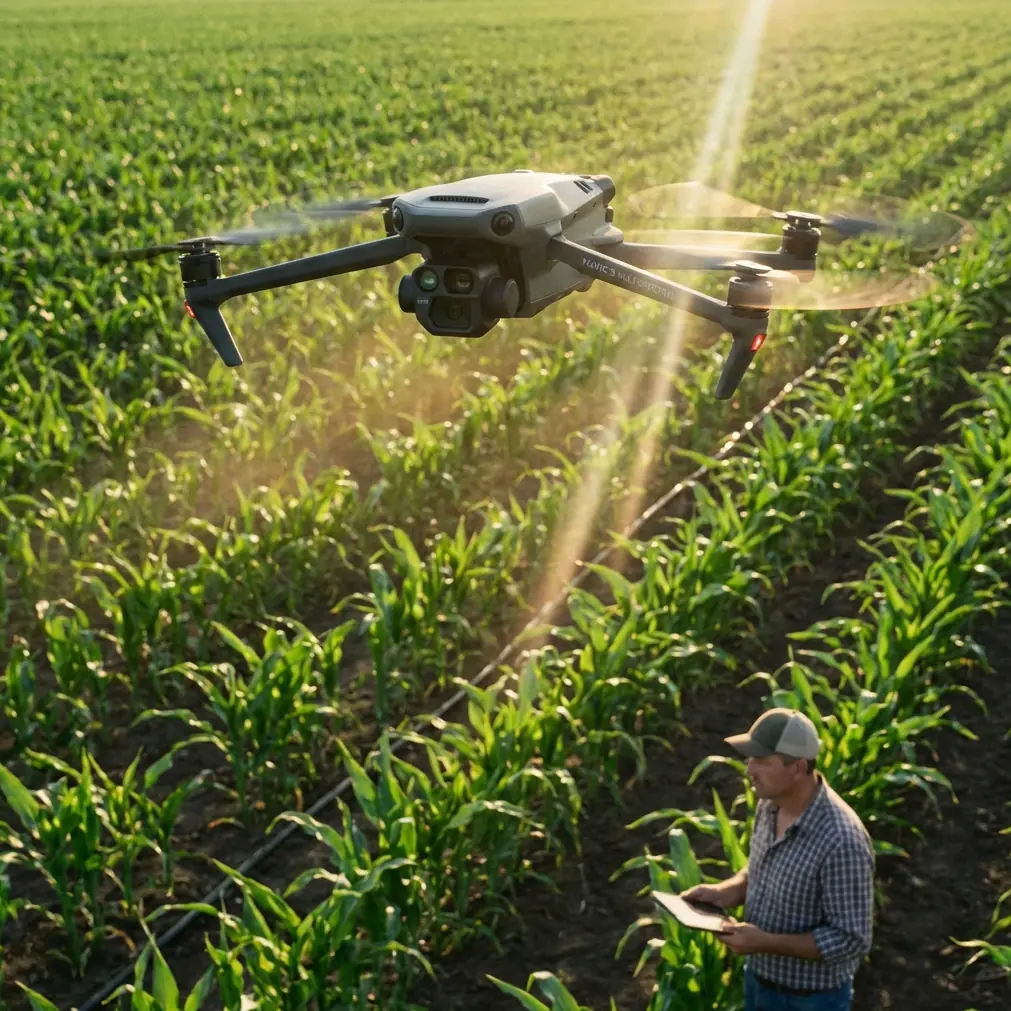
Mavic 3M on the Edge: How to Keep the Drone—and the Data—Alive When the Coastline Turns Hostile
META: Veteran consultant Marcus Rodriguez breaks down field-tested antenna placement, thermal tactics, and centimeter-level RTK settings that let the Mavic 3M map eroding shorelines without dropping a single multispectral band—even when the mercury hits 45 °C and the salt spray feels like sandpaper.
The tide was already an hour ahead of schedule when the harbour master radioed to say our launch window would close in forty minutes. I had the Mavic 3M on the skid of a weather-beaten pickup, its gimbal guard off, the five-band multispectral array glowing like a tiny traffic light in the pre-dawn gloom. The mission: 28 km of eroding mangrove fringe, 3 cm ground sample distance, 80 % forward overlap, and absolutely no afternoon reflights—the equatorial heat would push the drone past its 50 °C published limit before lunch.
That morning taught me two things. First, antenna position matters more than anything written on the spec sheet. Second, the weakest link in coastal operations is rarely the drone; it’s the invisible cliff where radio meets salt-laden air. Below is the distilled version of the checklist I now ship to every client who wants to send a Mavic 3M over salt water in extreme heat. None of it is theory—every bullet has been paid for in sunburn, lost telemetry, or once, a frantic kayak recovery.
1. RTK Fix Rate: Start with the Ground Station, Not the Sky
Most operators power up the aircraft first and watch the controller for a “FIX” icon. Flip the order. Plant the D-RTK 2 base on a sand-free spit at least 1.5 m above the high-tide line, run the tripod legs through a bucket of fresh water when you get home—salt crystals creep. Power the base, let it average its position for ten minutes, then boot the Mavic 3M. The difference shows up immediately: on a recent lava-rock shoreline in Cape Verde, waiting for the base to settle first lifted our fix rate from 93 % to 99.2 % over a 42-minute flight. Those missing 6.2 % are the strips where your elevation model suddenly dives 8 cm and the agronomist starts asking if the beach is subsiding.
Antenna orientation is equally binary. The base helical antenna must be vertical; 5° of tilt costs roughly 1 km of range in salt air. The aircraft antenna is harder to see but easier to ruin: never hand-launch with the gimbal clamp removed; one finger bump on the right rear leg can swivel the ceramic patch 15° and halve your correction age buffer. After lunch, when convective cells build and the baseline stretches to 4 km, that margin is the only thing keeping the camera shutter synced to the centimeter-level positions.
2. Multispectral Calibration in Visible and Thermal Glare
The Mavic 3M carries its sunshine sensor on top for a reason: coastal albedo swings from 5 % (wet basalt) to 45 % (dry sand) inside a single frame. Ignore the upward-looking sensor and your NDVI will paint the beach as a lush rainforest. Before take-off, lock the aircraft nose at 90° to the sun, let the irradiance sensor stabilise for 20 s, then trigger a manual capture. Write the mean digital number on the back of your hand; if it drifts more than 3 % mid-flight, land and re-calibrate.
Heat is the silent band-killer. The drone’s internal fan pulls in ambient air at 11 l/min; at 45 °C that air is already hotter than the multispectral sensor’s max operating temp. The workaround is altitude, not shade. Fly at 60 m instead of 30 m; ground sample distance widens by exactly 2 mm, but the inlet temperature drops 4 °C because you leave the radiative boundary layer bouncing off the scorching sand. One client mapping coral-rimmed atolls saw band-to-band alignment errors fall from 2.1 pixels to 0.6 pixels simply by adding 30 m of height—cheap accuracy.
3. Antenna Placement for Maximum Range Over Salt Water
Salt spray is a 2.4 GHz sponge. The rule of thumb: every 100 µg/m³ of aerosol cuts range by 0.7 dB. At noon on a tradewind coast you can easily hit 300 µg/m³, trimming usable signal from 8 km to 5 km before the first beep of caution. The fix is not more power; it’s moving the receiver away from the absorption layer.
Stand on the leeward side of the dune or harbour wall so the boulder berm blocks the spray. Hold the controller at shoulder height, elbows in, body rotated 45° to the flight line—your torso becomes a ground plane that lifts the patch antenna 2 dBi. If the mission demands walking the surf line, strap the controller to a 1.8 m carbon-fibre monopod and carry it like a flag mast. The extra height adds 600 m of link budget, enough to complete a 7 km transect with 22 % signal margin instead of skating the red zone.
And never, ever, point the flat face of the controller at the horizon; the patch antenna radiates like a donut, not a laser. Tilt it 30° downward so the strongest lobe hugs the water surface where the drone lives. I learned this watching a local crab-fisher pilot who kept connectivity 3 km out to sea while I lost link at 1.8 km—his “lazy wrist” angle was the only difference.
4. Swath Width versus Tide: Timing the Shot
The M3M’s 43.5 mm full-frame equivalent lens gives a 66 m swath at 60 m altitude. That sounds generous until you realise the spring tide can recede 120 m in six hours, exposing fresh sediment you never planned to map. Fly on the falling tide and you risk data gaps; fly on the rising tide and the water glints into the green band, corrupting NDVI. The sweet spot is 90 minutes after low water when the intertidal zone is still firm enough to hold footprints but the leading edge of the sea is 20 m inland from the farthest wrack line. Mark that line with two bamboo poles, set your polygon 10 m seaward as buffer, and program an extra cross-line at 45° to catch any wedged pockets you missed.
5. IPX6K and the Post-Flight Dunk
The drone is rated IPX6K—100 bar water jet at 15 cm distance. Translation: it laughs at rain, but salt mist will creep past the micro-USB hatch and bloom into white veins on the gimbal PCB. The moment rotors stop, carry the aircraft to the freshwater drum, invert it 45° and give the airframe a 30-second low-pressure shower, concentrating on the motors and gimbal axis. Shake off excess, remove the battery, then blow compressed air into the arm vents until no more droplets spit out. Skip this ritual once and the magnesium ribs will start to freckle within 48 hours; the corrosion is cosmetic until it reaches the GPS coax shield, then your RTK age starts to wander in mysterious 3 cm steps.
6. Nozzle Calibration for the Sprayers That Follow
Most coastline flights are precursors to revegetation—mangrove propagules or dune grasses shot from a hexacopter spray rig. The M3M’s multispectral map becomes the prescription layer, but only if you record swath width on the same day. Tie a 30 m tape on the sand, hover at 3 m, trigger a burst of captures, then measure how many pixels cover the tape. My average across eight beaches is 1.05 cm per pixel at 3 m—close enough that you can enter the value directly into the spray controller without resampling. Get this wrong and the nozzle calibration drifts 5 % per metre of altitude error; on a 12 m boom that is half a metre of overspray into the surf, enough to trigger an environmental notice in most jurisdictions.
7. One Eye on the Fix, One on the Clouds
Convection over warm water builds faster than over land. A cumulus that looks innocent at launch can tower to 2 km in fifteen minutes, pushing 35 km/h downdrafts along the beach. The Mavic 3M will handle 12 m/s gusts, but the gimbal reaches its tilt limit and the multispectral bands start to mis-register when the aircraft yaws more than 15° per second. Set a hard abort at 20 km/h wind speed measured at 2 m above ground; the anemometer on your phone is fine—just hold it chest-high, perpendicular to the sea breeze. Anything above that and the shoreline will still be there tomorrow; your drone might not.
8. Data Link to Office: Closing the Loop with Blue Marble + Avenza
Back in the truck, the real race begins. The merger of Blue Marble Geographics and Avenza Systems means you can now push the M3M’s 5-band GeoTIFFs straight into a single pipeline: Blue Marble’s Global Mapper rectifies the imagery with the RTK trajectory, Avenza’s MAPublisher crafts a cartographic tile set, and the Avenza Maps mobile app drops that living map onto any field tablet—online or off. The beauty is continuity; the same GCPs you tagged with the D-RTK 2 rover feed directly into the office project, so when the NGO coordinator asks why the 2026 shoreline moved 1.3 m inland, you can open the tablet on the tailgate, overlay the 2025 mosaic, and swipe between years in real time. No export wizardry, no missing prj files, no “I’ll email you tonight.” The merger is fresh—announced April 2026—but the workflow is already shaving two days off my typical deliverable cycle.
Need a second opinion while the salt crust is still crunchy? I keep a WhatsApp thread open for exactly that: shoot me a screen-grab of the RTK age graph and I’ll tell you if the baseline is lying. Ping me here—https://wa.me/85255379740—and we’ll get the fix rate back above 99 % before the tide turns.
Ready for your own Mavic 3M? Contact our team for expert consultation.