
Mavic 3M for Coastal Venues: A Field Tutorial on Using Road
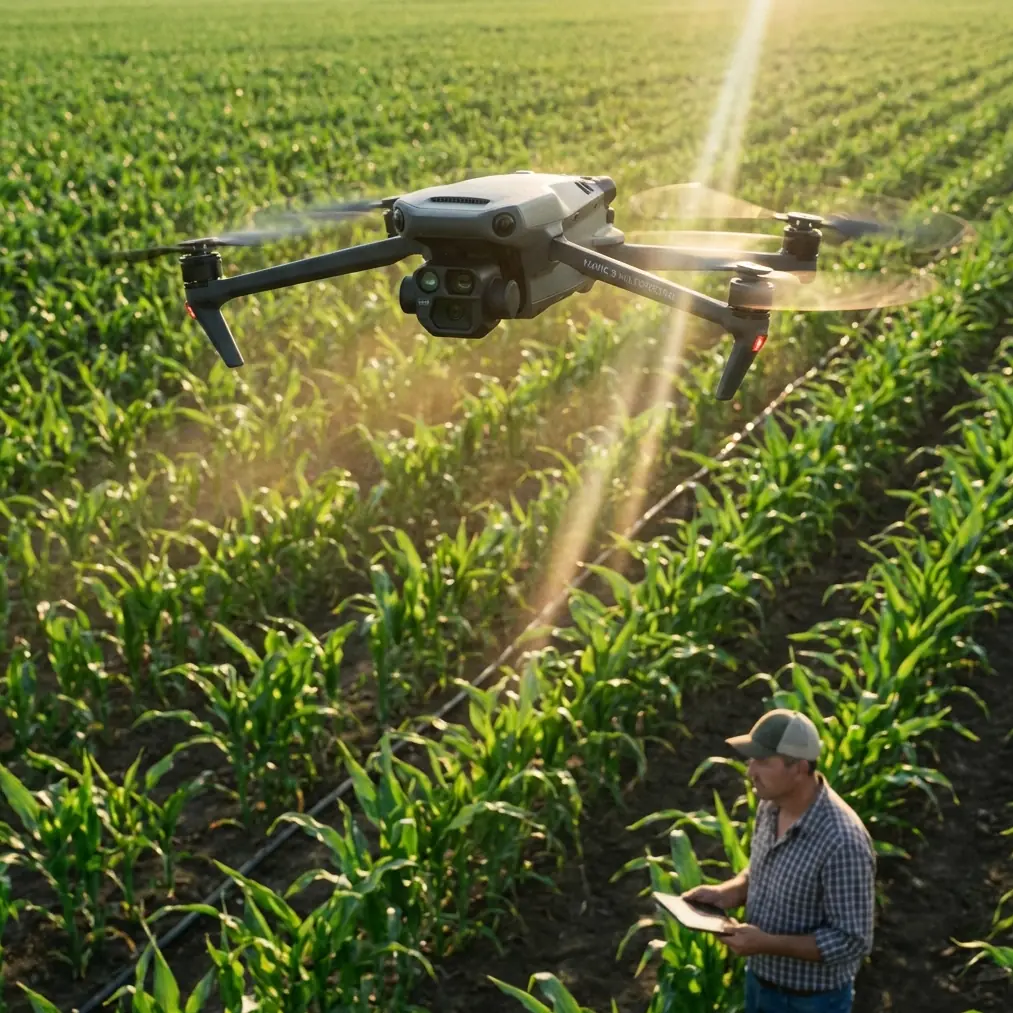
Mavic 3M for Coastal Venues: A Field Tutorial on Using Road Geometry to Plan Better Multispectral Capture
META: Learn how to use road lines, wide-angle perspective, and S-curve geometry to improve Mavic 3M venue surveying in coastal environments with more reliable framing and cleaner mapping passes.
Coastal venue work has a habit of exposing weak planning. Open edges, reflective surfaces, long access roads, scattered infrastructure, and fast-changing light all punish lazy flight design. When crews bring a Mavic 3M to survey these sites, the aircraft’s multispectral payload and RTK-backed workflow get most of the attention. Fair enough. Those are the headline tools. But one of the most practical planning advantages comes earlier, before the first proper mapping leg begins: reading the venue’s roads and paths as visual structure.
That may sound like a photographer’s concern rather than a surveyor’s. It is both.
A recent piece from chinahpsy focused on something simple but useful: roads are not just background. They are subjects, guides, and compositional anchors. The article highlighted two ideas that deserve a technical translation for Mavic 3M operators working in coastal venues. First, a wide-angle view exaggerates spatial depth, making distant objects appear smaller and nearby space feel larger. Second, straight roads can form a triangular visual base, while curved roads naturally lend themselves to S-shaped composition, especially when placed along a diagonal or contrasted with vertical elements such as trees or traffic lights.
Those are photography ideas on the surface. Operationally, they help a Mavic 3M crew make better reconnaissance decisions, cleaner mission boundaries, and more trustworthy multispectral interpretation.
Why roads matter before the map starts
Venue surveys in coastal areas often begin with a practical question: where is the site edge in operational terms, not just on paper? Legal boundaries rarely tell the whole story. The usable venue includes service roads, pedestrian approaches, drainage shoulders, equipment access lanes, and transition strips between landscaped zones and hardscape. A Mavic 3M can capture all of this, but the quality of the final output depends on how well the operator understands the site’s shape before launching a full grid.
Roads solve part of that problem because they reveal circulation logic. Straight roads indicate alignment, access priority, and often grade changes. Curved roads indicate flow, obstruction avoidance, and spatial hierarchy. In coastal venues, that matters even more because roads frequently trace dunes, shoreline setbacks, sea walls, parking terraces, and wind-protected service corridors.
If you fly a hasty mapping mission without first reading those shapes, you risk two common problems. One is weak coverage planning around edges and transitions. The other is poor interpretation later, when multispectral data shows anomalies that are actually tied to traffic stress, salt exposure, irrigation patterns, or compaction near road margins.
The wide-angle lesson, translated for Mavic 3M crews
The source article’s point about wide-angle perspective is more than visual trivia. A wide field of view changes how a site’s depth relationships appear. Distant features shrink. Foreground space stretches. On a straight road, that can turn a simple access lane into a strong triangular structure in the frame.
For a coastal venue surveyor, this is useful during the reconnaissance pass. Before committing to an automated mission, use the Mavic 3M’s live view to inspect the main access road or internal service route from several heights and headings. A straight road that visually narrows toward the horizon is not merely attractive. It gives immediate clues about three practical issues:
- Whether the venue’s circulation spine is straight enough to serve as a reliable orientation reference for mission alignment.
- Whether roadside features create repeating edge conditions that will affect vegetation interpretation.
- Whether the apparent width changes are due to true geometry or perspective distortion that could confuse a quick visual assessment.
That distinction matters because multispectral operations are not just about collecting data. They are about collecting data with a stable mental model of the site. If the operator mistakes a perspective effect for a genuine change in swath width or road dimension, the preflight plan can drift away from the real site geometry.
This is where Mavic 3M discipline shows. Use the visual exaggeration of a wide-angle reconnaissance image to identify structure, but do not let that same exaggeration drive measurement assumptions. Let RTK and mapping software handle precision. Let the road geometry guide observation.
In practice, I advise crews to identify one straight venue road as a visual baseline before launching a full mission. When RTK fix rate is behaving well and the aircraft holds centimeter precision as expected, that baseline becomes an excellent reality check for overlap logic, edge trimming, and ground control sanity review. The road is visible, persistent, and easy to compare across RGB and multispectral outputs.
Why the “triangle road” concept helps with stable framing
The source material describes a straight road photographed with a wide-angle perspective as becoming a triangle, creating a stable composition. That is a photographer’s way of saying the frame gains order.
For venue survey work, order is underrated.
A stable visual base helps operators maintain orientation in complex coastal environments where hardscape, water, turf, planting beds, and reflective roofs can compete for attention. The triangular reading of a road gives the eye an anchor. This has three direct benefits during Mavic 3M fieldwork:
- It speeds up reconnaissance decisions because the operator can quickly separate circulation structure from visual clutter.
- It improves communication with clients and site managers, who often understand a road-centered overview faster than a vegetation index overlay by itself.
- It supports repeatability when returning to the same venue for seasonal or post-maintenance comparison.
Repeatability is the hidden win here. If a venue manager asks for another survey after drainage work, turf replacement, or irrigation adjustment, crews need a reliable way to align “before” and “after” site understanding. Roads provide that reference. A straight road read as a stable triangular base in the initial recon imagery gives everyone a common visual language.
The original article also noted that color markings on a road can enrich the image. In a commercial survey context, painted lane lines, curb markings, loading zones, and pedestrian warnings do more than enrich the frame. They reveal activity zones and maintenance boundaries. On multispectral review, those markings help explain abrupt changes near turf edges or planting strips. A stressed band beside a painted loading zone may have more to do with heat, foot traffic, or compaction than irrigation failure.
Curved roads and the operational value of the S-shape
The source also emphasizes curved roads as part of S-shaped composition. This is especially relevant in coastal venues, where straight geometry is often interrupted by landscaping, shoreline setbacks, parking circulation, and topographic accommodation.
An S-curve does something a straight line cannot: it describes movement through the site. That has clear value when planning Mavic 3M operations.
A curved access route often indicates where the venue transitions between exposure zones. On one side, you may have open salt-laden wind. On the other, tree cover, structures, or berms create shelter. Multispectral data from turf or ornamental plantings along these routes can change sharply over short distances. The curve is not just a visual flourish. It is a clue to changing environmental conditions.
The source specifically mentions placing the S-shape along the diagonal. For drone operators, diagonal reading is operationally useful because venue roads rarely align neatly with cardinal mission axes. If you insist on flying every site according to a rigid north-south logic, you may collect acceptable data while missing the actual way the venue functions. Recon imagery that emphasizes diagonal S-curves helps teams decide whether the mission grid should align with site use, vegetation blocks, or drainage behavior rather than simple map orientation.
The same article also suggests using curved roads to contrast with straight objects like trees or traffic lights. That contrast is valuable for survey interpretation. Vertical objects along a curved road create natural control points in the operator’s visual memory. In a coastal venue, rows of palms, lighting poles, signposts, or service fixtures can help identify where a vegetation issue begins and ends. When a multispectral anomaly follows the outside edge of a curve but stops at a lighting line or tree row, the team gains a stronger hypothesis about wind exposure, runoff pattern, or maintenance inconsistency.
A practical coastal venue workflow
For Mavic 3M crews surveying a venue near the coast, I recommend a five-part road-led workflow.
First, conduct a short manual reconnaissance pass. Do not rush into the mapping template. Fly the main access road, service lanes, and any curved circulation paths at a modest altitude. Look for the straight-road triangle effect and the S-curve effect described in the source material. This is not artistic indulgence. It is site reading.
Second, identify one linear road segment to serve as your orientation spine. If your RTK fix rate is inconsistent, do not pretend otherwise. Sort that out before relying on detailed spatial judgments. Once the aircraft is holding robust positional confidence, use the road spine to sense-check your mission alignment and overlap plan.
Third, flag transition zones where curved roads meet vegetation or drainage changes. Coastal venues often hide their management problems in these boundaries: overspray from irrigation, salt stress, compacted shoulders, runoff pooling, and irregular turf vigor. The shape of the road often predicts where those patterns will emerge.
Fourth, use roadside verticals as interpretation markers. Trees, traffic lights, poles, and similar upright elements were mentioned in the source as contrast points. In practice, they help you track recurring hotspots and explain them to stakeholders who may not read a multispectral layer intuitively.
Fifth, capture one client-facing reconnaissance set in addition to the full survey dataset. This is where the source’s compositional lessons become commercially useful. A clean wide-angle road overview can bridge the gap between technical data and operational decision-making. Venue owners, grounds managers, and contractors are more likely to act when they can understand the site structure immediately.
Where a third-party accessory earns its place
The narrative spark here calls for a third-party accessory that genuinely improves capability. In this kind of venue work, my pick is straightforward: a high-visibility landing pad with weighted edges designed for coastal wind and dusty hardscape.
That may sound humble compared with software add-ons or specialized mounts, but it solves a real problem. Coastal venues often offer poor launch surfaces: grit, salt residue, loose debris, painted asphalt, or damp ground near landscaped edges. A stable landing pad protects the Mavic 3M during takeoff and recovery, reduces contamination risk around the airframe and sensors, and makes repeated sorties more predictable.
That matters because multispectral work depends on consistency. If your aircraft is ingesting dust or dealing with messy recoveries between flights, your day gets slower and your data discipline slips. Accessories should remove friction, not add novelty. For venue teams that revisit sites frequently, that simple field upgrade earns its keep.
If you want a second enhancement, a sun hood for the controller display is often worthwhile in bright coastal conditions. Strong glare can make it harder to evaluate the very road geometry discussed here during reconnaissance. Good site reading depends on actually seeing the structure clearly.
Why this approach works specifically for Mavic 3M
The Mavic 3M is often discussed in terms of multispectral outputs, agronomic workflows, and precision positioning. All of that is valid. But its value in venue surveying grows when the operator thinks beyond raw capture and starts with spatial literacy.
The chinahpsy article is useful because it reminds us that roads already contain an organizing logic. A straight road can create a stable triangular frame through wide-angle depth exaggeration. A curved road can become an S-shaped guide, especially on the diagonal or when contrasted with upright elements like trees and traffic lights. Those are not museum-gallery observations. They are field cues.
For coastal venue surveying, those cues help crews decide where to begin, how to orient missions, how to explain findings, and how to avoid misreading edge conditions. They also improve communication with non-technical stakeholders, which is half the job on many commercial projects.
That is the real takeaway. A better survey is not only the product of better sensors. It begins with better noticing.
If your team is building a repeatable Mavic 3M workflow for coastal venues and wants a practical field checklist, you can share your use case here: https://wa.me/85255379740
Ready for your own Mavic 3M? Contact our team for expert consultation.