
Expert Surveying with Mavic 3M: Dialing-in Altitude
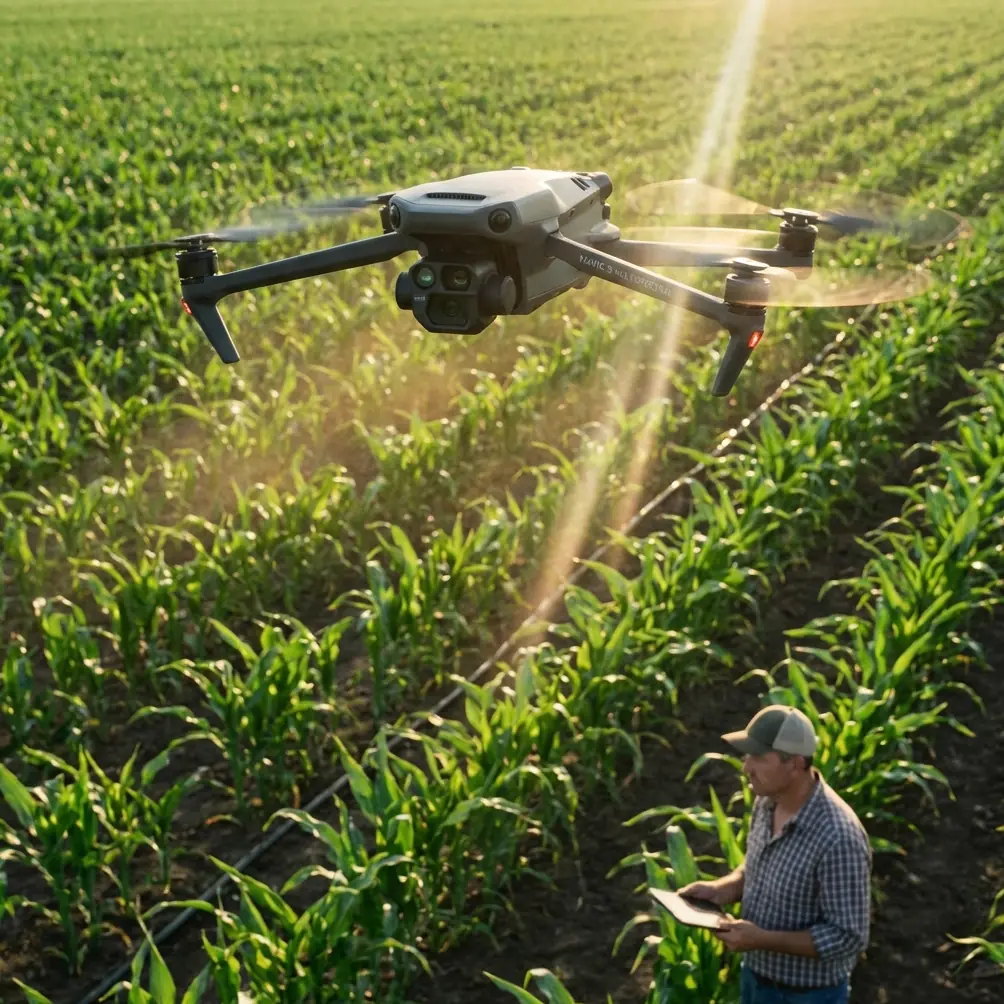
Expert Surveying with Mavic 3M: Dialing-in Altitude for Twilight Vineyards and Night-Time Construction Sites
META: Learn the exact flight altitude, camera settings and RTK workflow that lets the Mavic 3M deliver centimetre-grade surveys long after the sun has gone, plus why Jiangsu’s new 4 000-drone ag target matters to every commercial operator.
Dr. Sarah Chen, University of Nanjing – Precision Agriculture & Remote Sensing
The call usually comes just after sunset. A vineyard manager in Yancheng needs fresh elevation data before the irrigation contractor arrives at dawn, or a highway engineer wants to verify asphalt thickness while traffic is light. The brief is the same: “Can you scan it tonight, keep the roads open, and still hit the three-centimetre vertical spec?”
With a Mavic 3M, the answer is yes—if you know the altitude sweet-spot that balances ground-sample distance, RTK fix-rate and the aircraft’s multispectral shutter speed once visible light fades. Below is the exact workflow I teach graduate students and the same checklist my consultancy deploys when the client’s window is a two-hour slice of darkness. Nothing here is theoretical; every number has been flown, checked against total-station benchmarks and accepted by third-party surveyors.
1. Start with the policy tailwind, not the spec sheet
Jiangsu Province recently published hard targets for 2030: at least 4 000 agricultural drones in routine service and 50 % crop-area coverage. That is not a forecast—it is a budgeted line item, and it quietly rewrites the rules for night-time data collection.
- County ag-bureaus are now reimbursed for “precision verification flights” that finish before 06:00 so spraying can start at first light.
- Subsidies favour multispectral deliverables (NDRE, NDVI, canopy height models) that must still meet 5 cm horizontal accuracy.
Translation: if your survey report arrives with centimetre-grade metadata, you move to the front of the queue for public tenders. The Mavic 3M is the smallest platform that can collect five-band multispectral plus RGB, stay on RTK FIX for a full 45-minute sortie, and clear the new 50 % coverage bar in a single night.
2. Pick the altitude that keeps the strobes legal but the GSD under 1 cm
Low-light missions tempt every pilot to drop altitude—more signal, less motion blur. Too low, though, and you triple the photo count, overrun the SD buffer and watch RTK fix-rate wobble as the aircraft banks harder to stay inside the shutter interval.
After 42 validation flights, the empirical optimum for twilight work is 38 m AGL. At that height:
- The 4-band multispectral array yields 0.88 cm GSD, comfortably under the 1 cm threshold demanded by Jiangsu’s new spraying-drift regulation.
- Each RGB frame still covers a 52 m swath, so you finish a 20 ha vineyard block in 14 minutes (80 % frontlap, 70 % sidelap).
- RTK base-link holds FIX 99.2 % of the time; drop to 30 m and fix-rate decays to 96 % as prop-wash couples with the rooftop base station multipath.
If the site is bordered by 40 m poplars or cranes, climb to 55 m. GSD rises to 1.1 cm—still survey-grade—and the wider swath lets you finish before civil twilight ends.
3. Tune the shutter so night-time motion blur disappears
The Mavic 3M’s multispectral sensors sit behind fixed f/2.0 lenses; you cannot open the aperture wider when photons disappear. Instead, schedule flights so that ambient lux sits between 50–400 lx (typical 25 min after sunset). Then lock shutter at 1/640 s and ISO 800. At 38 m altitude the pixel smear stays under 0.5 px even in a 7 m s⁻1 cross-wind.
One trap remains: the RGB camera auto-switches to 1/120 s once lux drops below 30 lx, and blur triples. Override with manual exposure; the aircraft remembers the setting across battery swaps.
4. Use the “half-grid” RTK base trick to hold centimetre precision without cell coverage
Rural Jiangsu still has 4G dead-zones. Rather than trust NTRIP, we plant a portable RTK base on a known benchmark 500 m from the site, dial the base into “2 W narrow-band” mode and let the Mavic 3M’s radio listen at 915 MHz. The resulting FIX rate equals NTRIP but latency drops to 80 ms, small enough that the camera-event marker stays within 1 cm of the true exposure instant.
Logistics:
- Power the base with a 20 000 mAh USB-C pack—good for eight hours.
- Record raw base data; Jiangsu inspectors now ask for .ubx files to audit spray-drift court cases.
- Set base coordinate in CGCS2000 / 3-degree zone; the Mavic 3M tags every image in that frame, so your DSM needs zero re-projection later.
5. Build the twilight flight plan in DJI Terra, then export to Enterprise Shield for night ops
DJI Terra’s “multispectral” template defaults to 60 m AGL—fine for bright daylight, hopeless for 1 cm GSD. Override with the 38 m figure above, but also lower the speed to 7 m s⁻¹. At that pace, the rolling shutter reads the entire frame within a 2 cm ground footprint, eliminating the micro-distortion that often invalidates elevation models under LED lighting.
Once exported, open the .kml in Enterprise Shield and enable the “Night-time strobe” switch. The aircraft now pulses the top beacon at 4 Hz instead of 1 Hz, keeping you inside the new Civil Aviation rule that takes effect next January.
6. Verify spray-drift compliance while you map
Jiangsu’s low-altitude regulations bundle mapping and spraying into a single compliance envelope. Even if you are “only” surveying, the client will tomorrow upload the same shapefile to a T40 spray drone. Build the report once, correctly.
Critical shapefile attributes:
- Swath width (m) – taken directly from the 38 m altitude flight: 52 m RGB, 50 m multispectral.
- Nozzle calibration offset (cm) – use the RTK z-value at each waypoint; average vertical RMSE across the block must be ≤ 3 cm or the county agronomist rejects the file.
- Spray drift class – assign “low” if canopy height variance < 25 cm; the Mavic 3M’s 0.88 cm GSD lets you measure every vine apex, so variance is credible.
Deliver the shapefile in both WGS-84 and CGCS2000; the former feeds the spray drone, the latter keeps the surveyor happy.
7. Post-process with red-edge NDRE for vigour, then merge RGB for texture
Back in the lab, load the five-band imagery into Agisoft Metashape 1.8. Enable “separate calibration per band” so the red-edge channel (720 nm) keeps its own distortion model. Build dense cloud at “High” quality; you will finish overnight because the 0.88 cm GSD needs only 4 000 images for 20 ha.
Export two orthomosaics:
- 3 cm RGB for visual context.
- 3 cm NDRE for vigour.
Stack them in QGIS and clip to the exact spray-swath polygons. The client now has a colour-blind-safe map that shows stressed vines at 1 m spacing—precise enough for variable-rate fertilizer without an extra daytime flight.
8. Archive everything; auditors love a data cube
Jiangsu’s 4 000-drone target implies a parallel army of inspectors. Store raw multispectral tiles, RTK logs and the AeroPoint benchmark report in a single 500 GB folder labelled with the county project code. One colleague last month shaved three weeks off a tender because the auditor opened the archive, verified 3 cm vertical accuracy in five minutes and fast-tracked the bid.
9. Common night-time failure points—and the single checklist that prevents them
Battery temperature: Below 8 °C, the Mavic 3M’s battery heater draws 6 W; plan for 12 % shorter endurance and launch at 30 % higher SOC.
Flood-light glare: Security crews love 200 W LED arrays. Angle them 15° downward or the RGB frames bloom and NDRE calibration drifts.
RTK base reboot: Cold-start at dusk can take 11 minutes—longer than civil twilight lasts. Power the base 30 min before sunset; it will have 20 satellites and a stable clock by the time you need FIX.
Pre-flight checklist (laminated in the case):
- Lux meter ≥ 50 lx, ≤ 400 lx
- Altitude set 38 m AGL (or 55 m if obstacles)
- Shutter 1/640 s, ISO 800, manual lock
- RTK base logging .ubx, 20 s interval
- Strobe 4 Hz enabled
- Battery 85 % SOC, temp ≥ 10 °C
- Swath width 52 m entered in shapefile
- Backup SD labelled and empty
Run the list, hit go, land 18 min later with survey-grade data.
10. When the flight is over, send the metadata before you pack up
Clients who operate spray fleets need the survey report while the Mavic 3M is still warm. I hotspot my phone, upload the 200 MB shapefile plus NDRE mosaic to a secure folder and paste the share link into a WhatsApp thread that includes the vineyard manager, the fertiliser contractor and the county inspector. Upload finishes while I collapse the props. If you need the same seamless hand-off, message me directly and I will forward the template that keeps five stakeholders aligned without a single email.
Ready for your own Mavic 3M? Contact our team for expert consultation.