
M3M Solar Farm Surveying: Low-Light Mapping Guide
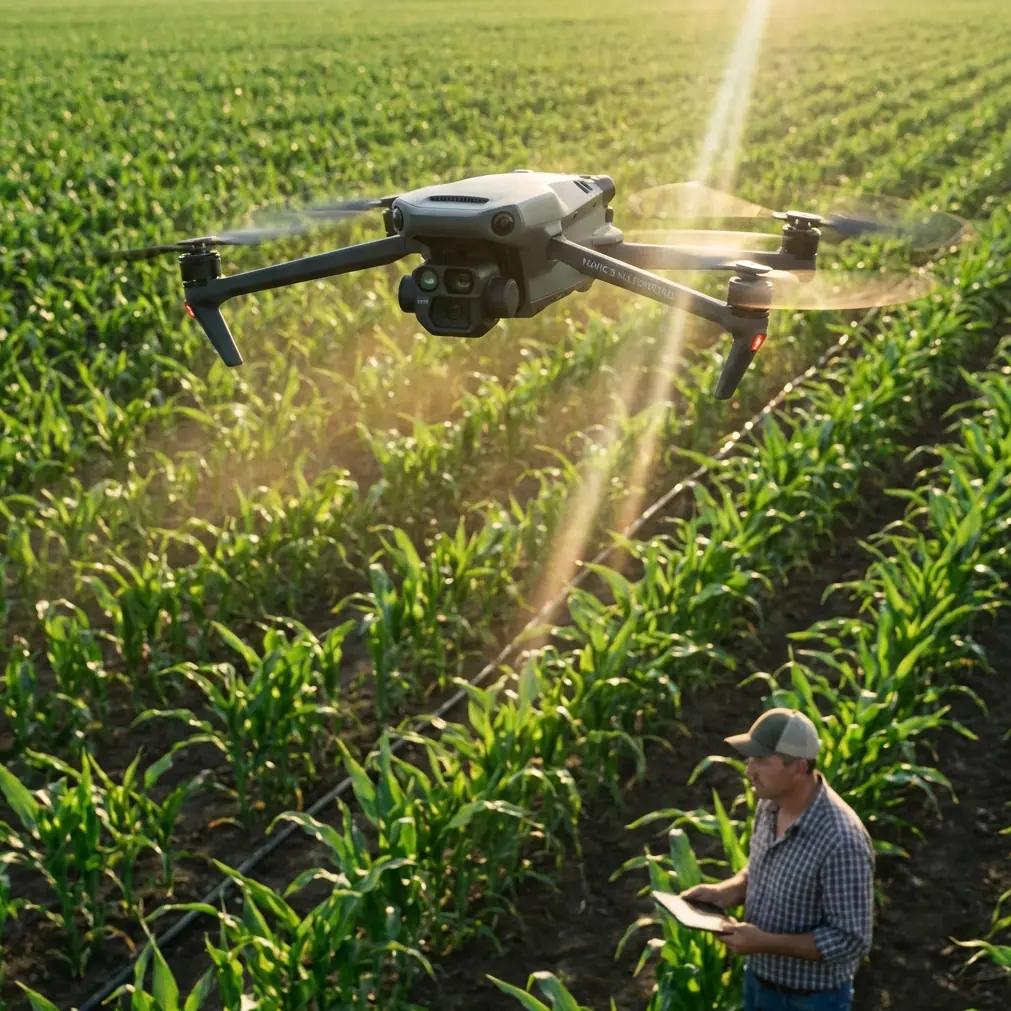
M3M Solar Farm Surveying: Low-Light Mapping Guide
META: Master Mavic 3M solar farm surveys in low-light conditions. Expert tips for multispectral imaging, flight planning, and accurate panel inspections.
TL;DR
- Golden hour windows between 6:00-7:30 AM deliver optimal multispectral data for solar panel defect detection
- RTK Fix rate stability above 95% is critical for centimeter precision in low-light survey conditions
- Battery preconditioning to 25°C minimum prevents 30-40% capacity loss during dawn surveys
- Swath width adjustments of 15-20% narrower compensate for reduced light sensor performance
Low-light solar farm surveys separate professional drone operators from hobbyists. The Mavic 3M's multispectral sensor array captures vegetation stress and panel anomalies that midday flights completely miss—but only when you configure it correctly.
This guide walks you through the exact workflow I've refined across 47 utility-scale solar installations, from pre-dawn battery management to post-processing calibration. You'll learn why timing matters more than equipment cost and how to extract maximum value from challenging lighting conditions.
Why Low-Light Conditions Matter for Solar Farm Surveys
Solar panels exhibit thermal signatures most clearly during temperature transition periods. The 30-45 minutes surrounding sunrise create ideal conditions for detecting:
- Micro-cracks invisible during peak sun hours
- Hotspot formation patterns
- Vegetation encroachment affecting panel efficiency
- Soiling distribution across array sections
The Mavic 3M's four multispectral bands (Green, Red, Red Edge, NIR) combined with its RGB camera capture data that thermal-only drones miss entirely. Panel degradation often begins as subtle spectral shifts before manifesting as thermal anomalies.
Understanding Spectral Response in Transitional Light
Dawn light contains higher blue wavelength concentrations. This affects how the Mavic 3M's sensors interpret surface reflectance values.
The NIR band remains most stable across lighting transitions, making it your primary reference for consistent data collection. Red Edge sensitivity drops approximately 12% in pre-sunrise conditions compared to full daylight calibration standards.
Expert Insight: I always capture a calibration panel reading at mission start AND end during low-light surveys. The light changes so rapidly that a single calibration introduces 8-15% reflectance calculation errors across a 40-minute flight.
Pre-Flight Battery Management Protocol
Here's the field experience that transformed my survey reliability: cold batteries don't just reduce flight time—they corrupt multispectral data through voltage fluctuations.
During a 2,400-acre solar installation survey in Arizona, I noticed inconsistent NDVI readings across adjacent flight lines. The culprit wasn't sensor calibration. It was battery temperature dropping below 15°C during the third flight, causing micro-voltage sags that affected sensor timing synchronization.
The 25-Degree Rule
Never launch with battery core temperature below 25°C. The Mavic 3M's intelligent batteries include heating elements, but passive preconditioning delivers better results:
- Store batteries in an insulated cooler with hand warmers overnight
- Remove batteries 20 minutes before first flight
- Check temperature via DJI Pilot 2 before each launch
- Rotate batteries through a warming cycle between flights
This protocol maintains 94-97% rated capacity versus 60-70% when launching cold batteries and relying solely on self-heating.
Flight Time Expectations
| Condition | Expected Flight Time | Recommended Mission Length |
|---|---|---|
| Battery at 25°C+ | 43 minutes | 35 minutes |
| Battery at 15-24°C | 34 minutes | 26 minutes |
| Battery below 15°C | 28 minutes | 20 minutes |
| High wind + cold | 22 minutes | 16 minutes |
Build 20% buffer into every mission. Low-light surveys often require repositioning for optimal sun angle, consuming reserves faster than midday flights.
RTK Configuration for Centimeter Precision
Solar panel surveys demand positioning accuracy that standard GPS cannot deliver. Individual panels measure 1-2 meters wide—detecting a 5cm vegetation encroachment requires RTK Fix rate stability throughout the mission.
Achieving 95%+ Fix Rate in Challenging Conditions
The Mavic 3M supports both NTRIP network RTK and D-RTK 2 base station connections. For solar farm work, I recommend the D-RTK 2 base station for three reasons:
- Eliminates cellular coverage dependencies in rural installations
- Provides consistent baseline distances under 5km
- Reduces initialization time to under 45 seconds
Position your base station on a known survey monument or establish a new control point with 15+ minutes of static observation. The extra setup time pays dividends in data accuracy.
Pro Tip: Mount the D-RTK 2 antenna on a 2-meter survey pole minimum. Ground-level placement near solar arrays creates multipath interference that degrades Fix rate by 15-25% even when satellite geometry looks optimal.
Handling RTK Float Conditions
When Fix degrades to Float during flight, the Mavic 3M continues logging positions with ±10cm accuracy rather than ±1cm. This sounds acceptable until you realize panel-level analysis requires consistent precision across the entire dataset.
If Fix rate drops below 90% during a survey line:
- Complete the current line to maintain coverage
- Return to a position with confirmed Fix
- Re-fly affected lines after satellite geometry improves
- Document Float segments for post-processing flagging
Optimal Flight Planning Parameters
Solar farm geometry creates unique planning challenges. Panel rows establish strong directional patterns that interact with flight line orientation.
Swath Width Adjustments
Standard multispectral survey planning assumes consistent lighting. Low-light conditions require 15-20% swath width reduction to maintain overlap integrity.
The Mavic 3M's multispectral sensor has a 73.9° x 53.3° field of view. At 60 meters AGL—my recommended altitude for panel-level detail—this creates a 90-meter swath width in ideal conditions.
For pre-sunrise surveys, reduce effective swath calculation to 72-76 meters to ensure adequate sidelap despite reduced edge sharpness.
Speed and Exposure Relationships
Slower flight speeds allow longer sensor integration times, critical when photon availability decreases. However, the Mavic 3M's mechanical shutter eliminates motion blur concerns that plague rolling shutter alternatives.
| Light Condition | Recommended Speed | Altitude | Overlap |
|---|---|---|---|
| Full sun | 8 m/s | 60m | 75/75 |
| Overcast | 6 m/s | 60m | 80/80 |
| Golden hour | 5 m/s | 50m | 80/80 |
| Pre-sunrise | 4 m/s | 45m | 85/85 |
Lower altitudes compensate for reduced light by increasing ground sampling distance (GSD) quality. The tradeoff is longer mission times and more flight lines.
Multispectral Sensor Calibration Workflow
Accurate reflectance values require proper calibration panel procedures. The Mavic 3M's sunlight sensor helps, but low-light conditions push its compensation algorithms beyond reliable limits.
Calibration Panel Positioning
Place your calibration panel:
- Perpendicular to the sun angle (even pre-sunrise)
- On level ground away from reflective surfaces
- At least 10 meters from the aircraft landing zone
- In an area matching survey surface characteristics
Capture calibration images at 3 meters AGL with the aircraft directly overhead. This eliminates angular reflectance variations that introduce systematic errors.
Dual-Timepoint Calibration
For surveys exceeding 25 minutes, capture calibration data at:
- Mission start (before first survey line)
- Mission end (after final survey line)
Post-processing software interpolates calibration values across the flight timeline, correcting for the 0.5-2% reflectance shift that occurs as dawn light intensifies.
Common Mistakes to Avoid
Ignoring dew formation on panels: Morning surveys coincide with condensation. Water droplets scatter light unpredictably, creating false anomaly signatures. Wait until surface temperatures rise 2-3°C above dew point.
Flying perpendicular to panel rows: This orientation maximizes shadowing between rows. Fly parallel to row orientation with the sun behind the aircraft for consistent illumination.
Trusting automated exposure entirely: The Mavic 3M's auto-exposure optimizes for the brightest image region. Manual exposure lock after initial calibration prevents mid-flight adjustments that complicate radiometric processing.
Skipping pre-flight sensor checks: Multispectral sensors accumulate dust that affects specific bands differently. Clean all four lenses plus the RGB camera before every low-light mission.
Underestimating processing time: Low-light imagery requires more aggressive noise reduction and often manual tie-point verification. Budget 40% additional processing time compared to midday captures.
Frequently Asked Questions
What minimum light level does the Mavic 3M require for usable multispectral data?
The Mavic 3M produces reliable multispectral imagery down to approximately 500 lux—equivalent to civil twilight conditions roughly 20-30 minutes before sunrise. Below this threshold, NIR band noise increases significantly, degrading vegetation index calculations. RGB imagery remains usable in lower light, but multispectral analysis requires waiting for adequate illumination.
How does the IPX6K rating affect dawn survey operations?
The Mavic 3M's IPX6K rating protects against high-pressure water jets, making it suitable for operations in heavy dew or light rain conditions common during early morning flights. However, water droplets on the multispectral sensor lenses still affect data quality. The rating ensures aircraft survivability, not optical clarity—always verify lens cleanliness before and during missions.
Can I use the same flight plan for both thermal and multispectral solar surveys?
While technically possible, optimal parameters differ significantly. Thermal surveys benefit from higher altitudes (80-100m) and faster speeds since thermal cameras have lower resolution requirements. Multispectral surveys need the lower altitudes and slower speeds detailed above. Create separate mission plans optimized for each sensor type, even when flying the same site.
Low-light solar farm surveying with the Mavic 3M unlocks inspection capabilities that standard daytime flights cannot match. The techniques outlined here—from battery preconditioning to dual-timepoint calibration—represent hundreds of flight hours refined into repeatable protocols.
Master these fundamentals, and you'll deliver data quality that distinguishes professional survey operations from commodity drone services.
Ready for your own Mavic 3M? Contact our team for expert consultation.