
Mavic 3M for High-Altitude Highway Survey
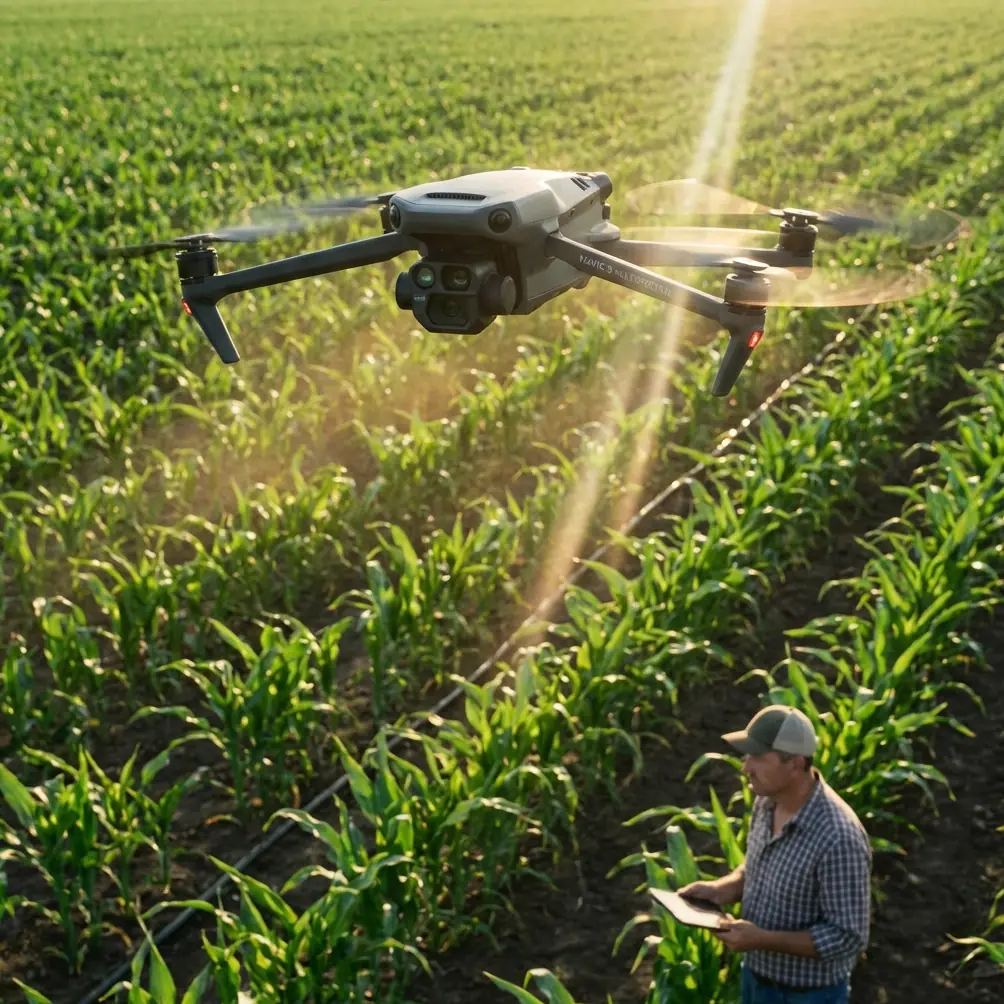
Mavic 3M for High-Altitude Highway Survey: Practical Flight Altitude, RTK Discipline, and the Lessons Most Teams Miss
META: A field-focused tutorial on using the Mavic 3M for high-altitude highway surveying, with practical guidance on flight altitude, RTK reliability, battery discipline, crew coordination, and multispectral workflow decisions.
High-altitude highway surveying sounds straightforward until the mountain starts dictating the mission.
Thin air changes rotor efficiency. Steep terrain breaks line of sight. Long paved corridors tempt crews into flying too high for convenience, then punish them with weaker ground detail, inconsistent overlap, and shaky RTK behavior near ridgelines. For operators using the Mavic 3M in this environment, the real question is not whether the aircraft can do the job. It can. The question is how to set flight altitude and crew procedures so the data is actually usable once you leave the roadside and open the map.
I approach this as both an academic and a field operator: the aircraft matters, but the surrounding system matters more. One recent thread in China’s UAV sector makes that point clearly. A school-enterprise consortium in Yunnan publicly stated it has mastered core rotary engine technology for drones and reached industrialization, describing itself as the first in Yunnan and the second in the country to do so. On the surface, that sounds unrelated to a compact mapping platform like the Mavic 3M. It isn’t. The operational significance is that China’s drone ecosystem is maturing beyond airframes alone. Propulsion, training, maintenance, and application-specific workflows are becoming integrated. For highway survey teams, that kind of ecosystem maturity translates into better operator preparation, stronger support culture, and more disciplined mission design.
The Mavic 3M benefits from exactly that kind of disciplined thinking.
Why altitude selection is the real decision in mountain highway work
When crews ask for the “best” altitude for surveying highways at high elevation, they usually want one number. That is the wrong framing.
The correct altitude is the one that preserves three things at once:
- reliable image geometry over changing terrain
- enough detail to resolve edge features along the carriageway
- battery margin for safe return in thinner air and shifting winds
On mountain highways, I generally recommend planning from terrain-relative height rather than a single takeoff-relative altitude. That sounds technical, but the logic is simple: a road climbing along a slope can create a large effective height change under the aircraft even when the drone seems to be flying steadily. If you hold one fixed altitude from the launch point, your ground sampling can vary drastically over the route. That inconsistency can weaken reconstruction quality and reduce confidence when measuring shoulders, drainage structures, cut slopes, and surface anomalies.
For the Mavic 3M, a practical starting band for corridor work is often around 60 to 100 meters above ground, adjusted by terrain complexity, required detail, and wind exposure. In open, stable sections, the upper part of that range may be efficient. In steep sections with retaining walls, drainage edges, vegetation encroachment, or areas where the road bench sits sharply above a drop-off, I prefer the lower half of that band if safety and obstacle clearance allow. The reason is not aesthetic. It is about preserving feature clarity and overlap consistency where the corridor bends and the terrain falls away.
Higher is not always safer. In mountain survey, higher often means more lateral wind, less detail on narrow roadside features, and longer exposure per leg.
The Mavic 3M’s multispectral payload changes how you should think about a highway survey
Many teams still treat the Mavic 3M as if it were only a general mapping drone with extra sensors attached. That leaves value on the table.
For highways in high-altitude regions, multispectral data can help when the survey objective extends beyond pavement geometry. If you are also evaluating roadside vegetation stress, drainage impact zones, slope cover stability, or revegetation performance after earthworks, the multispectral stack becomes more than a side feature. It becomes a way to connect corridor mapping with asset maintenance and environmental monitoring in one mission set.
That does not mean every flight should be a multispectral flight. It means the mission should be built around the question being asked. If the deliverable is centimeter precision surface mapping of the road platform and structures, flight altitude, overlap, and RTK fix rate deserve priority. If the deliverable includes vegetation condition along embankments or cut slopes, then solar angle, reflectance consistency, and route timing become equally important.
This is where many highway operators make a subtle mistake. They fly one compromise mission and expect every output to be equally strong. Better practice is to separate objectives when needed: a geometry-first corridor run and a condition-focused multispectral run, even if both happen the same day.
Optimal flight altitude: what actually works in the field
Let’s turn the core question into a field method.
1. Start from the narrowest feature you need to trust
For mountain highway work, that feature may be the road edge, a crack pattern, a ditch boundary, a guardrail alignment shift, or encroaching vegetation at the shoulder. If your planned altitude cannot render that feature with confidence, the mission is already underperforming.
On Mavic 3M missions, I advise operators to test a short segment at two altitudes before committing to the full corridor. For example, compare a lower terrain-following pass and a higher one over the same 300 to 500 meter section. Review edge fidelity, shadow impact, and overlap quality before scaling up. This saves more time than it costs.
2. Use terrain-following logic whenever the relief is aggressive
In high-altitude mountain corridors, the road is rarely level for long. Terrain-following reduces the risk of drifting too high above one segment and too low over the next. That consistency helps maintain more stable reconstruction and a more predictable RTK Fix rate.
3. Leave battery margin beyond your flatland habits
Thin air and mountain wind punish optimism. Even with an efficient platform, the return leg can cost more than expected. If the route includes climbs, crosswinds, or cold morning temperatures, shorten each block and build in more reserve than you would for lowland mapping.
4. Watch shadows as closely as altitude
Highway cuts, bridge approaches, and retaining walls can produce hard contrast early and late in the day. A theoretically good altitude can still yield weak mapping if shadow depth obscures the features you care about. In these cases, shifting mission timing by an hour can improve data more than changing altitude by 20 meters.
RTK reliability is not a box to tick
The LSI phrase “RTK Fix rate” gets thrown around too casually. In high-altitude highway work, it deserves active management.
A strong RTK workflow matters because corridor surveys amplify small positional inconsistencies over long distances. A short local block might absorb minor disruptions without obvious consequences. A mountain highway section is less forgiving. If the fix state degrades repeatedly around bends, valley walls, or elevation transitions, the resulting model may still look complete while carrying alignment weaknesses that surface later in measurement or design review.
So the operator should monitor RTK status as a living part of the mission, not a preflight checkbox. If the fix is unstable in a given section, pause and diagnose. That may mean changing launch position, breaking the route into shorter segments, or adjusting timing around sky visibility constraints.
The goal is not just centimeter precision in theory. It is consistency in practice.
Crew coordination matters more than many Mavic teams assume
One of the most useful insights from agricultural UAV operations also applies to highway survey: the observer and pilot must function as one unit. Agricultural guidance explicitly emphasizes that the observer should continuously report aircraft status and position when the pilot’s visual reach is limited, helping avoid obstacles while maintaining coverage. That principle translates directly to mountain corridor mapping.
Operationally, this matters because highway surveys at altitude often involve blind sections, changing terrain, roadside wires, signs, and intermittent traffic distractions near launch or recovery zones. A dedicated observer can do more than watch for hazards. They can also help the pilot preserve mission quality by flagging wind shifts, route drift, overlap risks, or sections where the aircraft’s apparent ground clearance is changing faster than expected.
That is not a luxury role. It is a data-quality role.
If your team is small, at least assign explicit callouts before launch:
- terrain rise ahead
- lateral drift near edge of corridor
- obstacle at shoulder or crossing
- RTK state changes
- battery threshold for route break
This kind of verbal discipline becomes especially valuable on long mountain jobs.
Battery management is a data-quality issue, not just a safety issue
Another lesson from agricultural drone practice deserves direct adoption: battery care has to be procedural, not casual.
The source material on plant protection operations gives concrete thresholds that are useful beyond spraying. It recommends checking whether voltage difference between batteries and between individual cells is below 0.2V before use. It also notes that when the aircraft will sit idle, batteries should be kept around 3.85V storage voltage, and during the off-season they should be cycled 2 to 3 times per month. Those are not trivial maintenance notes. They affect whether your survey day begins with a trustworthy power system.
Why does that matter for the Mavic 3M on high-altitude highway jobs?
Because mountain missions tend to expose weak batteries faster. Cold air, long transits, and repeated climbs reveal cell imbalance that might go unnoticed in easier work. A pack that looks acceptable on paper can sag unexpectedly under load, forcing route interruption and creating inconsistent lighting or overlap across stitched segments. If your corridor must be split into extra flights because one battery underperforms, the hidden cost appears later in processing.
Professional teams therefore treat battery logs as part of survey QA. Before a major highway block, verify pack health, not just charge percentage. If a battery has unusual cell spread, retire it from primary mapping duty until it is evaluated. This is especially critical when your project depends on repeatable altitude and speed across multiple sorties.
What spray-drone maintenance teaches Mavic 3M operators
The agricultural reference also stresses immediate cleaning after operations because chemical residue can corrode metal parts and clog pumps and nozzles. The Mavic 3M obviously is not a sprayer, so nozzle calibration and spray drift are not direct mission concerns here. Still, the underlying lesson is relevant: post-mission maintenance should happen while the field conditions are still fresh in your mind.
For a mountain highway mapping team, that means cleaning optics and airframe surfaces promptly, reviewing log anomalies the same day, and documenting sections affected by dust, moisture, or rapid temperature change. If you flew near active roadwork, fine particulate contamination can quietly degrade sensor performance on the next sortie. Immediate post-flight care prevents tomorrow’s survey from inheriting today’s neglect.
Training culture is the hidden advantage
The education reference in the source set might seem distant from a highway-survey tutorial, but I think it points to something essential. One Shenzhen-based UAV training and technology organization described a model built by combining drone technical experts with vocational education specialists. Its parent company was identified as the only enterprise in Shenzhen at the time with AOPA-China-recognized qualification as a civil unmanned aircraft pilot training institution, and its R&D portfolio included more than 40 patents. Another section emphasized hands-on disassembly, mechanical assembly, circuit welding, and flight-data analysis as ways to build practical skill.
This matters operationally because good Mavic 3M results in demanding terrain rarely come from button-pushing alone. They come from technicians who understand aircraft behavior, sensor logic, battery discipline, and mission analytics. In high-altitude corridor work, the best operator is often the one who notices a subtle pattern early: unusual power draw, reduced overlap consistency in crosswind, RTK instability at one bend, or terrain-following behavior that suggests a route redesign.
That is a training problem before it is a hardware problem.
If your team is refining its mountain workflow, build rehearsal around short test corridors and structured debriefs. Review not only the map output but also:
- actual versus planned battery consumption
- RTK fix continuity
- terrain-relative altitude variation
- image quality in shadow zones
- observer callouts that prevented quality loss
If you want a second set of eyes on a corridor mission design, a practical way to discuss route logic and altitude planning is through this field workflow chat: https://wa.me/85255379740
A workable high-altitude mission template for Mavic 3M highway survey
Here is the procedure I recommend most often:
Pre-mission
Define whether the primary deliverable is geometry, condition mapping, or both.
Check battery health, including cell balance; avoid packs with questionable spread near the 0.2V threshold.
Confirm RTK workflow and launch points with maximum sky visibility.
Break the corridor into conservative blocks rather than one ambitious continuous route.
Altitude planning
Use terrain-relative height.
Start with a trial section in the 60 to 100 meter band above ground.
Choose the lowest practical altitude that still preserves safe obstacle clearance and route efficiency.
Lower the altitude in sections where roadside detail matters more than broad area coverage.
Flight execution
Use a dedicated observer whenever terrain or road geometry limits pilot visibility.
Monitor RTK Fix rate continuously, especially near valley walls, steep cuts, and bends.
Watch wind on the return leg, not just at takeoff.
Pause if terrain relief begins to distort your intended swath width or overlap pattern.
Post-flight
Inspect imagery before leaving the site.
Clean aircraft and optical surfaces promptly, especially after dusty roadside work.
Log battery performance and any abnormal discharge behavior.
Document problematic sections for reflights while lighting remains compatible.
The main takeaway
For Mavic 3M highway surveys in high-altitude environments, the “optimal” altitude is never just a number from a manual. It is an operational choice shaped by terrain relief, RTK stability, battery integrity, and the narrowest feature you need to defend in the final deliverable.
If you remember only two field rules, make them these.
First, treat terrain-relative altitude as the baseline, not an optional refinement. That is what keeps image scale and corridor quality under control in mountain road work.
Second, adopt the procedural rigor seen in mature parts of the UAV industry: observer coordination, battery voltage discipline, and same-day maintenance. The reference data behind this article may come from education, industrial development, and agricultural operations, but together they point to one truth. Reliable drone outcomes are built by systems, not by airframes alone.
Ready for your own Mavic 3M? Contact our team for expert consultation.