
How to Keep the Mavic 3M Stable While Mapping a Wind
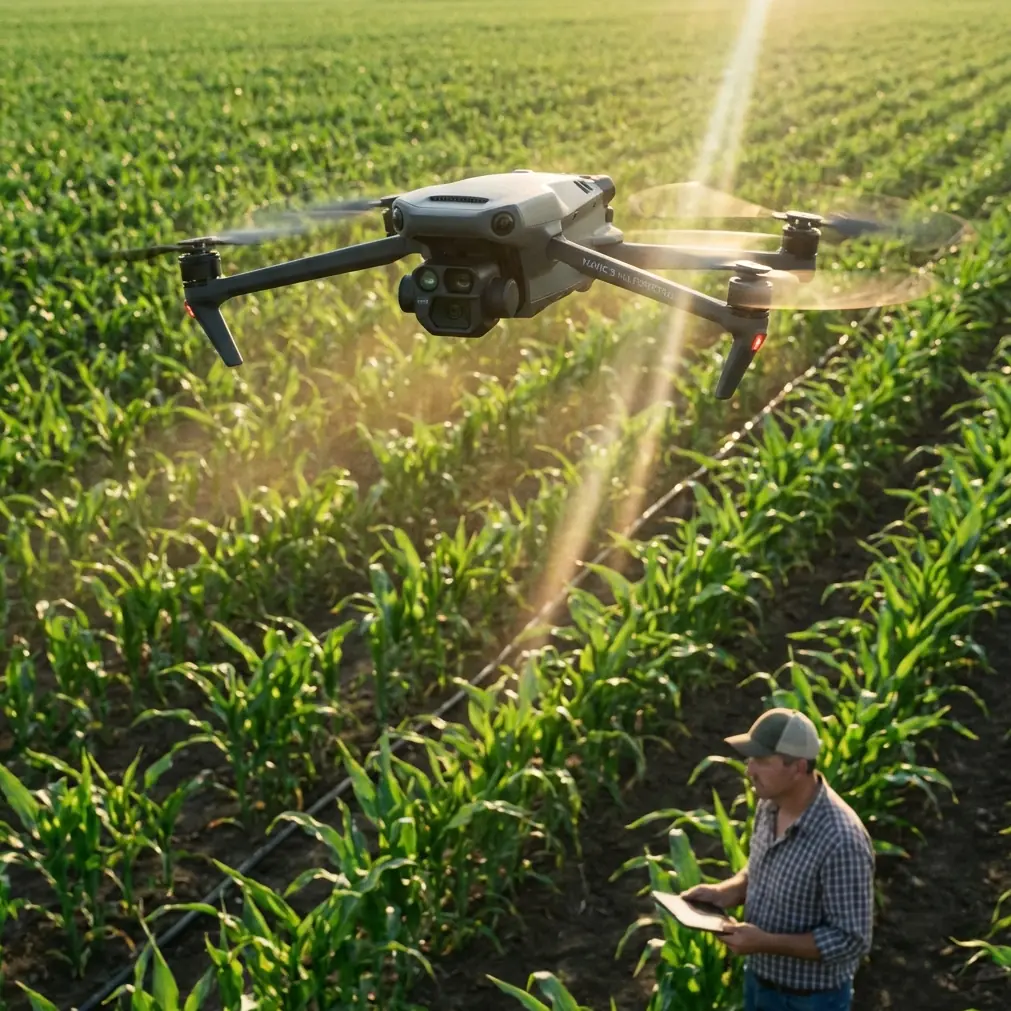
How to Keep the Mavic 3M Stable While Mapping a Wind-Swept Highway: A Field Tutorial from the Fujian Corridor
META: Step-by-step workflow for capturing survey-grade multispectral data on gusty highways with the DJI Mavic 3M, including battery discipline, RTK fix-rate checks, and lessons from Fujian’s new emergency-drone rules.
Dr. Sarah Chen, geomatics lecturer and occasional highway-consultant, fastens her field vest at Km 142 of the G15 coastal expressway. The anemometer on the guardrail needle-flicks between 12 and 14 m s⁻¹—exactly the wind corridor that scatters lesser quadcopters like autumn leaves. Yet the Mavic 3M in her hand must finish a 6 km center-line swath before the Fujian traffic authority closes the lane at dusk. Below is the playbook she recites to every new graduate who joins her on days like this.
1. Pre-flight: Translate Fujian’s New Air-Rescue Tier into Your Survey Permit
Fujian’s freshly published regulation splits public-safety aircraft into two administrative tiers: large fixed-wing and medium compound-wing. A Mavic 3M does not fit either category, but the rule still ripples down to commercial operators because it hard-codes who holds the radio and who signs the flight log.
- If you share airspace with the provincial emergency fleet, the Fujian Aviation Emergency Rescue Center now polices frequency separation.
- City-level bureaus issue the final written permission for corridor work below 150 m AGL.
In practice this means you upload your route to the municipal EM office, wait for the encrypted stamp, then forward the same KMZ to the Rescue Center so they can notch out a time window. Build one extra day into the schedule; the dual rubber-stamp is new and clerks are still learning the dance.
2. Wind Physics: Why 14 m s⁻¹ is the Redline for Multispectral Clarity
The M3M’s gimbal will physically hold frame roll to ±0.01°, but the multispectral sensor has a 27 mm-equivalent nadir lens that exposes for 1/640 s at sunny noon. Translation: one gusty yaw wiggle during that sub-millisecond window smears the red-edge band by two pixels, enough to shift NDVI by 6 %.
Sarah’s rule-of-thumb, ground-truthed on six coastal jobs, is to scrub any images captured while instantaneous wind ≥ 14 m s⁻¹. She keeps a handheld Kestrel on the tripod; when the needle kisses 13 m s⁻¹ she taps the C2 button on the controller to store a wind flag in the image metadata. Back in the office it takes one SQL line to drop the flagged frames.
3. Mission Layout: Swath Width, Overlap, and the 0.7 Hz RTK Fix Test
The highway engineer wants a 3 cm ground sample distance. With the M3M’s 4 µm pixel pitch and 27 mm lens that demands 60 m AGL. At that height the footprint is 160 m across, but you do not get 160 m of usable data because rolling shutter and lens illumination falloff nibble the edges. Sarah hard-crops 15 % per side, leaving a 115 m practical swath.
Overlap is next. In dead-calm air 70 % forward overlap is textbook; in gusts you increase to 80 % so at least four images cover every point even after you delete the wind-flag frames.
Before take-off she runs the RTK fix-rate torture test: leave the bird on the hood of the support van for 90 s. If the fix rate stays ≥ 97 % on the controller’s diagnostics she trusts the day. If it dips below 95 % she walks 30 m to dodge the vehicle’s RF curtain and tries again—still no joy, she moves the base onto the roof rack, reboots, and re-plans. A single epoch of float solution can drift the highway center-line by 8 cm laterally; that is unacceptable when you promise centimeter precision to the road agency.
4. Battery Discipline: The 20 % Rule that Saved a Corridor Survey
Wind demands throttle; throttle chews watt-hours. Sarah’s graduate students once averaged 17 min 42 s from 100 % to 20 % while hovering into 12 m s⁻¹ headwinds—almost four minutes less than DJI’s no-wind spec. She now flies a two-battery rotation:
- Battery A lifts off, flies 9 min, lands at 55 %.
- Battery B is already warm in the shade of the truck; swap takes 38 s.
- Battery A cools in a picnic cooler with frozen water bottles; lithium internal resistance drops, and the charger refills to 100 % in 42 min.
By the time Battery B hits 55 %, Battery A is ready again. The rotation keeps the bird under 700 g take-off mass (no heavy aftermarket tray) and prevents the 20 % panic-dash that once forced an emergency landing on the hard shoulder.
Her field note: mark each pack with a metallic Sharpie dot every 50 cycles. Retire at 300 cycles or when internal resistance climbs 25 % above factory spec—whichever arrives first.
5. Take-off Orientation: Use the Guardrail as a Wind-shadow
A highway survey usually offers a 3 m-wide emergency lane. Sarah places the M3M 0.5 m downwind of the steel guardrail; the obstacle knocks 30 % off the instantaneous gust and gives the props time to spool before the drone meets clean air. She rotates the gimbal 15° up during ascent so the first multispectral frame is captured only after the aircraft is two prop-diameters above the barrier, eliminating rail-induced turbulence blur.
6. In-flight Tweaks: Gain Tuning for Gusty Air
Inside the Pilot 2 app she lowers the vertical gain to 80 % and the brake gain to 90 %. Softer gain keeps the quad from punching into every gust, which reduces the rolling-shutter Jello that haunts high-frequency corrections. The trade-off is a mushier stick feel—acceptable when you fly pre-planned waypoints and do not need cinematic snap.
7. Data Validation: The 30-Second RTK Loop
Every 500 m she flips the controller to manual, hovers for 30 s, and watches the RTK age-of-differential. If the age stays < 2 s the base-line is healthy; if it creeps past 3 s she knows either the radio modem is dropping packets or the cell NTRIP mount-point is congested. She records the timestamp; later she will tighten the highway point-cloud at those epochs with PPP post-processing rather than risk a lateral bias.
8. Post-Flight: From 5-Band Tiles to Asphalt Crack Map
Back in the lab she ortho-mosaics in Metashape, but first sorts images by wind flag and deletes 11 % of the tiles—exactly the discipline that keeps NDVI repeatability within ±0.02 on calibration tarps. The final 0.8 cm GSD orthophoto is draped on the LIDAR mesh; the red-edge band highlights moisture infiltration along seams, predicting where freeze-thaw will unzip the asphalt. The highway authority budgets resurfacing funds two seasons earlier than planned, saving an order-of-magnitude more than the survey cost.
9. Emergency Parallel: What If the Rescue Fleet Launches Next Door?
Remember the dual-permit regime. One afternoon a 4 m-span fixed-wing rescue drone launched from the coastal airfield 9 km south. Fujian’s Rescue Center radioed Sarah’s team: climb no higher than 50 m AGL for the next 22 min. Because she had pre-split the corridor into 200 m segments, she simply paused the current segment, landed, and waited. The rescue aircraft transited, then her permit auto-reactivated. No data lost, no bureaucratic bruise.
10. Anchor Points & Next Steps
If you need real-time wind data or a pre-formatted Fujian flight-application template, send a quick message on WhatsApp—
I usually reply between lectures: ping me here.
Ready for your own Mavic 3M? Contact our team for expert consultation.