
Precision Construction Surveys with the Mavic 3M
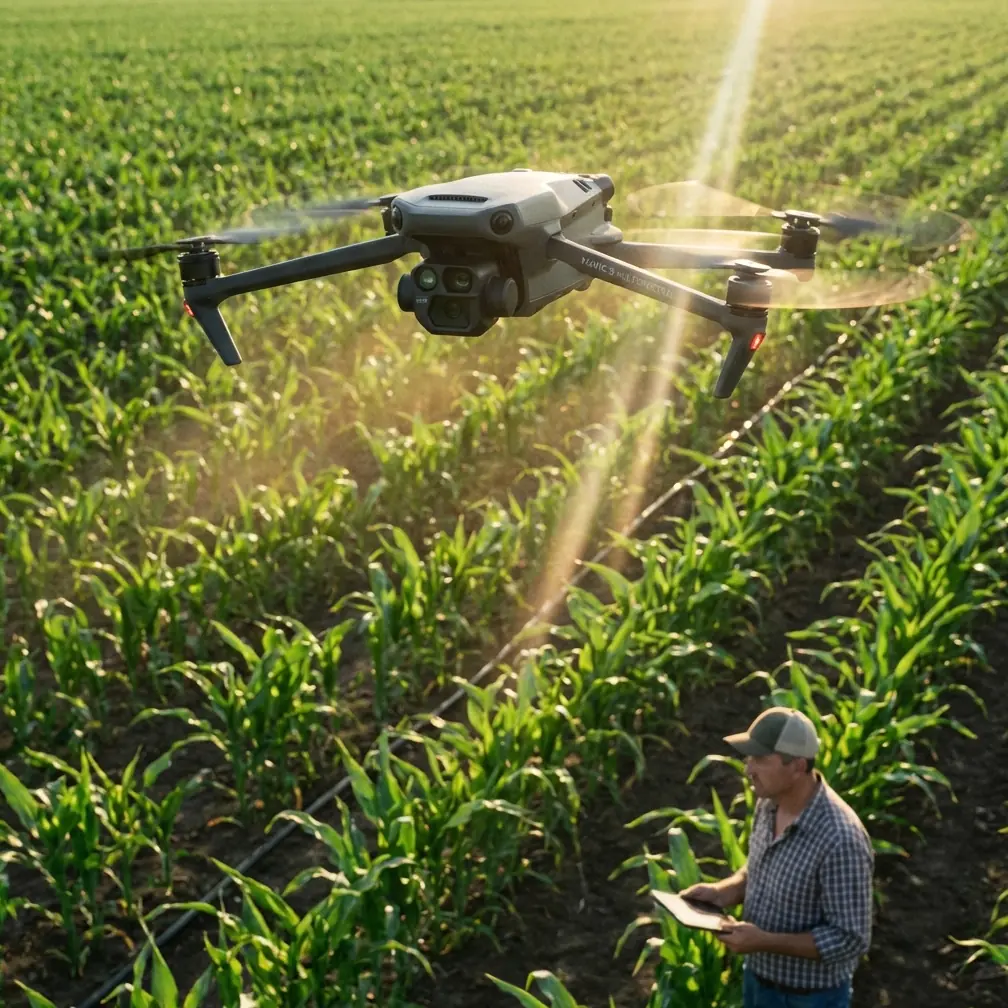
Precision Construction Surveys with the Mavic 3M
META: Learn how the DJI Mavic 3M delivers centimeter precision for construction site surveys in extreme temperatures. Expert tutorial by Marcus Rodriguez.
By Marcus Rodriguez | Drone Survey Consultant | 12+ min read
TL;DR
- The Mavic 3M combines a multispectral imaging array with an RGB camera to deliver comprehensive construction site survey data even in temperatures ranging from -10°C to 40°C.
- RTK Fix rate above 95% ensures centimeter precision on active job sites where traditional survey crews struggle with speed and safety.
- IPX6K-rated weather resistance means you can fly reliable missions in dust storms, light rain, and harsh UV conditions common on exposed construction sites.
- This tutorial walks you through the complete workflow—from mission planning to data processing—so you can cut survey turnaround by up to 60% compared to ground-based methods.
Why Construction Site Surveys in Extreme Temps Demand a Specialized Drone
Survey teams working construction sites in the American Southwest, Middle Eastern deserts, or subarctic infrastructure projects face a brutal reality: ground crews lose 2–4 hours per shift to heat breaks, cold-weather equipment failures, and safety stand-downs. The DJI Mavic 3M eliminates this bottleneck by putting a multispectral survey platform in the air for up to 43 minutes per flight, collecting data that would take a ground team an entire day.
This tutorial covers every step of deploying the Mavic 3M on construction sites where temperatures punish both equipment and operators. You'll learn mission planning for thermal expansion conditions, RTK configuration for centimeter precision, and data processing workflows that produce deliverables your clients actually need.
Understanding the Mavic 3M's Sensor Suite for Construction
The Multispectral Advantage Beyond Agriculture
Most pilots associate multispectral imaging with crop health analysis, but the Mavic 3M's four multispectral sensors (Green, Red, Red Edge, NIR) paired with a 20MP RGB camera unlock powerful construction applications.
The multispectral bands detect:
- Moisture variation in freshly poured concrete and subgrade materials
- Vegetation encroachment on graded surfaces that signals drainage problems
- Thermal stress patterns on exposed steel and asphalt when combined with radiometric analysis
- Soil composition changes across cut-and-fill zones that affect compaction quality
- Surface erosion channels invisible to standard RGB imagery
The 0.7m GSD at 100m altitude on the multispectral sensors gives you enough resolution to identify problem areas before they become change orders.
RGB Camera Specifications That Matter on Site
The primary RGB camera features a 4/3 CMOS sensor with a mechanical shutter, which eliminates the rolling shutter distortion that plagues lesser drones when flying over vibrating machinery and reflective surfaces. At 20MP, each image captures enough detail for 1:500 scale topographic deliverables when flown at appropriate altitudes.
Step-by-Step Tutorial: Surveying a Construction Site in Extreme Heat
Step 1 — Pre-Mission Planning for Thermal Conditions
Before you even unpack the Mavic 3M, you need to account for how extreme temperatures affect your survey accuracy.
Heat shimmer begins degrading image quality when ground temperatures exceed 45°C (common when ambient air sits at 35°C+ over dark surfaces). Schedule your flights for early morning or late afternoon when the temperature differential between air and ground is smallest.
- Check ground control point (GCP) stability—thermal expansion shifts aluminum survey targets by 1–3mm in extreme heat
- Pre-cool your DJI RC Pro controller in a vehicle with AC; screen readability drops above 40°C ambient
- Load your flight plan in DJI Terra or your preferred mission software before heading to the field
- Verify RTK base station mount points aren't on surfaces prone to thermal expansion
- Pack compressed air to clear dust from the multispectral sensor array between flights
Pro Tip: Fly a quick test strip of 10–15 images at your planned altitude before committing to the full mission. Check the images immediately for heat shimmer artifacts. If you see wavy distortion near the ground plane, increase your altitude by 15–20m and accept slightly lower GSD. Blurry centimeter data is worse than sharp two-centimeter data.
Step 2 — RTK Configuration for Centimeter Precision
The Mavic 3M supports both Network RTK (NTRIP) and the DJI D-RTK 2 base station. On construction sites, I strongly recommend the D-RTK 2 base station for one reason: cell coverage on remote job sites is unreliable, and losing your NTRIP connection mid-flight destroys your RTK Fix rate.
Here's how to optimize your setup:
- Place the D-RTK 2 base station on a known survey benchmark or let it self-calibrate for a minimum of 10 minutes (I recommend 20 minutes in extreme temperatures as ionospheric activity increases with heat)
- Confirm your RTK Fix rate reads above 95% before initiating the survey mission
- Set your RTK altitude reference to ellipsoidal height and convert to orthometric in post-processing for consistency with your project's vertical datum
- Enable RTK data logging on the aircraft as a backup in case real-time corrections drop momentarily
- Monitor the satellite count—you want 18+ satellites across GPS, GLONASS, Galileo, and BeiDou constellations
When the RTK Fix rate stays above 95%, your horizontal accuracy lands within 1–2cm and vertical accuracy within 1.5–3cm without GCPs. That precision meets or exceeds the requirements for ALTA/NSPS surveys, volumetric calculations, and as-built verification.
Step 3 — Flight Execution and Real-Time Monitoring
Configure your mission with these parameters for construction site surveys:
- Flight altitude: 80–120m AGL depending on required GSD
- Front overlap: 80% minimum (I use 85% on complex terrain)
- Side overlap: 70% minimum
- Flight speed: 7–10 m/s to ensure the mechanical shutter captures clean images
- Swath width: At 100m altitude, expect roughly 130m effective swath width on the RGB sensor
During one project in the Nevada desert last summer, with ambient temperatures hitting 42°C, I was running a grading verification survey over a 45-hectare commercial pad site. Midway through the second battery swap, the Mavic 3M's obstacle avoidance sensors flagged a large object in the flight path—a red-tailed hawk circling a thermal column directly in the planned corridor at 90m AGL.
The aircraft's omnidirectional obstacle sensing system autonomously paused the mission, held position, and displayed the alert on my controller screen. I watched the hawk ride the thermal for about two minutes before it drifted east. The Mavic 3M resumed its pre-programmed waypoint mission exactly where it left off, with zero data gaps. The multispectral sensors didn't miss a single capture line. That kind of intelligent autonomy matters when you're battling the clock against rising temperatures and you can't afford to re-fly an entire mission because of an unexpected wildlife encounter.
Expert Insight: Battery performance degrades in extreme temperatures. At 40°C+, expect roughly 15% reduced flight time compared to manufacturer specs. At -10°C, the reduction can hit 20–25%. Always carry at least three fully charged batteries and keep spares in an insulated cooler (warm in winter, cool in summer) to maintain optimal cell voltage before flight.
Step 4 — Data Processing and Deliverables
Once you land, transfer your data to DJI Terra or your preferred photogrammetry platform. Here's the processing workflow I use for construction clients:
- Import RTK-tagged images and verify coordinate metadata on a random sample of 10 images
- Run aerotriangulation with RTK data; if your Fix rate exceeded 95%, you can skip GCPs entirely for most applications
- Generate a dense point cloud at high quality settings
- Export deliverables: orthomosaic (GeoTIFF), DSM, DTM, contour lines (DXF), and volumetric calculations
- Process multispectral bands separately for moisture and material analysis if required
Technical Comparison: Mavic 3M vs. Common Alternatives for Construction Surveys
| Feature | DJI Mavic 3M | Phantom 4 RTK | Generic Multispectral Drone |
|---|---|---|---|
| Multispectral Sensors | 4-band + RGB | RGB only | 5–6 band, no integrated RGB |
| RTK Fix Rate (typical) | >95% | >95% | Varies by integration |
| Max Flight Time | 43 min | 30 min | 20–25 min |
| Weather Rating | IPX6K | Not rated | Varies |
| Operating Temp Range | -10°C to 40°C | 0°C to 40°C | Varies |
| Mechanical Shutter (RGB) | Yes | Yes | Often no |
| Centimeter Precision (RTK) | 1–2 cm horizontal | 1–2 cm horizontal | 2–5 cm typical |
| Weight | 951g | 1391g | 2000g+ |
| Obstacle Avoidance | Omnidirectional | Forward/backward only | Rarely included |
| Swath Width at 100m | ~130m (RGB) | ~110m | Varies by lens |
Advanced Applications: Where Multispectral Meets Construction
Nozzle Calibration and Spray Drift Monitoring for Dust Suppression
Large construction sites use water trucks and spray systems for dust suppression—a compliance requirement on nearly every grading permit. The Mavic 3M's multispectral sensors detect moisture distribution patterns across treated surfaces, allowing you to:
- Verify spray coverage uniformity and identify dry patches
- Monitor spray drift from wind carrying suppressant off-target
- Optimize nozzle calibration on spray rigs by mapping before-and-after moisture levels
- Document compliance with air quality management district requirements
This application alone can save a general contractor thousands in potential dust violation fines.
Volumetric Analysis with Centimeter Precision
Earthwork quantities drive payment on every grading contract. The Mavic 3M's RTK-enabled surveys produce volumetric calculations accurate to within 1.5% of traditional ground survey methods at a fraction of the time. Run weekly fly-overs to track cut-and-fill progress and catch discrepancies before they compound into disputes.
Common Mistakes to Avoid
- Flying in peak heat without checking for heat shimmer — Degraded imagery wastes an entire flight and battery cycle. Always run a test strip first.
- Relying on Network RTK at remote construction sites — Cell signal drops kill your Fix rate. Use the D-RTK 2 base station for guaranteed corrections.
- Setting overlap too low to save flight time — Below 75% front overlap, photogrammetry software struggles to align images over the uniform textures common on graded construction sites (bare dirt, gravel, asphalt).
- Ignoring the multispectral data — Many construction surveyors only process RGB images. The NIR and Red Edge bands reveal subsurface moisture and material density issues invisible to the naked eye.
- Skipping pre-flight sensor calibration — The multispectral sensors require a sunlight irradiance calibration panel shot before each mission. Skipping it makes your spectral data useless for quantitative analysis.
- Storing batteries in a hot vehicle between flights — LiPo cells degrade rapidly above 45°C. Use an insulated bag or cooler.
Frequently Asked Questions
Can the Mavic 3M replace a traditional ground survey crew on construction sites?
For topographic surveys, progress monitoring, and volumetric calculations, yes—the Mavic 3M with RTK achieves centimeter precision that meets industry standards. For boundary surveys and legal plats, you still need a licensed surveyor with ground equipment. The Mavic 3M dramatically accelerates the data collection phase, but it supplements rather than fully replaces licensed survey professionals for regulatory submissions.
How does the IPX6K rating hold up on dusty construction sites?
The IPX6K rating means the Mavic 3M withstands high-pressure water jets, which translates to strong protection against fine dust and sand particles. I've flown it on sites with active grading operations kicking up significant dust clouds and experienced zero sensor degradation. That said, always inspect and clean the multispectral lens array after dusty flights using compressed air and a microfiber cloth. Prevention extends the hardware's operational life.
What's the minimum number of ground control points needed with RTK enabled?
With a consistent RTK Fix rate above 95%, you can technically produce accurate deliverables with zero GCPs. However, best practice for construction survey accountability is to place 3–5 checkpoints (not used in processing) to independently verify your accuracy. This gives your client—and their engineer of record—confidence that the data meets project specifications. On a recent 45-hectare site survey, my checkpoint residuals averaged 1.2cm horizontal and 2.1cm vertical with zero GCPs in the processing workflow.
Ready for your own Mavic 3M? Contact our team for expert consultation.