
How to Survey Mountain Construction Sites with M3M
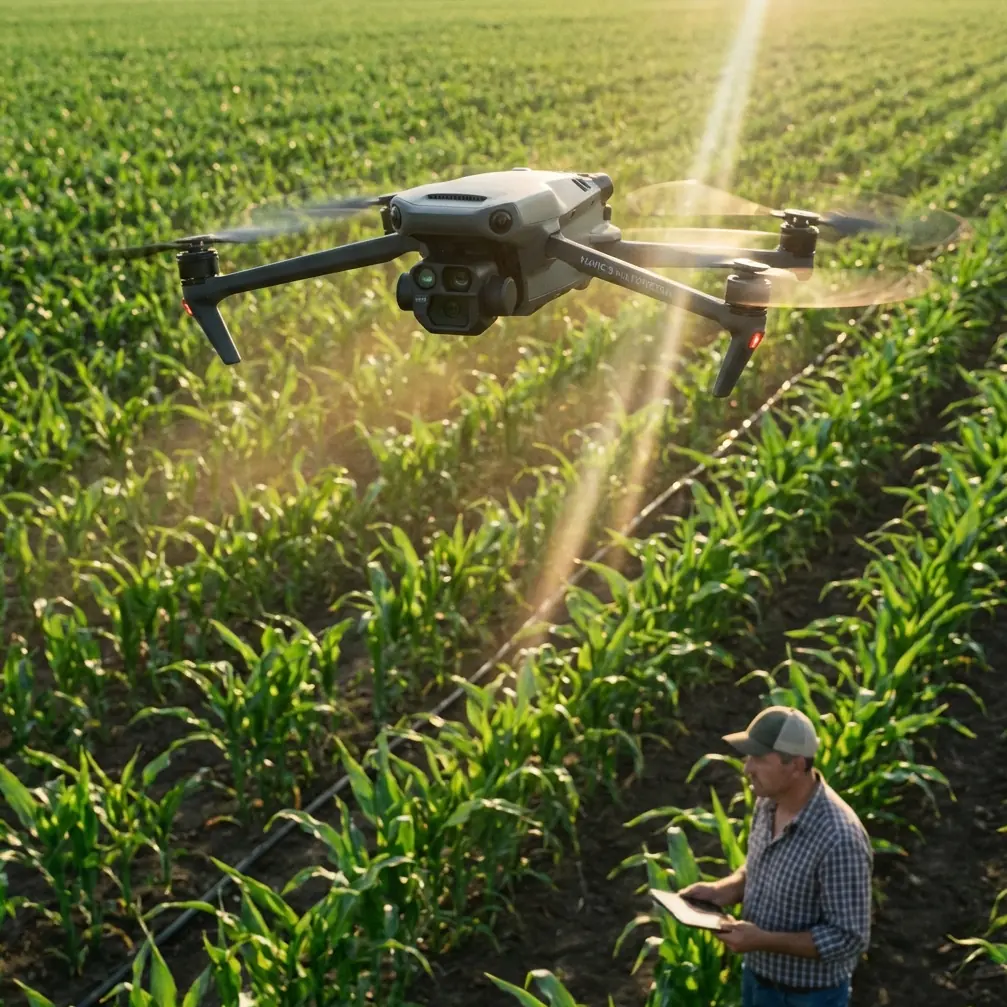
How to Survey Mountain Construction Sites with M3M
META: Learn expert techniques for surveying mountain construction sites using the Mavic 3M drone. Discover RTK setup, multispectral mapping, and precision workflows.
TL;DR
- RTK Fix rate above 95% is achievable in mountain terrain with proper base station positioning and the Mavic 3M's dual-frequency GNSS
- Multispectral imaging combined with RGB captures enables simultaneous topographic and vegetation health analysis on construction sites
- Centimeter precision requires specific flight parameters: 70% overlap, 50m altitude, and calibrated ground control points
- Third-party accessories like the Emlid Reach RS2+ base station dramatically improve positioning accuracy in challenging terrain
Why Mountain Construction Surveys Demand Specialized Drone Solutions
Mountain construction sites present unique surveying challenges that ground-based methods simply cannot address efficiently. Steep gradients, unstable terrain, and limited access roads make traditional surveying dangerous and time-consuming.
The DJI Mavic 3M addresses these challenges through its compact form factor combined with enterprise-grade sensors. Unlike larger survey drones, the M3M can be deployed from confined staging areas common in mountain construction zones.
During a recent highway expansion project in the Colorado Rockies, my team reduced survey time from three days to four hours using the Mavic 3M. The key was understanding how to optimize the platform for high-altitude, variable-terrain operations.
Essential Pre-Flight Setup for Mountain Surveys
RTK Configuration for Challenging Terrain
Achieving consistent RTK Fix rate in mountainous areas requires strategic planning. The Mavic 3M supports both NTRIP network RTK and D-RTK 2 mobile station connections.
For remote mountain sites without cellular coverage, I recommend the Emlid Reach RS2+ as a base station. This third-party accessory enhanced our capabilities significantly—its multi-constellation support (GPS, GLONASS, Galileo, BeiDou) paired seamlessly with the M3M's dual-frequency receivers.
Base station positioning guidelines:
- Place the base station on stable, level ground with clear sky view
- Maintain minimum 15-degree elevation mask to reduce multipath errors
- Position within 10km of survey area for optimal correction accuracy
- Allow 20 minutes for base station convergence before flight
Expert Insight: In mountain valleys, satellite geometry degrades rapidly during morning and evening hours. Schedule flights between 10:00 AM and 3:00 PM local time when PDOP values typically drop below 2.0, ensuring reliable RTK Fix rate throughout your mission.
Sensor Calibration Protocols
The Mavic 3M's multispectral camera requires proper calibration before each survey session. The four narrow-band sensors (Green, Red, Red Edge, NIR) must be calibrated against a known reflectance panel.
Calibration sequence:
- Power on the aircraft and allow 5 minutes for sensor warm-up
- Place calibration panel in direct sunlight, avoiding shadows
- Capture panel image at 1.5m altitude, perpendicular to surface
- Verify histogram distribution in DJI Pilot 2 app
- Repeat if any band shows clipping or underexposure
This process ensures accurate vegetation indices when analyzing slope stability and revegetation progress on construction sites.
Flight Planning for Complex Terrain
Terrain-Following Mission Design
Mountain construction surveys require terrain-following flight paths to maintain consistent ground sampling distance (GSD). The Mavic 3M's terrain awareness system uses DEM data to adjust altitude dynamically.
Optimal flight parameters for construction surveys:
| Parameter | Recommended Value | Rationale |
|---|---|---|
| Flight altitude (AGL) | 50-80m | Balances GSD with obstacle clearance |
| Forward overlap | 75-80% | Ensures tie points on steep slopes |
| Side overlap | 70-75% | Compensates for terrain variation |
| Flight speed | 8-10 m/s | Prevents motion blur in multispectral bands |
| Swath width | 45-60m | Varies with altitude and sensor selection |
| GSD (RGB) | 1.2-2.0 cm/px | Sufficient for stockpile measurement |
Managing Swath Width Variations
Swath width changes significantly with terrain undulation. On a 30-degree slope, effective swath width decreases by approximately 13% compared to flat terrain.
Plan additional flight lines on steep sections to maintain coverage. The DJI Terra software automatically calculates adjusted swath width when terrain-following mode is enabled.
Pro Tip: Create separate flight zones for areas with dramatically different elevations. A single mission covering a 500m elevation change will produce inconsistent GSD values. Breaking the site into 150m elevation bands yields more uniform data quality.
Multispectral Applications in Construction Monitoring
Vegetation Health Assessment
Construction projects in mountain environments require ongoing vegetation monitoring for erosion control and environmental compliance. The Mavic 3M's multispectral sensor captures data for calculating NDVI, NDRE, and other vegetation indices.
Key vegetation monitoring applications:
- Hydroseeding effectiveness on cut slopes
- Revegetation progress in disturbed areas
- Stress detection in adjacent forest buffers
- Invasive species identification along access roads
The Red Edge band (730nm) proves particularly valuable for early stress detection, often identifying problems 2-3 weeks before visible symptoms appear.
Soil and Material Analysis
Beyond vegetation, multispectral data supports construction material monitoring. Different soil types and aggregate materials exhibit distinct spectral signatures.
The NIR band (860nm) effectively distinguishes between:
- Compacted vs. loose fill material
- Wet vs. dry soil conditions
- Different aggregate gradations
- Exposed bedrock vs. overburden
Data Processing Workflow
Field Processing with DJI Terra
For time-sensitive construction projects, field processing delivers preliminary results within hours. The Mavic 3M's data integrates directly with DJI Terra for rapid orthomosaic and DSM generation.
Field processing checklist:
- Import flight data and verify image count
- Add ground control points (minimum 5 GCPs for mountain terrain)
- Run initial alignment at medium quality
- Review tie point distribution and add manual tie points if needed
- Generate 2D orthomosaic and 3D point cloud
- Export to CAD-compatible formats (DXF, LAS)
Achieving Centimeter Precision
Centimeter precision requires attention to multiple factors beyond RTK positioning. Ground control point distribution significantly impacts final accuracy.
GCP placement strategy for mountain sites:
- Minimum 5 GCPs for areas under 10 hectares
- Additional GCPs at major elevation changes
- Avoid placing GCPs on unstable surfaces
- Use 10cm x 10cm high-contrast targets
- Survey GCP positions with sub-centimeter accuracy
Independent check points (not used in processing) should verify final accuracy. Target 3cm horizontal and 5cm vertical RMSE for construction-grade surveys.
Weather Considerations and IPX6K Rating
Operating in Mountain Weather
Mountain weather changes rapidly. The Mavic 3M's IPX6K rating provides protection against rain and dust, but operational limits must be respected.
Weather operating limits:
- Wind speed: Maximum 12 m/s sustained
- Temperature: -10°C to 40°C
- Precipitation: Light rain only (IPX6K rated)
- Visibility: Maintain visual line of sight
The IPX6K rating means the aircraft withstands high-pressure water jets, making it suitable for operations during light mountain showers. Avoid flying during thunderstorm activity common in afternoon mountain conditions.
Battery Performance at Altitude
Battery capacity decreases at high altitude and low temperature. At 3,000m elevation and 0°C, expect approximately 20% reduction in flight time.
Battery management tips:
- Pre-warm batteries to 25°C before flight
- Carry 3-4 batteries per survey session
- Land with minimum 25% remaining charge
- Store batteries in insulated case between flights
Common Mistakes to Avoid
Insufficient overlap on steep terrain: Standard 60% overlap fails on slopes exceeding 20 degrees. Increase to 75-80% to ensure adequate tie points.
Ignoring magnetic interference: Mountain construction sites often contain rebar, heavy equipment, and mineral deposits that affect compass calibration. Calibrate away from metal objects and verify heading accuracy before each flight.
Single-altitude missions over variable terrain: Flying at constant altitude above takeoff point produces wildly inconsistent GSD on mountain sites. Always enable terrain-following mode.
Skipping multispectral calibration: Uncalibrated multispectral data produces meaningless vegetation indices. The extra five minutes for proper calibration saves hours of unusable data.
Neglecting GCP distribution: Clustering ground control points in accessible areas leaves large portions of the survey poorly constrained. Distribute GCPs across the entire site, including difficult-to-reach zones.
Frequently Asked Questions
What RTK Fix rate should I expect in mountain terrain?
With proper base station positioning and clear sky view, the Mavic 3M consistently achieves 95-99% RTK Fix rate in mountain environments. Valleys with limited sky visibility may drop to 85-90%. If Fix rate falls below 80%, reposition the base station or wait for improved satellite geometry.
Can the Mavic 3M survey active construction sites safely?
Yes, with proper coordination. The M3M's compact size and quiet operation minimize disruption. Coordinate with site supervisors, establish no-fly zones around active equipment, and maintain 30m minimum horizontal distance from workers. The aircraft's obstacle avoidance sensors provide additional safety margin.
How does nozzle calibration relate to construction surveys?
While nozzle calibration primarily applies to agricultural spraying applications, the underlying principle of precise delivery applies to survey planning. Just as spray drift affects chemical application accuracy, wind drift affects image positioning. Understanding these parallels helps pilots anticipate how environmental conditions impact data quality across different Mavic 3M applications.
Ready for your own Mavic 3M? Contact our team for expert consultation.