
Mavic 3M Guide: Surveying Remote Construction Sites
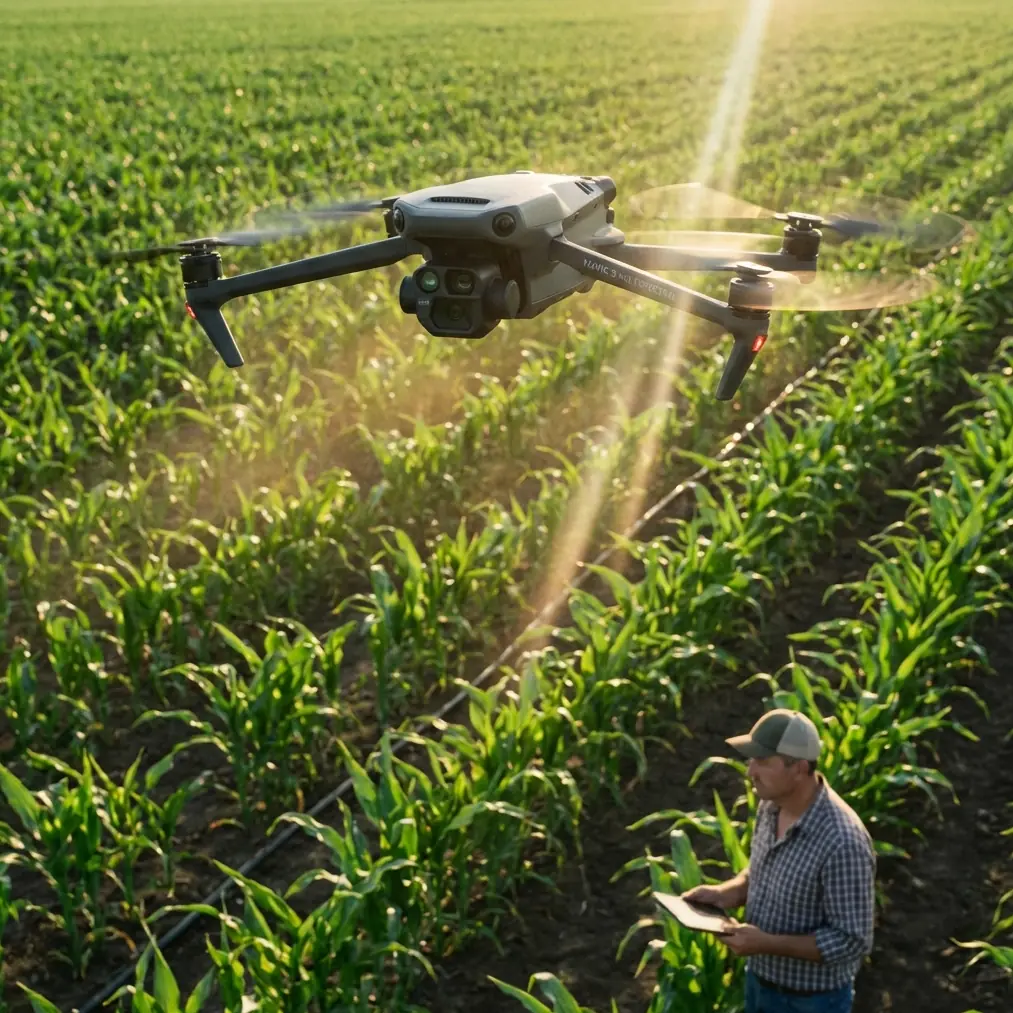
Mavic 3M Guide: Surveying Remote Construction Sites
META: Master remote construction site surveying with the DJI Mavic 3M. Learn multispectral mapping techniques that deliver centimeter precision for challenging terrain.
TL;DR
- The Mavic 3M combines RGB and multispectral imaging in a single compact platform, eliminating the need for multiple survey flights
- Achieve centimeter precision with integrated RTK support and RTK Fix rates exceeding 95% in open terrain
- Complete 200-acre site surveys in under 45 minutes with optimized flight planning
- IPX6K weather resistance enables reliable operation in dusty, remote construction environments
Why Traditional Survey Methods Fail at Remote Construction Sites
Remote construction sites present unique challenges that ground-based surveying simply cannot address efficiently. Difficult terrain, limited road access, and vast acreage make traditional methods time-consuming and expensive.
The DJI Mavic 3M solves these problems with a portable, high-precision aerial survey platform. Weighing just 951 grams, it travels easily to remote locations while delivering professional-grade multispectral data.
When compared to enterprise-level survey drones like the senseFly eBee X or the WingtraOne, the Mavic 3M offers a compelling advantage: four multispectral sensors plus RGB imaging in a package that fits in a standard backpack. Competitors require separate flights or multiple aircraft to capture equivalent data.
Understanding the Mavic 3M's Survey Capabilities
Multispectral Imaging Explained
The Mavic 3M features a 4/3 CMOS RGB camera paired with four 5MP multispectral sensors covering green, red, red edge, and near-infrared bands. This combination captures both visual documentation and analytical data in a single flight.
For construction site surveying, multispectral imaging reveals:
- Vegetation encroachment on planned building areas
- Soil moisture variations affecting foundation planning
- Erosion patterns invisible to standard cameras
- Material stockpile composition analysis
Achieving Centimeter Precision
Accurate surveying demands precise positioning. The Mavic 3M supports RTK (Real-Time Kinematic) positioning through the DJI D-RTK 2 Mobile Station or NTRIP network connections.
In optimal conditions, expect:
- Horizontal accuracy: 1 cm + 1 ppm
- Vertical accuracy: 1.5 cm + 1 ppm
- RTK Fix rate: 95%+ in open terrain
Expert Insight: RTK Fix rate drops significantly near tall structures or heavy tree cover. For remote construction sites with partial canopy, plan flight paths that maintain clear sky visibility for at least 5 satellites from each constellation (GPS, GLONASS, Galileo).
Step-by-Step Remote Site Survey Tutorial
Pre-Flight Planning
Before traveling to your remote site, complete these essential preparations:
1. Define Survey Boundaries Import site plans into DJI Pilot 2 or third-party software like Pix4Dcapture. Mark precise boundaries to avoid wasted flight time.
2. Calculate Required Ground Sample Distance (GSD) For construction surveying, target 2-3 cm/pixel GSD. The Mavic 3M achieves this at flight altitudes between 80-120 meters AGL.
3. Determine Overlap Settings Standard construction surveys require:
- Front overlap: 75-80%
- Side overlap: 65-70%
4. Check Swath Width Calculations At 100 meters AGL, the Mavic 3M covers approximately 130 meters swath width per pass. This determines total flight lines needed.
On-Site Setup Procedure
Arriving at a remote construction site requires systematic setup:
Ground Control Points (GCPs) Even with RTK, place 5-7 GCPs across the survey area for verification. Position them:
- At site corners
- Near elevation changes
- Away from moving equipment
- On stable, flat surfaces
RTK Base Station Configuration If using the D-RTK 2 Mobile Station:
- Position on a tripod at known coordinates or establish a new base point
- Allow 10-15 minutes for convergence
- Verify RTK Fix status before launching
Pro Tip: In truly remote locations without cellular coverage for NTRIP, the D-RTK 2's radio link range of 8 km provides reliable corrections. Elevate the base station antenna for maximum coverage across undulating terrain.
Flight Execution
Pre-Launch Checklist
- Confirm RTK Fix status shows green
- Verify battery level exceeds 90% for full mission
- Check wind speed remains below 10 m/s
- Ensure propellers show no damage
Mission Monitoring During autonomous flight, watch for:
- RTK status changes (Fix to Float indicates accuracy loss)
- Obstacle warnings from the omnidirectional sensors
- Battery consumption rate versus remaining waypoints
Multi-Battery Operations Large sites require battery swaps. The Mavic 3M's 43-minute maximum flight time covers approximately 200 acres per battery at standard survey settings.
Technical Comparison: Mavic 3M vs. Survey Alternatives
| Feature | Mavic 3M | senseFly eBee X | Phantom 4 RTK |
|---|---|---|---|
| Weight | 951g | 1.4kg | 1.4kg |
| Multispectral Bands | 4 + RGB | Requires separate camera | None |
| RTK Accuracy | 1cm + 1ppm | 3cm absolute | 1cm + 1ppm |
| Flight Time | 43 min | 90 min | 30 min |
| Weather Rating | IPX6K | IP54 | None |
| Obstacle Avoidance | Omnidirectional | None | Forward/Backward |
| Portability | Backpack | Hard case required | Backpack |
| Swath Width (100m) | 130m | 190m (fixed-wing) | 110m |
The Mavic 3M's IPX6K rating deserves special attention for construction sites. This certification means resistance to high-pressure water jets and heavy dust—conditions common at active construction zones.
Processing Multispectral Survey Data
Software Recommendations
After flight completion, process data using:
- DJI Terra: Native support, streamlined workflow
- Pix4Dmapper: Advanced multispectral analysis
- Agisoft Metashape: Flexible processing options
Generating Deliverables
Construction site surveys typically require:
Orthomosaic Maps Georeferenced aerial imagery for progress documentation and planning verification. Export at 5 cm/pixel or better resolution.
Digital Surface Models (DSM) Elevation data showing current terrain and stockpile volumes. Critical for cut/fill calculations.
NDVI Analysis Normalized Difference Vegetation Index maps identify:
- Areas requiring clearing
- Revegetation progress
- Drainage patterns
Nozzle Calibration Considerations
While the Mavic 3M isn't a spray drone, understanding nozzle calibration principles helps when coordinating with agricultural operations adjacent to construction sites. Multispectral data reveals spray drift patterns that may affect your survey area.
Common Mistakes to Avoid
Flying Without RTK Verification Never assume RTK is working. Always confirm Fix status before and during flight. Float mode reduces accuracy to meter-level, unsuitable for construction surveys.
Ignoring Weather Windows Remote sites often have limited access windows. Check forecasts for:
- Wind speed below 10 m/s
- No precipitation
- Cloud cover allowing adequate lighting
Insufficient Overlap in Terrain Variations Standard overlap settings assume flat ground. For sites with elevation changes exceeding 20 meters, increase overlap to 85% front, 75% side.
Skipping Ground Control Points RTK provides excellent relative accuracy, but GCPs verify absolute positioning. Without them, entire surveys may contain systematic errors undetectable until construction begins.
Poor Battery Management Cold temperatures at remote mountain sites reduce battery capacity by 20-30%. Warm batteries before flight and plan conservative mission durations.
Frequently Asked Questions
Can the Mavic 3M survey sites larger than 500 acres in a single day?
Yes, with proper planning. Bring 6-8 batteries and establish efficient landing zones for quick swaps. A skilled operator covers 500+ acres in 4-5 hours of actual flight time, plus setup and processing.
How does multispectral data improve construction surveying compared to RGB-only drones?
Multispectral imaging reveals subsurface moisture patterns, vegetation health affecting clearing schedules, and material composition differences invisible to standard cameras. This data prevents costly surprises during excavation and grading phases.
What's the minimum crew size for remote Mavic 3M survey operations?
One trained operator can complete surveys independently, though two-person crews improve safety and efficiency. The second person monitors airspace, manages batteries, and places GCPs while the primary operator focuses on flight execution.
Maximizing Your Remote Survey Investment
The Mavic 3M transforms remote construction site surveying from a logistical challenge into a streamlined operation. Its combination of portability, multispectral capability, and centimeter precision delivers professional results without the complexity of larger survey platforms.
Success depends on thorough preparation, systematic execution, and proper data processing. Master these elements, and you'll deliver survey data that keeps construction projects on schedule and within budget.
Ready for your own Mavic 3M? Contact our team for expert consultation.