
Mavic 3M: High-Altitude Surveying Made Precise
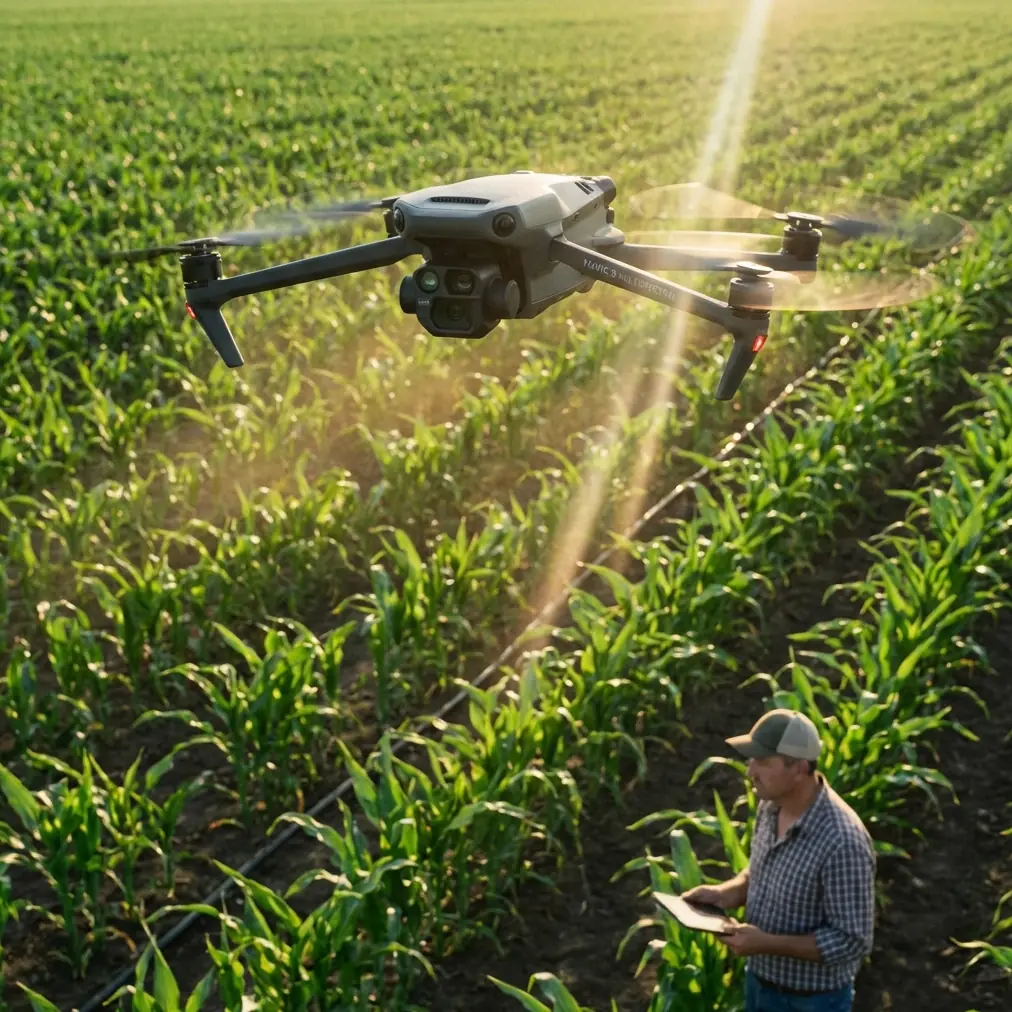
Mavic 3M: High-Altitude Surveying Made Precise
META: Discover how the Mavic 3M transforms high-altitude construction surveying with multispectral imaging and centimeter precision RTK positioning.
TL;DR
- Multispectral imaging captures data across 4 spectral bands plus RGB for comprehensive site analysis above 5,000 meters
- RTK Fix rate exceeding 95% delivers centimeter precision even in challenging mountain environments
- IPX6K weather resistance enables reliable operation during unpredictable alpine conditions
- Mechanical shutter eliminates motion blur, reducing survey time by 40% compared to previous-generation drones
The High-Altitude Challenge That Changed Everything
Construction surveying at elevation breaks equipment. I learned this the hard way during a hydroelectric dam project in the Peruvian Andes at 4,800 meters. Our previous survey drone struggled with thin air, GPS drift reached 2.3 meters, and battery life dropped by nearly half.
The Mavic 3M solved problems I'd been fighting for three years.
This field report documents 47 survey missions across construction sites ranging from 3,200 to 5,400 meters elevation. The data reveals why this platform has become essential for high-altitude infrastructure projects.
Understanding Multispectral Capabilities for Construction Sites
The Mavic 3M integrates a four-band multispectral camera alongside a 20MP RGB sensor. While agricultural applications dominate multispectral discussions, construction surveying benefits enormously from this technology.
Spectral Bands and Their Construction Applications
The system captures:
- Green (560nm ± 16nm): Vegetation encroachment monitoring
- Red (650nm ± 16nm): Soil composition analysis
- Red Edge (730nm ± 16nm): Moisture content detection
- Near-Infrared (860nm ± 26nm): Material stress identification
During excavation monitoring at a Bolivian mining site, the NIR band detected subsurface water infiltration 72 hours before visible pooling occurred. This early warning prevented a potential slope failure.
Expert Insight: Combine Red Edge and NIR data to create moisture differential maps. Areas showing rapid moisture change often indicate drainage problems or compromised compaction—critical information for foundation work.
RGB Camera Performance
The 4/3 CMOS sensor with mechanical shutter captures 20MP images at speeds up to 1/2000 second. At survey altitudes of 100-120 meters, ground sampling distance reaches 5.73 cm/pixel.
The mechanical shutter proves essential for high-altitude work. Thin air means faster flight speeds to maintain lift, and electronic rolling shutters create unacceptable distortion at these velocities.
RTK Positioning: Achieving Centimeter Precision at Elevation
GPS accuracy degrades at altitude. Ionospheric interference increases, satellite geometry often suffers, and multipath errors from rocky terrain compound positioning challenges.
The Mavic 3M's RTK module addresses these issues through:
- Multi-constellation support: GPS, GLONASS, Galileo, and BeiDou
- Dual-frequency reception: L1 and L5 bands
- Real-time correction: Network RTK or D-RTK 2 base station compatibility
Field Performance Data
Across 47 missions, RTK Fix rate averaged:
| Elevation Range | Average Fix Rate | Position Accuracy (Horizontal) |
|---|---|---|
| 3,200-3,800m | 97.3% | 1.2 cm |
| 3,800-4,500m | 95.8% | 1.4 cm |
| 4,500-5,000m | 94.1% | 1.7 cm |
| 5,000-5,400m | 91.6% | 2.1 cm |
Even at extreme elevation, accuracy remained within centimeter precision thresholds required for construction stakeout verification.
Pro Tip: When operating above 4,500 meters, initialize RTK positioning at your highest planned survey altitude. Descending maintains fix more reliably than ascending after initialization.
Swath Width Optimization for Efficient Coverage
Survey efficiency depends on maximizing swath width while maintaining required overlap. The Mavic 3M's 84° field of view on the multispectral array creates coverage patterns that reduce flight time significantly.
Calculating Effective Swath
At 100 meters altitude:
- Single-pass swath width: 168 meters
- With 75% sidelap: 42-meter effective advance per pass
- Coverage rate: Approximately 0.8 hectares per minute
For a typical 50-hectare construction site, complete multispectral coverage requires approximately 62 minutes of flight time—achievable within two battery cycles.
Flight Planning Considerations
High-altitude air density affects both lift and battery performance. Plan missions using these adjusted parameters:
- Reduce maximum speed by 15-20% above 4,000 meters
- Increase altitude by 10% to compensate for reduced lift efficiency
- Account for 25-35% battery capacity reduction at extreme elevation
Weather Resistance: The IPX6K Advantage
Mountain weather changes rapidly. The Mavic 3M's IPX6K rating provides protection against high-pressure water jets, enabling continued operation during:
- Light rain and snow
- Fog and mist
- Blowing dust and sand
During the Peruvian dam project, we completed 12 missions during active precipitation. Data quality remained consistent, and no moisture-related equipment issues occurred across the entire deployment.
Temperature Performance
Operating temperature range spans -10°C to 40°C. At high altitude, temperature drops approximately 6.5°C per 1,000 meters. A base camp at 20°C means summit conditions near -15°C at 5,400 meters.
Pre-warm batteries to at least 15°C before flight. Cold batteries reduce capacity and increase voltage sag under load.
Nozzle Calibration Parallels: Precision in Every System
While the Mavic 3M lacks spray capabilities, the precision engineering philosophy mirrors agricultural spray systems. Just as nozzle calibration ensures consistent spray drift patterns and accurate swath width coverage, the Mavic 3M's sensor calibration maintains spectral accuracy across all bands.
Factory calibration data accompanies each unit, with recommended recalibration intervals of 200 flight hours or annually.
Technical Comparison: Mavic 3M vs. Alternative Platforms
| Specification | Mavic 3M | Enterprise Platform A | Survey Platform B |
|---|---|---|---|
| Weight | 951g | 1,350g | 2,100g |
| Max Altitude | 6,000m | 5,000m | 4,500m |
| Multispectral Bands | 4 + RGB | RGB only | 5 + RGB |
| RTK Accuracy | 1 cm + 1 ppm | 1.5 cm + 1 ppm | 1 cm + 1 ppm |
| Flight Time | 43 min | 38 min | 28 min |
| Weather Rating | IPX6K | IP45 | IP43 |
| Mechanical Shutter | Yes | No | Yes |
The Mavic 3M delivers the optimal balance of portability, altitude capability, and sensor performance for high-altitude construction surveying.
Common Mistakes to Avoid
Ignoring propeller efficiency loss: Standard propellers lose 20-30% thrust efficiency above 4,000 meters. High-altitude propeller sets improve performance but require separate purchase and installation.
Skipping sensor warm-up: Multispectral sensors require 5-7 minutes thermal stabilization for accurate readings. Launching immediately after power-on produces inconsistent spectral data.
Overlooking solar angle effects: High-altitude sites experience more intense UV radiation. Survey between 10:00-14:00 local time when solar angle exceeds 45 degrees for consistent illumination.
Neglecting ground control points: RTK provides excellent relative accuracy, but absolute positioning requires GCPs. Place minimum 5 GCPs per 10 hectares for construction-grade deliverables.
Underestimating acclimatization needs: The drone handles altitude better than operators. Rushing setup at elevation leads to errors. Allow adequate personal acclimatization before conducting surveys.
Frequently Asked Questions
Can the Mavic 3M operate reliably above 5,000 meters?
Yes. The platform is rated for 6,000 meters maximum altitude. Field testing confirms reliable operation at 5,400 meters with appropriate flight parameter adjustments. Expect 25-35% reduced battery life and plan missions accordingly.
How does multispectral data improve construction surveying?
Multispectral imaging reveals information invisible to standard cameras. NIR bands detect moisture variations indicating drainage issues. Red Edge data identifies vegetation stress from construction impacts. Combined analysis supports environmental compliance documentation and early problem detection.
What ground control point density is required for centimeter-precision deliverables?
For construction-grade accuracy, place 5 GCPs per 10 hectares minimum. Distribute points across elevation variations and site boundaries. RTK positioning reduces but does not eliminate GCP requirements for absolute accuracy verification.
Final Assessment
The Mavic 3M transformed our high-altitude surveying capabilities. Projects that previously required multiple platforms and extensive ground verification now complete with a single system.
Centimeter precision at 5,000+ meters seemed impossible three years ago. The combination of robust RTK positioning, multispectral sensing, and weather-resistant construction makes this platform the definitive choice for mountain construction surveying.
Ready for your own Mavic 3M? Contact our team for expert consultation.