
Mavic 3M on High-Altitude Coastlines: A Field Report
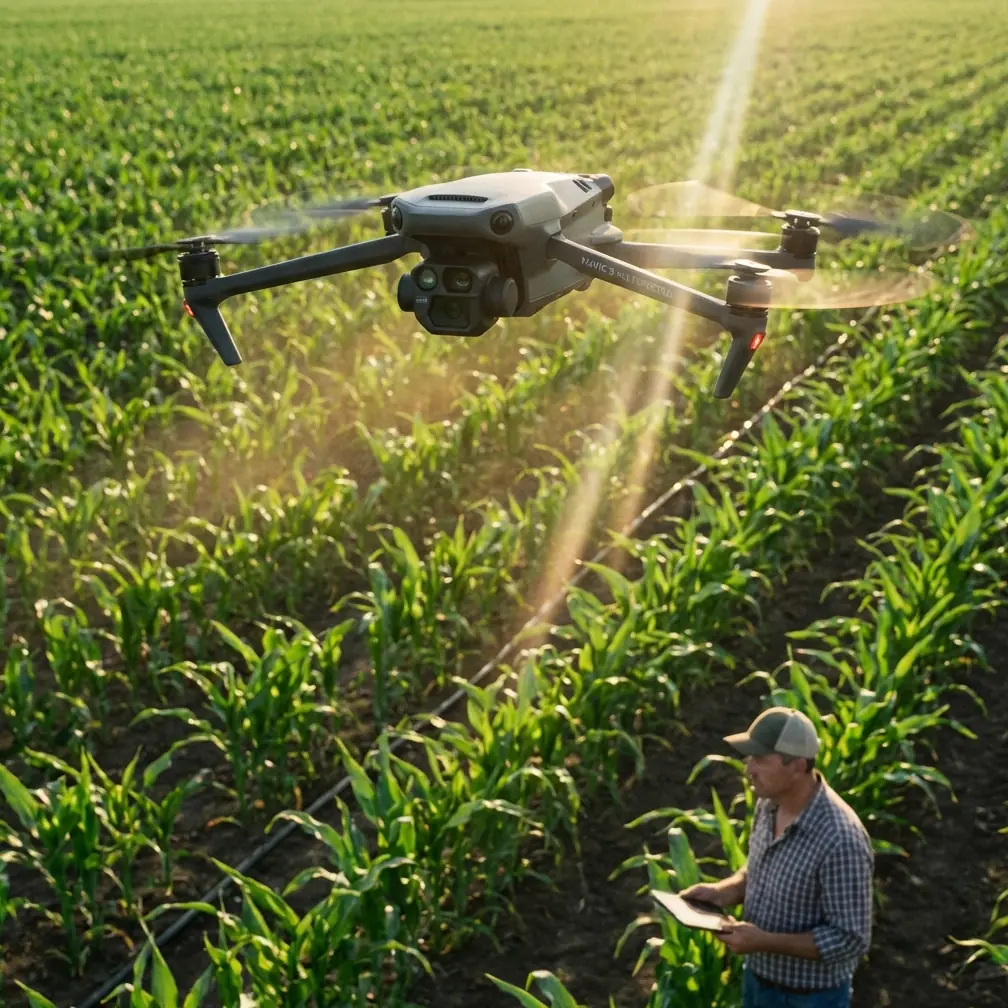
Mavic 3M on High-Altitude Coastlines: A Field Report on Precision, Interference, and Smarter Capture
META: Expert field report on using the DJI Mavic 3M for high-altitude coastline surveying, with practical insights on RTK stability, multispectral workflows, electromagnetic interference, and disciplined flight execution.
High-altitude coastline work exposes every weak habit a drone team has.
You feel it before takeoff. Wind rolls off the escarpment. Salt haze flattens contrast. GNSS behavior can change from one launch point to the next because the terrain, structures, and nearby communications equipment all shape the RF environment. On paper, the Mavic 3M looks ideal for this kind of mission: compact, efficient, and built around multispectral data capture that supports vegetation analysis, shoreline condition monitoring, and corridor-style mapping. In the field, though, the aircraft only performs as well as the operator’s system discipline.
That is the real story.
I’ve spent enough time around academic and applied survey teams to know that the difference between a usable dataset and a frustrating reflight usually comes down to small operational decisions. With the Mavic 3M, especially on elevated coastal sites, the priority is not just getting airborne. It is preserving consistency in image geometry, maintaining RTK confidence, and keeping the aircraft predictable when electromagnetic interference starts creeping into the workflow.
Why the Mavic 3M makes sense for coastline surveys
The Mavic 3M is often discussed as an agriculture platform because of its multispectral payload. That framing is too narrow. On coastlines, multispectral capture can help teams distinguish vegetated dune systems, identify stress patterns in salt-tolerant plant communities, document land-water transition zones, and separate disturbed surfaces from stable cover. For environmental monitoring, that matters far more than generic marketing labels.
A coastline survey also rewards aircraft that can move quickly between dispersed launch points. Many sites are awkward: cliff edges, access tracks, narrow staging zones, or elevated platforms above the shore. A compact aircraft reduces setup friction. That is one reason the Mavic 3M fits well into academic field campaigns and contractor workflows where crews may need to cover multiple segments in a day.
Still, the payload is only half the equation. The other half is positional reliability.
When readers ask me what they should watch first in a high-altitude coastal mission, my answer is simple: RTK fix rate and aircraft composure under interference. If your fix quality drops in and out, centimeter precision becomes an aspiration rather than a deliverable. And once the aircraft is working in a noisy RF environment, even experienced pilots can misread the source of the problem. They blame wind, or satellite geometry, or the drone itself, when the issue is often local interference combined with poor site setup.
The hidden-function problem exists in drones too
One of the more interesting reference points behind this article came from an unexpected place: a piece about smartphone photography. Its core observation was that many people blame the phone when their images look soft, badly lit, or poorly composed, when the real issue is that they never learned the useful built-in functions. That is not just a phone story. It is a drone operations story.
I see the same pattern with survey crews.
They assume weak outputs are a hardware limitation. In reality, they have not built repeatable habits around antenna orientation, mission planning, overlap discipline, terrain awareness, and environmental checks. The Mavic 3M has enough capability to produce serious geospatial results, but it does not rescue sloppy fieldcraft.
On a coastline, “hidden functions” are not menu tricks. They are operational behaviors that unlock the platform you already have.
Antenna adjustment is one of them.
Electromagnetic interference: the quiet disruptor
High coastal ridges and developed shorelines can be surprisingly hostile to stable links. Communication towers, radar-adjacent infrastructure, relay equipment, metal railings, cliffside buildings, and even parked service vehicles can all contribute to a messy electromagnetic environment. The Mavic 3M may still fly, but the quality of command link, RTK correction flow, and general confidence in the mission can degrade before the pilot fully notices it.
This is where antenna handling stops being a minor detail.
In practical terms, I advise crews to treat the controller antennas as part of the survey instrument, not as an afterthought. Small orientation changes can improve the link budget enough to stabilize performance, especially when the aircraft is operating laterally along a coastal face rather than directly out in front of the pilot. If the signal begins to fluctuate near a ridge shoulder or near installed infrastructure, I want the team to pause and assess geometry first: aircraft position relative to the operator, operator position relative to probable interference sources, and whether a different stance or launch point clears the path.
That sounds mundane. It is not. It is often the difference between finishing the line and aborting it.
A disciplined crew will also monitor where the aircraft passes relative to metallic clutter or communications hardware. If interference appears to cluster in a repeated location, don’t muscle through it and hope for the best. Shift the operator location, re-aim antennas deliberately, and rerun the segment only after the control link and RTK behavior settle.
If your team needs a practical discussion of field setup logic for coastal missions, I usually suggest sharing mission specifics before mobilization through a direct planning channel such as this WhatsApp line, especially when launch geometry and interference exposure are not obvious from desktop mapping alone.
Precision is not just RTK on or RTK off
The phrase “centimeter precision” gets used too loosely in drone mapping circles. On a coastline, it has to be earned.
The Mavic 3M can contribute to high-accuracy datasets, but only if the entire mission chain stays coherent: stable corrections, consistent speed, proper image overlap, and clean flight lines across terrain that often changes elevation and reflectance quickly. Coastal surfaces are deceptive. Sand, rock, scrub, wet patches, tidal edges, and shadow bands all challenge image matching differently.
That is why RTK fix rate matters as an active field metric, not a spec-sheet talking point. If the aircraft is dropping out of a robust fix state during crucial parts of the corridor, you should assume the final surface model may need more verification. The temptation is to keep flying because the drone appears stable enough. For surveying, “stable enough” is not a standard.
I prefer to think of RTK as one layer of trust. It must be supported by good mission design.
On elevated coastal corridors, swath width decisions are part of that design. Push the swath too wide and you may gain productivity at the cost of edge consistency, especially if crosswind begins tilting vegetation or changing ground texture between passes. Fly too conservatively and you inflate battery swaps, processing volume, and exposure to shifting weather. The right balance depends on terrain shape, target ground sampling needs, and whether the end product prioritizes shoreline geometry, habitat classification, or change detection.
What training literature still gets right
Another useful reference behind this piece came from aerobatic RC training, of all places. At first glance, that seems unrelated to the Mavic 3M. It isn’t.
The material emphasized two ideas that remain deeply relevant for professional UAV work: maintaining higher flight speed through transitions can create time margin, and positioning maneuvers symmetrically around a visual center improves consistency. One section even quantified the value of efficiency, arguing that a better turn structure can effectively win back about 20% more time for alignment, reflection, and planning between actions.
That number belongs to a different flight discipline, but the operational lesson translates well.
In coastline surveying, every turn is a quality event. If turns are sloppy, if the aircraft overshoots, if the line re-entry is crooked, or if the pilot loses orientation near a cliff face, the mission accumulates small defects. Better crews preserve rhythm. They know where the line begins, where the transition occurs, and how to re-establish the next leg with minimal drift. They do not improvise the shape of the mission in real time unless conditions demand it.
The RC text also stressed symmetry relative to a performance center. For mapping, the equivalent is symmetry relative to the planned corridor and terrain reference. That matters on coastlines because visual cues can trick the pilot. Water and sky erase contrast. Sloped terrain distorts distance judgment. A drone that feels visually centered may actually be offset from the intended mapping lane. Good mission planning and disciplined line entry help correct that bias.
This is one reason I encourage training teams to rehearse coastal mission geometry before collecting production data. Not because the Mavic 3M is difficult to fly, but because coastal environments make ordinary mistakes harder to detect.
Battery realism beats optimistic scheduling
The educational TT drone reference provided another detail worth carrying into Mavic 3M operations: flight endurance only has meaning inside a workflow. In that training context, a single battery supported about 13 minutes of unloaded flight, and a charging hub could replenish one battery in roughly 30 minutes while cycling through three batteries in sequence. The numbers are platform-specific, of course, but the operational principle is universal.
Do not build your coastline day around nominal endurance alone.
Survey teams often calculate sortie counts based on ideal battery performance and then act surprised when field reality compresses margins. High-altitude launch points, wind exposure, repeated repositioning, and delays caused by RTK checks or interference assessments all consume time. Even if the Mavic 3M significantly exceeds the small training drone’s endurance, the lesson remains sharp: battery logistics are mission architecture.
On coastal work, I plan energy around interruptions, not around best-case duration. That means accounting for time spent waiting for stable initialization, verifying image capture continuity, and occasionally powering down to reset workflow cleanly if conditions become inconsistent. The TT reference even noted that the aircraft needs a brief rest after using a battery. Again, different aircraft, same mindset: reliability comes from respecting the operating cycle rather than pretending the drone is a tireless sensor mast.
Crews that ignore this usually make poorer decisions near the end of a sortie. They stretch the final line, rush the last turn, or skip a verification pass. That is how gaps appear.
Multispectral value on coastlines is easy to oversimplify
Because the Mavic 3M is a multispectral platform, some operators assume every coastline mission should automatically center on vegetation indices. Sometimes yes. Sometimes no.
The real strength is not merely producing colorful analytical layers. It is combining spectral separation with accurate spatial coverage so you can answer site-specific questions. Is dune vegetation under stress after salt spray and seasonal traffic? Are restoration areas establishing consistently across slope zones? Is there a visible transition between stable and disturbed coastal margins? Can you isolate plant communities that look similar in RGB but diverge spectrally?
Those are useful outputs. But they only become defensible when your capture geometry is clean and your control quality holds.
This is why I get uneasy when operators jump straight to post-processing conversations before they have solved field execution. The cleanest analytical map in software cannot rescue weak source collection. Start with line discipline, RTK integrity, interference management, and altitude strategy. Then let the multispectral payload do its job.
The field habit that saves the most rework
If I had to name one habit that prevents the most wasted effort on high-altitude coastline missions with the Mavic 3M, it would be this: stop treating each sortie as an isolated flight.
Think in loops.
Launch, verify RTK state, confirm link stability, inspect the first image set, check corridor alignment, monitor interference zones, review the turn behavior, then decide whether the next sortie should be identical or adjusted. That loop creates operational intelligence during the day. Without it, teams repeat the same flaw three or four times before noticing.
The smartphone article I mentioned earlier made a deceptively simple point: bad output often comes from underused capability, not from bad hardware. In drone surveying, that principle is even more unforgiving. The Mavic 3M already gives crews a capable airframe and a meaningful sensor package. The value comes from how intentionally you use them.
On a quiet inland site, mediocre habits can still produce acceptable maps. On a high coastal ridge with changing interference conditions, no such mercy exists.
That is why the best Mavic 3M coastline work does not look flashy from the outside. It looks controlled. Antennas are adjusted on purpose. Launch positions are chosen for RF clarity, not convenience. RTK fix quality is watched like a live variable. Swath width is matched to terrain reality. Battery planning assumes friction, not perfection. And every turn is treated as part of the dataset, not dead time between lines.
That is how you get survey-grade confidence from a compact multispectral platform in one of the least forgiving civilian environments to map.
Ready for your own Mavic 3M? Contact our team for expert consultation.