
Mavic 3M in Windy Conditions: A Practical Field Tutorial
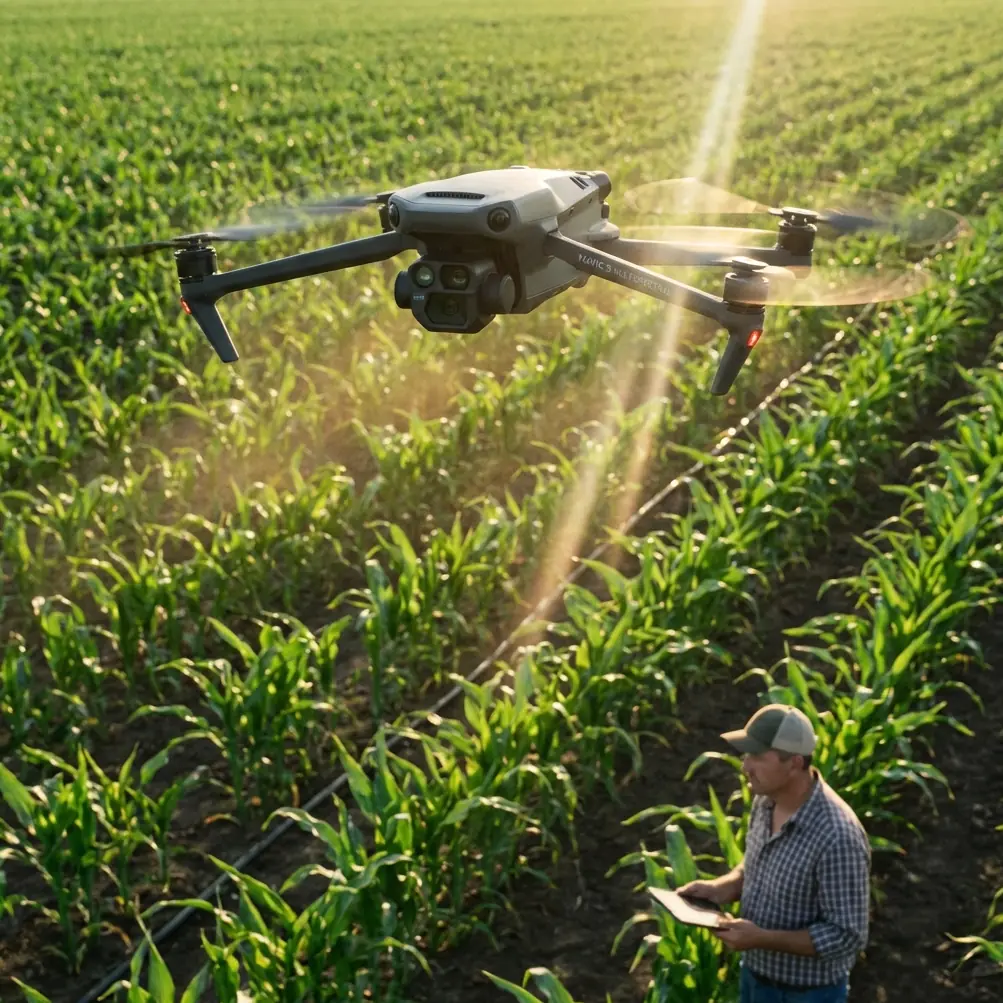
Mavic 3M in Windy Conditions: A Practical Field Tutorial for Cleaner Flights, Better Data, and Safer Low-Altitude Work
META: A field-focused Mavic 3M tutorial for windy operations, covering pre-flight cleaning, low-altitude practice, drift awareness, RTK precision, and why disciplined launch habits matter.
If you are planning wildlife-area spraying support or vegetation monitoring in windy conditions, the hardest part is rarely the aircraft itself. It is workflow discipline. The Mavic 3M is a data tool first, and in wind, small mistakes made on the ground become large errors in the air: drifted coverage assumptions, inconsistent multispectral capture, unstable low-altitude handling, and poor launch decisions that ripple through the rest of the mission.
That is why I want to start somewhere many operators skip: pre-flight cleaning and surface preparation.
This may sound basic. It is not. In my own training framework, especially for crews transitioning from mapping into wind-sensitive field operations, the safest and most repeatable missions begin with an almost boring routine. Clean the aircraft exterior. Check that the vision-related surfaces and camera windows are free of dust, moisture, residue, and plant debris. Confirm the landing area is flat and visually distinct. Then fly only after the aircraft, sensors, and takeoff point are giving you a stable baseline.
That approach lines up with a useful training principle found in DJI educational flight material: beginners are advised to choose a calm setting, use a flat open area, and place the aircraft on a level surface with clear ground texture. That guidance matters even more when your real mission environment is windy. You may not get calm air in the field, but you can still control the launch geometry, the cleanliness of the aircraft, and the quality of the visual reference below it. A textured, level launch point helps the aircraft settle into a predictable initial hover. In a windy wildlife or habitat management scenario, that predictability reduces rushed stick inputs and poor first corrections.
Another detail from that same training reference is worth highlighting: an automatic takeoff sequence can bring the aircraft to roughly 80 centimeters above the ground before it holds position. Operationally, that number matters. Near the surface, wind is often turbulent and inconsistent because of grass, brush, vehicles, embankments, and tree lines. If the aircraft reaches a stable hover around 80 cm, that is not your cue to accelerate straight into the mission. It is the moment to watch. Does the Mavic 3M hold cleanly? Is there lateral creep? Are the multispectral and RGB payload surfaces clear enough to trust your capture? Is your RTK fix rate stable, or are you forcing the aircraft to work from a compromised start?
For windy work, those first seconds tell the truth.
A lot of field teams think of the Mavic 3M primarily through its multispectral value, and rightly so. Its usefulness in vegetation assessment, stress detection, and treatment planning depends on data consistency. But data consistency is not only about the sensor block. It is also about how well the aircraft is managed in the first meter above ground and the first minute after launch. Wind amplifies poor habits. If the aircraft departs with residue on exposed surfaces, dampness around camera covers, or dust affecting downward sensing performance, the quality of hovering, positioning, and image repeatability can all degrade in ways that are easy to miss until processing.
For wildlife spraying support, this becomes especially relevant because the Mavic 3M is often not acting as the spray platform itself. It may be the reconnaissance layer used to identify vegetation boundaries, assess treatment zones, map access corridors, or verify habitat conditions before a separate application workflow begins. In those cases, spray drift is not an abstract term. It is a planning variable. Wind can move droplets off target, but it can also distort your confidence if your mapping pass was flown carelessly. If your low-altitude data collection is shaky, your assumptions about swath width, exclusion buffers, and sensitive habitat edges may be wrong before the sprayer even starts.
That is why I advise operators to borrow another simple lesson from entry-level training manuals: practice low and slow first. The reference document recommends initial flight at about 30 to 50 centimeters, with a suggested maximum not exceeding the pilot’s own height during early control practice. For a professional Mavic 3M operator, this is not about learning like a hobbyist. It is about validating control feel under current wind conditions before committing to a larger autonomous or semi-automated pattern. In other words, do a controlled micro-evaluation close to the ground. Test vertical response. Test yaw authority. Test how the aircraft reacts when you make small corrections rather than aggressive ones.
That last point matters. The same training source emphasizes using small stick movements to avoid collisions and overcorrections. In windy conditions, exaggerated inputs create their own instability. A pilot who fights gusts with abrupt commands often worsens lateral oscillation and wastes battery on unnecessary corrections. With the Mavic 3M, that translates into less efficient route execution and potentially lower consistency in overlap and ground sampling reliability. Small, deliberate input discipline is not “beginner advice.” It is precision work.
Now let’s connect that to field realities specific to wildlife-area operations.
Windy environments often mean uneven terrain, mixed canopy height, open corridors next to dense growth, and airborne contaminants such as dust, pollen, mist, or fine spray residue from nearby equipment. This is where the pre-flight cleaning step becomes more than cosmetic. Before takeoff, wipe exposed sensor windows, camera glass, and airframe surfaces that could carry residue into the mission. Confirm the landing gear area is free from mud or plant matter. If the aircraft has been transported in a dirty vehicle or staged beside active spraying equipment, do not assume the optics are fine because they “look okay” at a glance. A thin film is enough to affect confidence in your capture, especially when multispectral outputs are meant to support treatment decisions.
On the navigation side, readers often ask about RTK fix rate and centimeter precision. In a windy mission, centimeter-level positioning is only valuable if the aircraft can maintain stable flight long enough to exploit it. RTK does not erase drift physics. It improves positional certainty, route repeatability, and geospatial trust. That is crucial when you are building treatment maps, revisiting plots, or comparing plant response across time. But RTK should be treated as one layer in a stack: clean sensors, sound launch practice, stable hover confirmation, measured low-altitude handling, then precision mission execution. Skip the early layers and the headline precision becomes less meaningful.
I also want to touch on control setup, because training references mention that some drones default to an “American hand” stick layout while allowing alternatives. For professional crews, stick mode is not a trivial preference when operating in wind. Consistency across pilots matters. If one operator uses a different yaw/throttle arrangement than the rest of the team, takeover scenarios become messier, especially during low-altitude corrections near sensitive vegetation or exclusion zones. Standardize your controller mode within the crew, document it, and train to that standard. Wind is not the time for muscle-memory confusion.
There is another useful lesson hidden in a technical motor-control reference, even though it comes from a more general ESC context than the Mavic 3M ecosystem. That document describes a startup sequence with 3 beeps at power-on, then a low beep at the start of arming and a high beep at the end. The operational takeaway is simple: startup signals matter, and they should never be treated as background noise. Different aircraft families communicate readiness differently, but disciplined operators always verify that the aircraft has completed its startup logic cleanly before moving into takeoff. In windy field deployments, rushed launches are common because crews want to “beat the gusts.” That is exactly when checklist discipline tends to fail.
The same technical note warns that if full throttle is detected during arming, the system can enter an unintended programming path in that platform context. Again, the broader lesson is what matters here: control inputs during startup should be deliberate, neutral, and standardized. For a Mavic 3M team, that means no casual stick movement, no distracted handling while discussing the mission, and no half-attention setup behavior. Windy operations reward boring professionalism.
So how should a practical windy-day Mavic 3M routine look?
Start with the aircraft case open and a cleaning cloth in hand. Remove dust, moisture, and residue from all relevant surfaces. Inspect the multispectral and visible imaging components carefully. Check propellers and folding arms. Confirm the takeoff area is flat, open, and visually textured enough to support stable initial sensing. Power up calmly and let the system complete its startup state without unnecessary control input. Verify your navigation status and RTK readiness if the mission requires centimeter precision. Use auto takeoff or a controlled manual launch, then watch the aircraft at its initial hover rather than hurrying away. Assess drift, responsiveness, and visual stability. Perform a short low-altitude handling check with small stick movements. Only then begin the planned route.
If your mission connects directly to spraying decisions, pause once more before route execution and ask the hard question: are wind conditions still compatible with acceptable drift risk? The Mavic 3M can help you understand vegetation and terrain, but it cannot make poor application weather acceptable. A clean map collected in unsuitable spray conditions is still useful for planning, but it should not be used to justify pushing ahead when off-target movement is likely.
For teams building this workflow into repeatable operations, I recommend a written pre-flight card that includes cleaning, hover check, RTK confirmation, low-altitude control validation, and drift assessment. If you need help structuring that checklist around your own field conditions, you can share your use case here: message our operations desk.
The deeper point is that windy operations are not won by bravado or by spec-sheet thinking. They are won by sequencing. Clean aircraft. Clean launch. Confirmed hover. Measured handling. Reliable positioning. Only then does the Mavic 3M deliver what it is actually good at: trustworthy, repeatable field intelligence that supports better decisions around vegetation, habitat management, and treatment planning.
For readers focused on wildlife spraying support, that discipline has a direct payoff. Better data helps define where intervention is needed. Better control reduces unnecessary risk near sensitive areas. Better launch habits protect the mission before the first waypoint is ever flown. And in wind, that first minute is often the difference between a professional operation and a salvage exercise.
Ready for your own Mavic 3M? Contact our team for expert consultation.