
Mavic 3M for Wildlife Spraying in Complex Terrain
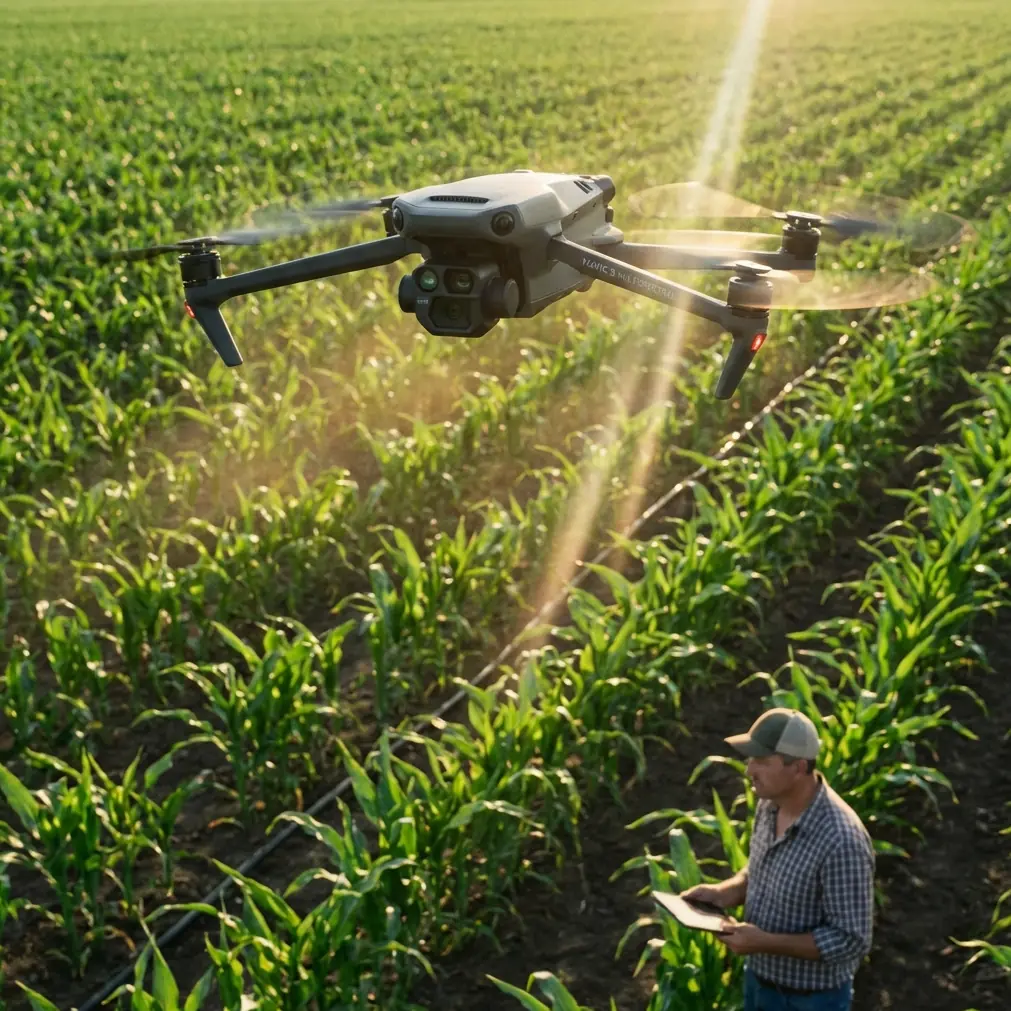
Mavic 3M for Wildlife Spraying in Complex Terrain: What Actually Matters, and Why CAAC Licensing Changes the Equation
META: A technical review of using the DJI Mavic 3M around wildlife and difficult terrain, with practical insight on multispectral workflow, spray planning limits, drift control, RTK precision, and why CAAC licensing is becoming a real operational threshold in China.
I’ve spent enough time around field teams to know that “can this drone do the job?” is rarely the first serious question. The real one is usually harsher: can this operation be executed legally, repeatably, and safely when the land is uneven, the target area is sensitive, and wildlife is moving through the work zone?
That is the right frame for discussing the Mavic 3M.
The Mavic 3M sits in an interesting place in the civilian drone market because it is not just another camera platform. Its multispectral capability pushes it toward agricultural analysis, vegetation assessment, and decision support. That matters when the reader’s scenario is spraying wildlife in complex terrain, because the first professional correction is obvious: the Mavic 3M is fundamentally a sensing and mapping aircraft, not a spraying platform. If you are working in habitat management, ecological treatment planning, invasive plant control, or targeted land stewardship around wildlife corridors, the Mavic 3M earns its place before the spray mission starts. It helps define where intervention should happen, where it should not, and how to reduce unnecessary passes in terrain that punishes sloppy planning.
That distinction is not academic. It is operational.
In a steep valley, for example, a spray team may be dealing with crosswinds, vegetation height changes, variable canopy density, and protected wildlife movement at the edge of the treatment block. A multispectral aircraft gives you a way to understand vegetative stress patterns, stand boundaries, wet ground, and route constraints before a heavier application drone enters the area. If you skip that step, nozzle calibration and swath width planning become guesses dressed up as field judgment. In sensitive habitat work, that is how spray drift problems begin.
One of the more memorable field observations I’ve heard from habitat teams involved a deer breaking from scrub near a ridgeline just as a low-altitude mission was being staged. It is the kind of moment that exposes whether the operation was designed around the environment or merely imposed on it. A drone with strong situational sensing and dependable terrain-aware route planning does not solve the wildlife problem by itself, but it gives the crew better information and more time to react. With the Mavic 3M, that usually means refining boundaries, identifying exclusion zones, and adjusting timing so the actual treatment aircraft is not forced into unnecessary low-level improvisation.
That gets us to the part many operators still underestimate: compliance.
A recent piece from youuav made a point that aligns with what serious commercial operators are already seeing on the ground in China. The CAAC unmanned aircraft operator license is no longer a nice extra to mention in a capability deck. It is increasingly a threshold for lawful flying, safety assurance, and access to work. The article describes the CAAC license as the official civil unmanned aircraft operating qualification issued by the Civil Aviation Administration of China, and it separates that credential into three levels: visual line of sight pilot, beyond visual line of sight operator or aircraft commander, and instructor. Those categories matter because they map directly to operational scope, accountability, and training depth.
For Mavic 3M users, especially those supporting ecological or agricultural missions in difficult areas, this is more than regulatory background. It changes who can legally lead a mission, what kind of flight profile is realistic, and how your organization is perceived by partners, insurers, and contracting entities. The same source notes that the license is nationally searchable and valid across the country. In practical terms, that means the credential travels with the operator rather than being trapped in a local or informal training bubble. If your teams move between provinces for seasonal vegetation work, corridor mapping, or restoration projects, that national recognition is not a footnote. It is operational continuity.
I would go even further. In the Mavic 3M context, licensing discipline affects data quality.
A licensed operator working in complex terrain tends to think in structured layers: airspace legality, line-of-sight limitations, terrain masking, emergency procedures, mission objective, and only then sensor output. That mindset produces cleaner RTK workflows and more reliable mapping products. And yes, RTK fix rate deserves mention here. When readers talk about centimeter precision, they often jump straight to the finished map. The more consequential issue is whether the aircraft maintains stable positioning confidence throughout the mission envelope, particularly where cliffs, tree lines, and terrain-induced signal complications can degrade consistency. If your fix rate is unstable, your vegetation analysis and treatment boundary decisions can become less trustworthy exactly where terrain makes mistakes most expensive.
That matters in wildlife-adjacent spraying work because treatment zones are rarely neat rectangles. They wrap around gullies, riparian strips, rocky shelves, and habitat edges. A few centimeters of positioning confidence may sound like a luxury until you are trying to define a no-treatment buffer beside sensitive water or nesting ground. Then centimeter precision stops being a specification and becomes risk control.
The Mavic 3M’s value, then, is strongest when treated as the intelligence layer in a broader operation. Use it to map the site, identify vegetative variability, and confirm whether the planned swath width for the actual application aircraft makes sense given slope, cover, and drift risk. That sequence can reduce over-application, missed patches, and poorly chosen ingress paths. It also helps teams avoid the lazy habit of drawing treatment blocks from outdated satellite imagery and hoping the field still matches the office plan.
Complex terrain punishes hope-based planning.
If you are assessing whether the Mavic 3M belongs in your workflow, ask four blunt questions.
First, are you trying to spray with it, or are you trying to make spraying smarter? The Mavic 3M excels in the second role. Its multispectral data can help identify plant vigor differences, stress signatures, and treatment priority areas. For wildlife and habitat work, that may mean spotting invasive growth patterns or distinguishing dense vegetation bands that are likely to alter drift behavior.
Second, are you building around terrain reality? Ridge lift, funneling winds, shadowed slopes, and canopy edges all influence treatment quality. A drone that can document those conditions in high detail before deployment saves time later. It also supports better nozzle calibration on the actual sprayer because application settings can be matched to observed vegetation density rather than assumed uniform conditions.
Third, is your team licensed at the level the mission demands? The youuav source is blunt on this point: tighter regulation and low-altitude economic growth are turning the CAAC license from a “bonus” into a hard gate for legal flight and industry entry. That should resonate with any Mavic 3M operator working in commercial mapping or pre-treatment reconnaissance. If your mission profile expands toward larger sites, more complex supervision, or beyond-visual-line planning frameworks where permitted, the difference between a basic visual line of sight qualification and a higher-grade command-level credential is not symbolic.
Fourth, can your workflow stand scrutiny? The source also frames the CAAC license as the only official national-level drone operating qualification recognized across regulatory, enterprise, insurance, and judicial contexts. That is a serious statement. For contractors using Mavic 3M outputs to support land treatment decisions, this broad recognition strengthens defensibility. If an operation is questioned after the fact—because of drift complaints, habitat concerns, or task execution disputes—operator qualifications suddenly become central evidence, not admin paperwork.
This is why the Mavic 3M conversation should not be reduced to sensor specs alone.
A lot of online content treats professional UAV work as if hardware is the whole story. It is not. Aircraft capability, operator certification, workflow design, and field discipline rise or fail together. In China especially, where the low-altitude economy is expanding while oversight becomes more formalized, that interdependence is getting harder to ignore. The article from youuav ties this directly to sectors like aerial imaging, mapping, power inspection, agricultural plant protection, emergency response, and logistics. That list matters because it shows where regulatory seriousness is already converging with commercial demand. Mapping and agriculture are not edge cases. They are central sectors. The Mavic 3M lives right in that overlap.
For habitat managers and environmental service providers, the practical takeaway is straightforward. If your end goal involves treatment in areas used by wildlife, the safest and most efficient approach is usually a layered one: survey first, interpret second, apply third. The Mavic 3M handles the survey and interpretation stages well when paired with disciplined RTK procedures and a crew that understands terrain-driven variability. It can reveal where dense vegetation may alter droplet penetration, where narrow treatment corridors could force reduced swath width, and where drift exposure is too high to justify application under current conditions.
It can also help you decide not to fly, which is one of the most underrated marks of a professional operation.
That may sound conservative, but it is exactly what good operators are paid for. Not to push an aircraft into every possible situation, but to understand where data can reduce uncertainty and where the mission should wait. Around wildlife, restraint is often the most technical decision on the site.
If you’re building a Mavic 3M program in China, I would treat CAAC licensing as part of the aircraft itself—not physically, of course, but operationally. A nationally recognized credential with defined levels for visual line-of-sight pilot, beyond-visual-line operator, and instructor is not separate from capability. It shapes legal authority, team structure, and client confidence. It also signals whether the operation has matured beyond hobby habits into professional practice.
And that is really the dividing line here.
The Mavic 3M is a strong aircraft for precision observation, multispectral analysis, and treatment planning support in uneven, biologically sensitive terrain. But when people talk about using it in workflows involving wildlife and spraying, the smartest conversation is not about romantic field footage or vague promises of efficiency. It is about data before application, drift before damage, precision before assumption, and licensing before liability.
That’s the real technical review.
If you are refining a wildlife-sensitive vegetation management workflow and need to think through mapping setup, RTK reliability, or how CAAC licensing affects deployment planning, a practical starting point is to message an experienced UAV consultant here.
Ready for your own Mavic 3M? Contact our team for expert consultation.