
Mavic 3M Near Dusty Power Corridors: Why One Pre
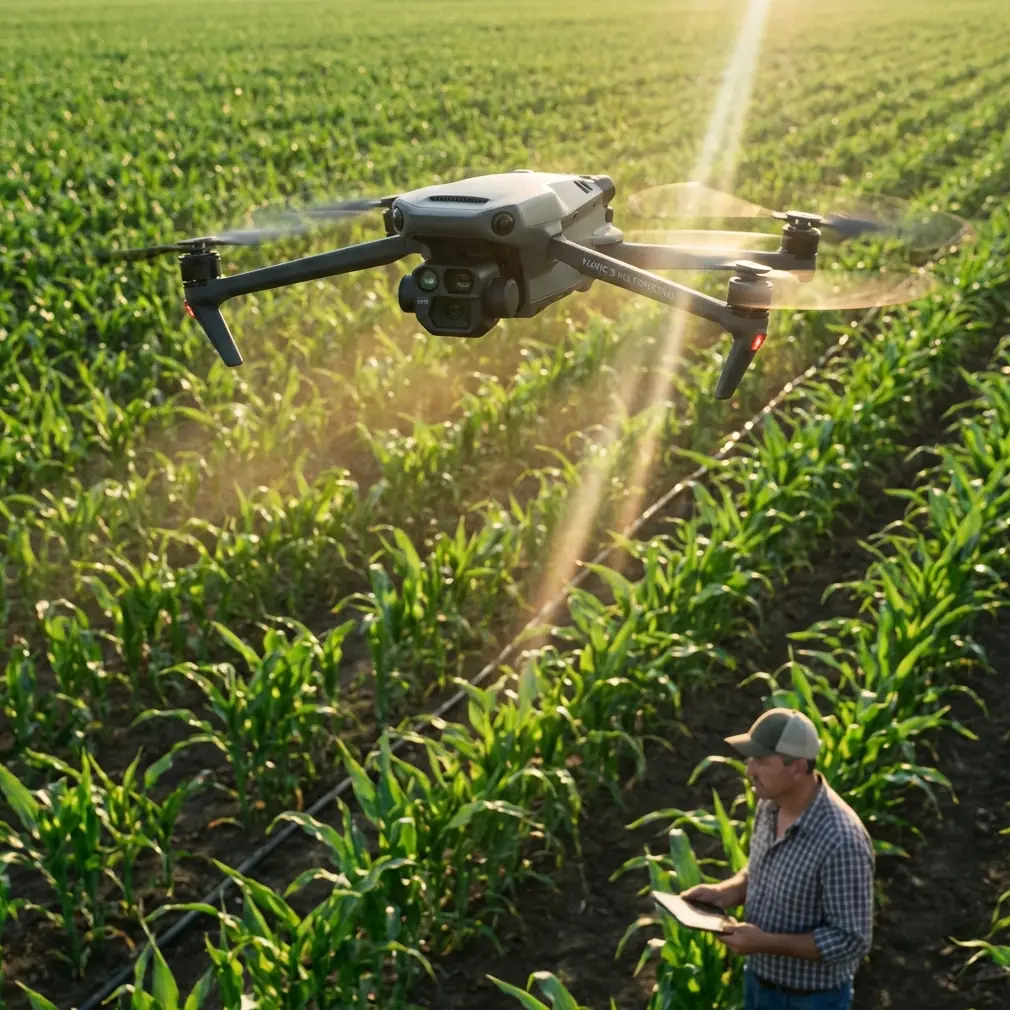
Mavic 3M Near Dusty Power Corridors: Why One Pre-Flight Cleaning Step Can Protect Detection, Mapping Quality, and Mission Timing
META: A field-focused Mavic 3M case study on dusty utility corridor work, covering pre-flight cleaning, obstacle sensing logic, AI traffic-response lessons, TOF sensor relevance, and why small preparation steps affect accuracy and operational continuity.
Dust changes the way a drone “sees.”
That sounds obvious until you watch a mission slow down for reasons that do not look dramatic on paper: hesitant low-altitude behavior, inconsistent obstacle responses near poles or roadside structures, degraded situational awareness after repeated takeoffs, or a crew losing time to avoidable resets and visual checks. For teams using the Mavic 3M around dusty power-line corridors, especially where vegetation, access roads, and adjacent traffic create a messy operating environment, the most valuable safety habit may not be a flight mode or a route setting. It may be a simple cleaning step before launch.
I want to frame this through a practical case-study lens rather than a generic checklist.
The Mavic 3M is usually discussed in terms of multispectral output, mapping efficiency, and precision workflows. All of that matters. But in field conditions like utility rights-of-way, a drone is only as dependable as its sensing chain and the crew discipline around it. Dust on the aircraft body is one thing. Dust on forward or downward sensing surfaces is another. Once that layer starts interfering with distance awareness or low-altitude stability cues, the aircraft can still fly, but the quality of its autonomous behavior can become less predictable right when operators need consistency most.
The lesson hidden inside a traffic-response drone story
A recent report from Yancheng described an “air traffic police” platform used during the May Day period to keep road traffic moving. Two numbers stand out. First, the system could help process minor traffic incidents in about 3 minutes. Second, it was built around a verified AI core that could operate around the clock, automatically identifying illegal parking occupying road space, slow-moving vehicles, congestion, and other abnormal events.
At first glance, that sounds far removed from a Mavic 3M flying near power infrastructure. It is not.
The operational significance is this: aerial systems create value when they shorten the time between detection and decision. In the Yancheng example, that meant spotting anomalies early enough to keep traffic flowing and prevent small disruptions from becoming larger ones. In a civilian utility or corridor inspection setting, the same principle applies. The drone’s real advantage is not merely that it can fly above a dusty access road. Its advantage is that it can identify developing issues fast enough for the crew to act while the mission still stays on schedule.
That only works when the aircraft’s sensing and imaging inputs remain clean and trustworthy.
If your Mavic 3M is being launched repeatedly from dry shoulders, gravel pull-offs, or bare ground near transmission structures, contamination is not a cosmetic issue. It is a delay multiplier. A dirty sensor face or camera cover can nudge the workflow away from the drone’s biggest strength: fast, confident detection followed by immediate interpretation.
In other words, the same logic behind a 3-minute aerial traffic response applies to a utility mapping sortie. Small frictions in sensing turn into larger frictions in decision-making.
Why a cleaning step matters more in dusty low-altitude work
One of the most useful technical references here comes from an educational drone training document explaining TOF, or Time of Flight, sensing. The text focuses on obstacle avoidance during autonomous flight, particularly in takeoff, landing, and low-altitude flight. It explicitly notes that drones often encounter obstacles such as trees, buildings, hills, and cliff faces in those phases, and that the aircraft may need to avoid, detour, hover, or back away to prevent a crash.
That is directly relevant to Mavic 3M field work near power corridors.
You may not be operating in a forested canyon, but utility environments often contain the same kind of low-altitude complexity: poles, guy wires, vegetation edges, fence lines, parked service vehicles, signposts, embankments, roadside debris, and uneven launch surfaces. The training material also explains the TOF principle clearly: an infrared emitter sends light, a receiver catches the reflected signal, and distance is derived from the travel time. It even anchors the concept with the familiar equation distance = speed × time, while noting light speed at roughly 3 × 10^8 meters per second.
Why does that matter operationally? Because TOF-based distance awareness depends on a clean optical path. If dust, residue, or grime interferes with emission or reflection capture, the drone’s perception of near-field space can become less robust. On paper, that is a sensor concept. In the field, it becomes behavior.
The educational text specifically calls out the importance of front-facing and downward TOF sensing for perceiving obstacle proximity. For a Mavic 3M crew working close to roads, embankments, or uneven terrain under dusty conditions, those are exactly the sensing directions that support stable launch, controlled descent, and confident low-level maneuvering.
That is why I recommend making lens and sensor-face cleaning a formal pre-flight item, not an improvised “if needed” task.
The overlooked field scenario: repeated launches in a powder-dry corridor
Let’s build the case around a realistic day.
A utility contractor is using a Mavic 3M to map vegetation encroachment and corridor conditions along a power-line route bordered by dry service roads. Trucks move in and out. Wind gusts are light but constant. Every landing sends a fine dust plume around the aircraft. The mission requires multiple short repositioning hops rather than one long uninterrupted flight. That means the drone is exposed to repeated takeoff and landing contamination cycles.
In this scenario, the crew is naturally focused on route completion, image overlap, RTK fix quality, and keeping the aircraft clear of structures. They should be. But a hidden risk starts accumulating after each launch: dirty sensor windows and dirty camera surfaces.
The Mavic 3M’s multispectral value depends on reliable capture quality. The drone’s field safety depends on stable environmental awareness. Dust pressures both at the same time.
This is where one disciplined pre-flight cleaning step pays for itself. Before each launch sequence, inspect and gently clean:
- vision and distance-sensing surfaces
- main camera and multispectral optical surfaces
- downward-facing sensing areas
- landing gear contact points and body seams where dust can migrate
Not because the aircraft is fragile. Because field precision is cumulative. A small reduction in sensing fidelity can cause conservative aircraft behavior, extra pilot interventions, or repeated verification passes. A small reduction in optical clarity can weaken the confidence of the data review that follows.
The cost is rarely a dramatic failure. More often, it is lost rhythm.
Training references reveal another useful principle: stable path discipline reduces workload
A second reference, from a radio-control flight training text, discusses the Immelmann turn and why it can reduce overall pilot workload. The key idea is not the aerobatic maneuver itself; it is the flight-discipline principle behind it. The text explains that ordinary turning can pull the aircraft away from the ideal line, forcing several corrections on the return path. Those corrections reduce the time available to think about the next action and create a rushed feeling. By contrast, a better-structured maneuver helps maintain alignment with the intended track.
For Mavic 3M operators, the relevance is surprisingly strong.
Dusty utility work is cognitively expensive. The pilot is already managing terrain awareness, aircraft status, line-of-sight constraints, and data objectives. Anything that causes extra corrections—whether poor launch placement, sensor hesitation, unstable positioning, or unnecessary manual path cleanup—eats into the operator’s decision margin.
The training text also emphasizes completion position and staying aligned with the axis of flight. That maps well onto corridor missions. A drone that starts from a clean sensing state is more likely to behave consistently during the lowest and most cluttered portions of the flight envelope. Consistency preserves track discipline. Track discipline preserves mental bandwidth. And preserved mental bandwidth is what keeps mapping and inspection crews safe and efficient over a long day.
The value of cleaning, then, is not merely “sensor care.” It is workload management.
What this means for a Mavic 3M workflow near power lines
If the mission involves dusty access roads, bare soil, or repeated staging near utility assets, think of your pre-flight cleaning step as part of data integrity control.
Here is the operational chain:
Clean sensors and optics before launch.
This protects low-altitude sensing quality and image capture confidence.Confirm stable positioning before committing to the route.
For teams relying on centimeter-level outputs and strong RTK fix behavior, avoid rushing into the line just because the aircraft is airborne.Watch the first segment, not just the map plan.
If the aircraft shows unusual hesitation, drift, or inconsistent low-level responses, treat that as diagnostic information, not pilot inconvenience.Reduce dust generation at the source.
Use cleaner launch mats or staging surfaces when possible. In dry corridor work, the launch point is often where preventable contamination starts.Recheck after every dusty recovery.
The educational TOF material is especially relevant here because takeoff and landing are the contamination-heavy phases, and they are also exactly where obstacle and height awareness matter most.
This becomes even more critical if your mission design includes low, repeated transitions along variable terrain. Swath width planning, route efficiency, and multispectral capture settings are only useful if the aircraft remains behaviorally predictable.
The practical connection to spray drift and adjacent corridor work
The context here also mentions spraying around power lines in dusty conditions. The Mavic 3M itself is not a spraying platform, but it is often part of the decision chain before or alongside treatment operations. That means its data can influence vegetation assessment, treatment planning, and exclusion-zone awareness.
In that role, dusty conditions matter twice.
First, dust can interfere with the aircraft’s sensing and capture reliability during the survey mission. Second, the resulting maps or assessments may feed decisions where spray drift, buffer judgment, or route timing matter. If the pre-treatment intelligence is weaker because the aircraft launched with dirty optical or sensing surfaces, the cost shows up later in execution quality.
That is why I tell crews not to separate “mapping hygiene” from “application safety.” In corridor vegetation programs, they are connected.
A small habit that protects the drone’s best advantage
The Yancheng traffic platform demonstrates the strategic value of fast aerial recognition. The TOF training material explains why close-range sensing matters most during takeoff, landing, and low-altitude flight. The flight-training reference reminds us that stable path discipline lowers workload and improves the quality of the next decision.
Put together, those references point to a practical truth for Mavic 3M operators in dusty utility environments:
The drone’s best feature is not any single sensor. It is the reliability of the whole sensing-and-decision chain under field pressure.
That chain starts before takeoff.
A clean aircraft will not solve every challenge near power corridors. It will not eliminate drift, replace nozzle calibration in adjacent spray operations, or guarantee perfect RTK fix rates under every canopy or structure condition. But it does remove one of the most common and least respected causes of degraded field performance: contamination right where the drone perceives the world.
If your crew wants to build a tighter pre-flight SOP for dusty corridor work, including launch-surface setup and sensor cleaning logic, you can share your scenario here: https://wa.me/85255379740
For Mavic 3M users, that one step is rarely dramatic. It is simply professional. And in commercial drone work, the most valuable habits usually are.
Ready for your own Mavic 3M? Contact our team for expert consultation.