
Spraying highways in wind: what the Mavic 3M changes
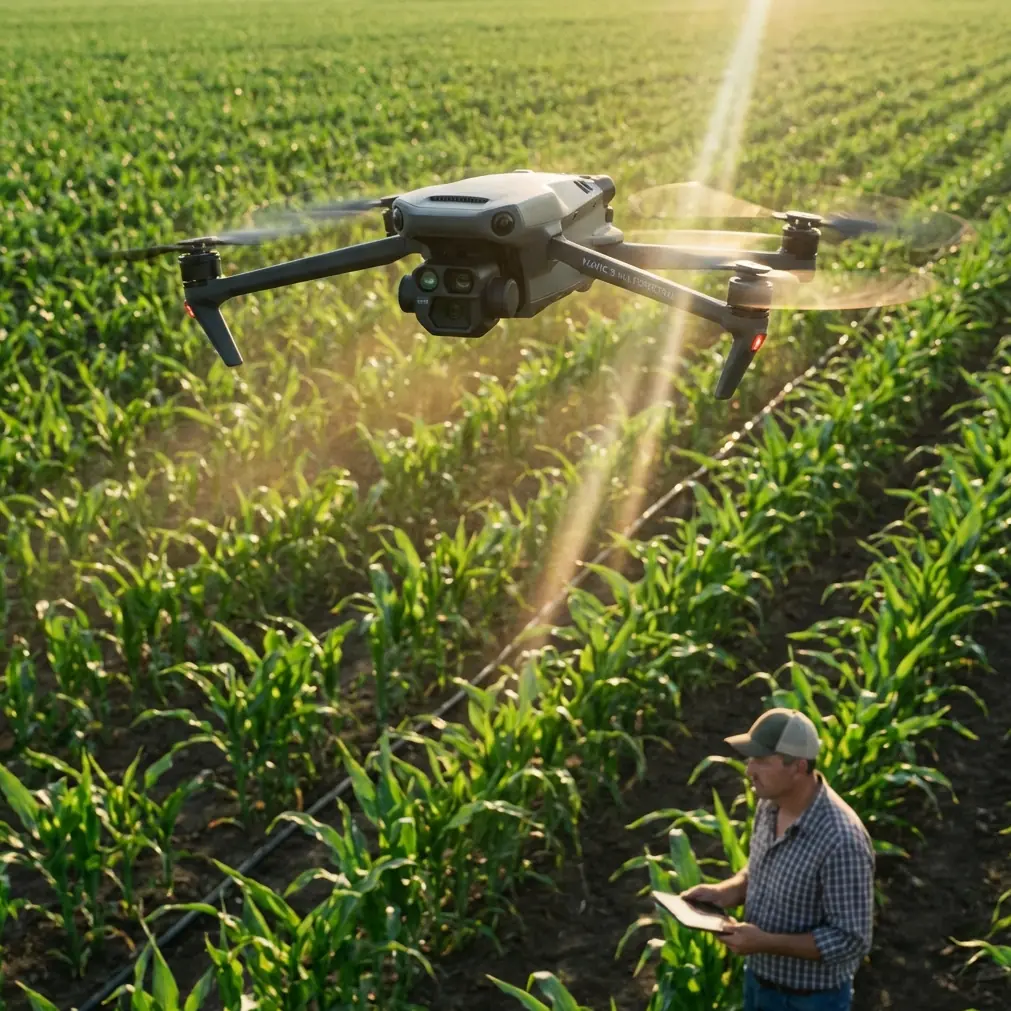
Spraying highways in wind: what the Mavic 3M changes, and what it doesn’t
META: Practical guidance for using DJI Mavic 3M around windy highway corridors, with lessons from industrial drone operations, drift control, precision workflows, and what matters in the field.
Highway vegetation work sounds simple until the wind starts doing what wind always does: exposing every weak assumption in your plan.
I learned that the hard way on a roadside corridor project where the brief looked straightforward—monitor vegetation stress, identify treatment zones, and support a spraying workflow along a long stretch with uneven shoulders, changing traffic exposure, and gusts rolling off embankments. On paper, it was just another linear asset job. In practice, it became a lesson in how fast drift risk, positioning quality, and operational safety can stack up when you’re working beside pavement in open air.
That is the frame in which the Mavic 3M makes sense.
Not as a miracle aircraft. Not as a replacement for judgment. As a tool that compresses several parts of the highway vegetation workflow into one more manageable system, especially when the job starts with mapping, stress detection, treatment planning, and verification. If your real concern is spraying highways in windy conditions, the best use of the Mavic 3M is often before and after liquid ever leaves a tank.
The real highway problem isn’t just wind. It’s uncertainty.
When people talk about drift, they usually focus on nozzle choice or wind speed. Those matter. But on highway work, drift is often the visible symptom of a larger planning issue: you don’t fully know where treatment is needed, how wide the actual target band is, or how consistently your crew can hold a safe and repeatable application path along a corridor with constant interruptions.
That’s why precision upstream matters so much.
Older industry material on drone operations emphasized things like one-touch launch and return, real-time image transmission, and terrain flexibility. That may sound basic today, but the operational logic still holds. Linear infrastructure jobs reward systems that reduce setup friction and preserve situational awareness. Highway shoulders are not forgiving workspaces. You want fast deployment, stable links, and as little improvisation as possible once the aircraft is in the air.
The Mavic 3M fits that logic because it is fundamentally a data-first platform. Its value on windy roadside spraying jobs is not that it turns poor application practice into good application practice. Its value is that it helps you define treatment boundaries more accurately, identify vegetation variation through multispectral capture, and create a corridor map that narrows where spraying should happen at all.
That alone can cut exposure to drift events. Less unnecessary spraying means fewer chances for weather to punish bad decisions.
Why multispectral matters more on highways than many crews expect
Highway vegetation is messy. You get mixed species, compacted soil, drainage effects, heat reflection from asphalt, partial shade from barriers and trees, and maintenance histories that vary by segment. A simple RGB overview can tell you where growth is dense. It is less reliable when you need to separate surface appearance from actual plant condition.
This is where the Mavic 3M has a practical edge. Multispectral data helps operators identify stressed or invasive vegetation bands with more confidence than visible imagery alone. That changes the workflow from “spray the whole strip to be safe” to “treat the areas that actually need intervention.”
For highway rights-of-way, that can influence swath width planning in a meaningful way. If your map shows that only a narrow shoulder band and selected median pockets require treatment, you can recalibrate the mission around a tighter target corridor. That reduces over-application, shrinks the exposure window for spray drift, and makes nozzle calibration more purposeful instead of generic.
A lot of crews still calibrate as if every roadside stretch is uniform. It isn’t. The better the map, the smarter the calibration.
Windy conditions punish bad geometry
One of the most underrated problems in roadside work is poor alignment between the aircraft path and the treatment zone. If the line is inconsistent, the pilot or automation ends up chasing the target. That leads to overlap errors, variable speed, and unstable release behavior if you’re using a spray platform in the operation chain.
This is where centimeter precision matters, even if the Mavic 3M itself is not the spray aircraft.
Highway jobs are long, narrow, and repetitive. They benefit from accurate georeferencing and repeatable lane-like passes. In practical terms, strong RTK performance improves your ability to place target layers exactly where crews need them. A solid RTK Fix rate is not just a technical brag line. On a highway corridor, it determines whether your map aligns cleanly with real edges, drainage cuts, guardrail lines, and exclusion zones.
That affects downstream spray planning. If the digital treatment band drifts a meter or two from reality, your field team compensates manually. Once manual compensation starts in gusty conditions, consistency usually starts to unravel.
So when people ask whether the Mavic 3M helps with spraying highways in wind, my answer is yes—but through mapping certainty first. It gives the spray operation better geometry to follow.
What older industrial drone lessons still teach us
There’s a useful contrast in the reference material.
An earlier DJI industry solution built around the Matrice 210 focused hard on survivability and operational continuity: IP43 protection, self-heating batteries for low-temperature work, forward FPV support, forward and upward obstacle sensing, and wind resistance up to Level 5, listed as 10 m/s. It also highlighted a 27-minute flight time under standard conditions and a handheld ground station with a 7 km transmission distance, 720P video, and a 7.85-inch high-brightness display rated at 2000 cd/m².
Those are not Mavic 3M specs. But they reveal something useful about serious corridor operations: professionals care about weather tolerance, clear visual feedback in bright conditions, obstacle awareness, and stable links over long, awkward work areas.
That is exactly the mindset highway crews should bring to Mavic 3M deployments.
If you’re mapping before spray treatment on a breezy roadside, sunlight readability, signal confidence, and obstacle management are not luxury features. They are what keep the mission organized. Bright pavement, reflective barriers, traffic movement, and interrupted takeoff positions create enough cognitive load already. The cleaner the platform behavior, the more attention you can devote to wind reading, corridor segmentation, and data quality.
The same document also described dual-payload operation and a 640 × 512 thermal payload with global temperature measurement and sensitivity below 50 mK in one configuration. Again, that is not a description of the Mavic 3M. But it underscores a larger point: industrial users increasingly expect one mission to answer more than one operational question.
That expectation is one reason the Mavic 3M is attractive. Multispectral collection and efficient corridor mapping reduce the number of separate site visits required to decide what gets treated, what gets monitored, and what gets left alone.
A smarter role for Mavic 3M in a spraying workflow
If I were building a windy-highway vegetation program around the Mavic 3M today, I would not present it as “the spraying drone.” I would position it in four stages.
1. Pre-treatment corridor intelligence
Fly the route to identify plant stress patterns, weed concentration, erosion-prone shoulders, and sections where treatment should be narrowed or postponed. This is where multispectral earns its keep.
2. Boundary control
Use the map to define exact treatment zones and exclusion areas. Near highways, that can include drainage channels, adjacent landscaping, signage zones, and places where gusts funnel unpredictably between structures or embankments.
3. Spray execution support
Even if another aircraft handles liquid application, the Mavic 3M data improves swath width decisions, speed planning, and nozzle calibration targets. Better target definition lowers the temptation to compensate with excessive volume.
4. Post-treatment verification
Return to the same corridor and compare response over time. You’re not guessing whether the application worked. You’re measuring the vegetation outcome segment by segment.
This is the part many operators skip. They spray, move on, and rely on anecdotal follow-up. But repeatable verification is where a data platform starts saving real money and reducing repeat exposure to roadside wind risk.
Drift control starts before the tank is filled
Let’s talk directly about spray drift.
In windy highway work, drift control is usually framed as an application setting problem. In reality, it begins at planning. You reduce drift by shrinking unnecessary spray area, improving line accuracy, and choosing windows where gust behavior is predictable enough to support consistent coverage.
That means:
- tighter treatment polygons
- realistic swath width
- speed matched to site conditions, not to schedule pressure
- nozzle calibration validated for the target vegetation density
- exclusion zones that reflect actual roadside geometry
The old agriculture reference included a striking benchmark: a spray setup with 3.5 m/s flight speed, a 4.5 m spray device width, and 7–10 m working width, with productivity reaching 100 mu per hour. That kind of historical industry language was designed to showcase efficiency. On highways, efficiency still matters, but only after control is established. A wide theoretical swath means very little if crosswind and corridor complexity make half of it unusable.
That’s where Mavic 3M-derived maps help. They let you plan around the effective swath, not the advertised one.
Highway operations are also a communication problem
One reason windy roadside work goes sideways is that the mapping team, spray team, and site manager are often working from different assumptions. One sees imagery, one sees application hardware, one sees schedule pressure.
The fix is a shared corridor model.
A clean Mavic 3M output can become that common reference: here is the target strip, here is where vegetation stress actually clusters, here is where drift risk rises, and here is where repeat passes are most likely to create overlap. When the team works from the same spatial truth, decisions get calmer.
That’s especially useful for contractors managing multiple corridors with different exposure profiles. If you need a second opinion on building that workflow, I’d suggest starting the conversation with a field-oriented channel like this direct WhatsApp contact, especially when the issue is mission design rather than generic product talk.
What the Canton Fair signal really tells us
The non-DJI reference in your source set may seem unrelated at first, but it actually helps explain the market context around the Mavic 3M.
At the 139th Canton Fair, the exhibition reportedly opened at a record scale, with exhibition area, exhibitor count, and new product launch frequency all hitting historic highs. One industrial drone exhibitor, Rongqi Intelligent, was singled out as the only drone company at that event to receive a dedicated all-English feature from Xinhua, with coverage centered on intelligent upgrading in the global drone industry and China’s industrial drone development.
Why does that matter to someone thinking about highway spraying with a Mavic 3M?
Because it shows where the commercial UAV market is heading: away from “airframe first” thinking and toward integrated intelligent workflows. Not just flying. Sensing, planning, analyzing, documenting, and feeding decisions back into operations.
That is exactly the lens through which the Mavic 3M should be evaluated. Its strongest argument in roadside vegetation work is not raw flight drama. It is the fact that it supports the intelligent upgrade of the workflow around the spray mission.
My practical take
If your highway program is struggling in wind, the answer is rarely to push harder. It is usually to get more selective.
Use the Mavic 3M to map first. Build treatment zones with centimeter precision where possible. Watch your RTK Fix rate because poor positional confidence will infect the whole workflow. Revisit nozzle calibration based on actual vegetation conditions, not assumptions from the previous corridor. Narrow swath width when the site tells you to, not when the brochure says you should. And if weather turns the effective application envelope into guesswork, stop and reschedule.
The aircraft makes that decision easier, too. Good data removes the urge to spray broadly just because the crew is already on site.
That is the real operational benefit.
The Mavic 3M does not eliminate wind on highways. It reduces the amount of uncertainty you carry into it. And on roadside vegetation jobs, uncertainty is usually what causes the expensive mistakes.
Ready for your own Mavic 3M? Contact our team for expert consultation.