
Mavic 3M Field Report: Backlit Highway Work at Altitude
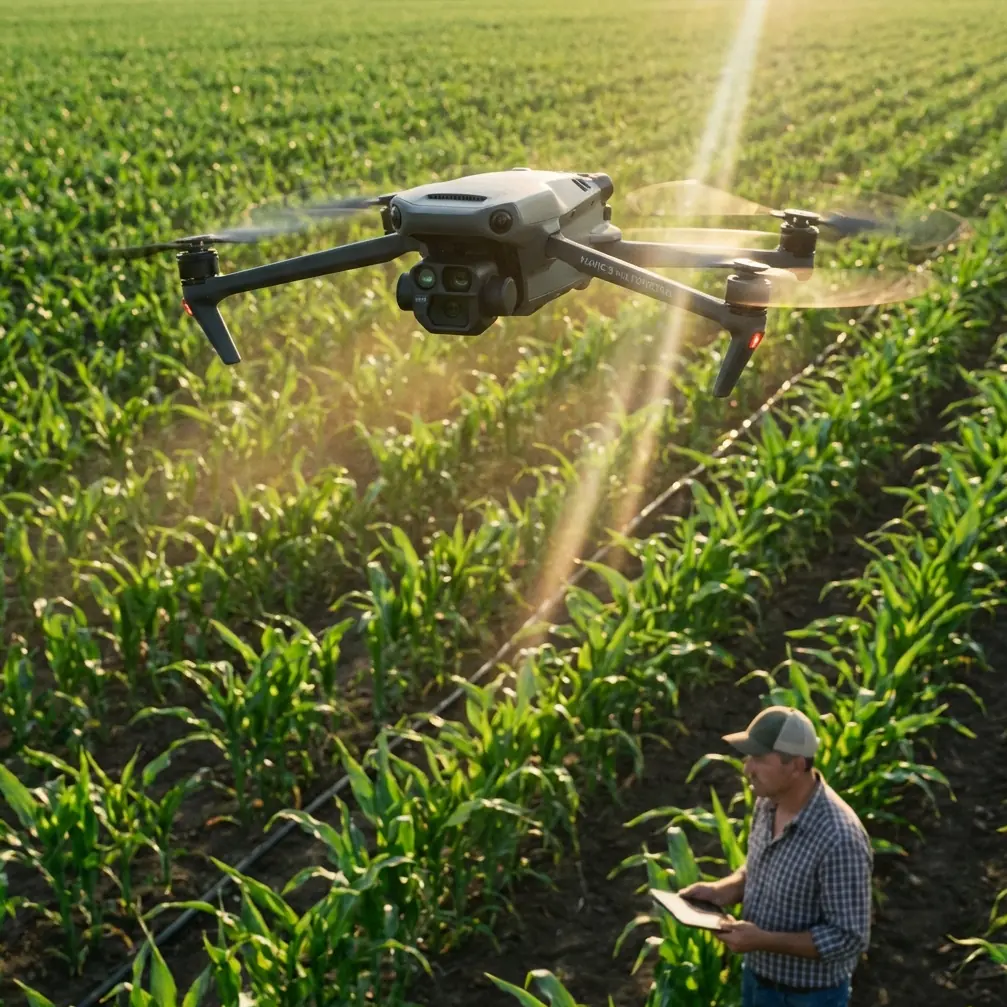
Mavic 3M Field Report: Backlit Highway Work at Altitude When the Weather Turns
META: A field report on using the Mavic 3M around high-altitude highway operations, with practical insight on backlight, weather shifts, RTK stability, spray drift awareness, and why soft sunrise or sunset light matters.
High-altitude highway work is unforgiving. Thin margins, changing wind, reflective pavement, steep embankments, and light that can either flatten detail or reveal it beautifully. When crews talk about the Mavic 3M in these environments, they usually start with mapping, multispectral capture, or precision data collection. Fair enough. But in real field conditions, image quality and light handling matter just as much as raw positioning performance, especially when the mission depends on seeing edge definition, roadside vegetation, moisture patterns, lane boundaries, runoff channels, and slope transitions without wasting passes.
This report comes from a day that started calm and orderly, then shifted halfway through. The assignment involved highway corridor work at elevation, where drift awareness, route discipline, and positional confidence all needed to coexist with one less glamorous variable: backlight.
That last part deserves more respect than it gets.
Why backlight mattered on this job
Most operators instinctively avoid shooting or observing into the sun. On paper, that makes sense. Backlight can blow out highlights, bury shadow detail, and make surface reading difficult if exposure is mishandled. Yet the right kind of backlight does something front-lit scenes rarely achieve. It creates strong contrast between subject and background, separates forms cleanly, and gives structure to terrain that otherwise looks visually flat.
That distinction mattered on the highway.
The corridor included elevated sections with guardrails, drainage cuts, shoulder breaks, and low roadside growth. Under standard forward light, those elements merged into a broad, low-contrast scene. Once the sun moved behind the subject line, however, the geometry sharpened. Embankment edges became more legible. Thin vegetation stood apart from road margins. Surface transitions gained definition. Even airborne moisture and particulate movement became easier to read against the lit background.
This is one reason experienced visual teams deliberately work in backlight when conditions are right. The effect is not cosmetic. It is operational.
The photography principle is simple: backlight places the light source behind the subject, with light traveling toward the camera. Its main visual effect is a pronounced bright-dark contrast that separates the subject from the background and increases the sense of depth. In the field, that can mean cleaner visual interpretation along a linear infrastructure corridor.
The time window that delivered the best results
We planned around softer light, not midday glare. That choice paid off.
The most useful backlit conditions came when the light intensity was moderate and the tone was gentle rather than harsh. Sunrise and sunset windows are well known for that. They produce warmer color ranges, often shifting from orange-red to golden yellow, while reducing the hard overhead look that wipes out dimensionality. On this particular job, the early window gave the scene enough warmth and contrast to expose shoulder texture and roadside separation without making the pavement unreadable.
That warm band of light also helped over reflective surfaces. At altitude, highway stretches can behave like giant mirrors in the wrong sun angle. Softer backlight reduced the uglier specular blast and replaced it with more controlled edging. Instead of a featureless bright strip, we got visible lane context and shoulder hierarchy.
For anyone using the Mavic 3M in corridor assessment, vegetation analysis, or planning support around mountainous or elevated road systems, this timing choice is not artistic fussiness. It is field efficiency. Better light means fewer questionable frames, less re-flying, and better alignment between visual interpretation and subsequent multispectral review.
The weather changed mid-flight
The day did not stay polite.
About halfway through the mission, the air shifted from stable to indecisive. Wind started rolling across the slope from an angle we had not seen during setup. Nothing extreme, but enough to matter. You could watch it first in the vegetation, then in the exposure behavior as haze increased and the light lost some of its earlier softness. In high-altitude highway environments, those changes rarely arrive alone. Wind alters aircraft behavior, haze changes visual contrast, and both together can undermine confidence in route consistency.
This is where the platform’s discipline matters more than its spec sheet.
The Mavic 3M held the corridor calmly. The route remained controlled, and RTK-backed positioning made it easier to trust what the aircraft was doing even as visual conditions drifted. On this kind of work, a strong RTK fix rate is not just a nice checkbox. It underpins repeatability along narrow linear jobs where small offsets can compound over distance. If you are comparing successive runs, checking corridor edge encroachment, or tying visible conditions to multispectral outputs, centimeter-level precision changes the value of the data entirely.
That is one of the core reasons the Mavic 3M stays relevant in technical operations. Multispectral capability gives you a richer analytical layer, but the significance grows when that data is spatially dependable. A multispectral reading with weak positional confidence is harder to trust in narrow roadside zones. A multispectral reading anchored by stable RTK behavior becomes actionable.
When the wind turned, drift awareness immediately moved to the top of the list. In a spraying discussion, that would directly affect application integrity and environmental control. In our corridor case, the same principle applied to flight discipline. Crosswind can nudge lines, distort assumptions about clearance, and make operators too eager to “correct” manually. The better response was restraint: monitor, verify fix quality, keep swath logic consistent, and avoid overcontrolling the aircraft.
A note on spraying highways with the Mavic 3M
Let’s be precise here. The Mavic 3M is not a highway spraying platform in the way a dedicated agricultural application drone is. But readers working in roadside vegetation management often evaluate it alongside spray-related workflows, especially when they are trying to connect scouting, multispectral diagnosis, and downstream treatment planning. That is where the operational crossover becomes useful.
If the highway mission includes identifying stressed vegetation, uneven growth bands, drainage-driven plant vigor, or target zones near barriers and slopes, the Mavic 3M can act as the intelligence layer before any nozzle leaves the truck. In high-altitude conditions, that matters because wind and terrain make generalized treatment assumptions expensive. A good multispectral pass can narrow where intervention is actually needed.
Then come the spray-side realities everyone should respect:
- Spray drift is magnified by elevation, crosswinds, and thermal instability.
- Nozzle calibration has to reflect actual target geometry, not ideal flat-field assumptions.
- Swath width must be adjusted for corridor shape, roadside obstacles, and changing slope.
- Centimeter precision matters when treatment zones sit next to pavement, drainage channels, or protected roadside margins.
In other words, even when the Mavic 3M is not doing the application itself, it can reduce unnecessary application by making the treatment map sharper. That is especially valuable on highways, where every meter of overspray risk carries consequences beyond crop economics.
Backlight improved more than aesthetics
There is a lazy way to talk about backlight as “cinematic.” That misses the point.
Backlight is useful because it reveals edges and textures in a way that supports interpretation. The classic examples are hair light, silhouettes, contour lines, and translucent rendering in still life. Translate those into UAV fieldwork and the value becomes obvious. Guardrail posts create cleaner outlines. Bushes and grass clusters separate from asphalt shoulders. Drainage channels show contour more convincingly. Dust and moisture become visible movement instead of vague atmosphere.
On our run, one section near a descending curve looked ordinary under flatter light. Once the sun angle shifted behind the corridor, the roadside profile changed completely. Fine growth at the shoulder line developed a bright rim. The drop beyond the shoulder read more clearly. The surface transition between paved edge and compacted runoff strip became easier to identify. No dramatic algorithm. Just light doing useful work.
That also helped with mission decisions. Where visual uncertainty falls, confidence rises. Better contrast meant less second-guessing about whether certain areas needed another pass, closer inspection, or later multispectral review.
The role of weather resistance in messy real operations
High-altitude highway work is rarely clean. Spray from passing traffic, moisture, dust, grit, and abrupt weather shifts all stack up. This is where ruggedness matters in a practical sense. If your operating day includes wind-carried debris or a quick change in surface moisture, a platform with field-ready durability is easier to keep in rotation.
That is why details like IPX6K-level weather resistance language remain part of serious operator conversations, even when not every mission turns wet. The significance is not bravado. It is continuity. You want equipment that tolerates the kind of imperfect conditions common to roadside and mountainous work without turning every weather fluctuation into a stand-down event.
Of course, weather resistance does not cancel judgment. If conditions degrade beyond safe operational limits, you stop. But on days like this one, where the weather changed enough to complicate the mission but not enough to abort it, resilient design and stable flight behavior help preserve the schedule.
Practical takeaways from the day
Three lessons stood out.
1. Choose light with intent
Backlight is not something to survive. It is something to use. When the light source sits behind the scene, contrast increases and subject separation improves. Along a highway corridor, that can expose terrain structure and roadside detail that flatter light hides. The best results came in a softer window, when the color leaned from orange-red toward gold and the contrast stayed controllable.
2. Treat RTK confidence as an operational tool, not a marketing phrase
On linear infrastructure missions, a strong RTK fix rate is what makes repeatable corridor work believable. The Mavic 3M’s value grows when its multispectral outputs and visual observations are tied to dependable positioning. That is how centimeter precision becomes useful rather than theoretical.
3. Weather changes rewrite the mission in real time
The mid-flight wind shift changed aircraft management, visual readability, and planning for any downstream spray-related decisions. Drift awareness became more relevant immediately. The answer was not aggressive stick work. It was disciplined route logic, careful observation, and realistic adaptation.
Where the Mavic 3M fits best in this kind of corridor workflow
For highway teams, vegetation contractors, and infrastructure consultants, the Mavic 3M makes the most sense as a decision-quality platform. It is well suited to collecting actionable corridor intelligence before maintenance, selective vegetation control, or broader roadside treatment planning. Its multispectral capability is not there to decorate reports. It helps detect variation that standard visual review may underread, especially in long, repetitive roadside environments where problem areas hide in plain sight.
Pair that with stable route execution, dependable positional discipline, and smart timing around light, and the platform becomes more than a mapper. It becomes a way to tighten field judgment.
And that is really the heart of this report. The day did not prove that technology eliminates difficult conditions. It showed that the right aircraft, used with respect for light and weather, helps operators make better calls when those conditions shift.
If you are evaluating corridor workflows, roadside vegetation assessment, or the overlap between multispectral scouting and treatment planning, it helps to discuss the mission profile in specifics rather than abstractions. For direct field questions, route planning nuances, or integration details, you can reach out here: message Marcus Rodriguez on WhatsApp
The Mavic 3M handled the changing light well because we stopped treating light as an obstacle. It handled the shifting weather well because the flight plan allowed for it. And it stayed useful because the data, the route discipline, and the environmental reading all pointed to the same thing: in high-altitude highway operations, the small choices decide whether the mission feels routine or fragile.
Ready for your own Mavic 3M? Contact our team for expert consultation.