
Mavic 3M in Harsh-Temperature Wildlife Scouting
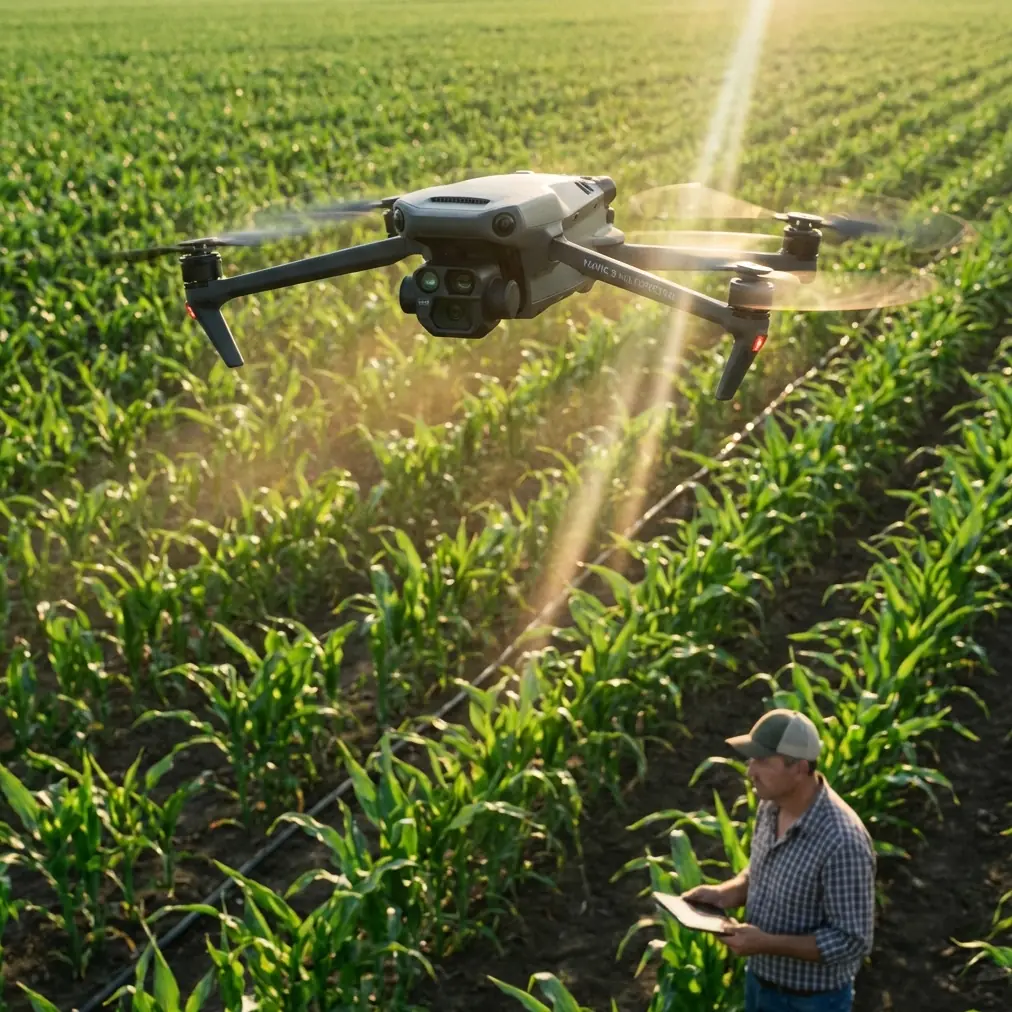
Mavic 3M in Harsh-Temperature Wildlife Scouting: Why Better Decisions Matter More Than Better Filters
META: A technical review of how Mavic 3M fits extreme-temperature wildlife scouting, why image quality starts with field thinking rather than filters, and how Beijing’s 2026 UAV rules reshape operational planning.
When professionals discuss the Mavic 3M, the conversation often drifts straight to sensors, flight specs, and mapping outputs. Those matter. But for wildlife scouting in extreme temperatures, they are only half the story. The more decisive factor is judgment: where to fly, when to fly, what to measure, and how to interpret what the aircraft captures under environmental stress and regulatory pressure.
That point lands especially well against two recent signals from the Chinese UAV and imaging space. One is a deceptively simple photography lesson published on March 27, 2026: the difference between ordinary and striking images is usually not the filter or the device, but the operator’s way of thinking. The other is far more formal: Beijing has introduced new rules governing unmanned aircraft flight as well as sales, transport, and storage, with implementation set for May 1, 2026. Put together, those developments say something useful for Mavic 3M operators. Better outcomes come from disciplined operational logic, not post-processing heroics, and that logic now has to extend beyond the flight itself into compliance, movement, and asset handling.
For wildlife teams working in heat, cold, dust, or wind, that is not an abstract idea. It is the difference between collecting defensible field data and returning with pretty but unreliable imagery.
The Real Edge of the Mavic 3M Is Operational Thinking
A recent photography commentary made an argument many UAV teams still resist: advanced-looking images are not created by filters. They are created by a different mental model. That observation may have been framed for everyday photographers, yet it applies cleanly to the Mavic 3M, especially in ecological scouting.
In extreme-temperature fieldwork, a pilot who treats the aircraft as a flying camera often underperforms. A pilot who treats it as a measurement platform does better. The distinction sounds small. In practice, it changes everything.
Consider a dawn wildlife reconnaissance mission in a cold grassland corridor. Two crews may fly the same Mavic 3M over the same terrain. One comes back with visually pleasing images that look dramatic after grading. The other comes back with repeatable multispectral datasets, comparable flight lines, consistent altitude discipline, and interpretable signs of habitat stress or animal movement patterns. Same aircraft. Different thinking.
That is the operational significance of the photography lesson. The article’s core claim—that equipment is not the main separator, but thought process—is directly relevant to Mavic 3M users because multispectral work punishes casual habits. You cannot fix poor mission design with a color treatment afterward. You cannot recover missing ecological context because the contrast looks nice. If the flight timing, angle of incidence, target selection, and environmental assumptions are wrong, the dataset is weak no matter how polished the image appears on screen.
For wildlife scouting, this matters more in extreme temperatures because environmental conditions distort both behavior and imagery. Animals change activity windows. Vegetation reflectance shifts with heat stress or frost. Wind can alter low-altitude stability and perceived motion patterns. Snow glare, dry dust, or hard summer sun can mask subtle field signals if the operator is not deliberately planning around them.
Why Multispectral Beats Pretty Pictures in Wildlife Surveys
The Mavic 3M earns its place in this scenario because its value is analytical, not cosmetic. Multispectral imaging helps field teams separate visual impressions from measurable conditions. In wildlife scouting, that can support habitat assessment, water stress observation, edge detection between viable and degraded forage zones, and identification of patterns that standard RGB imagery may flatten or obscure.
That is where readers should avoid a common trap. The “better image” is not always the more useful image.
A richly edited frame of a winter wetland may impress on social media. A clean multispectral pass with stable mission parameters may tell a conservation team where feeding pressure is rising, where vegetation health is uneven, or where animal routes are shifting around temperature-exposed terrain. Those are very different outputs, and only one supports repeatable field decisions.
This is also where some agricultural-adjacent concepts become unexpectedly useful in wildlife work. Terms like swath width and centimeter precision are not just for crop operators. They shape how effectively a scouting team covers habitat without wasting battery cycles or leaving gaps in data. In extreme temperatures, every sortie has a tighter margin. Cold can reduce battery confidence. Heat can compress safe operating windows. A mission with disciplined line spacing and reliable RTK Fix rate becomes more than a technical luxury. It becomes mission insurance.
Centimeter precision is especially important when teams revisit denning areas, migration bottlenecks, watering points, or thermal refuge zones over time. If the goal is change detection rather than one-off viewing, consistency is king. The Mavic 3M is most valuable when it allows repeated observation of the same ground truth with minimal positional drift.
Extreme Temperatures Expose Weak Field Habits Fast
Harsh environments reveal whether a team really understands its aircraft.
In cold conditions, crews often focus on battery temperature and forget that wildlife behavior itself has shifted. Target species may concentrate around thermal shelter or move later in the morning. A technically perfect early flight can still miss the ecological story if it is scheduled around pilot convenience rather than species behavior.
In heat, the problem flips. Teams sometimes delay too long, chasing softer light, only to find that thermal turbulence, glare, and animal inactivity have reduced the value of the mission. Here again, the lesson from the March 27 photography piece holds up: the advantage is rarely in the tool alone. It lies in how the operator frames the problem before launch.
This is why experienced Mavic 3M operators build pre-flight logic around questions such as:
- What biological signal am I trying to confirm?
- How will current temperature extremes distort movement or vegetation response?
- Is this mission for detection, comparison, or documentation?
- Does my line plan preserve the multispectral integrity I need later?
- Can I revisit this exact block under comparable conditions?
These are not glamorous questions. They are what separate a sharp field program from random airborne photography.
Beijing’s New UAV Rules Add a Second Layer of Mission Discipline
The regulatory development out of Beijing deserves close attention, even for readers outside the city. According to the recent announcement, the new rules cover not only unmanned aircraft flight, but also sales, transport, and storage, and they take effect on May 1, 2026. That breadth is significant.
Too many drone discussions isolate compliance as an airspace issue. The Beijing framework points to a wider chain of responsibility. For Mavic 3M operators supporting wildlife teams, research institutions, reserve managers, or contractors, that means mission readiness now depends on more than competent flying. It also depends on how the aircraft is handled before and after the sortie.
Operationally, this matters in at least three ways.
First, transport planning becomes a more serious piece of deployment strategy. Wildlife scouting in extreme temperatures often involves moving equipment between urban staging points and remote field sites. If local rules increasingly address transport and storage, teams need a documented chain for batteries, aircraft, accessories, and payload-related components. Sloppy logistics that might have been tolerated informally become a liability.
Second, storage conditions are no longer just a maintenance issue. They intersect with compliance. Extreme temperatures already make storage discipline essential for battery health and sensor reliability. A rule set that explicitly names storage reinforces the need for controlled procedures, logging, and accountability.
Third, organizations using the Mavic 3M for recurring environmental work should expect compliance audits and internal SOP scrutiny to become more detailed. The significance of the Beijing rules is not merely that they are stricter. It is that they treat the UAV lifecycle as one connected system. That is exactly how high-performing field teams should have been treating it anyway.
The Third-Party Accessory That Actually Changes Outcomes
Accessories are often oversold in the UAV world, but one category genuinely improves Mavic 3M field performance in wildlife scouting: a rugged third-party RTK base or compatible field positioning kit used to stabilize georeferencing in difficult terrain.
That may sound less exciting than a visual add-on, yet its impact is real. When you are trying to compare habitat condition across repeat surveys in wind-exposed plains, snow-lined valleys, or heat-shimmered scrubland, a stronger positioning workflow can improve RTK Fix rate consistency and sharpen the value of every flight. That translates into cleaner layer alignment, more reliable change detection, and less time second-guessing whether an apparent anomaly is ecological or just positional error.
I have also seen teams benefit from third-party hard-shell transport systems designed for severe field conditions. These do not change the aircraft’s sensor stack, but they absolutely enhance operational capability. In harsh-temperature deployments, proper transport protection reduces downtime, prevents calibration drift caused by rough movement, and supports the kind of disciplined storage practice that newer regulatory environments increasingly expect.
So yes, a third-party accessory can make the Mavic 3M more capable. But again, the real upgrade is not cosmetic. It is procedural integrity.
What Mavic 3M Users Should Borrow From Spray-Planning Logic
At first glance, concepts like spray drift and nozzle calibration belong to agricultural UAV operations, not wildlife scouting. Yet the underlying mindset is useful. In both cases, environmental variables can distort outcomes long before the operator notices.
Agricultural teams obsess over drift because air movement changes where material actually lands. Wildlife teams should bring the same seriousness to data drift. Wind, altitude inconsistency, sun angle, and timing errors all push imagery and interpretation away from ground truth. The discipline behind nozzle calibration has a close analogue in sensor workflow calibration and flight repeatability. You do not assume the system is “close enough.” You verify.
This mindset becomes essential when scouting species that react sharply to environmental edges. A few meters of positional inconsistency, a slight timing mismatch, or a changed swath width can make two surveys look comparable when they are not. For academic teams, reserve managers, and ecological consultants, that is a dangerous place to be. Policy decisions, habitat interventions, and seasonal reports can all be skewed by datasets that appear clean but lack methodological consistency.
The Mavic 3M is powerful partly because it encourages that calibration-first style of work. It rewards crews who think like scientists, not content creators.
From Academic Theory to Field Reality
If I were advising a research team as Dr. Sarah Chen, the first recommendation would be simple: stop asking how to make Mavic 3M imagery look more impressive, and start asking how to make it more defensible.
Those are different ambitions.
For wildlife scouting in severe cold or heat, defensibility means repeatable mission design, disciplined storage and transport routines, RTK-backed positional confidence, and a clear connection between multispectral observations and ecological hypotheses. It also means recognizing that new regulatory developments, such as Beijing’s rules taking effect on May 1, 2026, are not administrative side notes. They reflect a maturing expectation that UAV operations should be accountable from warehouse shelf to flight corridor.
The second recommendation would be to train crews around visual reasoning, not just flight mechanics. The March 27 photography commentary got one thing exactly right: the gap between average results and professional results often comes down to thinking patterns. In Mavic 3M operations, that thinking pattern includes map planning, environmental interpretation, revisit discipline, and a refusal to rely on post-processing as a substitute for weak fieldwork.
The third would be to build a practical communication loop between pilot, ecologist, and operations lead. If your team is refining workflows for difficult wildlife environments, sharing field constraints through a direct channel like message our UAV specialists here can be more useful than trying to solve positioning, storage, and repeatability issues in isolation.
The Bottom Line for Extreme-Temperature Wildlife Missions
The Mavic 3M remains one of the most interesting aircraft for wildlife scouting because it bridges mobility and measurable observation. But the current news cycle offers a timely reminder that success with this platform does not begin in the air and does not end in the image editor.
One recent article distilled photography down to a blunt truth: better results come from better thinking, not better filters. Another announced that Beijing will begin enforcing a broader UAV regulatory framework on May 1, 2026, covering flight along with sales, transport, and storage. Together, those two developments point in the same direction.
The future of effective Mavic 3M operations belongs to teams that think systemically.
They plan missions around ecological purpose rather than visual appeal. They use multispectral data to answer field questions instead of decorating weak observations. They care about centimeter precision because repeated surveys only matter when they truly align. They treat transport and storage as part of operational quality, not background admin. And when a third-party accessory enters the workflow, it earns its place by improving field reliability, not by adding novelty.
That is the standard harsh-temperature wildlife scouting now demands. The aircraft can meet it. The larger question is whether the operator can.
Ready for your own Mavic 3M? Contact our team for expert consultation.