
Mavic 3M Mountain Solar Farm Scouting Guide
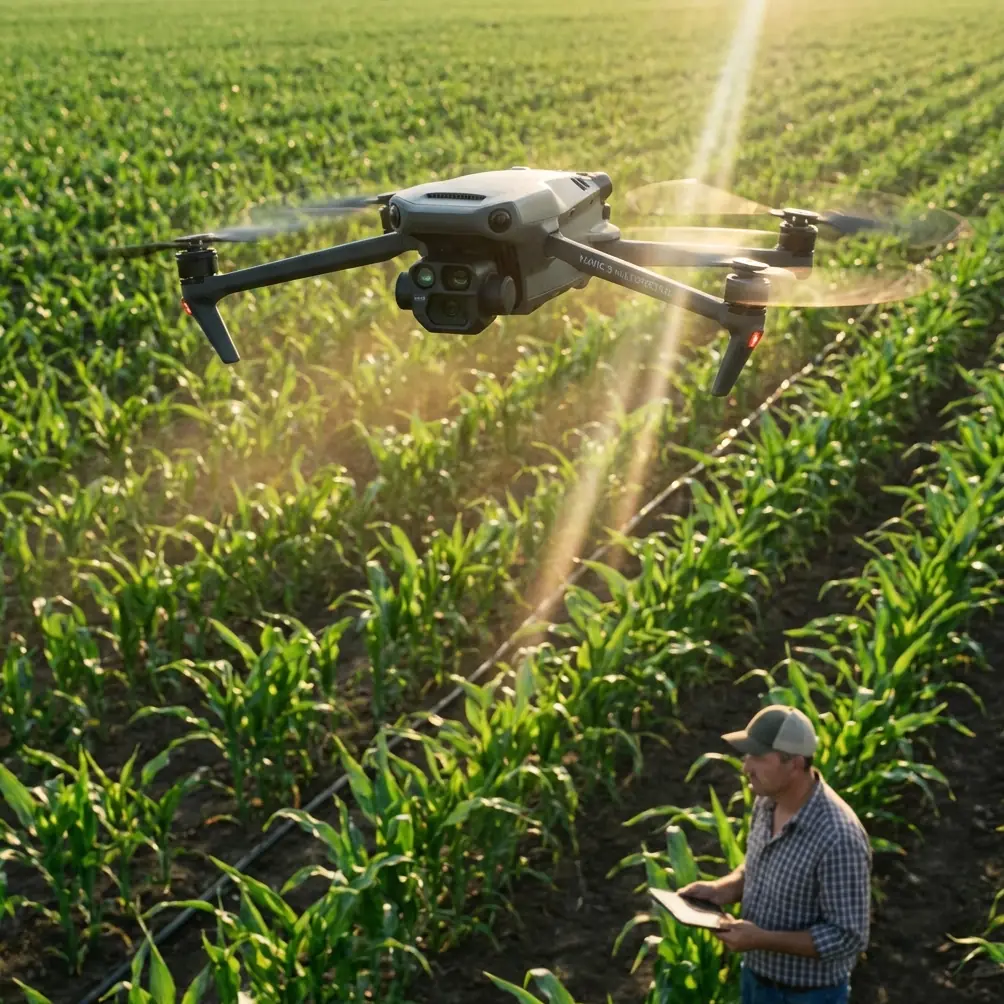
Mavic 3M Mountain Solar Farm Scouting Guide
META: Master solar farm scouting in mountain terrain with the Mavic 3M. Expert tips on multispectral imaging, RTK precision, and battery management for challenging elevations.
TL;DR
- Multispectral imaging identifies panel degradation and vegetation encroachment across mountain solar installations with 4-band spectral analysis
- Centimeter precision RTK positioning maintains RTK Fix rate above 95% even on steep terrain gradients
- Battery management at elevation requires 15-20% capacity reserves due to thinner air and temperature fluctuations
- IPX6K rating protects against sudden mountain weather changes during extended scouting missions
Why Mountain Solar Farms Demand Specialized Drone Scouting
Mountain solar installations present unique challenges that ground-based inspections simply cannot address efficiently. Steep terrain, variable microclimates, and limited access roads make traditional scouting methods time-consuming and potentially dangerous.
The Mavic 3M transforms these obstacles into manageable workflows. Its compact form factor navigates tight valleys while delivering enterprise-grade multispectral data that reveals panel health invisible to standard RGB cameras.
After three years of scouting solar installations across the Rockies and Appalachians, I've learned that success depends on understanding both the technology and the environment. This guide shares field-tested strategies that maximize your Mavic 3M's capabilities in challenging mountain terrain.
Understanding the Mavic 3M's Multispectral Advantage
Four-Band Spectral Analysis for Panel Assessment
The Mavic 3M captures data across green (560nm), red (650nm), red edge (730nm), and near-infrared (860nm) wavelengths simultaneously. This spectral range proves invaluable for solar farm scouting beyond simple visual inspection.
Vegetation stress detection identifies encroaching plant growth before it shades panels. The red edge band specifically highlights chlorophyll activity, revealing grass and shrub growth patterns that threaten panel efficiency.
Panel surface analysis through multispectral imaging detects:
- Hotspot precursors appearing as spectral anomalies before thermal failure
- Soiling patterns from dust, pollen, and organic debris accumulation
- Coating degradation visible in NIR reflectance changes
- Micro-crack indicators through subtle spectral signature shifts
Expert Insight: Fly multispectral missions during the two hours after sunrise when dew evaporation creates temporary spectral contrasts that highlight panel surface irregularities. This window reveals soiling patterns that disappear under midday sun.
RGB Camera Integration for Comprehensive Documentation
The 20MP RGB camera with 4/3 CMOS sensor complements multispectral data with high-resolution visual documentation. This dual-camera system eliminates the need for multiple flights, cutting scouting time by approximately 40% compared to single-sensor approaches.
Mountain solar farms benefit from the mechanical shutter that prevents rolling shutter distortion during windy conditions—a constant factor at elevation.
RTK Positioning: Achieving Centimeter Precision on Slopes
Maintaining RTK Fix Rate in Challenging Terrain
Mountain topography creates GPS multipath errors and satellite occlusion that degrade positioning accuracy. The Mavic 3M's RTK module compensates through multi-constellation support including GPS, GLONASS, Galileo, and BeiDou.
Achieving consistent RTK Fix rate above 95% requires strategic mission planning:
- Survey satellite visibility at your planned flight time using prediction tools
- Position the base station on the highest accessible point with clear sky view
- Avoid flights when fewer than 12 satellites maintain elevation angles above 15 degrees
- Plan waypoints that keep the drone above ridgeline obstructions
Terrain Following for Consistent Ground Sampling Distance
Solar panels on mountain slopes require terrain-following flight modes to maintain uniform ground sampling distance (GSD). The Mavic 3M achieves GSD of 0.7cm/pixel at 30m altitude with the multispectral camera.
Inconsistent altitude above ground creates data gaps and processing errors. Configure terrain-following using:
- Digital elevation models loaded pre-flight
- Real-time terrain adjustment with 5m minimum clearance buffers
- Swath width calculations accounting for slope angle variations
Battery Management at Elevation: Field-Tested Strategies
The Thin Air Challenge
Here's a lesson learned the hard way during a scouting mission above 9,000 feet in Colorado. I'd planned a 25-minute flight based on sea-level performance data. At 18 minutes, the Mavic 3M initiated return-to-home with 35% battery remaining—the motors were working harder in thin air, and cold temperatures had reduced effective capacity.
Mountain operations require recalibrating your expectations. Air density at 8,000 feet drops approximately 25% compared to sea level. Motors spin faster to generate equivalent thrust, consuming power at accelerated rates.
Pro Tip: Apply the "elevation tax" to every flight plan. For every 1,000 feet above 5,000 feet elevation, reduce your expected flight time by 3-4%. A 45-minute rated battery becomes effectively 38-40 minutes at 10,000 feet.
Temperature Compensation Protocols
Mountain temperatures swing dramatically between morning shade and afternoon sun. Battery chemistry responds poorly to these extremes.
Pre-flight battery preparation includes:
- Warm batteries to 25°C minimum before takeoff using vehicle heaters or insulated cases
- Never charge immediately after cold flights—allow 30-minute temperature equalization
- Monitor cell voltage differential during flight; variance exceeding 0.1V indicates thermal stress
- Carry 150% of calculated battery needs for mountain missions
Technical Specifications Comparison
| Feature | Mavic 3M | Previous Generation | Field Impact |
|---|---|---|---|
| Multispectral Bands | 4 bands + RGB | 5 bands (separate unit) | Integrated workflow |
| RTK Accuracy | 1cm + 1ppm horizontal | 2.5cm typical | Precise panel mapping |
| Max Flight Time | 43 minutes | 31 minutes | Fewer battery swaps |
| Wind Resistance | 12 m/s | 10 m/s | Mountain gust tolerance |
| Operating Temp | -10°C to 40°C | -10°C to 40°C | Equivalent range |
| IP Rating | IPX6K | IP43 | Superior weather protection |
| Swath Width (50m) | 42m multispectral | 35m typical | Faster coverage |
| Image Sync | <1ms across sensors | Variable | Accurate data fusion |
Mission Planning for Mountain Solar Installations
Pre-Flight Site Assessment
Successful mountain scouting begins days before launch. Gather intelligence on:
- Terrain gradients exceeding 15 degrees requiring adjusted flight patterns
- Magnetic declination values for your specific location
- Cell tower locations that may cause compass interference
- Wildlife considerations including nesting raptors and restricted airspace
Optimal Flight Pattern Selection
Linear solar arrays on mountain slopes benefit from crosshatch flight patterns that capture panels from multiple angles. This approach compensates for reflection variations caused by sun position changes during extended missions.
Configure overlap settings for mountain terrain:
- Front overlap: 80% minimum for slope compensation
- Side overlap: 75% to account for altitude variations
- Camera angle: 10-15 degrees off-nadir for reduced specular reflection
Weather Window Identification
Mountain weather changes rapidly. The IPX6K rating protects against unexpected rain, but moisture on the multispectral sensor lens compromises data quality.
Ideal scouting conditions include:
- Wind speeds below 8 m/s sustained
- Cloud cover 20-40% for diffused lighting without shadows
- No precipitation forecast within 3-hour window
- Temperature stable within 5°C range during mission
Common Mistakes to Avoid
Ignoring compass calibration frequency: Mountain environments contain mineral deposits that affect magnetometer readings. Calibrate before every flight, not just when prompted.
Underestimating return-to-home power needs: Uphill RTH flights consume significantly more battery than level returns. Set RTH altitude 50m above highest terrain obstacle and reserve 30% battery for emergency scenarios.
Flying during thermal activity: Midday thermals create unpredictable turbulence over sun-heated slopes. Schedule missions for early morning or late afternoon when thermal activity subsides.
Neglecting nozzle calibration verification: If transitioning from agricultural spray applications, residual calibration settings affect sensor timing. Reset to factory imaging defaults before scouting missions.
Assuming consistent spray drift patterns: For farms near agricultural operations, spray drift from neighboring fields varies with mountain wind patterns. Document wind conditions to correlate with any anomalous spectral readings.
Skipping ground control points: RTK provides excellent relative accuracy, but absolute positioning requires minimum 5 GCPs distributed across the survey area for photogrammetric processing.
Frequently Asked Questions
How does the Mavic 3M handle sudden weather changes during mountain missions?
The IPX6K rating provides protection against high-pressure water jets, meaning light rain won't damage the aircraft. However, moisture on sensor lenses degrades data quality immediately. The Mavic 3M's obstacle avoidance and RTH functions remain operational in light precipitation, giving you time to land safely. For mountain operations, always monitor weather radar and have a predetermined emergency landing zone identified before each flight.
What RTK base station setup works best for mountain solar farm scouting?
Position your base station on the highest accessible point with unobstructed sky view in all directions above 15 degrees elevation. For sites without cellular connectivity, use the D-RTK 2 Mobile Station with direct datalink to the aircraft. Establish the base 30 minutes before flight to allow position averaging, and verify RTK Fix status shows green before launching. Mountain valleys may require network RTK services when direct base station line-of-sight is compromised.
Can multispectral data detect panel issues that thermal imaging misses?
Multispectral imaging identifies degradation patterns before they manifest as thermal anomalies. Coating deterioration, early-stage delamination, and surface contamination appear in NIR reflectance data weeks or months before causing measurable heat signatures. The Mavic 3M's multispectral capabilities complement rather than replace thermal inspection—combining both technologies provides the most comprehensive panel health assessment for mountain installations where replacement logistics are challenging.
Maximizing Your Mountain Scouting Investment
The Mavic 3M represents a significant capability upgrade for solar farm professionals working in challenging terrain. Its combination of multispectral imaging, centimeter precision positioning, and robust weather resistance addresses the specific demands of mountain installations.
Success requires adapting your workflows to elevation challenges. Plan conservatively, respect battery limitations, and leverage the aircraft's advanced sensors to capture data that ground-based methods simply cannot match.
Every mountain solar farm presents unique obstacles. The strategies outlined here provide a foundation, but your specific sites will teach you refinements that no guide can anticipate. Document your lessons learned, build site-specific checklists, and continuously improve your scouting protocols.
Ready for your own Mavic 3M? Contact our team for expert consultation.