
Expert Scouting With Mavic 3M: A Field Report on Seeing
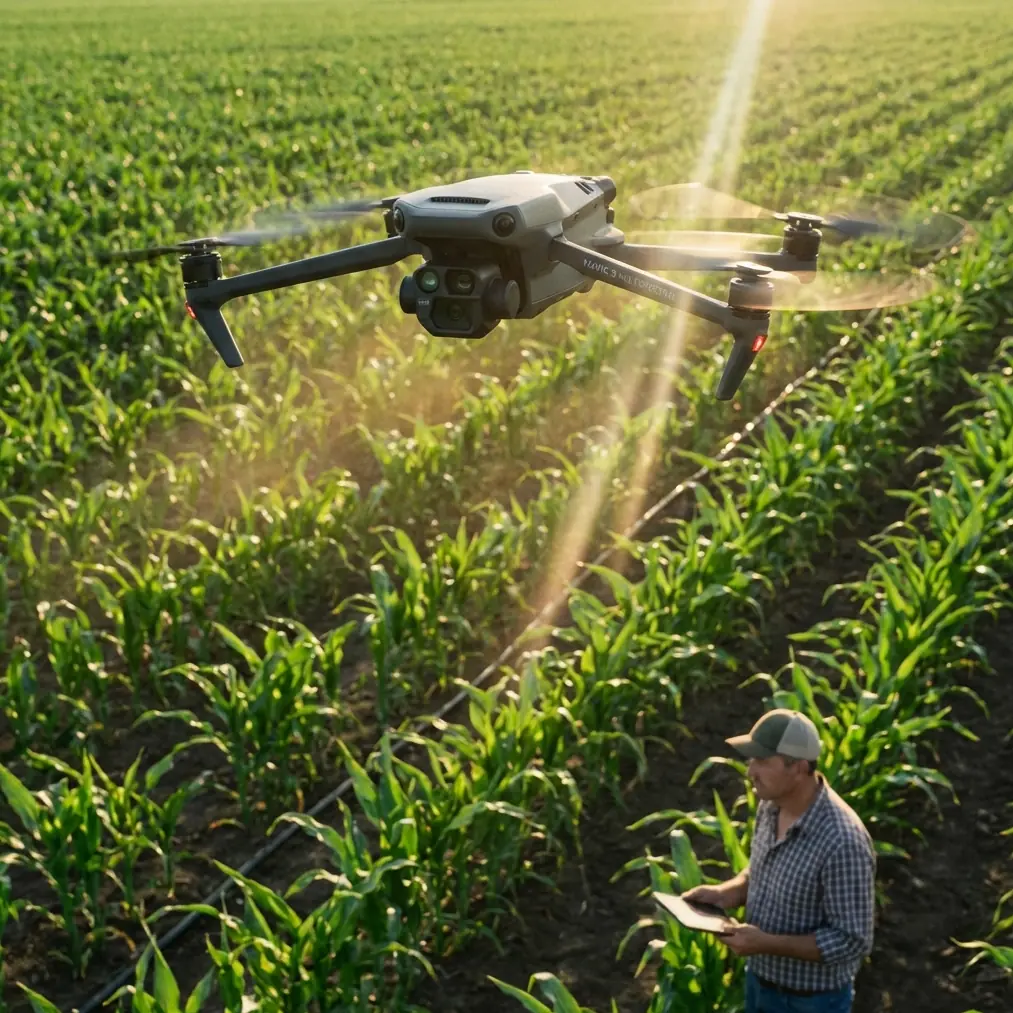
Expert Scouting With Mavic 3M: A Field Report on Seeing Clearly Before the Flight Starts
META: A field report for Mavic 3M operators scouting high-altitude power lines, using a timely photography lesson on shot distance and framing to improve inspection quality, safety, and multispectral mission discipline.
Power-line scouting at altitude is often described as a sensor problem. In practice, it is usually a seeing problem first.
That distinction matters for anyone flying the Mavic 3M in demanding inspection conditions. The aircraft can deliver highly useful multispectral data, stable flight behavior, and centimeter-level workflows when paired with disciplined mission methods. Yet many failed inspection flights do not begin with bad hardware or weak positioning performance. They begin with poor visual judgment: the subject is too small, the frame is too busy, or the operator never chooses the right shot scale for the job.
A recent beginner photography lesson published on March 24, 2026 made that point in unusually plain language. Its core argument was simple: when new shooters produce unusable images, the problem is often not the camera at all, but a lack of understanding of “scene distance” or shot type. The piece went even further, arguing that learning this basic visual language can help beginners avoid 90% of unnecessary detours. That is beginner advice on the surface, but for Mavic 3M crews scouting high-altitude transmission corridors, it lands much closer to professional fieldcraft than many operators may realize.
For the Mavic 3M user, especially one responsible for mountainous power-line routes, towers on uneven terrain, and vegetation pressure near conductors, shot discipline is not cosmetic. It defines whether a sortie produces operationally useful evidence.
Why this matters specifically for Mavic 3M crews
The Mavic 3M sits in an interesting place in the UAV stack. It is not just a visual drone and not purely a mapping platform either. It gives operators a way to connect standard visual awareness with multispectral interpretation. That combination is powerful in utility scouting, but it also creates a trap: pilots can become so focused on sensors, overlays, RTK fix rate, and mission geometry that they forget the oldest issue in imaging—what exactly is the frame trying to say?
The photography article’s phrase that “shot distance is photography’s way of speaking” deserves a technical translation for utility work. In transmission-line scouting, every framing choice answers a different operational question:
- A wide environmental view asks how the corridor behaves within terrain, slope, access tracks, and adjacent vegetation.
- A medium view asks how a pole, tower, insulator string, or span sits in relation to nearby hazards.
- A close view asks whether a specific component, conductor attachment point, or vegetation incursion needs intervention.
If operators stay too wide, the subject becomes unreadably small. The original article explicitly called out that failure mode: the subject ends up too small to see clearly. In a power-line context, that means a branch approach, minor hardware anomaly, or line-side condition gets buried in the frame. If operators go too tight too soon, they lose context and struggle to document why a condition matters geographically or operationally.
That is why this beginner photography lesson is more relevant to Mavic 3M missions than it first appears. It is not teaching style. It is teaching hierarchy.
The field reality: beautiful terrain, bad inspection images
Anyone who has worked high-altitude power-line routes knows the paradox. The environment is visually spectacular, but spectacular terrain often produces poor inspection imagery.
Snow edges on ridgelines, layered valleys, dramatic sky contrast, and long corridor sightlines pull the eye outward. The drone captures a scene that looks impressive in a briefing deck and almost useless in a maintenance workflow. The frame contains everything except the one thing the line crew, vegetation manager, or asset engineer actually needs.
That problem was described in the photography source with blunt precision: scenes look great in person, yet the captured image comes back cluttered, stiff, or lacking atmosphere. Translate that into utility operations and the symptoms are familiar:
- cluttered frames where conductors blend into background vegetation
- distant tower shots where defect candidates cannot be confirmed
- context-free close-ups with no spatial reference to the span
- repetitive compositions that make later review inefficient
The Mavic 3M does not solve those issues automatically. It gives you better tools. You still need better visual decisions.
A practical framing model for high-altitude line scouting
When I brief junior teams, I usually divide a Mavic 3M power-line mission into three image layers. The recent photography lesson, centered on core shot types, supports exactly this structure even if it comes from a beginner audience.
1. Corridor establishing view
This is your wide frame. It should show terrain, line alignment, access constraints, and the way vegetation pressure develops around the right-of-way. In high-altitude environments, this frame is especially useful because slope and elevation distort ground-level assumptions. What appears manageable from a map can be far more aggressive on a live ridge face.
For Mavic 3M crews, the establishing view is also the frame that links visible conditions to multispectral interpretation. If a vegetation patch shows unusual stress or reflectance behavior, the wide shot anchors that signal to terrain and asset position. Without that context, multispectral findings become harder to act on.
2. Structure relationship view
This is the medium frame. It centers the tower, pole, conductor zone, or insulator set while still preserving enough background to show surrounding risk. In utility work, this is often the most valuable single image because it balances readability with context.
This is also where operators start making stronger use of centimeter precision workflows. If your RTK fix rate is stable and your mission geometry is repeatable, medium-frame documentation becomes much more comparable across visits. That matters when assessing vegetation growth progression, access washout, or repeat thermal and spectral anomalies over time.
3. Defect confirmation view
This is the close frame, and it must be intentional. Close views should verify a concern, not merely look dramatic. On a Mavic 3M mission, that might mean documenting conductor clearance risk, attachment hardware condition, or a localized vegetation issue that multispectral review flagged earlier in the sortie.
Too many operators jump straight here. That is how inspection records become hard to interpret. A close shot without a wide and medium sequence is evidence without narrative.
The beginner photography lesson promised that mastering core shot types can make ordinary scenes look more refined. In utility work, the benefit is less about refinement than traceability. You want every close image to answer a maintenance question and every wider image to explain why that question exists.
The overlooked pre-flight step: cleaning before safety features are tested
The narrative around high-altitude scouting often emphasizes flight time, wind judgment, route planning, and obstacle awareness. All of that is valid. Still, one of the most neglected contributors to weak inspection quality is a rushed pre-flight cleaning routine.
Before launch, I recommend a simple but disciplined cleaning pass over the camera window, multispectral sensor surfaces, obstacle sensing areas, and upper body surfaces where dust, moisture residue, or fine debris can accumulate during transport. This is not housekeeping for appearance. It is a safety and data-quality step.
At altitude, low-angle light and atmospheric haze already reduce contrast. Add smudging or residue and your ability to distinguish line-side detail drops further. Sensor contamination can also compromise confidence in obstacle-related behavior, especially when flying careful approach lines around structures. For a platform expected to support precise, repeatable data capture, neglecting this step is avoidable self-sabotage.
This matters even more in crews that work across agricultural and utility environments. Terms like spray drift, nozzle calibration, swath width, and IPX6K belong more naturally to spraying discussions, but they remind us of something useful: field drones accumulate contamination in ways office planning never fully anticipates. Fine droplets, dust, pollen, and road grime all change what the aircraft sees. A quick cleaning check before takeoff protects both imagery and safety systems.
If your team is building a standard operating checklist for Mavic 3M utility work and wants a second set of eyes, I suggest sending your draft here: message the field support desk.
Multispectral data still needs visual discipline
There is a temptation to think multispectral work reduces the importance of composition. It does not.
On a Mavic 3M mission, multispectral outputs can reveal vegetation stress patterns near transmission corridors that are not obvious in standard RGB imagery. That is valuable for early encroachment assessment, selective trimming strategy, and identifying problem zones before they become reliability threats. But the interpretation is only as useful as the operator’s ability to frame, localize, and confirm what the data suggests.
This is where the March 24 photography lesson becomes unexpectedly relevant again. It argued that the camera is often not the issue; the operator simply has not understood the basics. For Mavic 3M crews, the parallel is direct. When a multispectral mission yields ambiguous results, teams often blame light conditions, map settings, or processing first. Sometimes the simpler truth is that the mission never gathered the right visual sequence around the target area.
A stressed vegetation patch near a tower base is not just a colored map region. It needs:
- a wide image showing terrain and corridor placement
- a medium image showing its relationship to the asset
- a close image confirming the specific condition on site
That sequence turns abstract data into a maintenance decision.
Why the broader UAV industry news also matters
The second reference item, published on March 23, 2026, reported that ePropelled opened a new Global Innovation Centre in Coventry to expand UAV propulsion and power-system capacity, with a production ramp aimed at more than 1 million propulsion systems annually by 2027. At first glance, that seems far removed from Mavic 3M line scouting. It is not.
Utility operators depend on a mature drone ecosystem, not just a single aircraft model. When a propulsion company expands toward annual capacity above one million systems, it signals industrial scaling in the wider UAV sector. That has operational significance for inspection teams because resilience in propulsion and power-system development tends to support better component availability, deeper engineering specialization, and more stable long-term support across commercial UAV operations.
For Mavic 3M users, the takeaway is strategic rather than product-specific. Inspection work on high-altitude infrastructure demands dependable airborne platforms, repeatable field methods, and a supply chain that is moving from niche production into industrial seriousness. The Coventry expansion is one more sign that UAV operations are becoming embedded in critical infrastructure workflows, not treated as experimental add-ons.
Put differently: as the hardware layer of the industry matures, the differentiator shifts toward operator judgment. That brings us right back to framing, shot discipline, and pre-flight rigor.
What expert scouting actually looks like
Expert Mavic 3M scouting is rarely flashy. It is structured.
It begins with a clean aircraft and verified sensor surfaces. It checks RTK status carefully because centimeter precision only matters if the fix is stable enough to support repeatable acquisition. It plans image hierarchy before takeoff, not during random hovering. It treats multispectral capture as part of an inspection narrative, not a separate exercise. And it respects a simple truth that beginner photographers are taught early: if the subject is unclear, the message is unclear.
The best utility operators I know do one thing consistently. They make every frame answer a field question.
- What is the corridor doing here?
- How is this structure interacting with nearby vegetation or terrain?
- Which exact component or encroachment point requires action?
Those are not artistic prompts. They are operational prompts. The Mavic 3M is at its best when flown by crews who understand that visual sequencing, not just sensor capability, determines inspection value.
So yes, a short beginner photography lesson about scene distance might sound trivial next to multispectral workflows and industrial UAV news. It is not trivial at all. It is a reminder that advanced field operations still depend on fundamentals. Learn the language of framing, and the aircraft starts producing evidence instead of merely images.
For high-altitude power-line scouting, that difference is everything.
Ready for your own Mavic 3M? Contact our team for expert consultation.