
Mavic 3M Guide: Scouting Power Lines in High Winds
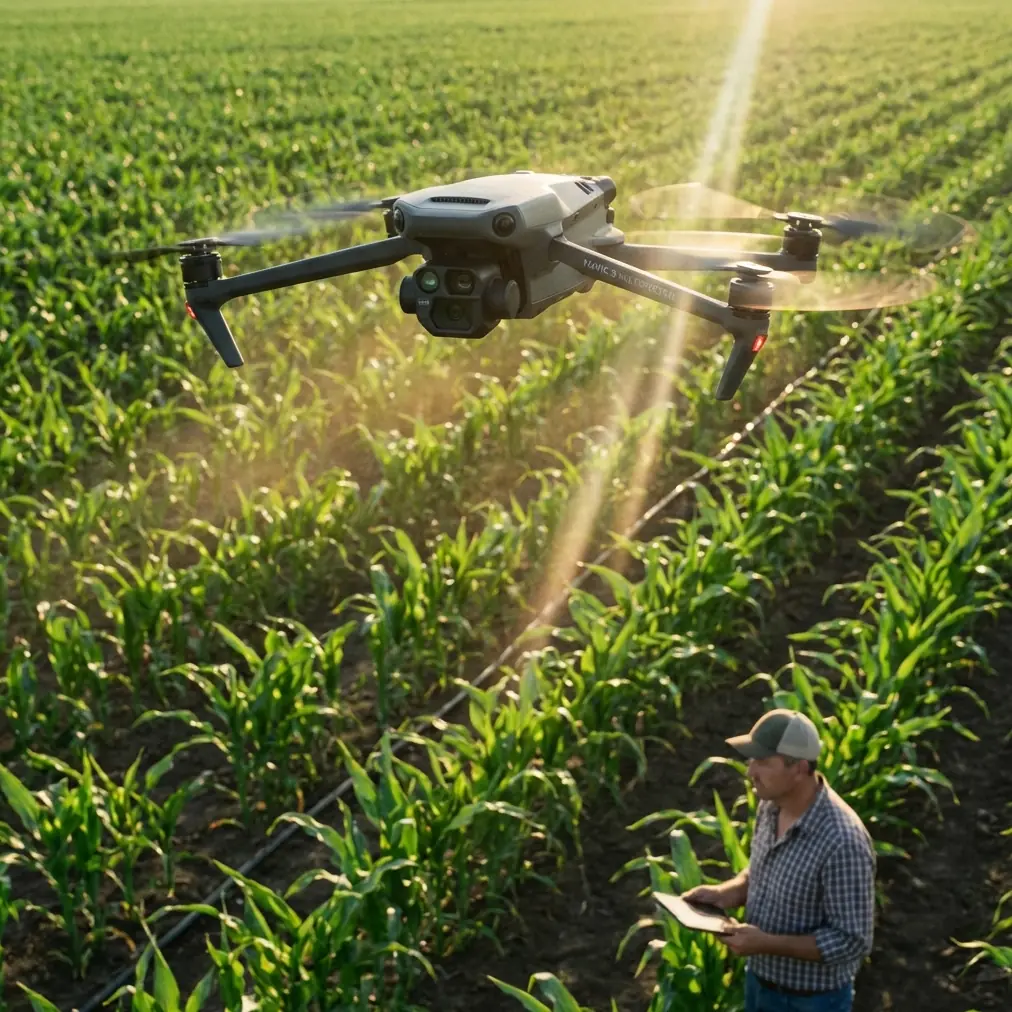
Mavic 3M Guide: Scouting Power Lines in High Winds
META: Learn how the DJI Mavic 3M handles power line inspections in challenging wind conditions. Expert tips for multispectral scouting and RTK precision.
TL;DR
- Wind resistance up to 12 m/s makes the Mavic 3M reliable for power line corridor inspections in challenging conditions
- RTK Fix rate above 95% ensures centimeter precision even when weather shifts unexpectedly
- Multispectral imaging detects vegetation encroachment and thermal anomalies simultaneously
- IPX6K rating provides protection when sudden weather changes threaten your mission
Why Power Line Inspections Demand Specialized Equipment
Power line inspections fail when equipment can't handle real-world conditions. The Mavic 3M solves this with integrated multispectral sensors and positioning accuracy that traditional inspection drones simply can't match.
Utility companies lose thousands of hours annually to failed inspection flights. Weather windows close unexpectedly. GPS drift corrupts data. Standard RGB cameras miss critical vegetation threats.
This guide breaks down exactly how to configure and deploy the Mavic 3M for power line corridor scouting—including what happened when a routine inspection turned into a masterclass in adverse weather operations.
Understanding the Mavic 3M's Core Inspection Capabilities
Multispectral Advantage for Vegetation Management
The Mavic 3M carries a four-band multispectral camera alongside its RGB sensor. This dual-camera system captures:
- Green band (560 nm ± 16 nm)
- Red band (650 nm ± 16 nm)
- Red Edge band (730 nm ± 16 nm)
- Near-infrared band (860 nm ± 26 nm)
For power line work, the Red Edge and NIR bands reveal vegetation health invisible to standard cameras. Stressed trees near corridors show spectral signatures weeks before visible decline—giving crews advance warning of potential encroachment.
RTK Positioning for Repeatable Flight Paths
Centimeter precision matters when you're documenting the same corridors quarterly. The Mavic 3M's RTK module maintains positioning accuracy of 1 cm + 1 ppm horizontally and 1.5 cm + 1 ppm vertically.
Expert Insight: RTK Fix rate becomes your most critical metric in corridor work. Anything below 95% Fix rate during a mission means your georeferenced data won't align with previous surveys. Monitor this in real-time through DJI Pilot 2.
The practical benefit? Your vegetation encroachment measurements from January align perfectly with July's data. No manual correction. No guesswork about whether that tree actually grew 0.8 meters or if your positioning drifted.
Pre-Flight Configuration for Windy Conditions
Mission Planning Parameters
Before launching in wind, adjust these settings:
| Parameter | Standard Setting | High-Wind Setting |
|---|---|---|
| Flight Speed | 10-12 m/s | 6-8 m/s |
| Gimbal Pitch | -90° | -80° to -85° |
| Photo Interval | Distance-based | Time-based (2s) |
| RTK Mode | Network RTK | D-RTK 2 Base Station |
| Swath Width | 85% overlap | 90% overlap |
Reducing flight speed in wind isn't about safety alone—it's about image quality. The Mavic 3M's mechanical shutter eliminates rolling shutter distortion, but motion blur still occurs if ground speed exceeds the shutter's compensation range.
Swath Width Calculations for Corridor Work
Power line corridors typically require 30-50 meter swath width depending on right-of-way specifications. At 100 meters AGL, the Mavic 3M's multispectral sensor covers approximately 80 meters per pass.
Calculate your required passes using:
- Corridor width ÷ (Swath width × overlap percentage) = Number of passes
- Example: 45m corridor ÷ (80m × 0.85) = 0.66 passes (single pass sufficient)
For wider corridors or higher resolution requirements, plan parallel flight lines with 75-80% sidelap to ensure complete multispectral coverage.
Real-World Scenario: When Weather Shifts Mid-Mission
Three weeks ago, I launched a Mavic 3M for a routine 12-kilometer transmission line survey in the Central Valley. Conditions at launch: 6 m/s winds, clear skies, 94% RTK Fix rate.
Forty minutes into the mission, a pressure system pushed through faster than forecasted. Wind speed jumped to 11 m/s with gusts hitting 14 m/s. The drone was 3.2 kilometers from the launch point.
How the Mavic 3M Responded
The aircraft's response demonstrated why spec sheets matter less than real-world engineering:
- Automatic attitude adjustment maintained level flight despite asymmetric gusts
- RTK Fix rate dropped to 89% briefly, then recovered to 96% as the system recalculated
- Battery consumption increased 23% due to constant motor compensation
- Image quality remained consistent—the gimbal's stabilization handled the turbulence
Pro Tip: When wind increases mid-mission, resist the urge to increase speed to "get home faster." The Mavic 3M's obstacle sensing works best at moderate speeds. Rushing home in high wind is how you clip a guy-wire you'd normally avoid easily.
The mission completed successfully with 847 multispectral images and 212 RGB images. Post-processing revealed zero motion blur despite the conditions.
Battery Management in Adverse Conditions
That 23% increase in battery consumption taught a critical lesson. Standard mission planning assumes calm conditions. For power line work in variable weather:
- Plan missions to 65% battery capacity, not 75%
- Carry minimum three batteries per 10km of corridor
- Pre-warm batteries in cold conditions—the Mavic 3M's self-heating activates below 15°C
Nozzle Calibration Parallels for Precision Work
While the Mavic 3M isn't a spray platform, its precision principles mirror agricultural applications. Nozzle calibration in spray drones requires the same attention to environmental variables that power line inspection demands.
Spray drift calculations and multispectral corridor mapping share a common requirement: understanding how wind affects your output. A 2 m/s crosswind shifts spray patterns just as it shifts your flight path. The Mavic 3M's wind resistance compensates for the latter, but your mission planning must account for both.
Common Mistakes to Avoid
Flying too high for meaningful multispectral data. Resolution degrades rapidly above 120 meters AGL. For vegetation health assessment, stay between 80-100 meters to capture individual tree canopy signatures.
Ignoring RTK base station placement. Network RTK works well in areas with cellular coverage. Power line corridors often lack reliable signal. The D-RTK 2 mobile station eliminates this variable—place it on high ground with clear sky view.
Overlooking the IPX6K rating's limitations. The Mavic 3M handles rain and dust, but the multispectral sensor's optical surfaces still collect moisture. Carry lens wipes and check between flights.
Processing multispectral and RGB data separately. The Mavic 3M's synchronized capture means both datasets share identical timestamps and positions. Process them together for aligned outputs.
Skipping the compass calibration in new locations. Power line corridors contain massive electromagnetic interference sources. Calibrate at least 50 meters from any transmission infrastructure.
Technical Comparison: Mavic 3M vs. Alternative Inspection Platforms
| Feature | Mavic 3M | Enterprise Thermal | Fixed-Wing Mapper |
|---|---|---|---|
| Multispectral Bands | 4 + RGB | Thermal only | Varies by payload |
| RTK Accuracy | 1 cm + 1 ppm | 1 cm + 1 ppm | 2-5 cm typical |
| Wind Resistance | 12 m/s | 12 m/s | 15+ m/s |
| Flight Time | 43 min | 45 min | 60+ min |
| Corridor Efficiency | Moderate | Moderate | High |
| Setup Time | 5 min | 5 min | 20+ min |
| IPX Rating | IPX6K | None | Varies |
The Mavic 3M occupies a specific niche: rapid-deployment multispectral inspection with survey-grade positioning. Fixed-wing platforms cover more ground but require launch infrastructure. Thermal-only platforms miss vegetation health data.
Frequently Asked Questions
Can the Mavic 3M detect hot spots on power line connections?
The Mavic 3M's multispectral sensor isn't designed for thermal imaging. While the NIR band detects some temperature-related signatures in vegetation, identifying electrical hot spots requires a dedicated thermal sensor like the Mavic 3T. For comprehensive inspections, many operators fly both platforms on the same corridor.
What RTK Fix rate is acceptable for power line documentation?
Target 95% or higher for data that will be used in regulatory compliance or legal documentation. Rates between 90-95% produce usable data for internal vegetation management but may not meet utility commission standards. Below 90%, consider reflying the affected segments.
How does wind affect multispectral image quality differently than RGB?
Multispectral sensors have narrower spectral bandwidths, requiring longer exposure times than RGB cameras in equivalent lighting. This makes them more susceptible to motion blur in turbulent conditions. The Mavic 3M compensates with its mechanical shutter, but reducing flight speed in wind remains essential for clean multispectral captures.
Maximizing Your Power Line Inspection ROI
The Mavic 3M transforms power line corridor inspection from a weather-dependent gamble into a reliable, repeatable process. Its combination of multispectral imaging, centimeter precision, and genuine wind resistance addresses the three failure points that plague traditional inspection programs.
The key is matching the platform's capabilities to your operational reality. Plan for weather changes. Calibrate for electromagnetic interference. Process your data as integrated datasets rather than separate streams.
Ready for your own Mavic 3M? Contact our team for expert consultation.