
Mavic 3M for Forest Scouting: High Altitude Expert Guide
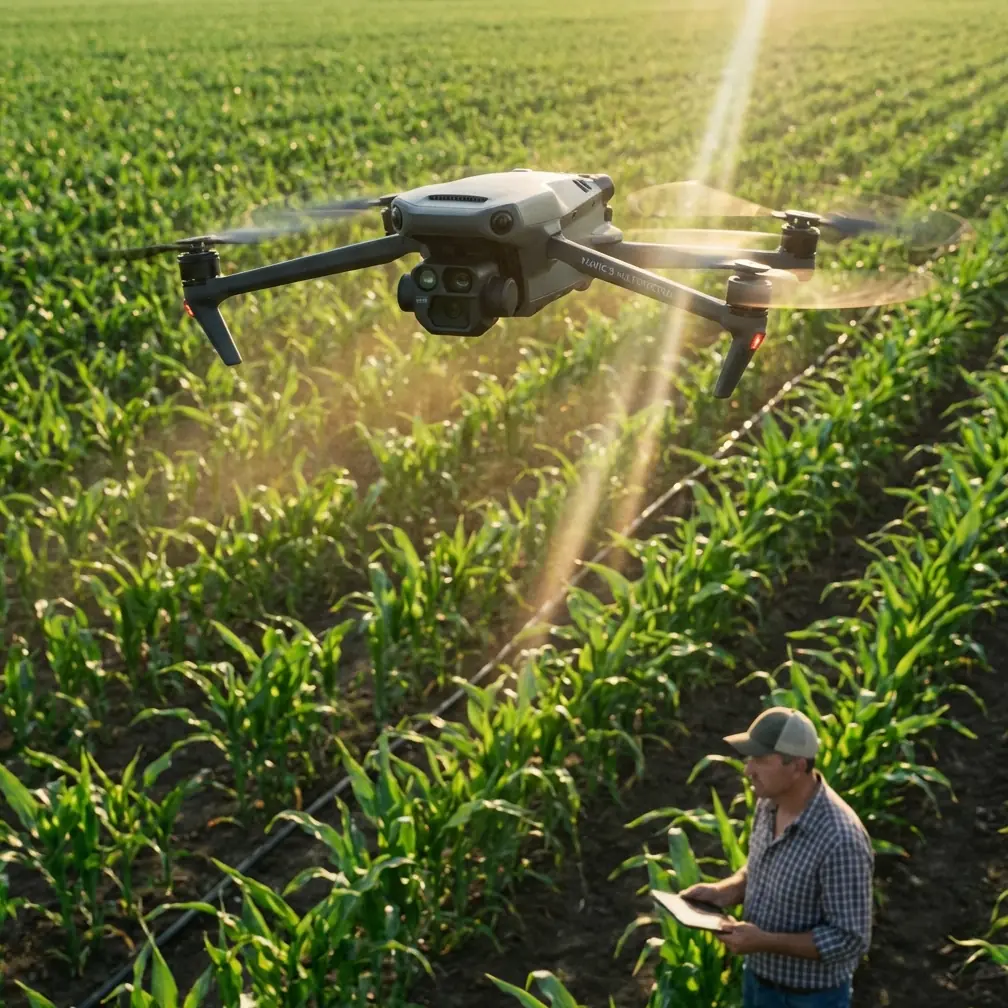
Mavic 3M for Forest Scouting: High Altitude Expert Guide
META: Master high-altitude forest scouting with the Mavic 3M drone. Expert tips on electromagnetic interference, multispectral imaging, and RTK precision for forestry pros.
TL;DR
- Electromagnetic interference at high altitudes requires specific antenna positioning and flight planning strategies
- The Mavic 3M's multispectral sensor array captures forest health data impossible to detect visually
- Achieving consistent RTK fix rates above 95% demands understanding of satellite geometry in mountainous terrain
- Proper calibration protocols reduce data errors by up to 60% in challenging forest environments
The High-Altitude Forest Challenge
Forest managers working above 2,500 meters face a unique problem: traditional scouting methods fail. Ground crews can't cover enough terrain. Satellite imagery lacks resolution. Manned aircraft burn budgets faster than wildfire.
The DJI Mavic 3M changes this equation entirely. Its combination of RGB and multispectral imaging packed into a portable airframe makes it the go-to tool for forestry professionals operating in demanding mountain environments.
But here's what most operators discover the hard way: high-altitude forest work introduces complications that don't exist at lower elevations. Electromagnetic interference from geological formations, thin air affecting flight dynamics, and dense canopy creating GPS shadows all conspire against clean data collection.
This guide breaks down exactly how to overcome these obstacles.
Understanding Electromagnetic Interference in Mountain Forests
Geological formations containing iron ore, magnetite, and other ferromagnetic minerals create localized magnetic anomalies. These anomalies wreak havoc on drone compass systems, causing erratic flight behavior and compromised positioning accuracy.
Recognizing Interference Patterns
The Mavic 3M's dual-compass system provides redundancy, but it can't eliminate interference entirely. Watch for these warning signs:
- Compass calibration requests appearing mid-flight
- Inconsistent heading readings during hover
- Unexpected yaw drift when flying straight lines
- RTK fix rate dropping below 90% without obvious cause
- Position jumps of 0.5 meters or more in logged data
Antenna Adjustment Protocol
When electromagnetic interference strikes, antenna positioning becomes your primary defense. The Mavic 3M's remote controller antennas should be oriented perpendicular to the drone's position—not pointed directly at it, as many operators assume.
Expert Insight: In high-interference zones, I rotate the controller 45 degrees from the standard orientation every 500 meters of flight distance. This technique maintains stronger signal lock by presenting different antenna angles to the aircraft as it moves through varying interference fields.
For severe interference, consider these adjustments:
- Increase flight altitude by 30-50 meters above planned survey height
- Reduce flight speed to 5 m/s to allow more sensor readings per meter
- Plan missions during solar minimum periods when geomagnetic activity decreases
- Avoid flying within 200 meters of known mineral deposits
Multispectral Imaging for Forest Health Assessment
The Mavic 3M carries a four-band multispectral sensor alongside its 20MP RGB camera. This combination captures data across green, red, red edge, and near-infrared wavelengths—the exact spectrum needed for vegetation analysis.
What Multispectral Reveals
Healthy forest canopy reflects specific light signatures. Stressed trees show changes in these signatures weeks before visible symptoms appear. The Mavic 3M detects:
- Early-stage pest infestations affecting chlorophyll production
- Water stress patterns across drainage zones
- Nutrient deficiencies in specific stand areas
- Disease spread vectors between tree clusters
- Post-fire recovery progression
Optimal Capture Settings
Forest canopy presents unique challenges for multispectral capture. Shadows, mixed species, and varying canopy heights all affect data quality.
Configure your Mavic 3M with these parameters:
- Overlap: 80% frontal, 75% side minimum
- Altitude: 80-120 meters AGL for balance between resolution and coverage
- Time window: 10:00-14:00 local solar time for consistent illumination
- Swath width: Calculate based on sensor FOV and desired GSD
Pro Tip: Calibrate your multispectral sensor using the DJI calibration panel before and after each flight session. Temperature changes at altitude affect sensor response, and bracketing your flights with calibration captures ensures accurate NDVI calculations.
Achieving Centimeter Precision with RTK
The Mavic 3M supports RTK positioning through the DJI D-RTK 2 Mobile Station or network RTK services. In forest environments, achieving consistent centimeter precision requires understanding the limitations of both systems.
RTK Fix Rate Optimization
Mountain forests create challenging conditions for satellite reception. Dense canopy blocks signals. Valley walls limit visible satellite count. Achieving the 95%+ RTK fix rate needed for survey-grade accuracy demands careful planning.
| Factor | Impact on Fix Rate | Mitigation Strategy |
|---|---|---|
| Canopy density | -15 to -40% | Fly during leaf-off season when possible |
| Valley orientation | -10 to -25% | Plan flights when satellite constellation favors valley axis |
| Altitude | +5 to +15% | Higher flights improve satellite visibility |
| Time of day | Variable | Check satellite prediction tools for optimal windows |
| Base station placement | Critical | Position on high ground with clear sky view |
Network RTK vs. Local Base Station
Network RTK services struggle in remote mountain areas. Cellular coverage gaps and distance from reference stations degrade correction quality. For serious forest work, a local base station setup delivers more reliable results.
Position your D-RTK 2 base station:
- On the highest accessible point within 5 kilometers of your survey area
- With minimum 15-degree elevation mask clear of obstructions
- Away from reflective surfaces that cause multipath errors
- On stable ground that won't shift during the survey session
Technical Comparison: Mavic 3M vs. Alternative Platforms
| Specification | Mavic 3M | Enterprise Platform A | Fixed-Wing Option B |
|---|---|---|---|
| Multispectral bands | 4 + RGB | 5 + RGB | 6 + RGB |
| Flight time | 43 minutes | 35 minutes | 90 minutes |
| Portability | 899g | 1,350g | 4,200g |
| Setup time | 5 minutes | 15 minutes | 30 minutes |
| Wind resistance | 12 m/s | 15 m/s | 18 m/s |
| Operating altitude | 6,000m | 5,000m | 4,500m |
| IPX rating | IPX6K | IP45 | None |
The Mavic 3M's combination of portability and capability makes it ideal for forest scouting where access points are limited and terrain is challenging. Larger platforms offer more sensor options but sacrifice the rapid deployment that mountain work demands.
Nozzle Calibration Considerations for Spray Operations
While the Mavic 3M itself doesn't carry spray equipment, its scouting data directly informs agricultural spray drone operations in forest management contexts. Understanding spray drift and nozzle calibration helps you collect more actionable intelligence.
When scouting for subsequent spray operations:
- Map wind patterns at canopy height, not ground level
- Identify thermal updraft zones that affect spray drift
- Document canopy gaps where spray penetration improves
- Note slope angles that influence droplet trajectory
- Record humidity gradients affecting evaporation rates
This data transforms raw imagery into operational intelligence that spray crews can actually use.
Common Mistakes to Avoid
Ignoring compass calibration warnings: That popup isn't optional in mountain environments. Calibrate every time the system requests it, and proactively calibrate when moving between geologically distinct areas.
Flying too fast for sensor capability: The multispectral sensor needs adequate exposure time. Pushing beyond 8 m/s in low-light forest conditions produces motion blur that ruins spectral analysis.
Trusting automated flight planning blindly: Terrain-following algorithms don't account for emergent trees or snags. Always review your planned flight path against recent imagery and add 20-meter safety buffers above calculated terrain heights.
Neglecting battery temperature: Lithium batteries lose capacity in cold mountain air. Keep batteries above 20°C until launch. A battery at 5°C delivers roughly 30% less flight time than the same battery at 25°C.
Skipping ground control points: RTK provides excellent relative accuracy, but absolute accuracy requires ground truth. Place minimum 5 GCPs per survey block for data you can actually use in GIS systems.
Frequently Asked Questions
How does altitude affect Mavic 3M flight performance?
The Mavic 3M operates effectively up to 6,000 meters above sea level, but performance degrades progressively above 3,000 meters. Expect approximately 10% reduction in hover time per 1,000 meters of elevation gain due to decreased air density. The motors work harder to generate lift, consuming battery faster. Plan missions with 25% reserve at high altitudes rather than the standard 20%.
Can the Mavic 3M multispectral sensor penetrate forest canopy?
The sensor captures reflected light from the uppermost canopy surface—it cannot see through leaves to the forest floor. However, canopy health directly indicates overall forest condition. For understory assessment, fly during leaf-off periods in deciduous forests or use the RGB camera's higher resolution to peer through natural canopy gaps. Some operators combine Mavic 3M data with LiDAR surveys for complete vertical forest profiles.
What weather conditions prevent effective forest scouting?
Wind speeds above 10 m/s at canopy height compromise both flight safety and image quality. Rain obviously prevents operations, but the IPX6K rating means light drizzle won't damage the aircraft if conditions change unexpectedly. Overcast skies actually improve multispectral capture by eliminating harsh shadows, though thick fog scatters light and degrades spectral accuracy. Optimal conditions combine light overcast, calm winds, and moderate humidity between 40-70%.
Taking Your Forest Operations Further
High-altitude forest scouting with the Mavic 3M rewards operators who understand both the technology and the environment. The techniques covered here—electromagnetic interference management, multispectral optimization, and RTK precision strategies—separate professional results from amateur attempts.
Master these fundamentals, and you'll extract intelligence from forest landscapes that ground-based methods simply cannot match.
Ready for your own Mavic 3M? Contact our team for expert consultation.