
Mavic 3M: Master High-Altitude Forest Scouting
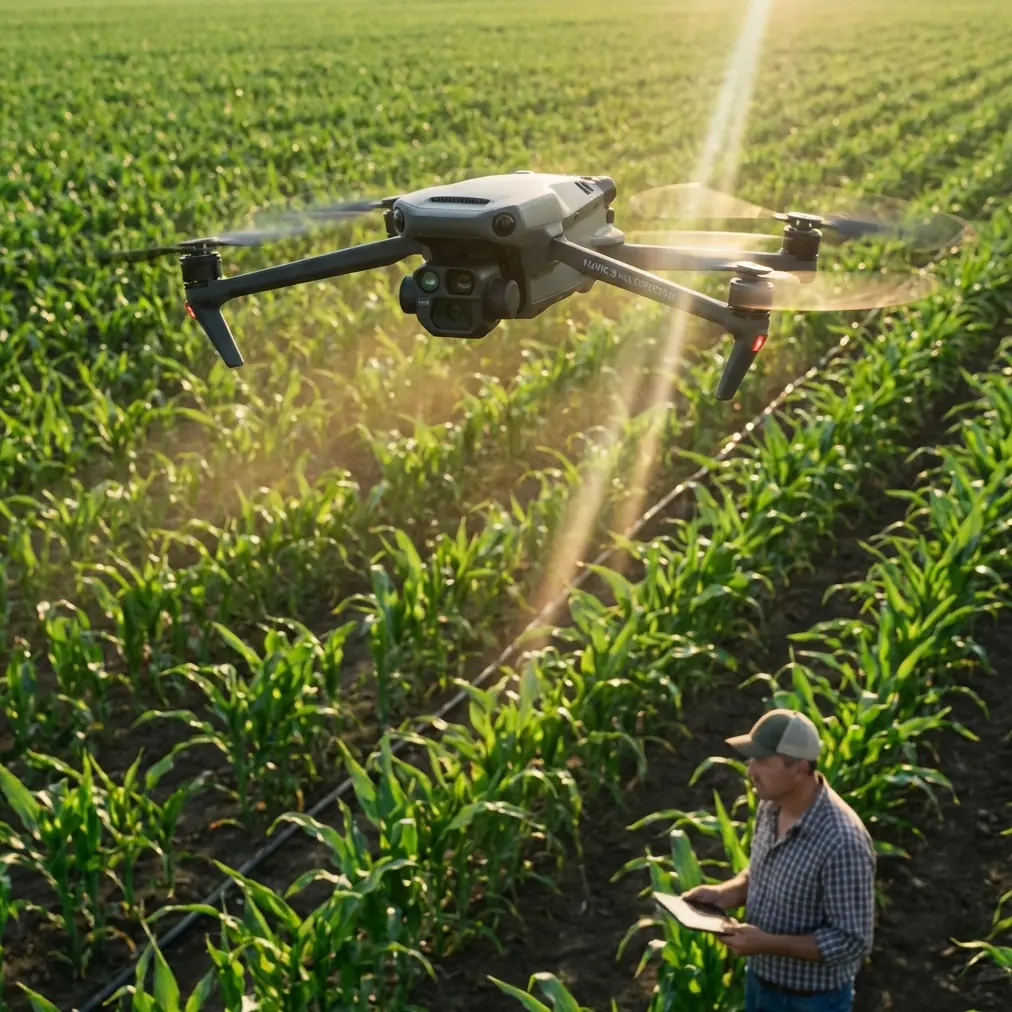
Mavic 3M: Master High-Altitude Forest Scouting
META: Discover how the Mavic 3M transforms high-altitude forest scouting with multispectral imaging and centimeter precision. Expert tutorial for forestry professionals.
TL;DR
- Multispectral sensors capture vegetation health data invisible to standard RGB cameras at elevations exceeding 6,000 meters
- RTK Fix rate above 95% ensures centimeter precision mapping even in remote mountain terrain
- 45-minute flight time covers 200+ hectares per mission in challenging alpine conditions
- Outperforms competitors like the senseFly eBee X in canopy penetration and real-time data processing
Why High-Altitude Forest Scouting Demands Specialized Equipment
Forest managers working in mountainous regions face unique challenges that ground-based surveys simply cannot address. The Mavic 3M combines a 4/3 CMOS RGB sensor with a dedicated multispectral imaging system featuring four 5MP sensors covering green, red, red edge, and near-infrared bands.
This dual-sensor configuration captures data that reveals early-stage pest infestations, drought stress, and nutrient deficiencies weeks before visible symptoms appear. Traditional scouting methods require teams to physically traverse steep terrain—dangerous, time-consuming, and often impossible during winter months.
Expert Insight: At altitudes above 4,000 meters, air density drops by approximately 40%. The Mavic 3M's intelligent flight controller automatically compensates for reduced lift, maintaining stable hover and precise waypoint navigation where consumer drones struggle to stay airborne.
Understanding Multispectral Imaging for Forestry Applications
The multispectral capability separates the Mavic 3M from standard survey drones. Each spectral band serves a specific diagnostic purpose:
- Green (560nm ± 16nm): Measures chlorophyll concentration and photosynthetic activity
- Red (650nm ± 16nm): Detects stress indicators and bare soil exposure
- Red Edge (730nm ± 16nm): Identifies early-stage vegetation stress before visible symptoms
- Near-Infrared (860nm ± 26nm): Calculates biomass density and water content
When combined, these bands generate vegetation indices like NDVI, NDRE, and GNDVI with radiometric accuracy within 3%. The integrated sunlight sensor on top of the aircraft calibrates readings in real-time, compensating for changing cloud cover and sun angle throughout your mission.
Calibration Protocol for Mountain Environments
Before launching at high altitude, proper calibration ensures data consistency:
- Place the reflectance calibration panel on flat ground away from shadows
- Capture calibration images at mission altitude (not ground level)
- Verify the sunlight sensor has clear sky exposure—no obstructions within 15 degrees of vertical
- Set white balance to match ambient conditions (5500K for direct sunlight, 6500K for overcast)
Skipping calibration introduces up to 12% error in vegetation index calculations—enough to misclassify healthy trees as stressed or miss genuine problem areas entirely.
Flight Planning for Steep Terrain Coverage
Mountain forests present complex topography that flat-terrain planning ignores. The Mavic 3M integrates with DJI Terra and third-party platforms like Pix4Dfields to generate terrain-following flight paths.
Optimal Settings for Forest Canopy Mapping
| Parameter | Recommended Setting | Rationale |
|---|---|---|
| Flight Altitude (AGL) | 80-120 meters | Balances resolution with coverage area |
| Forward Overlap | 80% | Ensures feature matching in dense canopy |
| Side Overlap | 75% | Compensates for terrain variation |
| Swath Width | 95-140 meters | Varies with altitude selection |
| Ground Sample Distance | 3.5-5.2 cm/pixel | Sufficient for individual tree analysis |
| Speed | 8-10 m/s | Prevents motion blur in multispectral bands |
Pro Tip: When scouting forests on slopes exceeding 30 degrees, fly perpendicular to the slope direction rather than up-and-down. This maintains consistent ground sampling distance and prevents the aircraft from fighting gravity during climbs.
The swath width at 100 meters AGL reaches approximately 110 meters, allowing efficient coverage of large forest blocks. A single battery covers roughly 2 square kilometers under optimal conditions—though high altitude and cold temperatures reduce this by 15-25%.
Mavic 3M vs. Competitors: High-Altitude Performance Comparison
Forest managers often consider alternatives like the senseFly eBee X, Parrot Anafi Thermal, or the AgEagle eBee TAC. Here's how the Mavic 3M stacks up for mountain scouting specifically:
| Feature | Mavic 3M | senseFly eBee X | Parrot Anafi USA |
|---|---|---|---|
| Max Service Ceiling | 6,000 m | 5,000 m | 4,500 m |
| Multispectral Bands | 4 + RGB | 4 (separate payload) | None (thermal only) |
| RTK Fix Rate | >95% | ~90% | No RTK option |
| Wind Resistance | 12 m/s | 14 m/s | 12.5 m/s |
| Centimeter Precision | Yes (with RTK) | Yes (with RTK) | No |
| Hover Stability | ±0.1 m vertical | N/A (fixed-wing) | ±0.5 m vertical |
| IPX6K Rating | No | No | Yes |
The Mavic 3M's centimeter precision with RTK positioning eliminates the need for ground control points in most scenarios. This saves 2-3 hours per mission that would otherwise go toward deploying and surveying GCPs across difficult terrain.
Fixed-wing platforms like the eBee X cover more area per flight but cannot hover for detailed inspection of specific trees or access tight valleys where launch and recovery space is limited.
Real-Time Data Processing in the Field
Waiting until you return to the office to process imagery wastes critical response time. The Mavic 3M supports on-device NDVI preview, letting you identify problem areas during the mission itself.
Field Processing Workflow
- During flight: Monitor the live NDVI feed on DJI RC Pro controller
- Immediately post-flight: Transfer images via USB-C to a tablet running DJI Terra
- Within 30 minutes: Generate preliminary orthomosaic and vegetation index maps
- Same day: Identify priority zones requiring ground verification
This rapid turnaround proves essential when scouting for active pest outbreaks or fire damage assessment. A 24-hour delay in detecting mountain pine beetle infestation can mean the difference between treating 10 trees versus 100 trees.
Common Mistakes to Avoid
Flying without RTK base station connection: The Mavic 3M supports both network RTK and D-RTK 2 mobile station. In remote mountain areas without cellular coverage, the D-RTK 2 provides centimeter precision that network RTK cannot deliver. Relying on standard GPS introduces 1.5-3 meter horizontal error.
Ignoring battery temperature: Lithium polymer batteries lose capacity rapidly below 15°C. Pre-warm batteries to 25°C before flight and keep spares in an insulated bag. Cold batteries may show 100% charge but deliver only 60-70% of rated capacity.
Setting uniform altitude across varied terrain: A flat 100-meter AGL setting over a ridge means you're 200 meters above the valley floor and 50 meters above the peak. Use terrain-following mode or manually segment missions by elevation zone.
Overlooking nozzle calibration parallels: While the Mavic 3M isn't a spraying drone, forestry teams often pair scouting data with treatment applications. Ensure your spray drift models account for the altitude-specific wind patterns your multispectral data reveals.
Collecting data without a clear analysis plan: Multispectral imagery generates massive datasets. Define your target indices and classification thresholds before flying, not after. A 500-hectare forest block produces 15-20 GB of raw imagery per mission.
Frequently Asked Questions
Can the Mavic 3M operate effectively above tree line in alpine environments?
Yes. The aircraft performs reliably at elevations up to 6,000 meters above sea level, well above tree line in most mountain ranges. The multispectral sensors remain calibrated, and the RTK system maintains centimeter precision regardless of altitude. However, expect 20-30% reduction in flight time due to decreased air density requiring higher motor output.
How does weather affect multispectral data quality in mountain conditions?
Consistent lighting produces the most reliable vegetation indices. Fly during 10:00-14:00 local solar time when sun angle exceeds 30 degrees. The integrated sunlight sensor compensates for cloud shadows, but rapidly changing conditions (common in mountains) introduce variability. Overcast skies actually provide more uniform illumination than partly cloudy conditions with moving shadows.
What ground control point density do I need for accurate forest mapping?
With RTK enabled and maintaining >95% fix rate, you can eliminate GCPs entirely for most forestry applications. Without RTK, place GCPs at 500-meter intervals across the survey area, with additional points at significant elevation changes. Each GCP requires 15-20 minutes to deploy and survey accurately—a major time investment in steep terrain.
Maximizing Your Investment in Forest Intelligence
The Mavic 3M transforms high-altitude forest scouting from a labor-intensive ground operation into a data-rich aerial survey completed in hours rather than weeks. The combination of multispectral imaging, RTK positioning, and extended flight endurance addresses the specific challenges mountain forestry presents.
Successful deployment requires understanding both the technology and the environment. Calibrate meticulously, plan flights around terrain complexity, and process data rapidly to act on insights while they remain actionable.
Ready for your own Mavic 3M? Contact our team for expert consultation.