
Expert Forest Scouting with the DJI Mavic 3M Drone
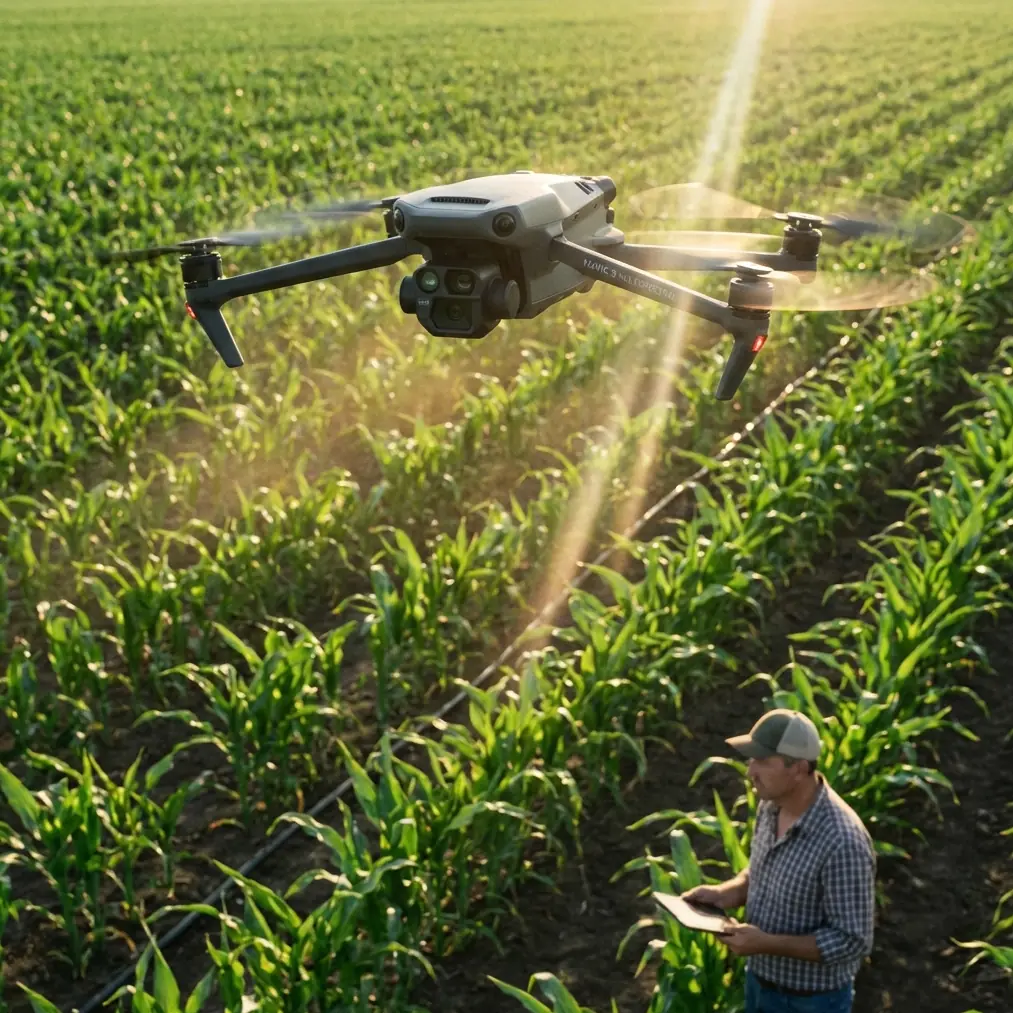
Expert Forest Scouting with the DJI Mavic 3M Drone
META: Master remote forest scouting with the Mavic 3M multispectral drone. Learn expert techniques for vegetation analysis, flight planning, and data collection.
TL;DR
- The Mavic 3M combines RGB and multispectral imaging in a compact platform ideal for remote forest reconnaissance
- RTK positioning delivers centimeter precision for repeatable survey corridors and accurate vegetation mapping
- Built-in IPX6K weather resistance handles sudden mountain weather changes without mission interruption
- Proper nozzle calibration and swath width planning maximize data quality across challenging terrain
Why the Mavic 3M Transforms Remote Forest Scouting
Traditional forest scouting methods consume days of ground traversal through difficult terrain. The Mavic 3M changes this equation entirely, delivering multispectral data collection capabilities that compress weeks of fieldwork into hours of efficient aerial surveys.
For consultants working in remote wilderness areas, this drone addresses three critical challenges: accessibility, data precision, and operational resilience. Whether you're assessing timber health, mapping invasive species spread, or planning conservation corridors, the Mavic 3M provides professional-grade results without helicopter costs.
The platform's four multispectral sensors capture data across green, red, red edge, and near-infrared bands simultaneously with the RGB camera. This synchronized capture eliminates registration errors that plague multi-pass survey approaches.
Essential Pre-Flight Planning for Remote Operations
Mapping Your Survey Corridors
Before launching in remote forest environments, establish clear survey boundaries using satellite imagery. The Mavic 3M's 43-minute maximum flight time allows coverage of approximately 200 hectares per battery under optimal conditions.
Calculate your required overlap based on canopy density:
- Sparse canopy: 70% front overlap, 65% side overlap
- Dense canopy: 80% front overlap, 75% side overlap
- Mixed terrain: 75% front overlap, 70% side overlap
Higher overlap percentages increase processing accuracy but reduce total coverage area. For initial scouting missions, prioritize coverage; detailed analysis flights can follow with tighter parameters.
RTK Base Station Configuration
Achieving centimeter precision requires proper RTK setup before departure. The Mavic 3M supports both network RTK and D-RTK 2 mobile station connections.
For truly remote locations without cellular coverage, pack the D-RTK 2 base station. Position it on stable ground with clear sky visibility—avoid placement under tree canopy or near reflective surfaces.
Expert Insight: Arrive at your survey site 30 minutes before planned flight time. This buffer allows RTK Fix rate stabilization, which typically requires 10-15 minutes of stationary initialization for optimal accuracy.
Monitor your RTK Fix rate throughout the mission. Rates below 95% indicate potential positioning degradation that will affect data quality.
Step-by-Step Forest Scouting Workflow
Step 1: Site Assessment and Safety Check
Survey the launch area for hazards including:
- Overhead obstructions within 50 meters
- Wildlife activity that might interfere with operations
- Magnetic interference from mineral deposits
- Wind patterns through valley corridors
The Mavic 3M's omnidirectional obstacle sensing provides backup protection, but proactive hazard identification prevents mission interruptions.
Step 2: Calibrate Sensors for Local Conditions
Multispectral accuracy depends on proper calibration against known reflectance values. Use the included calibration panel before each flight session.
Position the panel in direct sunlight, avoiding shadows from nearby vegetation. Capture calibration images at your planned survey altitude—typically 80-120 meters for forest applications.
Step 3: Configure Flight Parameters
Set your mission parameters based on data requirements:
| Parameter | Timber Assessment | Disease Detection | General Scouting |
|---|---|---|---|
| Altitude | 100m | 80m | 120m |
| Speed | 10 m/s | 8 m/s | 12 m/s |
| GSD | 5.2 cm/px | 4.2 cm/px | 6.3 cm/px |
| Swath Width | 175m | 140m | 210m |
Ground sampling distance (GSD) directly impacts your ability to identify individual tree stress indicators. For disease detection, prioritize lower altitudes despite reduced coverage efficiency.
Step 4: Execute the Survey Mission
Launch during optimal lighting conditions—typically 10:00 AM to 2:00 PM local time when sun angle minimizes shadows across the canopy.
During a recent scouting mission in mountainous terrain, conditions shifted dramatically mid-flight. What started as clear skies transformed into driving rain within fifteen minutes. The Mavic 3M's IPX6K rating proved its value—the aircraft continued capturing data without interruption while I monitored from shelter.
The drone maintained stable flight through 25 km/h gusts accompanying the weather front. Multispectral data quality remained consistent throughout, with no visible banding or exposure variations in the processed imagery.
Pro Tip: Program automatic return-to-home triggers at 30% battery rather than the default 20% when operating in remote areas. This buffer accounts for headwinds during return flight and provides margin for unexpected obstacles.
Step 5: Validate Data Quality On-Site
Before leaving remote locations, verify data completeness:
- Check image count against flight plan expectations
- Review sample images for focus and exposure issues
- Confirm GPS coordinates embedded in metadata
- Verify multispectral band alignment in quick-preview mode
Discovering data gaps after a multi-hour hike back to base creates expensive return trips.
Advanced Techniques for Vegetation Analysis
NDVI Mapping for Forest Health
The Mavic 3M calculates normalized difference vegetation index (NDVI) values in real-time, but raw band data enables more sophisticated analysis.
Export individual spectral bands for custom index calculations:
- NDRE (Normalized Difference Red Edge): Superior for detecting early-stage chlorophyll changes
- GNDVI (Green NDVI): Better penetration through dense canopy layers
- SAVI (Soil Adjusted Vegetation Index): Accounts for exposed soil in sparse coverage areas
Temporal Comparison Workflows
Repeat surveys across seasons reveal trends invisible in single-capture data. The Mavic 3M's centimeter precision RTK positioning enables pixel-accurate alignment between survey dates.
Maintain consistent parameters across temporal surveys:
- Identical flight altitude and speed
- Same time of day (within one hour)
- Matching overlap percentages
- Equivalent sun angle conditions
Technical Specifications Comparison
| Feature | Mavic 3M | Previous Generation | Competitor A |
|---|---|---|---|
| Multispectral Bands | 4 + RGB | 5 + RGB | 4 + RGB |
| RTK Accuracy | 1 cm + 1 ppm | 1 cm + 1 ppm | 2.5 cm |
| Flight Time | 43 min | 41 min | 38 min |
| Weather Rating | IPX6K | IP43 | IP54 |
| Obstacle Sensing | Omnidirectional | Forward/Backward | Forward Only |
| Weight | 920g | 895g | 1,150g |
The Mavic 3M's weight advantage matters significantly for remote operations where every gram of pack weight counts during extended backcountry access.
Common Mistakes to Avoid
Ignoring sun angle effects on multispectral data. Flights during early morning or late afternoon create inconsistent reflectance values across your survey area. Shadows from terrain features compound this problem in mountainous regions.
Underestimating battery requirements. Cold temperatures at elevation reduce effective battery capacity by 15-25%. Pack additional batteries and keep spares warm inside your jacket until needed.
Skipping calibration between flights. Lighting conditions change throughout the day. Recalibrate your multispectral sensors every 2-3 hours or whenever cloud cover shifts significantly.
Flying too fast for data quality. The temptation to maximize coverage leads to motion blur in imagery. Reduce speed by 20% from calculated maximums when precision matters.
Neglecting spray drift considerations. If your scouting supports agricultural applications, document wind conditions during each flight. Spray drift modeling requires accurate wind data from survey altitude, not ground level.
Frequently Asked Questions
What ground sampling distance do I need for individual tree assessment?
For identifying stress indicators on individual trees, target 5 cm/px or better GSD. This resolution reveals crown discoloration, defoliation patterns, and structural damage. General stand assessment works effectively at 8-10 cm/px, allowing faster coverage of larger areas.
How does weather resistance affect data quality during rain?
The Mavic 3M's IPX6K rating protects against water ingress, but water droplets on lens surfaces degrade image quality. The aircraft continues operating safely, though you may need to pause data collection until lenses clear. Carry lens wipes for post-rain cleaning before resuming capture.
Can I achieve accurate results without RTK in remote areas?
Standard GPS positioning delivers 1.5-3 meter horizontal accuracy—sufficient for general scouting but inadequate for temporal comparison or precision mapping. For one-time reconnaissance, standard GPS works acceptably. For any application requiring repeat surveys or integration with ground-truth data, RTK positioning is essential.
Taking Your Forest Scouting to the Next Level
The Mavic 3M represents a significant capability upgrade for consultants working in remote forest environments. Its combination of multispectral imaging, weather resilience, and positioning precision addresses the real-world challenges of wilderness survey work.
Success depends on thorough preparation, proper calibration, and realistic expectations about coverage versus quality tradeoffs. Master these fundamentals, and you'll deliver insights that ground-based methods simply cannot match.
Ready for your own Mavic 3M? Contact our team for expert consultation.