
Mavic 3M for Mountain Coastline Scouting
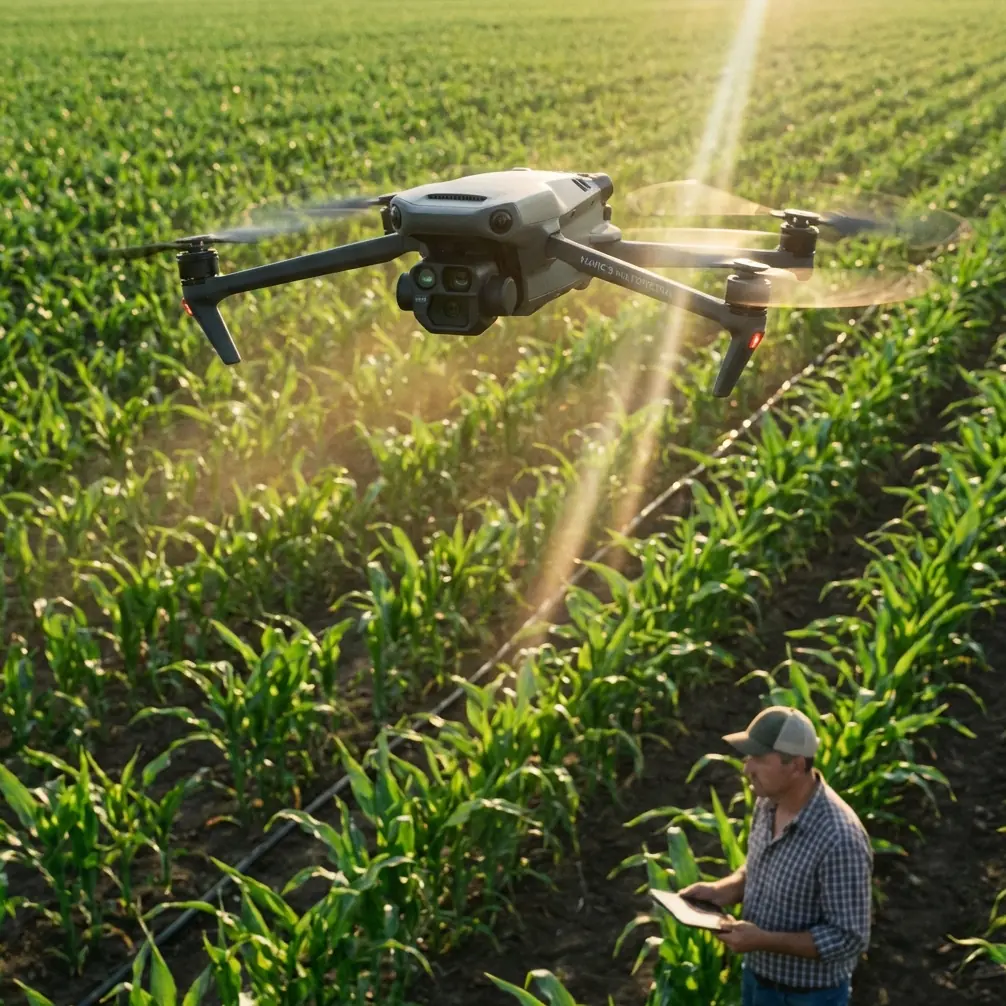
Mavic 3M for Mountain Coastline Scouting: A Practical Field Tutorial for Education-Led Survey Work
META: Learn how the Mavic 3M can support mountain coastline scouting, training, and academic fieldwork with multispectral data, RTK precision, and smart workflow tips grounded in current education and AI standardization trends.
When people talk about the Mavic 3M, the conversation usually stays in agriculture. That misses a much more interesting reality. In academic fieldwork, especially in difficult terrain like mountain coastlines, the aircraft becomes a compact sensing platform for disciplined observation, repeatable data collection, and teaching students how to work with evidence instead of impressions.
That matters now for a reason outside the drone world itself.
Recent guidance from China’s Ministry of Education and the National Language Commission introduced two formal language-related standards: the Machine-Synthesized Putonghua Proficiency Assessment Grade Standard and Assessment Outline and the Basic Terminology of Artificial Intelligence Corpora. These were developed by the Ministry of Education’s Institute of Language Application Research, under the National Language Commission’s Putonghua and Written Language Training and Testing Center, reviewed by the national standards review committee, and formally published by Language Press. On the surface, that sounds far removed from a Mavic 3M mission over cliffs, tidal inlets, and broken ridgelines. It is not.
The link is standardization.
If an education system is formalizing how AI language is described and how machine-generated speech is assessed, that tells us something broader: training environments increasingly depend on consistent terminology, verifiable procedures, and traceable outputs. That same discipline is exactly what makes Mavic 3M coastline scouting useful in universities, vocational programs, and field labs. In rough coastal mountain environments, “good enough” field notes break down quickly. A repeatable aerial workflow does not.
This tutorial looks at how to use the Mavic 3M in that context: not as a generic drone overview, but as a practical method for scouting coastlines in mountainous terrain where access is poor, lines of sight are constantly changing, and survey teams need to teach as much as they need to measure.
Why mountain coastlines are hard to scout properly
A mountain coastline compresses several problems into one operational area.
You may be dealing with steep elevation changes, reflective water surfaces, wind funneled by ridges, intermittent GNSS quality near rock faces, vegetation zones that shift sharply over short distances, and foot access that can be slow or risky. Add students or trainees to the mission, and now you also need a workflow that is teachable. That changes the choice of aircraft and the way the mission is structured.
The Mavic 3M stands out here because multispectral sensing and mapping-grade positioning can work together. The multispectral capability is not only for crop vigor. In coastal mountain work, it can help distinguish vegetation stress, identify drainage patterns along slopes, spot changes in salt-exposed plant communities, and compare surface conditions between exposed ridges and sheltered coves. When your objective is scouting rather than heavy-lift inspection, that combination is often more valuable than raw payload capacity.
The RTK side is just as significant. On a jagged coastline, revisiting the same transect matters. If one student team flies a section this week and another repeats it next month, centimeter precision changes the exercise from “interesting imagery” into real comparative field data. A strong RTK fix rate reduces ambiguity in georeferencing and makes later orthomosaic alignment far less painful.
The education angle is not a side note
Those newly released language and AI terminology standards signal a larger educational shift: schools and training institutions are being pushed toward formal structures for how machines, data, and human interpretation interact. For drone programs, that means instructors should care not only about flight safety and image capture, but also about how data is named, labeled, narrated, and archived.
This is where Mavic 3M operations can become a model teaching tool.
A coastline scouting mission produces imagery, spectral data, geotags, annotations, and oral or written reporting. Instructors can build a field module where students gather data with the drone, then produce standardized observations using controlled terminology. That mirrors the spirit behind the two published standards. One standard addresses machine-synthesized Putonghua assessment; the other defines baseline AI corpus terminology. Operationally, the significance is clear: machine-assisted systems are only as useful as the consistency of the language wrapped around them.
For Mavic 3M users, that means every field campaign should adopt a fixed vocabulary for shoreline type, vegetation condition, erosion indicators, observation confidence, and revisit intervals. It sounds administrative. It is actually what turns disconnected flights into a usable academic dataset.
A tutorial workflow for scouting coastlines in mountain terrain
Let’s get practical.
1. Define the survey question before the route
Do not begin by drawing a flight grid just because mapping software makes it easy.
For a mountain coastline mission, ask what you are trying to detect:
- Slope vegetation change
- Storm runoff pathways
- Cliff-edge plant stress
- Tidal interface shifts
- Access route planning for ground teams
- Repeatable teaching datasets for student comparison
The Mavic 3M is strongest when its multispectral output has a clear interpretive purpose. If the field team is vague, the mission will produce a lot of files and very little insight.
2. Use RTK discipline from the start
A mountainous coastline punishes sloppy positioning. When terrain blocks satellites or the launch point changes between sessions, inconsistent georeferencing can creep in fast. This is why RTK fix rate deserves attention before takeoff, not after processing.
If your objective includes comparing shoreline vegetation or slope runoff over time, prioritize stable RTK conditions and document them in the mission log. That single habit is operationally significant because it protects the integrity of time-series analysis. Without it, spectral differences can be confused with alignment errors.
Centimeter precision is not just a nice specification. In a training or research setting, it determines whether your students are learning environmental interpretation or learning how to clean up preventable coordinate drift.
3. Plan for swath width based on terrain, not textbook mapping
In flat farmland, swath width calculations are relatively straightforward. Along mountain coastlines, they are not. Elevation changes can reduce coverage consistency across a single leg, and cliff edges can create sections where overlap looks acceptable on paper but fails in reconstruction.
A better practice is to segment the mission into topographic zones. Fly exposed ridge sections, descending slopes, and low coastal shelves as separate mission blocks when possible. That produces more reliable overlap and better spectral consistency. It also gives students a clearer lesson in why mission design must respond to landform, not just software defaults.
4. Watch wind behavior, especially near cliff transitions
This should be obvious, yet it is often underestimated in academic teams.
Mountain coastlines generate mechanical turbulence where sea wind meets slope geometry. The aircraft may seem stable over open water and then encounter abrupt airflow changes near a rock face or ridge shoulder. Build wider safety margins into lateral route planning and avoid hugging terrain just to get visually dramatic footage. The Mavic 3M is a data tool here, not a cinema platform.
5. Create a standardized observation language
This is where the recent education standards become surprisingly relevant.
Because official standards are now being published around AI corpus terminology and machine-generated language assessment, drone educators should take the hint: define terms before data collection. For instance, do not allow one student to tag a zone as “degraded vegetation,” another as “salt burn,” and another as “coastal stress” unless those labels are formally distinguished.
A small shared glossary can dramatically improve annotation quality. That is the drone-field equivalent of corpus discipline. It is also one of the easiest ways to make Mavic 3M outputs more useful for later AI-assisted analysis or report generation.
Where a third-party accessory actually helps
One of the most practical upgrades for this kind of work is a third-party high-visibility landing pad with weighted edge anchors. It is not glamorous, but on uneven coastal terrain it can make launch and recovery much more consistent.
Why does that matter? Because mountain coastline staging areas are often gravel pull-offs, damp grass patches, or sandy ledges with loose debris. A stable launch surface reduces contamination risk to the aircraft and improves workflow discipline when students are rotating through field exercises. It also helps maintain a cleaner, more repeatable preflight routine.
Another useful accessory, depending on your teaching setup, is a rugged third-party tablet sun hood. Coastal glare can make route checks and exposure review harder than expected. If the pilot cannot confidently assess map positioning and telemetry in bright marine light, data quality suffers before the aircraft even reaches the first waypoint.
Translating agricultural habits into coastline work
Some Mavic 3M operators come from agricultural workflows, so it helps to clarify what carries over and what does not.
Terms like spray drift, nozzle calibration, and IPX6K belong more naturally to spraying platforms than to the Mavic 3M itself. Still, they are useful reference points in training. If a program teaches multiple UAV types, instructors can use the contrast to sharpen operational judgment. Spray drift and nozzle calibration matter for application drones; multispectral consistency and geospatial repeatability matter here. The discipline is shared even when the payload mission is different.
That distinction is educationally valuable. Students learn that not all drone missions solve the same problem. A coastline scouting workflow is about sensing and interpretation, not material application.
Building a field lesson around the aircraft
Dr. Sarah Chen, the sort of academic lead I imagine for this work, would probably structure the exercise in three layers.
First, the class learns the physical mission: topography, launch planning, RTK setup, weather reading, and route execution.
Second, they learn the data logic: multispectral capture, overlap discipline, revisit methodology, and annotation standards.
Third, they learn the reporting language: how to describe what the drone sees in a way that another team can reproduce or challenge.
That third layer is where many drone courses remain weak. The newly published standards from the education and language authorities reinforce the idea that structured machine-era work needs structured language. If your Mavic 3M program teaches image capture but not terminology control, it is only teaching half the job.
A sample mission template
For a mountain coastline scouting lesson, a useful template might look like this:
- Establish a single launch zone with clear fallback options
- Confirm RTK status and record fix condition in the log
- Divide shoreline into terrain-informed sectors rather than one oversized grid
- Capture multispectral data over each sector with consistent overlap targets
- Mark visible erosion channels, vegetation transition zones, and access hazards
- Require every team to use the same annotation glossary
- Repeat one short transect at the end for comparison and quality control
That final repeat leg is underrated. Instructors can use it to show students how small changes in light, angle, or positioning alter interpretation. It turns the Mavic 3M from a “flying camera” into a lesson in scientific humility.
When to bring in outside technical support
Some teams are comfortable with the aircraft but less confident in building a repeatable education workflow around it. In that case, getting practical setup advice can save a lot of trial and error, especially when integrating RTK procedures, terrain-specific mapping design, and field-teaching protocols. If you need a direct technical discussion around mission setup or accessories for this kind of environment, you can reach out here: message a UAV specialist on WhatsApp
What makes this approach different
The most useful takeaway is not that the Mavic 3M can fly over a mountain coastline. Many aircraft can do that.
What matters is that it can support a more disciplined kind of fieldwork at a moment when education systems are moving toward stronger standards for AI-related terminology and machine-mediated assessment. The publication of those two standards by the Ministry of Education and the National Language Commission is not random background noise. It points toward a future where data collection, interpretation, and language structure are increasingly connected.
For coastline scouting in mountain terrain, that connection becomes very practical. The Mavic 3M gathers spatial and spectral evidence. RTK gives that evidence positional credibility. A standardized vocabulary gives it academic value. And a few smart field accessories make the whole process more reliable where terrain and weather are constantly trying to break the workflow.
That is the real promise of the platform in this setting. Not spectacle. Not buzzwords. A tighter loop between sensing, teaching, and repeatable observation.
Ready for your own Mavic 3M? Contact our team for expert consultation.