
Mavic 3M Coastline Case Study: Why Focus Discipline
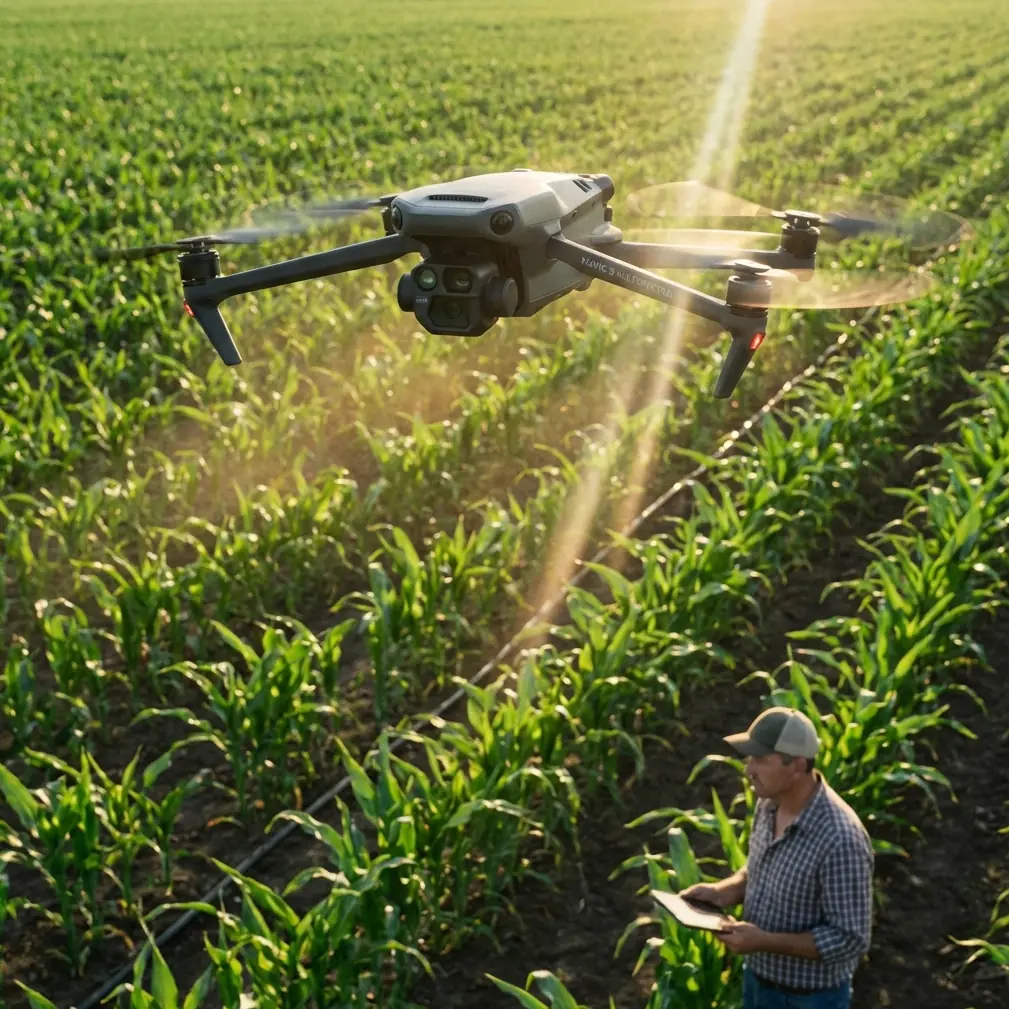
Mavic 3M Coastline Case Study: Why Focus Discipline and Autonomous Flight Planning Matter in Remote Shore Surveys
META: A practical Mavic 3M coastline scouting case study covering focus control, autonomous navigation, multispectral use, flight altitude choices, and operational lessons for remote shoreline missions.
Remote coastline scouting looks simple from a distance. Launch, map the shore, bring the aircraft home. In practice, it is one of the quickest ways to expose weak mission planning. Wind shifts. Contrast changes by the minute. Water glare confuses the eye and the sensor. Repetitive terrain can make image review painfully inconsistent if the camera setup is sloppy from the start.
That is exactly why the latest discussion around camera focus logic deserves more attention from Mavic 3M operators than it usually gets. A recent beginner-oriented camera piece made a blunt but accurate point: blurry images often have less to do with talent and more to do with misunderstanding how focus actually works. That sounds elementary until you are back from a remote shoreline sortie with dozens of soft frames embedded in an otherwise useful dataset.
For Mavic 3M users, that is not a cosmetic problem. It is an operational one.
As someone who studies UAV imaging workflows in field environments, I see the same pattern repeatedly. Teams spend time debating route geometry, battery rotation, and RTK behavior, then treat focus as something the aircraft will “handle.” That assumption is expensive when the mission is a long coastal strip, flown far from easy relaunch points, with surf, rocks, sand, vegetation edges, and tidal features all appearing in the same run.
This case study looks at a realistic Mavic 3M shoreline scouting scenario and explains why two seemingly separate news threads matter together: first, the renewed emphasis on understanding autofocus modes and focus areas; second, the broader rise of self-navigating UAV systems. On a remote coast mission, those two subjects are not separate. They define whether your map is dependable.
The scenario: remote shoreline reconnaissance with a Mavic 3M
Let’s set the scene. A field team is tasked with scouting a rugged coastal section to document erosion indicators, vegetation stress near salt intrusion zones, debris accumulation, and access-path changes after rough weather. The chosen aircraft is the Mavic 3M because it combines efficient field deployment with multispectral capability, useful when visible-light interpretation alone misses subtle vegetation signals.
The route is remote. Vehicle access is limited. Launch sites are few. Signal conditions may vary along cliffs and coves. The team needs repeatable coverage, clean overlaps, and usable imagery on the first visit.
This is where many pilots instinctively lean harder on autonomy. Another recent UAV discussion asked why self-navigating drones are advancing so quickly and where that trend is headed. The answer, in field terms, is straightforward: missions are becoming too data-sensitive and too labor-intensive to depend on improvised piloting alone. Autonomous navigation reduces workload, improves repeatability, and helps preserve swath consistency over difficult ground.
But there is a catch. Autonomy is not the same as judgment.
A perfectly flown autonomous route can still produce weak results if image acquisition fundamentals are not under control. On a coastline, that usually begins with focus.
Why focus errors are common over coasts
The recent camera tutorial broke autofocus down into three core modes: single autofocus for static subjects, continuous autofocus for moving subjects, and an automatic switching mode intended as a beginner bridge. That may sound like general photography advice, but it maps directly onto Mavic 3M field use.
Coastal missions are visually deceptive. The shoreline may be geographically stable enough for structured mapping, yet the scene itself is full of movement: wave edges, foam patterns, wind-blown grass, shifting reflections, birds, and moving shadows from clouds. If the pilot or payload operator relies on an automatic switching behavior in mixed scenes, the system can make imperfect decisions at exactly the wrong moment.
For mapping passes, the subject is not “motion” in the photographic sense. The operational goal is stable capture of terrain and surface features at a known altitude, speed, and overlap. That means focus behavior must be chosen to support consistency, not to react unpredictably to transient elements inside the frame.
The tutorial’s warning about beginners failing because they have not understood “focus logic” is more relevant to UAV work than many realize. In remote shoreline scouting, a soft dataset often comes from one of four causes:
- focus locked onto the wrong depth zone before the route begins
- autofocus chasing high-contrast wave lines instead of the survey surface
- mixed-scene auto modes changing behavior during the mission
- inadequate manual verification before committing to a long corridor flight
With the Mavic 3M, the cost of that mistake rises because you are often collecting more than simple scenic imagery. You may be aligning visual observations with multispectral outputs and georeferenced mission logs. Once the capture quality slips, confidence in the broader interpretation slips with it.
The operational significance of autofocus modes on a Mavic 3M mission
For a coastline case like this, the most practical lesson from the focus article is not that one mode is universally “best.” It is that mode selection should match mission intent.
If the team is conducting pre-survey inspection shots from a hover near launch, single autofocus logic makes sense. It allows deliberate lock on fixed shoreline features such as rock faces, dune edges, or man-made access points. Once focus is confirmed, reframing can happen with less uncertainty.
If the task shifts to tracking a moving object, such as a vessel approaching the survey zone or wildlife that must be documented and avoided, continuous autofocus behavior becomes more appropriate. The article described this mode as the one that keeps tracking while the shutter remains engaged. In UAV terms, that matters during dynamic observation, not during systematic map acquisition.
And that “beginner bridge” mode that automatically switches between behaviors? It may be convenient for casual flying, but on a remote professional sortie it can introduce ambiguity. The original article explicitly warned that in complex scenes this kind of automatic switching can fail. A surf line under hard light is a textbook complex scene.
That warning deserves emphasis because shoreline data collection often occurs in exactly the kind of high-contrast, mixed-motion environment where automatic logic is least trustworthy.
Optimal flight altitude for this coastline scenario
Now to the question that usually determines whether the mission feels easy or fragile: flight altitude.
For remote coastline scouting with the Mavic 3M, my preferred starting point is an altitude band around 60 to 80 meters above ground level, then adjusting based on terrain relief, wind, and the smallest feature the client actually needs to identify.
Why this range?
At roughly 60 to 80 meters, the aircraft usually gains several advantages at once:
- better visual stability than very low flight over wind-turbulent surf edges
- broader swath width for efficient shoreline coverage
- enough standoff from cliffs, spray, and unexpected bird activity
- improved consistency in image geometry across irregular coastal contours
Flying lower can sharpen tiny features, but it often makes the mission less robust. Near the surf zone, low altitude increases the influence of sea spray, updrafts, and abrupt light reflection changes. That matters even if the aircraft has strong environmental resilience. Readers may associate terms like IPX6K with rugged operations, but durability language should never be confused with permission to fly unnecessarily close to salt-laden turbulence.
Flying much higher creates a different problem. You gain efficiency but lose feature confidence, especially when trying to distinguish subtle transitions in vegetation stress or erosion edges. For multispectral interpretation, that tradeoff is not trivial. A broad pass may cover more coastline per battery, yet blur the boundary conditions you actually came to inspect.
So 60 to 80 meters is not a magic number. It is a smart baseline for this specific scenario: remote coastline scouting where safety, repeatability, and interpretable shoreline detail all matter more than chasing the lowest possible altitude.
Where autonomy helps—and where it needs human discipline
The recent discussion about fast progress in self-navigating UAVs speaks directly to Mavic 3M field strategy. Coastline work benefits enormously from automated routing. Repeat passes at fixed altitude and spacing are critical if the team is monitoring change over time. The cleaner the path geometry, the easier it becomes to compare one survey window against the next.
Autonomous navigation also reduces pilot fatigue. That matters in remote operations, especially when launches are spaced out over difficult terrain and each battery cycle must count. A tired pilot makes poor decisions about route deviations, return thresholds, and camera checks.
Still, the most advanced route planner cannot rescue weak acquisition settings. Before every autonomous leg, I recommend a simple human verification sequence:
- confirm RTK fix rate and home-point reliability before takeoff
- inspect focus on a shoreline feature at mission distance, not only near the operator
- review one or two captured frames at full zoom before committing the full route
- verify overlap assumptions against actual ground texture and lighting
- adjust altitude if glare or repetitive terrain weakens visual separation
That second step is where the camera-focus story becomes practical. A shoreline mission does not fail only because the aircraft flew poorly. It often fails because the operator trusted autofocus without validating where the system actually settled.
Why multispectral matters on the coast
The Mavic 3M’s real edge in this scenario is not just mobility. It is the ability to pair visible observations with multispectral data in places where shoreline health is changing faster than the naked eye suggests.
Salt stress along vegetation margins, drainage disruption near access roads, and disturbed strips behind dune lines may not always stand out cleanly in standard RGB imagery. Multispectral interpretation can reveal pattern shifts that deserve closer inspection on the ground.
But multispectral value depends on clean mission design. If altitude fluctuates too much, if path spacing is inconsistent, or if image quality drops due to poor focus discipline, the interpretive power of the dataset declines. The aircraft can collect a large volume of data and still underperform if the acquisition chain is unstable.
This is another reason autonomous navigation and focus control belong in the same conversation. One protects route repeatability. The other protects image usability.
A practical field workflow for remote coastal teams
Here is the workflow I would assign to a two-person Mavic 3M team scouting a difficult shoreline section:
Start with a short visual reconnaissance leg rather than immediately launching the full mapping route. Use this pass to inspect glare bands, identify bird activity, and locate surf zones where low-altitude turbulence is stronger than expected.
Then set the mapping altitude in the 60 to 80 meter band and keep it conservative if cliffs, spray, or unstable winds are present. Confirm centroid alignment and route geometry before the main pass.
Before the autonomous segment begins, manually verify focus on a representative coastal feature at distance. Do not rely on a default or transitional autofocus setting if the scene contains strong motion and contrast. If conditions are awkward—low contrast haze, flat sand under overcast light, or repetitive white wash—manual focus verification becomes even more valuable.
Once the route is underway, watch the mission like a data capture exercise, not just a flight. Monitor image rhythm, aircraft speed, and any signs that the camera is reacting to changing light. After the first segment, inspect sample frames at high magnification. It is far better to lose two minutes reviewing images than to lose the entire shoreline record.
If your team wants to compare field setup notes or route-planning checklists for coastal work, I’ve shared a simple contact path here: https://wa.me/example
A note on realism from outside the mapping world
One of the more interesting recent UAV developments comes from the counter-UAS side. Pendleton UAS Range and Gambit are preparing a live demonstration on April 23 in northeast Oregon focused on realistic counter-UAS testing, validation, and operator training. At first glance, that seems unrelated to a Mavic 3M shoreline mission.
It is not.
The connection is realism. The UAV sector is moving away from lab-perfect assumptions and toward scenario-based performance under field stress. That same mindset should shape civilian mapping and inspection work. Coastline scouting is not a controlled demo. It is a live environment with wind, motion, glare, access constraints, and limited chances to redo mistakes.
The broader industry trend is clear: autonomy is maturing, field validation is becoming more rigorous, and operators are being asked to trust systems in more demanding circumstances. That makes basic imaging discipline more valuable, not less.
The takeaway for Mavic 3M operators
The strongest Mavic 3M coastline missions are not built on a single feature. They come from aligning three things correctly:
First, autonomous navigation for route repeatability in a difficult environment.
Second, deliberate focus management based on scene behavior rather than habit.
Third, altitude selection that balances swath width, image clarity, wind resilience, and safety around spray and terrain.
The recent focus tutorial got one thing exactly right: beginners are often not failing because they lack instinct. They are failing because they have not yet learned the camera’s decision-making logic. On the coast, that logic can decide whether a mission produces reliable evidence or a frustrating pile of near-misses.
For remote shoreline scouting with the Mavic 3M, my advice is simple. Use autonomy aggressively, but never pass responsibility for image quality to automation. Lock down focus strategy before the route starts. Fly high enough to stabilize the mission, low enough to preserve shoreline detail, and disciplined enough to review data before leaving the site.
That is how a remote coastal sortie becomes a dependable survey instead of an expensive guess.
Ready for your own Mavic 3M? Contact our team for expert consultation.