
Mavic 3M in Extreme Temperatures: What Actually Matters
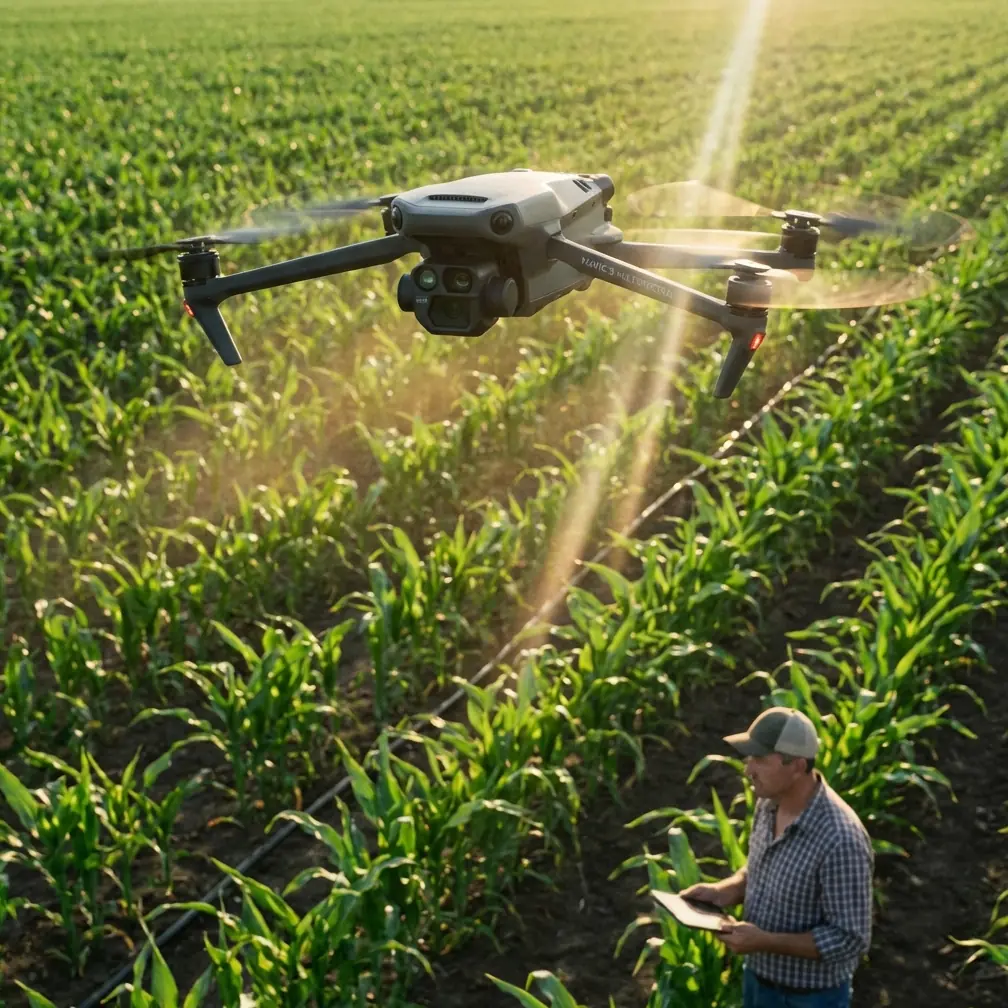
Mavic 3M in Extreme Temperatures: What Actually Matters for Wildlife Monitoring
META: A technical review of the DJI Mavic 3M for wildlife monitoring in extreme temperatures, with practical insight on weather risk, multispectral value, RTK-grade precision, and mission reliability.
By Dr. Sarah Chen
Wildlife monitoring sounds gentle on paper. In the field, it is usually the opposite.
You are working at dawn in frost-prone wetlands, over sun-baked grassland at midday, or along forest edges where moisture, temperature swings, and unstable weather can ruin a flight window in minutes. In those conditions, the useful question is not whether a drone can fly. Many can. The real question is whether the aircraft can collect dependable ecological data before weather, optics, or navigation uncertainty compromise the mission.
That is the lens through which the Mavic 3M deserves to be judged.
Most discussions around this platform stay inside agriculture. That is understandable given its multispectral identity. But for wildlife teams dealing with habitat condition, forage availability, water stress, seasonal vegetation change, nesting-area disturbance thresholds, and repeatable survey grids, the Mavic 3M is more interesting than its label suggests. Especially when temperatures are pushing both aircraft systems and operator decision-making to their limits.
Extreme temperatures change the mission before takeoff
A drone used for wildlife monitoring in harsh environments is not just fighting temperature. It is fighting the chain reaction temperature creates.
Cold conditions increase the chance of icing and moisture-related performance loss. One aviation meteorology reference in the source material is blunt about the consequences: ice reduces effective lifting surface area, can distort or disable critical air data readings when static and pressure ports are affected, and can even interfere with communications when antennas ice over. That matters operationally even for compact civilian UAVs because a wildlife mission often depends on stable low-altitude passes and clean sensor data, not merely airborne survival.
The same material also notes how frontal weather shifts bring cloud, precipitation, wind, and abrupt changes in temperature. A cold front can compress the useful flight window into a narrow period between calm and turbulence, while a warm front can stretch precipitation across a much wider area. For wildlife teams, that translates into a simple rule: environmental intelligence is part of payload planning. If your mission depends on repeatable multispectral capture, the weather model is not background information. It is a sensor-quality variable.
This is where the Mavic 3M starts to separate itself from more generic camera drones. In habitat monitoring, the aircraft is not only a platform for seeing animals. It is a platform for measuring landscape condition consistently enough that surveys from different days can be compared.
Why the Mavic 3M fits wildlife work better than a standard imaging drone
The Mavic 3M’s biggest advantage is not raw speed or spectacle. It is the combination of multispectral sensing and positional discipline.
A standard RGB drone can produce beautiful imagery of nesting sites, browse corridors, marsh edges, or canopy gaps. Beauty is not the same as ecological utility. When temperatures are extreme, visible signs of stress in vegetation often appear late or unevenly. Multispectral capture gives biologists a way to evaluate habitat quality before obvious visual deterioration sets in. That matters when the target is not a single species in frame, but the condition of the landscape supporting it.
For wildlife monitoring, this can mean:
- tracking forage stress in grazing zones
- identifying water-stressed vegetation near migration corridors
- mapping habitat disturbance after heat or frost events
- comparing seasonal plant vigor across repeated survey blocks
- distinguishing subtle surface variation that a visible-light image can flatten
In this respect, the Mavic 3M outclasses ordinary prosumer drones because it is built to produce analytical imagery rather than just attractive overheads. Competitors with strong RGB cameras can document a site. The Mavic 3M is better suited to measuring it.
That distinction becomes even more important in extreme temperatures. When environmental stress is the story, multispectral information often tells you more than standard color images.
Precision is not a luxury when wildlife work needs repeatability
The source material on drone formation flight includes a detail that sounds educational on the surface but has broad operational meaning: after route planning, coordinated drones can execute tasks with minimal manual intervention, and overall efficiency can reach 50 times that of traditional manual or conventional plant-protection work. It also describes a programmed mission in which aircraft rise 20 centimeters, move forward 30 centimeters, then begin their patterned route, repeating a bow-shaped path twice before landing.
Those numbers are from a training scenario, but the principle is the part worth carrying over. Reliable drone work is built on preplanned geometry, repeatability, and low-intervention execution.
For wildlife monitoring with the Mavic 3M, the equivalent is not two aircraft sowing a field. It is the ability to fly the same transect lines, with consistent overlap and stable geospatial control, across multiple dates and temperature regimes. That is where centimeter precision and RTK Fix rate become more than spec-sheet jargon. If you are trying to compare vegetation response after a cold snap, or measure changes in wetland edge cover over time, poor positional consistency can contaminate your dataset long before you notice a visual problem.
The Mavic 3M’s RTK-enabled workflow is therefore one of its most valuable traits in scientific use. It supports repeat surveys that land in the same spatial frame again and again. A wildlife team may not talk about “swath width” and “fix rate” in the same language as a crop consultant, but the underlying need is identical: coverage must be predictable, and positional error must stay small enough that temporal comparison remains credible.
That is one area where the Mavic 3M clearly excels over less specialized drones. Many aircraft can map. Fewer can support habitat analytics with tight positional discipline and multispectral output in a package small enough to deploy quickly when weather windows open.
The weather problem is not just flight safety. It is data integrity.
A lot of pilots think about weather in binary terms: safe to launch or unsafe to launch. That is not enough for ecological work.
Take icing. The reference material points out that icing on the camera lens can severely affect the pilot’s view. For wildlife monitoring, lens contamination is not only a piloting issue. It can undermine image consistency across a whole mission. Slight optical degradation can alter edge definition, reduce clarity in surface textures, and create quality variation between early and late passes. If your objective is to classify habitat condition, even mild contamination matters.
The same goes for frontal systems. The meteorology notes distinguish cold fronts, with narrower but more intense post-frontal precipitation zones and stronger abrupt changes, from warm fronts, where precipitation areas are broader and more continuous. Operationally, that difference affects mission design. Under cold-frontal influence, teams often need shorter, sharper capture windows and should expect more instability near transition periods. Under warm-frontal influence, the problem is often not sudden turbulence but prolonged moisture, diffuse light shifts, and persistent dampness that can compromise repeated sensing quality.
This is why serious Mavic 3M operators in wildlife applications should care about environmental planning with the same discipline seen in technical field operations. A multispectral mission launched into marginal atmospheric conditions may still complete. The harder question is whether the dataset will be trustworthy.
What the Mavic 3M does well in harsh field deployment
For all its analytical strengths, the Mavic 3M remains a field aircraft. That matters.
Wildlife teams rarely work from polished launch pads. You launch from uneven tracks, wet grass, open scrub, and improvised access points. Equipment may sit in a cold vehicle before a frosty morning survey, then move into much warmer air as the sun rises. A useful drone in this context is one that can be deployed quickly, recover quickly, and produce data without requiring a bulky support ecosystem.
That is why the Mavic 3M’s compact architecture gives it an advantage over larger enterprise systems. It lowers logistical friction. You can move fast when a herd shifts, when bird activity peaks in a brief morning window, or when the weather gives you only one clean hour.
The model’s multispectral identity also means one flight can serve several layers of interpretation. A field biologist may go out to verify species presence or movement patterns but come back with habitat-condition intelligence that informs a later conservation decision. In extreme temperatures, where plant stress and water distribution often drive animal behavior, that dual-use value is significant.
And there is another practical benefit. Because the aircraft supports structured mission planning well, it encourages discipline. That sounds minor until you compare it with ad hoc RGB flights that produce plenty of images but weak analytical continuity. Wildlife programs built around repeat monitoring need the opposite: fewer surprises, cleaner baselines, stronger comparability.
Borrowing a lesson from agricultural automation
One of the more useful ideas hidden in the source material comes from agricultural drone coordination. Two drones flying a planned “bow” route can at least double the efficiency of a single aircraft in that seeding example, and the broader claim is that autonomous multi-aircraft systems can vastly outperform manual work once the route is properly designed.
Wildlife teams are not seeding fields, and the Mavic 3M is not an application aircraft. Still, the lesson transfers neatly. Mission quality comes from route design first, flying second.
In extreme temperatures, route discipline is even more valuable because battery behavior, wind shifts, and thermal contrasts narrow your tolerance for improvisation. If your swath width, overlap, and turnaround logic are not decided before launch, you will spend scarce battery capacity making decisions in the air. That is inefficient and increases the risk of inconsistent coverage.
So while terms like spray drift and nozzle calibration belong more naturally to application operations than ecological surveys, they point toward a broader truth: successful drone work in variable environments depends on controlling what you can control. For the Mavic 3M operator, that means route geometry, altitude consistency, overlap, RTK stability, and environmental timing.
Where competitors usually fall short
Many drones compete on image sharpness, flight time, or portability. Those are useful qualities, but they do not solve the full wildlife-monitoring problem.
A camera-first drone can help identify animals, document habitat visually, and generate maps. Yet in temperature-stressed landscapes, that often leaves an information gap between what the eye can see and what the ecosystem is already doing. The Mavic 3M closes that gap with multispectral sensing tied to survey-grade repeatability.
Larger enterprise platforms may offer more payload flexibility, but they often demand more transport effort, more setup, and more operational overhead. For wildlife monitoring teams working across remote sites and weather-limited schedules, that overhead can be the difference between capturing the day’s window and missing it.
That is where the Mavic 3M quietly excels. It is not the biggest aircraft. It is not trying to be. It is a highly efficient data-collection tool for teams that need analytical imagery without dragging a full heavy-lift workflow into the field.
A realistic view of best use
The Mavic 3M is not a universal answer for every wildlife mission. If your primary requirement is thermal detection of animals under canopy or at night, you would evaluate different payload priorities. If your work is mostly close-range cinematic documentation, a specialized visual platform may be enough.
But if your mission sits at the intersection of wildlife presence and habitat condition, especially in places where extreme temperatures shape vegetation stress, water availability, and movement patterns, the Mavic 3M becomes unusually compelling.
Its strength is not just that it can map. It is that it can help explain why the landscape an animal depends on is changing.
That is a better question than many drone operators start with.
For teams building a serious workflow, the right next step is not more hype. It is mission design: define your survey intervals, identify the weather thresholds that protect data quality, establish RTK procedures, and decide what ecological indicators you want repeated over time. If you need help planning that workflow, you can message a field specialist here.
The Mavic 3M earns respect when it is treated as a scientific instrument rather than a flying camera. In extreme temperatures, that distinction becomes obvious very quickly. Weather punishes weak planning. Ecological monitoring punishes weak repeatability. This aircraft addresses both better than most compact alternatives because it combines analytical sensing with disciplined navigation in a package you can actually bring into the field.
For wildlife monitoring, that combination is the point.
Ready for your own Mavic 3M? Contact our team for expert consultation.