
Mavic 3M Monitoring Tips for Coastal Wildlife
Mavic 3M Monitoring Tips for Coastal Wildlife: Building Safe, Defensible Field Protocols
META: Practical Mavic 3M guidance for coastal wildlife monitoring, with a focus on multispectral workflows, pre-flight cleaning, traceable operations, and risk controls shaped by real-world drone misuse concerns.
Coastal wildlife work asks a lot from a small aircraft. Salt mist clings to the airframe. Wind shifts faster than the forecast admits. Reflective water and patchy vegetation can complicate image interpretation. And when your mission involves sensitive habitats, the burden is higher than simply getting good data. You need a workflow that is technically sound, ethically defensible, and easy to explain to land managers, researchers, and the public.
That last point matters more than many operators realize.
A recent BBC-reported inspection finding on HMP Manchester highlighted drugs being brought into a jail by drones, alongside broader violence and serious safety failures. Even though that case has nothing to do with conservation, it has operational significance for every legitimate pilot. It reinforces a simple reality: drones are highly visible tools, and public trust can be fragile when headlines are dominated by misuse. If you are flying a Mavic 3M along a shoreline, near estuaries, saltmarsh, dunes, or protected breeding areas, your field practice has to show clear intent and disciplined control from the moment the case opens.
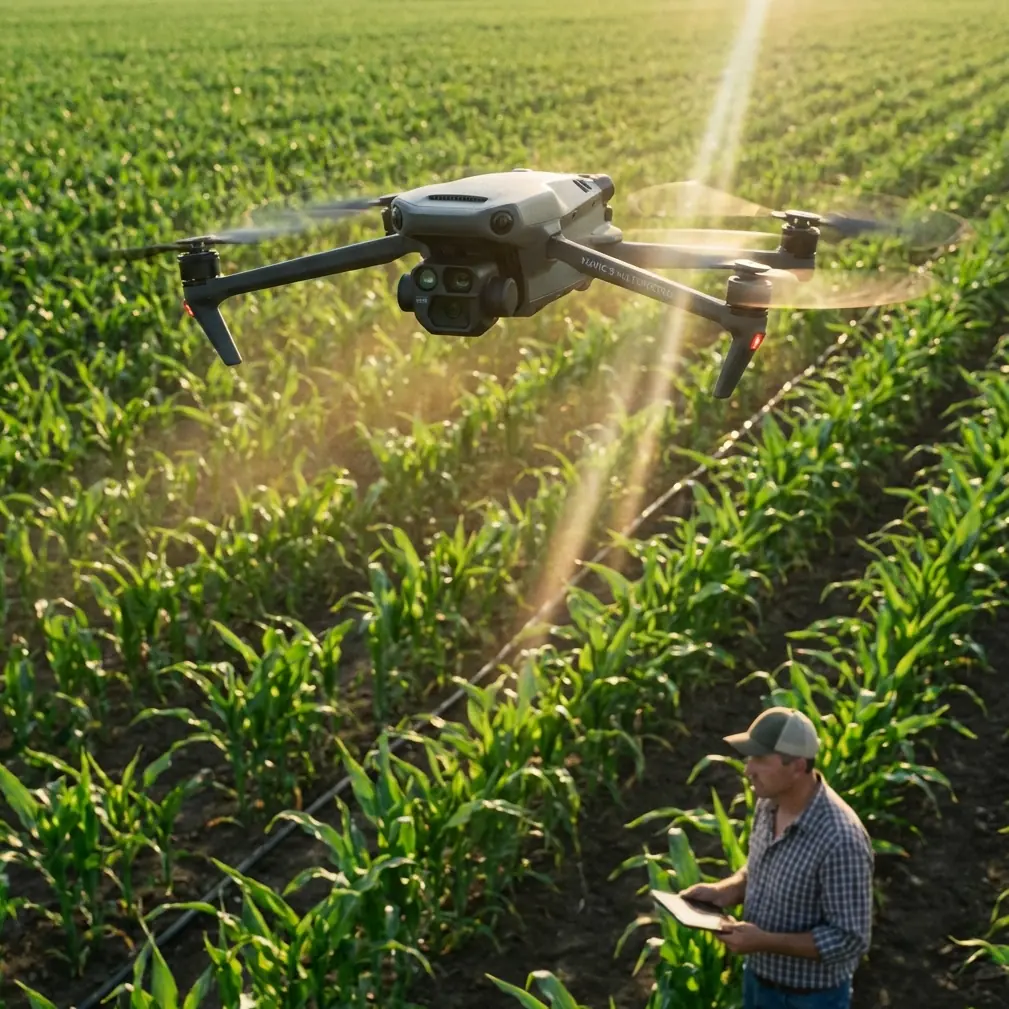
That is where the Mavic 3M becomes especially useful. Its value in wildlife monitoring is not just that it flies. It is that it can collect multispectral information in a way that helps researchers see habitat condition beyond a standard RGB image. For coastal work, that means better separation of stressed vegetation from healthy growth, cleaner comparisons between tidal-edge plant communities, and a more objective way to monitor change over time. The aircraft is often discussed in agriculture, but the same multispectral logic transfers well to ecological monitoring when the mission is carefully designed.
The real problem: coastal wildlife missions are technically hard and publicly sensitive
Many drone articles reduce fieldwork to a checklist. That misses the lived reality of coastal monitoring.
On one side, you have environmental complexity. Salt deposits can build on the aircraft body and sensor surfaces. Moisture and fine grit can interfere with reliable operation. Low-contrast ground features may affect image matching, and changing light over water can produce inconsistent captures if mission timing is sloppy. If you are depending on repeatable surveys, even small inconsistencies can erode the value of your dataset.
On the other side, you have social complexity. A drone over a sensitive site can trigger concern from wardens, local residents, or visitors who have seen stories about drones being used for contraband delivery. That BBC report about HMP Manchester is a reminder that irresponsible use shapes public perception well beyond the original incident. For a wildlife team, the response should not be defensive. It should be procedural. Document your purpose. Mark your operational area clearly. Brief any site staff. Keep flight logs clean and mission boundaries explicit.
The Mavic 3M fits this environment well, but only when it is treated as part of a monitoring system rather than as a flying camera.
Why multispectral matters in coastal habitats
Coastal wildlife monitoring often depends on the condition of vegetation as much as the presence of animals. Nesting success, feeding patterns, and habitat resilience are all tied to what is happening on the ground: saltmarsh vigor, dune stabilization, invasive spread, trampling pressure, tidal scarring, or freshwater stress in transition zones.
This is where a multispectral payload earns its place. Standard visible imagery can show surface appearance. Multispectral data can help reveal differences in plant response that are not obvious in ordinary photos. For ecologists, that means better trend detection across repeated flights, especially when a site is being monitored through seasonal changes.
Operationally, the significance is straightforward. If your Mavic 3M mission can reliably distinguish a stressed patch from a healthy one, field teams can focus boots-on-the-ground surveys where they matter most. That reduces unnecessary disturbance in sensitive areas. It also produces a stronger chain of evidence when habitat interventions are proposed.
The keyword many operators chase is “centimeter precision,” but precision is only useful if the survey is repeatable. In coastal monitoring, repeatability depends on mission timing, consistent altitude, stable overlap, and a strong RTK fix rate when the workflow requires precise georeferencing. If your fix quality drifts, your comparison between one survey date and the next can become less trustworthy, even if the images look sharp.
Start with a cleaning step, not a takeoff
The most underrated safety habit in coastal operations is a pre-flight cleaning routine.
It sounds minor. It is not.
Before powering up the Mavic 3M, inspect and clean the airframe, landing surfaces, and sensor windows. In marine environments, salt residue can accumulate quickly, even if the drone was stored carefully after the last sortie. Salt crystals and fine sand can affect moving parts, surface sealing, and optical clarity. A quick wipe with approved materials, attention to vent areas, and a check around sensor faces can prevent subtle failures that only appear once the aircraft is airborne.
This step also supports your safety narrative. When a team member watches you clean and inspect the aircraft before flight, it signals professionalism. When a site manager asks how you reduce risk, you can point to a repeatable protocol rather than vague assurances.
The context provided here mentions IPX6K, a durability cue often associated with more rugged enterprise platforms. Whether or not a field operator is working with equipment built to that exact ingress standard, the operational lesson still applies: environmental exposure matters, and coastal users should act as if salt, spray drift, and particulate contamination are always trying to shorten the life of the mission. “Spray drift” is usually discussed in crop operations, but the concept is useful in coastal flying too. Fine airborne moisture travels. It settles where you do not want it. Planning for that reality changes how you launch, recover, and maintain the aircraft.
A better mission design for wildlife work
The easiest mistake in coastal monitoring is to fly too much and think too little.
A stronger Mavic 3M workflow starts with the ecological question. Are you mapping vegetation stress around nesting areas? Tracking habitat fragmentation after storms? Comparing the health of marsh edges over a breeding season? Once the question is clear, the flight can be constrained around it.
That has two benefits.
First, it reduces disturbance. Wildlife missions should not look like broad, exploratory hovering over everything in sight. Use direct paths, avoid unnecessary loitering, and keep your survey geometry disciplined. Swath width matters here. A wider effective swath may improve efficiency, but only if it still delivers the ground detail and overlap your analysis requires. Chasing area coverage at the expense of interpretability is false economy.
Second, it improves data quality. Fixed survey parameters make repeated monitoring defensible. If a habitat manager asks whether a decline in plant vigor is real or just an artifact of changed flight settings, your answer should come from documented consistency. Same altitude. Similar sun angle window when possible. Comparable overlap. Stable ground control or RTK-supported positioning where the project requires it.
The phrase “nozzle calibration” from the context is clearly inherited from agricultural spraying workflows, and it does not directly apply to a Mavic 3M wildlife mission. But the underlying discipline does. In spraying, calibration is about making output predictable. In multispectral ecology, the equivalent is mission calibration: define your acquisition settings, environmental thresholds, and quality checks so every flight produces comparable output.
Trust is now part of flight planning
The HMP Manchester report is relevant in a second, deeper way.
It shows how drones can become part of a broader story about safety and control. For civilian conservation teams, that means lawful use is not enough by itself. You need visible signs of responsible use. In practical terms:
- Brief nearby stakeholders before launch.
- Use clear role assignments on site.
- Keep takeoff and recovery zones controlled.
- Log mission purpose and location precisely.
- Be prepared to explain what the sensor is collecting and why.
This is especially true in populated coastal corridors, where footpaths, marinas, roads, or adjacent facilities can put your team under informal scrutiny. A Mavic 3M used for habitat health assessment should look exactly like what it is: a scientific tool operated under discipline.
If your organization is building these procedures and wants to compare notes with experienced operators, one practical route is to message a field operations specialist before finalizing your next survey template.
RTK fix rate, data confidence, and why small errors become big ones
Serious habitat monitoring lives or dies on confidence in spatial alignment.
The Mavic 3M is often chosen because users need more than pretty maps. They need data they can compare over time. In that context, RTK fix rate becomes more than a technical metric. It is a proxy for how much confidence you can place in repeated boundaries, patch measurements, and change analysis. If your project involves shoreline vegetation retreat, intertidal edge movement, or restoration plots, inconsistent positioning can blur the difference between ecological change and survey noise.
This is where many teams overspend effort in the wrong place. They debate software outputs endlessly but underinvest in field discipline. Better results usually come from boring habits done well: antenna setup, launch-site selection with a clear sky view, mission timing, and post-flight validation.
And because coastal work often involves reflective surfaces and variable topography, you should not assume a clean result just because the aircraft completed the route. Inspect representative images before leaving the site. Check alignment indicators. Verify that the intended habitat features are actually legible. A ten-minute review in the field can save a wasted survey day.
Disturbance reduction is the metric that deserves more attention
People often ask how the Mavic 3M compares with other platforms in terms of payload utility, precision, or mapping speed. Those are valid questions. For coastal wildlife teams, though, a more useful benchmark is this: does the platform help you learn more while disturbing less?
Used well, the answer can be yes.
Multispectral analysis can reduce the need for repeated ground intrusion into fragile habitat. Structured survey plans can limit flight time over nesting or feeding zones. Reliable repeatability means fewer “just in case” reflights. The result is not only better science but a better conservation footprint.
That is the real solution to the problem outlined at the start. Public concern around drones will not disappear. Misuse stories will continue to shape perception. The answer for legitimate operators is not louder marketing or broader claims. It is tighter protocol, cleaner traceability, and missions that clearly serve a civilian purpose with minimal disruption.
What a mature coastal Mavic 3M workflow looks like
A strong operation usually includes these elements woven together rather than treated separately:
A documented pre-flight cleaning and inspection step tailored for salt exposure.
A survey design built around one ecological question, not a vague desire to “collect more data.”
Multispectral capture settings chosen for repeatability across dates.
Attention to RTK fix rate and geospatial consistency when the project requires comparison over time.
Controlled swath width and overlap decisions that balance area efficiency with habitat detail.
Post-flight review before leaving the site.
A stakeholder briefing process that makes lawful civilian intent obvious.
None of that is glamorous. That is why it works.
For Dr. Sarah Chen’s style of academic fieldwork, this approach is especially effective because it turns the Mavic 3M from a device into a method. And in environmental monitoring, method is what survives peer review, management scrutiny, and public questions.
The coastal edge is a difficult place to operate. It rewards careful teams and exposes careless ones quickly. If your objective is credible wildlife monitoring, the Mavic 3M can be an excellent fit. Just do not treat it as a shortcut. Treat it as an instrument that earns trust one clean, repeatable mission at a time.
Ready for your own Mavic 3M? Contact our team for expert consultation.