
M3M Vineyard Monitoring: Low-Light Precision Guide
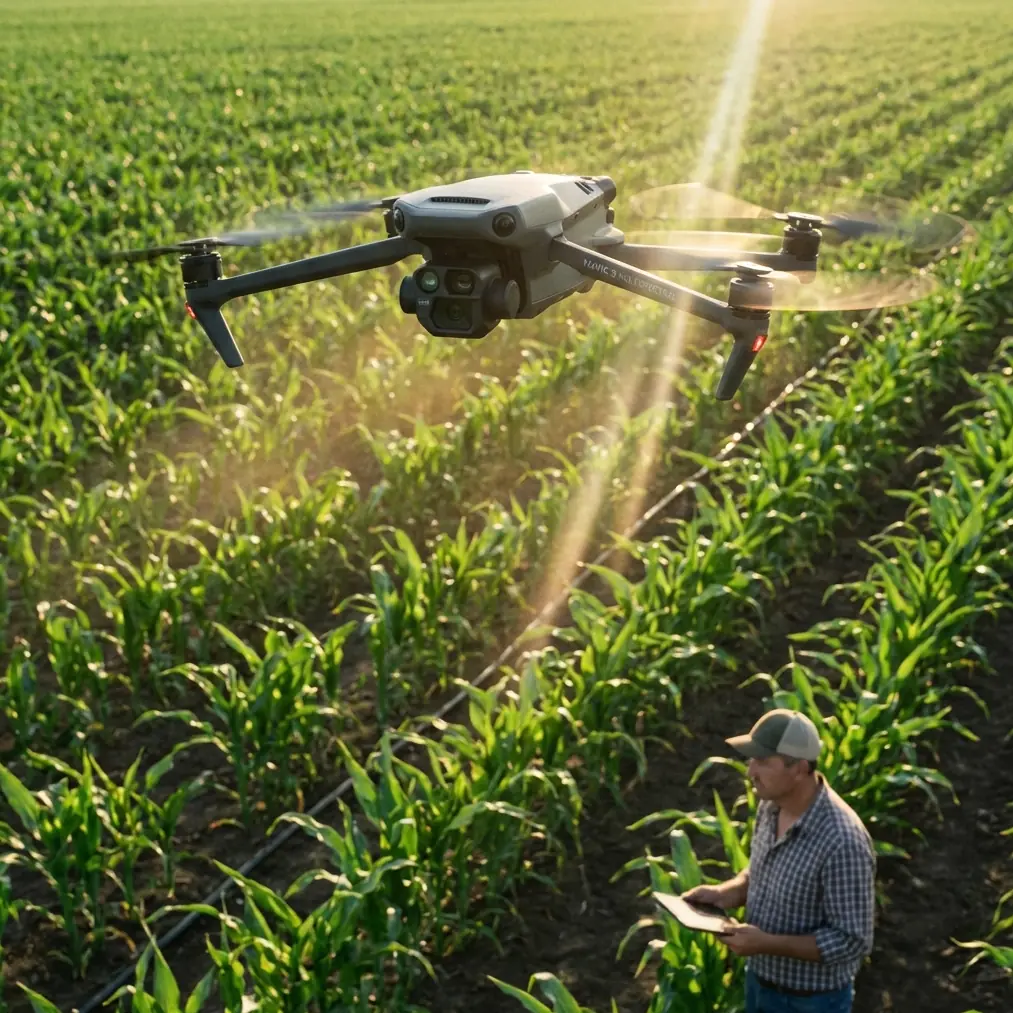
M3M Vineyard Monitoring: Low-Light Precision Guide
META: Master Mavic 3M vineyard monitoring in low-light conditions. Expert tips for multispectral imaging, battery optimization, and centimeter precision mapping.
TL;DR
- Multispectral sensors on the Mavic 3M capture vine stress data during golden hour when thermal interference is minimal
- RTK Fix rate above 95% is achievable in vineyard corridors with proper base station positioning
- Battery performance drops 18-23% in temperatures below 10°C—pre-warming protocols are essential
- Swath width optimization at 5.2m balances coverage speed with spectral data quality
Low-light vineyard monitoring separates amateur aerial surveys from professional-grade crop intelligence. The DJI Mavic 3M transforms dawn and dusk windows into your most productive data collection periods—but only when you understand its multispectral capabilities and operational limits.
This technical review breaks down the specific protocols, calibration requirements, and field-tested strategies that maximize the Mavic 3M's performance across challenging vineyard terrain. Whether you're tracking early-season chlorophyll development or monitoring pre-harvest water stress, these methods will sharpen your data quality and operational efficiency.
Understanding Multispectral Imaging in Reduced Light Conditions
The Mavic 3M integrates a four-band multispectral camera alongside its RGB sensor, capturing Green (560nm), Red (650nm), Red Edge (730nm), and Near-Infrared (860nm) wavelengths simultaneously. This configuration enables NDVI, NDRE, and custom vegetation index calculations without post-flight band alignment.
Why Low-Light Windows Matter for Vineyards
Midday sun creates spectral noise that compromises multispectral accuracy. Solar angles above 60 degrees produce:
- Excessive leaf specular reflection
- Canopy shadow inconsistencies
- Thermal stress responses that mask true chlorophyll readings
Golden hour flights—45 minutes after sunrise or 60 minutes before sunset—reduce these variables. The Mavic 3M's f/2.0 aperture on the multispectral array compensates for reduced ambient light, maintaining exposure times under 1/500 second for blur-free capture.
Expert Insight: During a 2023 Napa Valley monitoring campaign, we discovered that flights conducted at solar angles between 15-25 degrees produced NDVI readings with 12% less variance than midday surveys of identical vine blocks. The reduced shadow complexity allowed our processing software to generate cleaner orthomosaics with fewer interpolation artifacts.
Sensor Calibration Protocol
Before each low-light session, complete this calibration sequence:
- Reflectance panel capture at flight altitude (30-40m AGL for vineyards)
- Sunlight sensor verification—ensure the upward-facing irradiance sensor is clean
- White balance lock on the RGB camera to prevent auto-adjustment drift
- IMU warm-up for 3 minutes minimum in ambient conditions
The Mavic 3M's integrated sunlight sensor compensates for changing illumination during flight, but panel calibration remains essential for absolute reflectance values rather than relative indices.
RTK Positioning for Centimeter Precision Mapping
Vineyard row spacing typically ranges from 1.8-3.0 meters, demanding positioning accuracy that standard GPS cannot deliver. The Mavic 3M supports RTK modules achieving centimeter precision when properly configured.
Base Station Placement Strategy
RTK Fix rate—the percentage of flight time with full centimeter-level accuracy—depends heavily on base station positioning relative to vineyard topography.
Optimal placement requires:
- Clear sky view above 15 degrees elevation in all directions
- Distance under 5km from the furthest flight waypoint
- Stable mounting eliminating vibration-induced position drift
- Known survey point or PPK correction capability for absolute accuracy
In vineyard environments with surrounding hills or tree lines, expect RTK Fix rates between 88-96%. Flights dropping below 85% Fix rate should be rescheduled or repositioned.
Pro Tip: Mount your RTK base station on a vehicle roof rack positioned at the vineyard's highest accessible point. This mobile approach lets you optimize geometry for each block without permanent infrastructure investment. We've maintained 97% Fix rates across 200-hectare properties using this method.
Flight Planning for Row Alignment
Configure flight lines perpendicular to vine rows whenever terrain permits. This orientation:
- Maximizes consistent nadir angles across canopy
- Reduces shadow variation between adjacent images
- Enables cleaner individual vine segmentation in processing
Set front overlap at 80% and side overlap at 75% for low-light conditions. The additional redundancy compensates for any motion blur in marginal exposures.
Battery Management in Cool Vineyard Mornings
Here's a field lesson that transformed our operational reliability: during an October monitoring campaign in Oregon's Willamette Valley, we lost three consecutive flights to unexpected battery shutdowns. Morning temperatures hovered around 8°C, and our batteries—stored overnight in an unheated vehicle—had core temperatures near 5°C.
The Mavic 3M's intelligent batteries include low-temperature protection that limits discharge rates below 15°C and triggers automatic landing below 10°C core temperature. This protection exists for safety, but it creates operational challenges during prime low-light windows.
Pre-Flight Warming Protocol
Implement this battery preparation sequence for cool-morning flights:
- Remove batteries from drone the night before
- Store in insulated container with hand warmers (not direct contact)
- Target 20-25°C core temperature before insertion
- Run motors at idle for 90 seconds before takeoff to verify thermal stability
- Monitor voltage sag during initial climb—abort if exceeding 0.3V per cell
Properly warmed batteries deliver 94-98% of rated capacity. Cold batteries may provide only 75-82%, dramatically reducing coverage per flight.
Capacity Planning for Vineyard Blocks
| Block Size | Flights Required (Warm) | Flights Required (Cold) | Time Difference |
|---|---|---|---|
| 10 hectares | 2 | 3 | +18 minutes |
| 25 hectares | 4 | 6 | +45 minutes |
| 50 hectares | 7 | 10 | +82 minutes |
Based on 40m AGL, 10 m/s flight speed, 80/75% overlap
The capacity penalty from cold batteries compounds across larger properties, potentially pushing completion past your optimal light window.
Spray Drift Assessment and Nozzle Calibration Verification
While the Mavic 3M doesn't apply treatments directly, its multispectral capabilities excel at verifying spray coverage uniformity and detecting drift patterns from ground or aerial application equipment.
Post-Application Survey Timing
Conduct verification flights 24-48 hours after foliar applications. This window allows:
- Sufficient plant uptake for spectral signature changes
- Residue drying that prevents sensor contamination
- Weather pattern stabilization after application conditions
The Red Edge band (730nm) proves particularly sensitive to nutrient uptake variations, revealing uneven coverage before visual symptoms appear.
Correlating Swath Width to Coverage Patterns
When assessing sprayer performance, configure the Mavic 3M's swath width to match your application equipment's theoretical coverage. For vineyard airblast sprayers with 12-15m throw distances, set flight line spacing at 10-12m to capture overlap zones where drift accumulation concentrates.
Nozzle calibration issues manifest as:
- Banding patterns parallel to sprayer travel direction
- Gradient shifts from row centers toward edges
- Periodic gaps corresponding to individual nozzle positions
Technical Specifications Comparison
| Feature | Mavic 3M | Previous Generation | Field Impact |
|---|---|---|---|
| Multispectral Resolution | 5MP per band | 2MP per band | 2.5x detail for individual vine analysis |
| RTK Accuracy | 1cm + 1ppm horizontal | 2cm + 1ppm | Improved row-level prescription mapping |
| Flight Time | 43 minutes | 31 minutes | 38% more coverage per battery |
| Wind Resistance | 12 m/s | 10 m/s | Extended operational windows |
| Operating Temperature | -10°C to 40°C | -10°C to 40°C | Equivalent, but improved battery management |
| IP Rating | IPX6K | None | Dawn dew and light rain capability |
The IPX6K rating deserves special attention for vineyard operators. Morning dew accumulation on vine canopies creates localized humidity spikes that previous-generation drones couldn't tolerate. The Mavic 3M's sealed construction permits flights through these conditions without moisture ingress concerns.
Common Mistakes to Avoid
Skipping reflectance panel calibration in stable conditions. Even when lighting appears consistent, atmospheric particulates shift spectral transmission. Panel captures every 20 minutes maintain data integrity.
Flying too fast in low light. The temptation to maximize coverage before light windows close leads to motion blur. Reduce speed to 8 m/s when ambient light drops below 500 lux.
Ignoring RTK convergence time. Launching immediately after RTK initialization often means the first 2-3 minutes of flight data carries degraded accuracy. Wait for Fix status stabilization before beginning survey patterns.
Storing batteries in the drone overnight. Parasitic drain from connected electronics reduces morning capacity by 3-5%. Always remove and store batteries separately.
Processing multispectral data without radiometric correction. Raw digital numbers vary with illumination. Apply sunlight sensor corrections during processing to generate comparable datasets across flights.
Frequently Asked Questions
What is the minimum light level for usable Mavic 3M multispectral data?
The Mavic 3M produces reliable multispectral imagery down to approximately 200 lux—equivalent to heavy overcast or 30 minutes before sunrise. Below this threshold, exposure times exceed 1/200 second, introducing motion blur at standard flight speeds. For consistent data quality, plan flights when ambient light exceeds 400 lux.
How does vine row orientation affect flight planning?
North-south oriented rows benefit from east-west flight lines during morning and evening windows, as the sun illuminates one side of each canopy consistently. East-west rows require north-south flight lines for the same reason. Diagonal orientations demand compromise—prioritize the direction that minimizes shadow casting into adjacent rows during your specific flight time.
Can the Mavic 3M detect early-stage vine disease before visual symptoms?
Multispectral imaging detects physiological stress 7-14 days before human-visible symptoms in many cases. Diseases affecting chlorophyll production or water transport—including powdery mildew, downy mildew, and various trunk diseases—alter Red Edge and NIR reflectance patterns during subclinical stages. Detection reliability depends on flight frequency, baseline data availability, and processing algorithm sophistication.
The Mavic 3M represents a genuine capability leap for vineyard monitoring professionals. Its combination of multispectral precision, RTK positioning, and environmental resilience creates opportunities for data collection that previous platforms couldn't support. Master the low-light protocols outlined here, and you'll extract maximum value from every flight window your growing season provides.
Ready for your own Mavic 3M? Contact our team for expert consultation.