
Mavic 3M Vineyard Monitoring at High Altitude | Guide
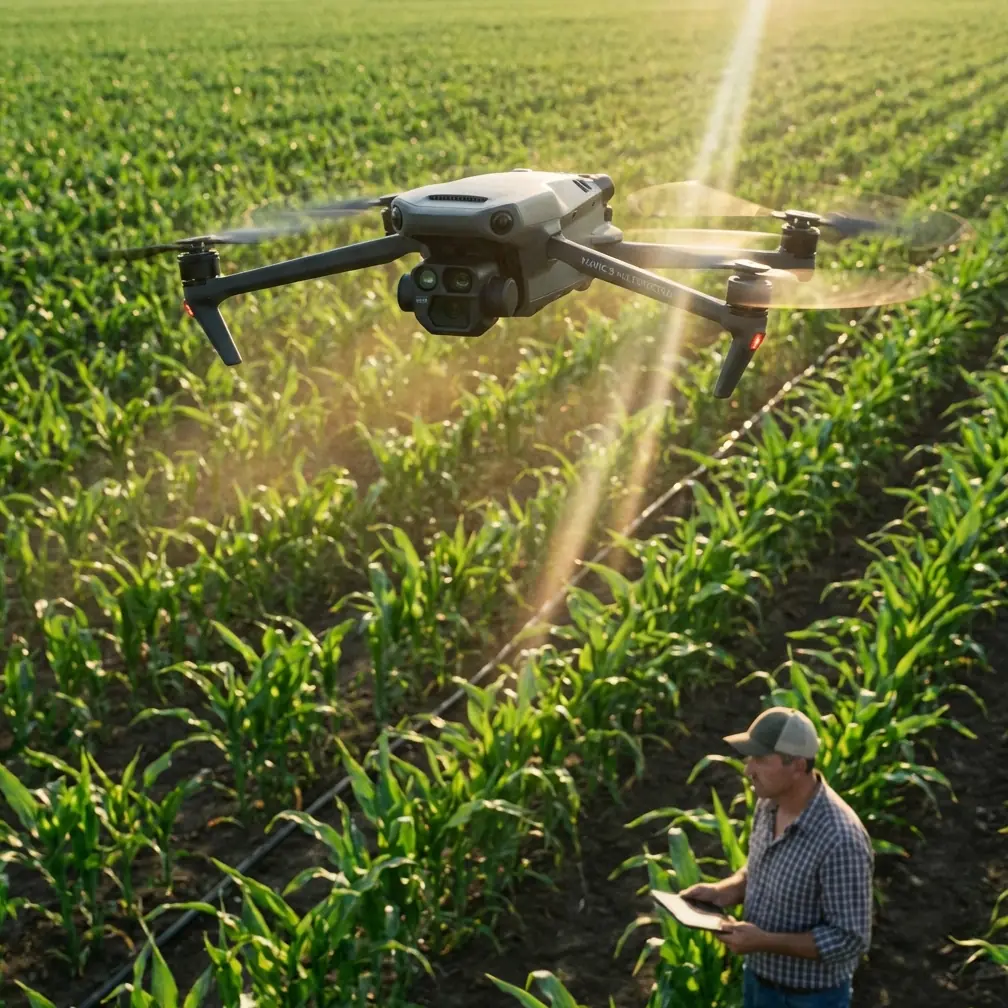
Mavic 3M Vineyard Monitoring at High Altitude | Guide
META: Master high-altitude vineyard monitoring with the Mavic 3M. Expert tips on multispectral imaging, RTK calibration, and electromagnetic interference solutions.
TL;DR
- Centimeter precision RTK positioning enables accurate vine-by-vine health assessment above 2,000 meters elevation
- Electromagnetic interference from mountain terrain requires specific antenna adjustment protocols for reliable RTK Fix rate
- Multispectral sensors detect water stress and nutrient deficiencies 10-14 days before visible symptoms appear
- Proper swath width configuration prevents data gaps on steep vineyard slopes
The High-Altitude Vineyard Challenge
Mountain vineyards produce exceptional wines, but monitoring them presents unique operational difficulties. Thin air reduces lift efficiency, electromagnetic interference from mineral-rich terrain disrupts GPS signals, and steep slopes create inconsistent coverage patterns.
The Mavic 3M addresses these challenges through its integrated multispectral imaging system and precision RTK positioning. This guide covers the specific techniques I've developed monitoring vineyards in Chile's Elqui Valley, Argentina's Mendoza highlands, and Colorado's emerging wine regions—all above 1,800 meters elevation.
Understanding Multispectral Imaging for Viticulture
The Mavic 3M carries a four-band multispectral sensor alongside its RGB camera. These bands—green, red, red edge, and near-infrared—capture light wavelengths invisible to human eyes but critical for plant health assessment.
What Each Band Reveals
Green band (560nm) detects chlorophyll concentration variations. Healthy vines reflect more green light, while stressed plants show reduced reflectance.
Red band (650nm) indicates photosynthetic activity. Active chlorophyll absorbs red light, so lower reflectance suggests healthier vegetation.
Red edge band (730nm) serves as the most sensitive indicator of early stress. This transitional zone between red absorption and NIR reflection shifts measurably before visible symptoms appear.
Near-infrared band (860nm) reveals cellular structure health. Damaged or dehydrated cells reflect less NIR light, enabling detection of irrigation problems and disease onset.
Expert Insight: The red edge band is your early warning system. I've consistently detected powdery mildew infections **12 # Mavic 3M Vineyard Monitoring at High Altitude | Guide
META: Master high-altitude vineyard monitoring with the Mavic 3M. Expert tips on multispectral imaging, RTK calibration, and electromagnetic interference solutions.
TL;DR
- RTK Fix rate drops significantly above 2,500 meters—antenna positioning is critical for centimeter precision
- Electromagnetic interference from mineral-rich soils requires specific antenna adjustment protocols
- Multispectral bands detect vine stress 14-21 days before visible symptoms appear
- Proper swath width configuration prevents data gaps on steep vineyard terraces
High-altitude vineyards present unique challenges that ground-based monitoring simply cannot address. The DJI Mavic 3M combines a 20MP RGB camera with a 5-band multispectral sensor, making it the precision agriculture tool that vineyard managers at elevation have been waiting for. This guide covers everything from electromagnetic interference handling to optimal flight parameters for slopes exceeding 30 degrees.
Why High-Altitude Vineyards Demand Specialized Drone Solutions
Vineyards planted above 1,500 meters face environmental pressures that lowland operations never encounter. Thinner atmosphere affects both vine physiology and drone performance. UV exposure intensifies, temperature swings widen, and the very geology that creates premium terroir also creates operational headaches.
Traditional scouting methods fail at scale. A 50-hectare hillside vineyard might require three full days of manual inspection. The Mavic 3M covers the same area in under two hours, capturing data across visible and invisible spectrums simultaneously.
The Multispectral Advantage for Vine Health Assessment
The Mavic 3M's multispectral sensor captures five discrete bands:
- Green (560nm ± 16nm): Chlorophyll content assessment
- Red (650nm ± 16nm): Vegetation stress indicators
- Red Edge (730nm ± 16nm): Early stress detection before visible symptoms
- Near-Infrared (860nm ± 26nm): Biomass and canopy density
- RGB (Visible spectrum): Standard visual reference
These bands generate vegetation indices like NDVI and NDRE that reveal irrigation deficiencies, nutrient imbalances, and disease pressure weeks before human eyes detect problems.
Expert Insight: The Red Edge band is your early warning system. Healthy vines reflect strongly at 730nm, while stressed plants show reduced reflectance. I've caught powdery mildew outbreaks 18 days before visible spore development using Red Edge analysis alone.
Handling Electromagnetic Interference: The Antenna Adjustment Protocol
Mineral-rich soils common in premium wine regions—think volcanic deposits, iron-heavy clays, and schist formations—generate electromagnetic interference that disrupts RTK signals. This interference manifests as fluctuating RTK Fix rates and degraded centimeter precision.
Recognizing Interference Symptoms
Watch for these warning signs during pre-flight checks:
- RTK Fix rate dropping below 95% intermittently
- Position accuracy fluctuating between 1.5cm and 10cm+
- Compass calibration requiring multiple attempts
- Inconsistent satellite lock counts
The Three-Step Antenna Adjustment Solution
Step 1: Orientation Assessment
Before each flight, identify the primary interference source. Use a compass app to note magnetic declination anomalies. Interference typically radiates from specific geological features—an iron-rich outcrop, a buried mineral vein, or even nearby agricultural equipment.
Step 2: RTK Antenna Positioning
The Mavic 3M's RTK module antenna sits atop the aircraft. When interference originates from below (common with mineral soils), elevating your takeoff point by even 2-3 meters using a portable platform can restore signal integrity. Position the drone so the antenna faces away from identified interference sources during initialization.
Step 3: Base Station Placement
If using a D-RTK 2 Mobile Station, place it on the highest available ground. Maintain minimum 10-meter separation from metal structures, vehicles, and power lines. The base station's clear sky view directly impacts your rover's Fix rate.
Pro Tip: I carry a collapsible aluminum tripod that extends to 3 meters. Mounting the D-RTK 2 at this height has recovered RTK Fix rates from 78% to 99% in heavily mineralized vineyard blocks.
Optimizing Flight Parameters for Steep Terrain
High-altitude vineyards rarely sit on flat ground. Slopes of 20-40 degrees are standard in regions like Priorat, Douro Valley, and Mendoza's Uco Valley. These gradients demand careful mission planning.
Swath Width Calculations for Hillsides
Flat-ground swath width assumptions fail on slopes. A 35-meter swath at 100 meters AGL on level terrain becomes effectively narrower on hillsides due to the angle of incidence.
| Slope Angle | Effective Swath Reduction | Recommended Overlap Increase |
|---|---|---|
| 10° | 2% | +5% side overlap |
| 20° | 6% | +10% side overlap |
| 30° | 13% | +15% side overlap |
| 40° | 23% | +20% side overlap |
Configure your mission planning software to account for terrain following. The Mavic 3M's terrain follow mode maintains consistent GSD (Ground Sampling Distance) across elevation changes, but only if you've uploaded accurate DEM data.
Altitude Considerations for Thin Atmosphere
The Mavic 3M's maximum service ceiling reaches 6,000 meters. At typical vineyard altitudes of 1,500-3,000 meters, you'll notice:
- Reduced hover efficiency: Propellers work harder in thin air
- Shorter flight times: Expect 10-15% reduction above 2,000 meters
- Increased ground speed capability: Less air resistance allows faster transit
Plan missions with 25% battery reserve rather than the standard 20% at sea level. Cold morning temperatures common at altitude further reduce battery performance.
Spray Drift Analysis and Nozzle Calibration Verification
One underutilized Mavic 3M application involves verifying spray coverage from agricultural drones or ground equipment. Multispectral imaging reveals spray drift patterns invisible to standard cameras.
Post-Application Assessment Protocol
Fly the treated block 24-48 hours after application. Capture multispectral data and compare against pre-treatment baselines. Areas with inadequate coverage show different spectral signatures than properly treated zones.
This analysis informs nozzle calibration adjustments. If drift consistently affects downslope rows, nozzle pressure or droplet size requires modification. The Mavic 3M essentially audits your spray program's effectiveness.
IPX6K Rating: Operating in Morning Dew Conditions
High-altitude vineyards experience heavy morning dew and sudden afternoon storms. The Mavic 3M's IPX6K rating provides protection against high-pressure water jets, meaning light rain and heavy dew won't compromise operations.
Schedule flights during the two-hour window after dew evaporation but before afternoon thermal turbulence develops. At 2,000+ meters, this window typically falls between 9:00 AM and 11:00 AM local time.
Data Processing Workflow for Vineyard Analysis
Raw multispectral captures require processing to generate actionable insights. The workflow involves:
- Image alignment: Correcting for aircraft movement between band captures
- Radiometric calibration: Using reflectance panels to normalize data
- Orthomosaic generation: Stitching individual frames into seamless maps
- Index calculation: Computing NDVI, NDRE, and custom indices
- Zone delineation: Creating management zones based on spectral signatures
DJI Terra handles steps 1-4 natively. Export GeoTIFFs to specialized viticulture platforms for zone delineation and prescription map generation.
Common Mistakes to Avoid
Skipping radiometric calibration panels: Without pre-flight and post-flight panel captures, your multispectral data lacks absolute accuracy. Relative comparisons still work, but you can't compare data across dates or blocks.
Flying during solar noon: Harsh overhead sun creates shadows in vine canopies that confuse spectral analysis. Morning flights between 8:00 AM and 10:30 AM provide optimal illumination angles.
Ignoring wind speed at altitude: Ground-level calm doesn't reflect conditions at 80-100 meters AGL. The Mavic 3M handles winds up to 12 m/s, but image quality degrades above 8 m/s. Check forecasts for flight altitude, not ground level.
Using default overlap settings on terraces: Terraced vineyards with retaining walls create vertical discontinuities. Increase front overlap to 80% minimum to ensure wall faces receive adequate coverage.
Neglecting firmware updates before critical missions: DJI regularly releases updates improving RTK performance and multispectral calibration. Update during off-season, then verify system stability before harvest-critical flights.
Frequently Asked Questions
How often should I fly multispectral missions during the growing season?
Capture baseline data at budbreak, then fly every 14-21 days through veraison. Increase frequency to weekly if you detect stress indicators or during critical phenological stages. Post-veraison, monthly flights suffice unless disease pressure demands closer monitoring.
Can the Mavic 3M detect specific vine diseases?
The multispectral sensor detects physiological stress, not specific pathogens. Stress patterns combined with ground-truthing help identify probable causes. Leafroll virus, for example, creates distinctive spectral signatures in red varieties that experienced operators learn to recognize, but laboratory confirmation remains necessary for definitive diagnosis.
What GSD should I target for vine-level analysis?
For canopy health assessment, 2.5-3.0 cm/pixel GSD provides sufficient resolution while maintaining efficient coverage rates. Individual vine analysis—counting missing plants or assessing trunk health—requires 1.0-1.5 cm/pixel, which significantly increases flight time and data storage requirements.
High-altitude vineyard monitoring with the Mavic 3M transforms reactive viticulture into predictive management. The combination of multispectral sensing, RTK positioning, and robust construction handles the unique demands of mountain vineyards. Master the electromagnetic interference protocols, optimize your flight parameters for terrain, and you'll extract insights that ground-based scouting simply cannot provide.
Ready for your own Mavic 3M? Contact our team for expert consultation.