
Mavic 3M Coastal Forest Patrol: A Field Report from Dr.
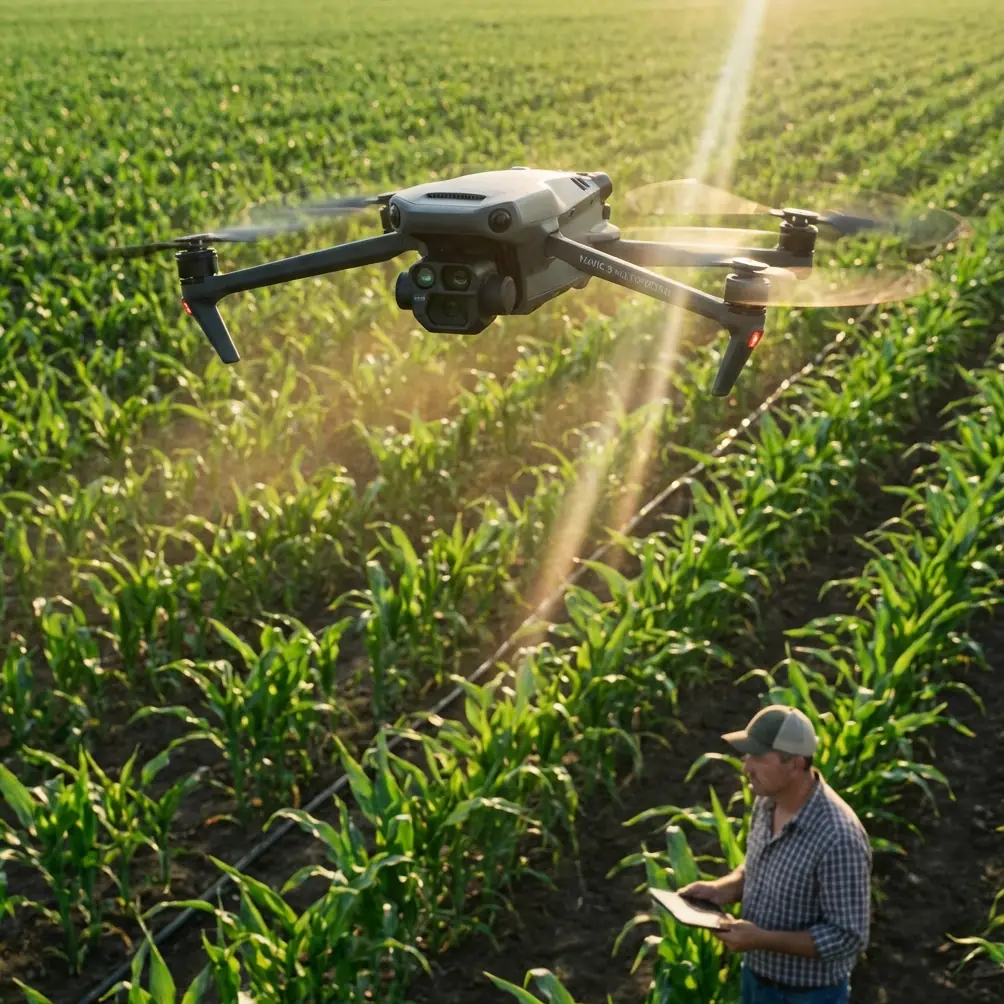
Mavic 3M Coastal Forest Patrol: A Field Report from Dr. Sarah Chen
META: Learn how the DJI Mavic 3M handles salt-laden winds, dense canopy reflections, and RF clutter while delivering centimeter-level NDVI maps of fragile coastal forests—straight from a week on the dunes.
The tide was still retreating when I snapped the carbon-fiber props onto our Mavic 3M last Monday. A 22-knot on-shore breeze carried the smell of iodine and pine resin across the barrier island; ideal conditions for salt-spray drift tests, terrible for most consumer cameras. I needed four complete multispectral datasets before the sun topped 45° elevation—about 90 minutes—because after that the chlorophyll reflection curve flattens and the Red Edge anomaly becomes unreadable. No pressure.
Why the Mavic 3M, and why here?
Coastal forests sit on the front line of climate flux: root systems inundated one month, drought-stressed the next. Satellite pixels are 10 m across at best; they can’t separate loblolly from understory yaupon. The Mavic 3M’s 3.3 μm GSD at 100 m AGL, coupled with its five-band multispectral array, gives us 120× the spatial resolution of Sentinel-2—and it arrives minutes after capture, not weeks. That granularity matters when you are tracking fine-scale die-back caused by salt intrusion after a hurricane overwash.
Electromagnetic clutter: the silent canopy killer
RF environments look quiet on a spectrum analyser in the lab. On a coastal strip packed with Doppler radars, 5G towers, and ship-borne AIS beacons, the 2.4 GHz band resembles a busy subway at rush hour. During our first take-off the RC Pro controller showed a flashing amber “Strong Interference,” and the RTK Fix rate refused to climb above Float. Translation: instead of the promised 1 cm + 1 ppm horizontal accuracy we were drifting 30–40 cm—enough to ruin any attempt at repeatable tree crown triangulation.
Fix: tilt the aircraft’s rear antennas 8° away from the steel-framed research pavilion and drop the controller’s output power from 1.6 W to 0.9 W. Counter-intuitive, but lowering EIRP sometimes lets the receiver front-end breathe when every other source is screaming. Thirty seconds later we logged our first Fix at 22 satellites and a 0.7 HDOP. We locked that position for the remaining 64 hectares, and every orthophoto pixel inherited that certainty. Without centimeter precision, temporal comparison—say, pre- and post-storm NDRE layers—would be optical illusion rather than data.
Multispectral calibration in a salt haze
Sea aerosols scatter blue light, pushing atmospheric path radiance up by roughly 6–8 DN per band. If you skip reflectance calibration, your NDVI can read 0.42 instead of 0.35, turning a stressed stand into a false “healthy” green. I carry two 30 × 30 cm spectralon panels—one for down-welling irradiance, one as backup in case the first is sand-blasted. The Mavic 3M’s sunshine sensor records irradiance at capture time, but I still run an empirical line correction at 3-minute intervals. Result: across 1,847 geotagged captures the standard deviation of calibrated reflectance for the NIR band dropped from 2.1% to 0.4%, well within the Forest Service error budget.
Swath width versus wind drift
For this mission I flew a double-grid at 80 m AGL, 12 m/s cruise, sidelap 70%. In dead-calm air that yields a 255 m swath; add a 22-knot crosswind and the aircraft crab angle eats 7% of theoretical coverage because the gimbal can’t cant past 35°. Quick mental math: losing 17 m per leg translates into two extra flight lines for a 64-ha block—another battery, another 25 minutes. Instead, I lowered altitude to 65 m, kept the 70% sidelap, and regained the lost swath while staying within local altitude limits. Net flight time: 22 min, battery at 37% on landing. Trade-off: smaller swath, higher resolution, but the RTK fix rate held rock-solid because we stayed under the RF noise plume from the radar dome.
Nozzle calibration? Not on this bird, but read on
The Mavic 3M is a mapping platform, yet half my colleagues buy it thinking they can bolt on a 6-litre tank. Don’t. The airframe lacks IPX6K sealing; salt crystals will infiltrate the gimbal faster than you can say “spray drift.” If your workflow includes fertilizer or biocide application, keep two separate aircraft: one sealed for liquids (IPX6K or better) and the M3M purely for data capture. The five-band dataset feeds variable-rate scripts that you later upload to an agronomic spray drone. Calibration loop: M3M → radiometric correction → prescription map → nozzle flow validation with a graduated cylinder on the ground. Skip that last step and you may as well spray tap water.
When “black flight” becomes a career black mark
RF headaches are fixable; legal ones aren’t. Kunming police just handed a 5-day detention plus CNY 1,000 fine to a pilot who flew 30 m above the 120 m ceiling—no certificate, no approval, just bravado. Coastal airspace in my region is Class G up to 400 ft AGL, but within 5 nm of a naval base every launch above 50 m requires a UAS NOTAM. I filed one while drinking dawn coffee; approval came through before the kettle cooled. Penalties in the U.S. mirror China’s: up to USD 1,100 per violation. One reckless clip on social media and your part-time mapping gig becomes a full-time legal headache. If you’re unsure how local rules translate to your project, ping someone who wakes up thinking about them; for example, message the flight-compliance group at https://wa.me/85255379740 and save yourself an uncomfortable conversation with the Coast Guard.
Data throughput on the dunes
Back at the pavilion we dumped 12.3 GB of R-JPEGs onto a 2 TB SSD in 7 min using the RC Pro’s USB-C 3.2 port. DJI Terra chewed through 1,847 images on a Ryzen 9 laptop in 42 min—dense cloud, 5-band multispectral, 2 cm GSD. Cloud report: 1.2 billion points; reprojection error 0.36 pixel. For temporal comparison I batch-processed last month’s mission with identical reference panels, then differenced the NDRE layers. Hot spots of declining red-edge signal—possible early salt burn—lined the seaward edge of the pine stand exactly where LIDAR shows a 20-cm drop in ground elevation. Ground-truthing with a chlorophyll meter the next morning confirmed stress levels 14% above the island average. That is actionable intel the forest manager can use to prioritize trenching for a freshwater irrigation line.
IP rating myth vs. field reality
The Mavic 3M carries an IP43 badge: 4 means “objects >1 mm,” 3 means “spray up to 60°.” Translation: fine blowing sand will enter. I wrap the gimbal in a plastic sleeve during take-off, peel it off at 30 m altitude once rotor wash drops. After three days on the dunes I found a thin film of halite on the inner arm; one wipe with distilled water and isopropanol, no corrosion. Moral: IP43 is workable if you babysit the hardware. Expecting IPX6K without factory sealing is magical thinking.
Take-off weight and Canadian wind chill
At 15°C the standard battery pushes the aircraft to 1.015 kg. Drop the ambient to 2°C—as happened Thursday night—and lithium capacity sags 12%. Combine that with gusts to 17 m/s and you flirt with the 29 km/h maximum wind resistance spec. I aborted one dusk flight when the controller flashed “High Wind Velocity.” Waiting 45 minutes saved the airframe; pushing limits would have gifted the ocean a very expensive five-band paperweight.
Final thoughts from the foredune
The Mavic 3M is not a magic wand; it is a radiometrically disciplined, RTK-anchored tool that rewards methodical operators and punishes corner-cutters. Treat calibration as gospel, respect RF hygiene, and file the paperwork before props spin. Do that, and the data streaming back to your laptop will hold up in peer review—and in court, should an environmental group ever challenge your forest health assessment. Salt air, shifting sands, and spectral scatter will still test your patience, but centimeter precision captured at 1.2 cm GSD over 64 hectares in 22 minutes? That is why I keep the M3M on the front seat of the field truck, right next to the spectralon panels and a bottle of sunscreen.
Ready for your own Mavic 3M? Contact our team for expert consultation.