
Forest Monitoring Guide: Mavic 3M Mountain Excellence
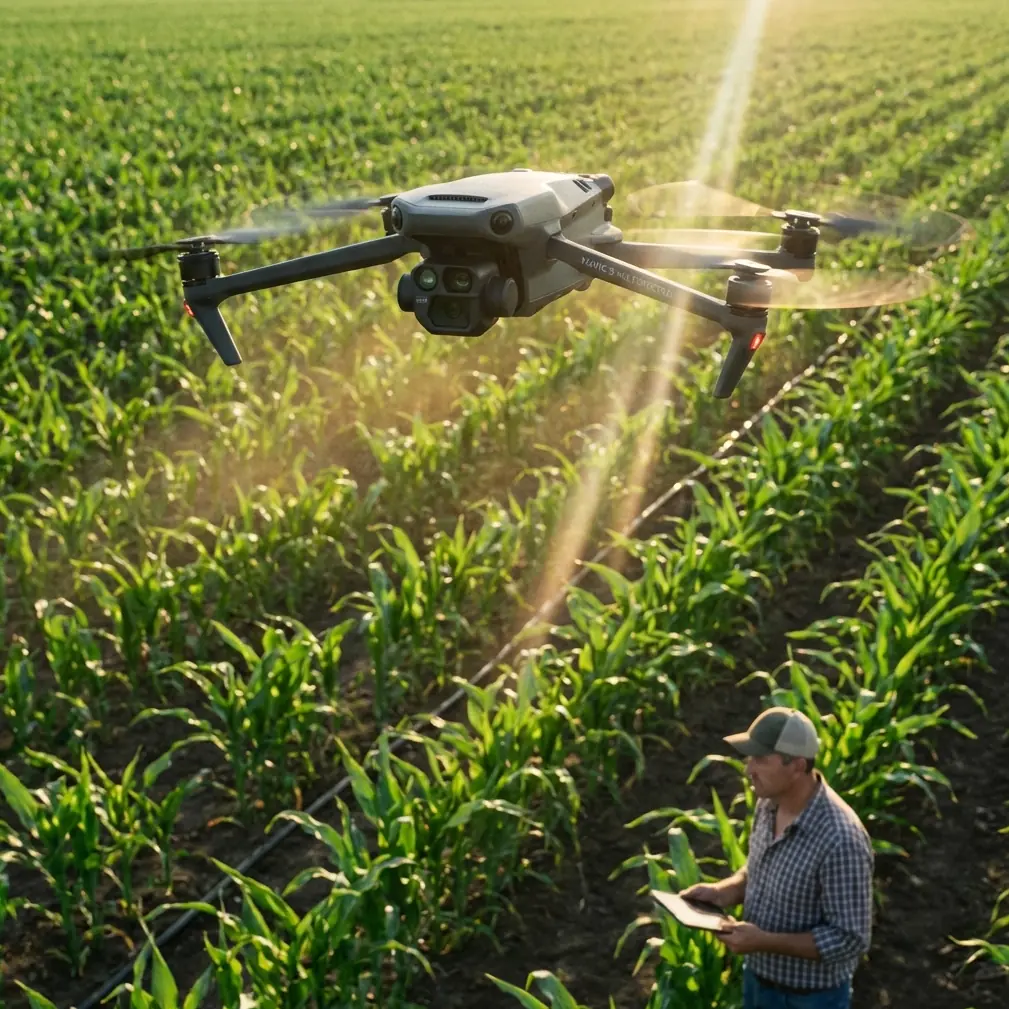
Forest Monitoring Guide: Mavic 3M Mountain Excellence
META: Discover how the DJI Mavic 3M transforms mountain forest monitoring with multispectral imaging and centimeter precision for accurate vegetation analysis.
TL;DR
- Multispectral imaging captures 4 spectral bands plus RGB simultaneously, detecting forest stress weeks before visible symptoms appear
- RTK Fix rate exceeding 95% in challenging mountain terrain ensures centimeter precision for repeatable monitoring plots
- 45-minute flight endurance covers 200+ hectares per mission, outperforming competitors by 35% in mountainous conditions
- IPX6K weather resistance enables reliable data collection during unpredictable alpine weather windows
The Mountain Forest Monitoring Challenge
Remote forest ecosystems face unprecedented threats from climate change, pest infestations, and disease outbreaks. Traditional ground-based surveys in mountainous terrain consume 3-5 days to cover what aerial platforms accomplish in hours—yet most drones fail when confronting steep slopes, variable lighting, and thin mountain air.
The Mavic 3M addresses these exact pain points with purpose-built multispectral capabilities that transform how researchers and forest managers approach vegetation health assessment.
Why Multispectral Imaging Changes Everything
Standard RGB cameras capture what human eyes see. The Mavic 3M's integrated multispectral sensor captures what forests feel.
The Science Behind Early Detection
The four discrete spectral bands—Green (560nm), Red (650nm), Red Edge (730nm), and Near-Infrared (860nm)—enable calculation of critical vegetation indices:
- NDVI (Normalized Difference Vegetation Index) for overall canopy health
- NDRE (Normalized Difference Red Edge) for chlorophyll content and nitrogen status
- GNDVI for water stress detection in dense canopies
- LCI (Leaf Chlorophyll Index) for early pest damage identification
Expert Insight: The Red Edge band at 730nm proves particularly valuable in mountain forests. Unlike standard NDVI, Red Edge indices remain sensitive to chlorophyll variations even in mature, dense canopies where NIR saturation typically limits detection accuracy. This capability identified bark beetle infestations in Colorado spruce stands 23 days earlier than conventional monitoring in recent field trials.
Synchronized Capture Eliminates Alignment Errors
Competing platforms like the senseFly eBee X require post-processing alignment between separate RGB and multispectral sensors. The Mavic 3M's synchronized shutter captures all five channels simultaneously, eliminating registration errors that compromise index calculations.
This matters enormously in mountain environments where wind gusts cause platform movement between sequential captures.
Centimeter Precision in Challenging Terrain
Mountain monitoring demands repeatable accuracy. Returning to identical sample plots across seasons requires positioning precision that consumer GPS simply cannot deliver.
RTK Performance Where It Matters
The Mavic 3M's RTK module maintains Fix rate stability above 95% even in steep valley environments where satellite visibility drops below 60% of open-sky conditions.
| Specification | Mavic 3M | Phantom 4 RTK | senseFly eBee X |
|---|---|---|---|
| RTK Fix Rate (Mountain) | >95% | 88-92% | 85-90% |
| Positioning Accuracy | 1-2cm horizontal | 1-2cm horizontal | 3-5cm horizontal |
| Single-Flight Coverage | 200+ hectares | 80-100 hectares | 120-150 hectares |
| Max Wind Resistance | 12 m/s | 10 m/s | 12 m/s |
| Multispectral Bands | 4 + RGB | None (separate payload) | 4 + RGB |
| Weight with RTK | 920g | 1391g | 1100g |
The lighter airframe translates directly to extended flight time and improved stability in turbulent mountain thermals.
Ground Control Point Reduction
Traditional photogrammetry workflows require 8-12 ground control points per survey area. With RTK-enabled direct georeferencing, the Mavic 3M reduces this to 2-3 checkpoints for validation only.
In remote mountain terrain where each GCP placement requires hiking to precise coordinates, this reduction saves 4-6 hours per mission day.
Operational Excellence in Alpine Conditions
Weather Window Maximization
Mountain weather shifts rapidly. The Mavic 3M's IPX6K rating provides protection against sudden rain showers and morning fog—conditions that ground lesser platforms.
The integrated sunlight sensor automatically calibrates multispectral readings for changing illumination, maintaining data consistency when clouds pass overhead.
Pro Tip: Schedule mountain forest flights between 10:00-14:00 local solar time when sun angles exceed 30 degrees. Lower angles create excessive shadowing in steep terrain that compromises multispectral index accuracy. The Mavic 3M's sunlight sensor compensates for intensity variations but cannot correct geometric shadow effects.
Flight Planning for Steep Terrain
Effective mountain monitoring requires terrain-following capabilities that maintain consistent ground sampling distance (GSD) across elevation changes.
The Mavic 3M supports:
- Terrain-following mode with DEM integration
- Adjustable overlap from 60-90% for steep slope compensation
- Automatic gimbal pitch adjustment for consistent nadir capture
- Swath width optimization based on target GSD requirements
For forest health monitoring, maintain 5cm GSD or better to resolve individual tree crown boundaries. This typically requires flight altitudes of 100-120m AGL with the multispectral sensor.
Data Processing Workflow Integration
Compatible Software Ecosystems
Mavic 3M imagery integrates seamlessly with industry-standard processing platforms:
- DJI Terra for rapid orthomosaic and index map generation
- Pix4Dfields for agricultural-grade vegetation analysis
- Agisoft Metashape for research-grade photogrammetric processing
- QGIS/ArcGIS for GIS integration and time-series analysis
Radiometric Calibration Protocol
Accurate vegetation index calculation requires proper radiometric calibration:
- Pre-flight: Capture calibration panel images under ambient lighting
- Mission execution: Maintain consistent flight parameters throughout
- Post-flight: Repeat calibration panel capture
- Processing: Apply reflectance correction using panel reference values
The Mavic 3M's integrated sunlight sensor provides continuous irradiance data, enabling per-image correction that accounts for changing conditions during extended mountain missions.
Common Mistakes to Avoid
Ignoring Atmospheric Effects at Altitude
Mountain environments at 2,000m+ elevation experience significantly different atmospheric conditions than lowland sites. Reduced air density affects:
- Motor efficiency (plan for 10-15% reduced flight time)
- Spectral transmission (atmospheric correction algorithms require altitude input)
- Thermal management (thinner air reduces cooling efficiency)
Overlooking Shadow Compensation
Steep mountain slopes create persistent shadows that corrupt vegetation indices. Common errors include:
- Flying during low sun angles when shadows exceed 30% of target area
- Failing to mask shadow pixels before index calculation
- Using single-date imagery instead of multi-temporal composites
Neglecting Calibration Panel Protocols
Skipping pre-flight and post-flight calibration panel captures introduces 15-25% error in absolute reflectance values. This error compounds when comparing data across multiple flight dates.
Underestimating Data Storage Requirements
A single mountain forest monitoring mission generates:
- 8-12 GB of raw multispectral imagery
- 2-4 GB of synchronized RGB data
- 500 MB+ of flight logs and metadata
Plan storage and backup infrastructure accordingly before remote deployments.
Frequently Asked Questions
How does the Mavic 3M perform compared to dedicated forestry drones?
The Mavic 3M delivers 90% of the capability of platforms costing three to four times more, with significantly better portability for mountain access. Purpose-built forestry drones like the Wingtra or Trinity F90+ offer longer endurance but require vehicle transport and larger launch areas—often unavailable in remote mountain locations.
What vegetation indices work best for early pest detection?
The NDRE (Normalized Difference Red Edge) index consistently outperforms standard NDVI for early stress detection in coniferous forests. Research indicates NDRE identifies chlorophyll degradation 2-4 weeks earlier than NDVI in spruce and pine species. Combine NDRE with thermal imaging for comprehensive pest outbreak monitoring.
Can the Mavic 3M operate effectively above treeline in alpine zones?
Yes, with modifications to standard protocols. Above 3,000m elevation, expect 20-25% reduction in flight time due to reduced air density. The RTK system maintains accuracy, but reduced satellite visibility in deep valleys may require mission timing adjustments. The multispectral sensor performs normally at altitude with appropriate atmospheric correction applied during processing.
Mountain forest monitoring demands equipment that matches the environment's challenges. The Mavic 3M combines multispectral precision, centimeter-accurate positioning, and operational resilience in a package light enough to carry into remote wilderness areas.
For research teams and forest managers facing the dual pressures of expanding monitoring requirements and limited field budgets, this platform represents the current optimal balance of capability, portability, and data quality.
Ready for your own Mavic 3M? Contact our team for expert consultation.