
Mavic 3M for Dusty Coastline Monitoring: A Practical Field
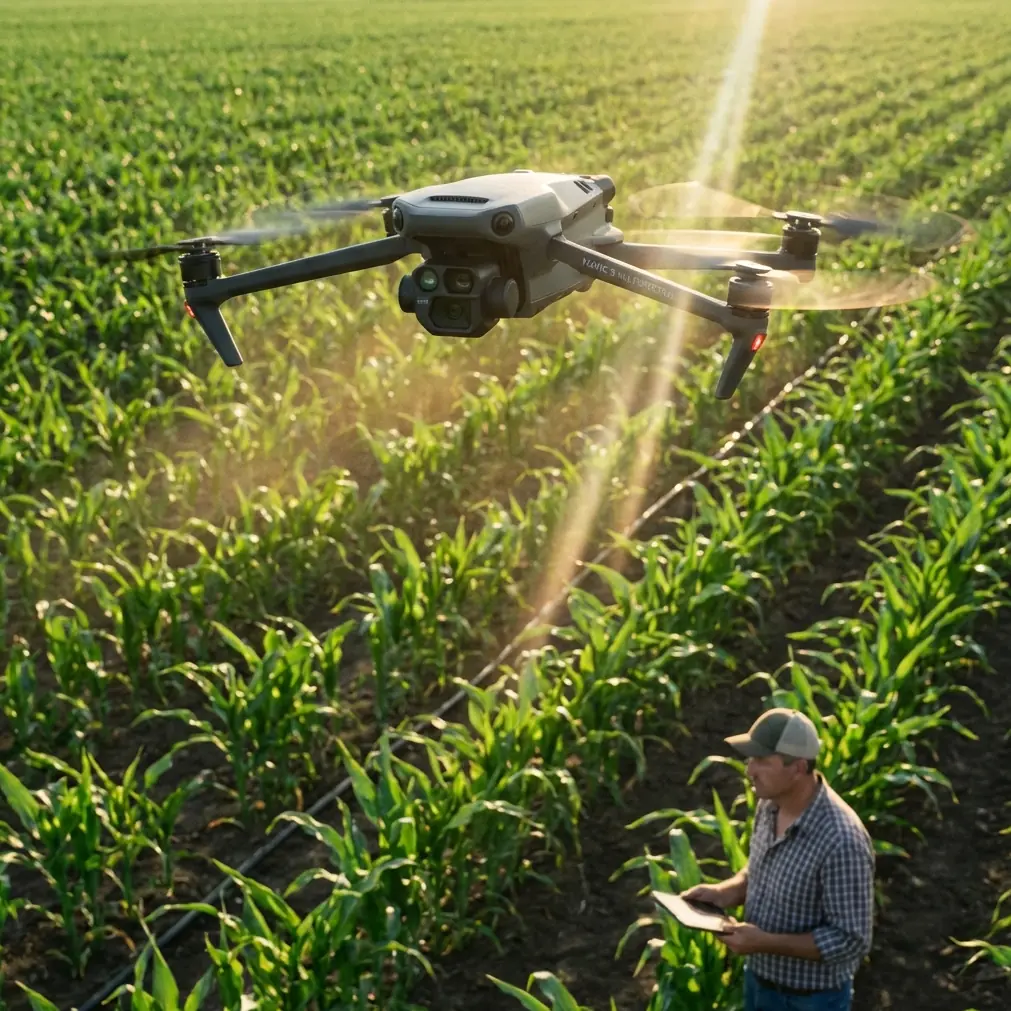
Mavic 3M for Dusty Coastline Monitoring: A Practical Field Method for Better Data and Better Images
META: Learn how to use the Mavic 3M for dusty coastline monitoring with multispectral discipline, RTK-focused setup logic, and field-proven flight habits that improve image quality and mapping reliability.
Coastline work exposes a drone to two problems at once. The environment fights your aircraft, and the scene fights your judgment.
Dust, salt haze, reflective water, patchy vegetation, shifting light, magnetic clutter near infrastructure, and unstable GNSS conditions can all chip away at map quality. At the same time, operators often become overly focused on settings, overlaps, and software checklists while missing the more decisive factor: how to see the site clearly before the first battery leaves the ground.
That last point may sound more like photography than surveying, but it matters for the Mavic 3M. A recent article published on May 19, 2026 argued that technique alone does not determine image quality; visual judgment is built through repeated observation, and that accumulated judgment is what separates flat documentation from useful imagery. For civilian coastline monitoring, that idea has real operational weight. The Mavic 3M is packed with capable sensors, but sensor capability does not automatically create usable coastal intelligence. The operator still decides what deserves attention, what flight line best reveals erosion, what sun angle hides washout, and what anomaly is just glare masquerading as change.
So if you are using the Mavic 3M to monitor dusty coastlines, treat this as a field method rather than a feature recap.
Start with observation, not automation
Many teams launch too quickly. They trust the aircraft, trust the mission planner, and assume a good RTK Fix rate will rescue the job. It won’t.
Before you build a route, stand on site and look. Not casually. Deliberately.
You are trying to identify four things:
- Dust transport direction
- Reflective surfaces that may contaminate interpretation
- Electromagnetic interference sources
- The visual story you actually need the data to tell
That last one is where the photography reference becomes useful. The article’s core argument was that ordinary image-making is often about recording life and expressing intent, not chasing technical perfection. For coastline monitoring, the equivalent is this: do not collect imagery just because the software can. Collect imagery that answers a management question.
Are you tracking vegetation stress in dune margins? Sediment movement along a construction-adjacent shoreline? Spray drift from nearby agricultural activity? Wash patterns after high wind events? Salt-affected plant decline? Each objective changes how you should use the Mavic 3M’s multispectral payload and how you interpret swath width versus detail.
A coastline is not one subject. It is a layered surface system.
Why the Mavic 3M fits this job
The Mavic 3M makes sense for coastline monitoring because it sits in a useful middle ground. It is portable enough for repeated deployment, but advanced enough to support multispectral collection, repeatable mapping, and centimeter precision workflows when RTK conditions cooperate.
That combination matters in dusty environments. Coastal teams often need to move fast between access points, launch from imperfect terrain, and repeat surveys under similar geometry. A larger platform can provide more endurance, but the Mavic 3M wins on operational agility. If your monitoring program depends on frequent revisits, the best drone is often the one that can be deployed consistently by the same crew using the same method.
And consistency is where real trend analysis starts.
Build repeatability with a simple geometric discipline
One of the most useful references here comes from a DJI educational training document, not because it was written for the Mavic 3M, but because it captures the logic of clean, repeatable flight design. In that exercise, the aircraft climbs to 100 centimeters and flies a square with vertices at (50,50,100), (50,-50,100), (-50,-50,100), and (-50,50,100) before returning to the center point (0,0,100).
On paper, that is a beginner coordinate drill. In field operations, it illustrates something bigger: the value of a known geometric pattern.
For coastline work, especially in dusty conditions, geometric discipline does three jobs.
1. It reveals whether your aircraft is tracking cleanly
If repeated passes over a shoreline segment show inconsistent edge alignment, that may not be a processing issue. It may indicate wind compensation, poor heading stability, or interference affecting positioning confidence.
2. It exposes environment-driven data contamination
A simple square or box-pattern verification flight over a stable reference patch can help you spot whether dust plumes, glare, or haze are changing image character between legs. If one side of a repeatable pattern looks consistently weaker, you have learned something about the environment before wasting a full mission.
3. It gives you a baseline for multispectral trust
Multispectral datasets are only as credible as the consistency behind them. If your route logic changes every time, comparison becomes fragile. A small controlled pattern at a known height is a fast way to validate camera behavior, light conditions, and mission assumptions before flying the whole corridor.
This is not academic. It is how you stop bad data from becoming official data.
Handling electromagnetic interference with antenna adjustment
The coastline often appears open and clean on a map. In reality, interference can be surprisingly local.
Harbor facilities, communications towers, utility lines, metal seawalls, rooftop repeaters, research stations, and vehicles clustered near the launch point can all disrupt link quality or degrade confidence in your control environment. Some pilots react by climbing quickly and hoping distance solves it. A better habit is to address the link geometry first.
When interference shows up, I start with antenna orientation and pilot position before changing mission design.
The practical sequence looks like this:
- Move a few meters away from vehicles, railings, and dense metal objects.
- Reassess controller-to-aircraft line of sight.
- Adjust antenna angle so the strongest radiation pattern faces the aircraft’s expected working sector, not the horizon behind it.
- Avoid standing beside portable generators, communications gear, or large battery arrays.
- If the issue appears tied to one segment of the route, rotate the launch position and test again with a short verification leg.
This matters because operators often misdiagnose interference as a drone problem when it is really a launch geometry problem. In dusty shoreline work, where you may already be battling weak visual contrast, you do not want an avoidable signal issue piled on top.
If you need a second opinion on mission setup or interference behavior in the field, you can message our technical team here.
Use “entry discipline” from flight training to improve mapping results
A second reference, drawn from radio-control aerobatic training, seems unrelated at first glance. It describes how a loop should begin: wings level, level flight maintained, and enough throttle carried into the maneuver. The text is explicit that entering poorly leads to errors later, and it even specifies a 1 to 2 second progressive control input in the maneuver sequence.
That principle transfers directly to Mavic 3M mapping flights.
Not the aerobatics, obviously. The entry discipline.
Most bad coastline datasets are damaged before the mission really begins. The aircraft enters the first line while still stabilizing, the pilot launched from a crooked surface, the heading isn’t settled, the light check was rushed, or the crew accepted marginal conditions because the tide window felt urgent.
The training material emphasizes that what happens before a maneuver determines what happens during it. Same here. For Mavic 3M operations, the equivalent is:
- Launch from the cleanest, flattest practical surface
- Confirm stable hover before committing to the route
- Verify heading response and positional hold
- Check that the aircraft is not “sneaking” into drift during setup
- Start the mission only once the platform is visibly settled
That sounds basic, but it has direct operational significance. If your first lines begin with drift or unstable orientation, your overlap quality, edge consistency, and RTK confidence can all become less trustworthy. In a coastline dataset, small errors can look like shoreline movement or vegetation change when they are really artifacts of poor mission entry.
Multispectral decisions that matter in dusty coastal zones
The Mavic 3M is often discussed as if multispectral automatically means agricultural work. That misses a lot of useful civilian shoreline applications.
In dusty coastal environments, multispectral collection can help distinguish between:
- stressed and healthy vegetation on dune systems
- sediment-coated surfaces versus naturally darker ground
- salt-exposed plant decline
- disturbed zones near access roads or construction
- areas affected by spray drift from adjacent operations
But only if you fly with purpose.
Watch your swath width assumptions
A broad swath width is efficient, but it can blur the boundary between ecological zones that matter. Coastlines are full of narrow transitions: sand to scrub, scrub to salt-tolerant growth, wet margin to dry crest. If your route is designed for speed rather than edge fidelity, those transitions become less useful in analysis.
Treat dust as both a flight issue and a data issue
Dust is not just an airframe cleanliness problem. It changes how the scene presents itself. Airborne particulates can flatten contrast, reduce apparent clarity, and introduce inconsistency across passes. If one battery is flown in cleaner air and the next in active dust transport, your comparison may be weaker than the map software suggests.
Repeat geometry before chasing raw coverage
If your objective is trend analysis, repeated geometry often beats maximum daily acreage. Same height, same heading logic, similar light window, stable takeoff routine. That is how centimeter precision becomes operationally meaningful rather than just a marketing phrase.
Nozzle calibration and spray drift: where the Mavic 3M helps indirectly
The context around this topic includes terms like nozzle calibration and spray drift. The Mavic 3M is not the spraying aircraft, but it can still be extremely useful around spray operations near coastlines.
For example, if a coastal agriculture site borders sensitive dunes or wetlands, the Mavic 3M can document vegetation response patterns and identify irregular stress signatures that suggest drift exposure beyond intended boundaries. It can also help teams verify whether application corridors align with expected treatment zones over time.
That is where multispectral monitoring becomes more than pretty color layers. It turns into a compliance and stewardship tool.
The key is to avoid overclaiming. The drone does not replace proper nozzle calibration. It does not directly measure droplet distribution. What it does provide is a repeatable aerial perspective that can flag where field conditions and ecological outcomes do not match.
Field workflow I recommend for dusty coastlines
Here is the method I trust most for the Mavic 3M in this environment.
1. Conduct a visual site read
Observe dust movement, glare, vegetation boundaries, access hazards, and interference sources.
2. Define the question
Pick the monitoring objective before route design. Erosion edge? Dune health? Sediment deposition? Spray drift symptoms?
3. Run a short verification pattern
Borrow the logic of the square training flight. A compact, repeatable pattern helps validate light, tracking, and image consistency before the main mission.
4. Check antenna orientation and launch position
If interference is possible, optimize the human end of the link before blaming the aircraft.
5. Start only from a settled hover
The RC training reference gets this exactly right in spirit: the quality of the entry governs the quality of the whole action.
6. Fly for comparability
Keep altitude, route direction, and timing as consistent as practical across survey dates.
7. Review edge zones first
The most useful information on a coastline is often in the transitions, not the broad uniform areas.
The real skill behind strong Mavic 3M coastline work
It is tempting to think the best operator is the one who knows every setting. That is not quite true.
The best operator is usually the one who can combine three disciplines:
- visual judgment
- geometric consistency
- clean flight execution
That first discipline is where the May 19, 2026 photography article deserves more respect than it might get in technical circles. Its point was simple: tools and tricks are not the heart of image quality. Accumulated observation is. For Mavic 3M coastline monitoring, that translates almost perfectly. The drone can collect data. Only a thoughtful operator can collect the right data in the right way, repeatedly enough to make it defensible.
And the two training references reinforce that lesson from different directions. The coordinate-square exercise shows the value of controlled spatial logic. The aerobatic training notes show that stable entry conditions determine downstream performance. One teaches pattern discipline. The other teaches setup discipline. Together, they form a surprisingly strong operating philosophy for Mavic 3M fieldwork.
On a dusty coastline, that philosophy holds up.
You do not need theatrical complexity. You need consistent observation, careful launch habits, a route that respects the landscape, and enough judgment to know when environmental conditions are telling you to slow down and refly.
That is where useful coastal intelligence comes from.
Ready for your own Mavic 3M? Contact our team for expert consultation.