
Coastal Recon with the Mavic 3M: A Field-Tested Walk
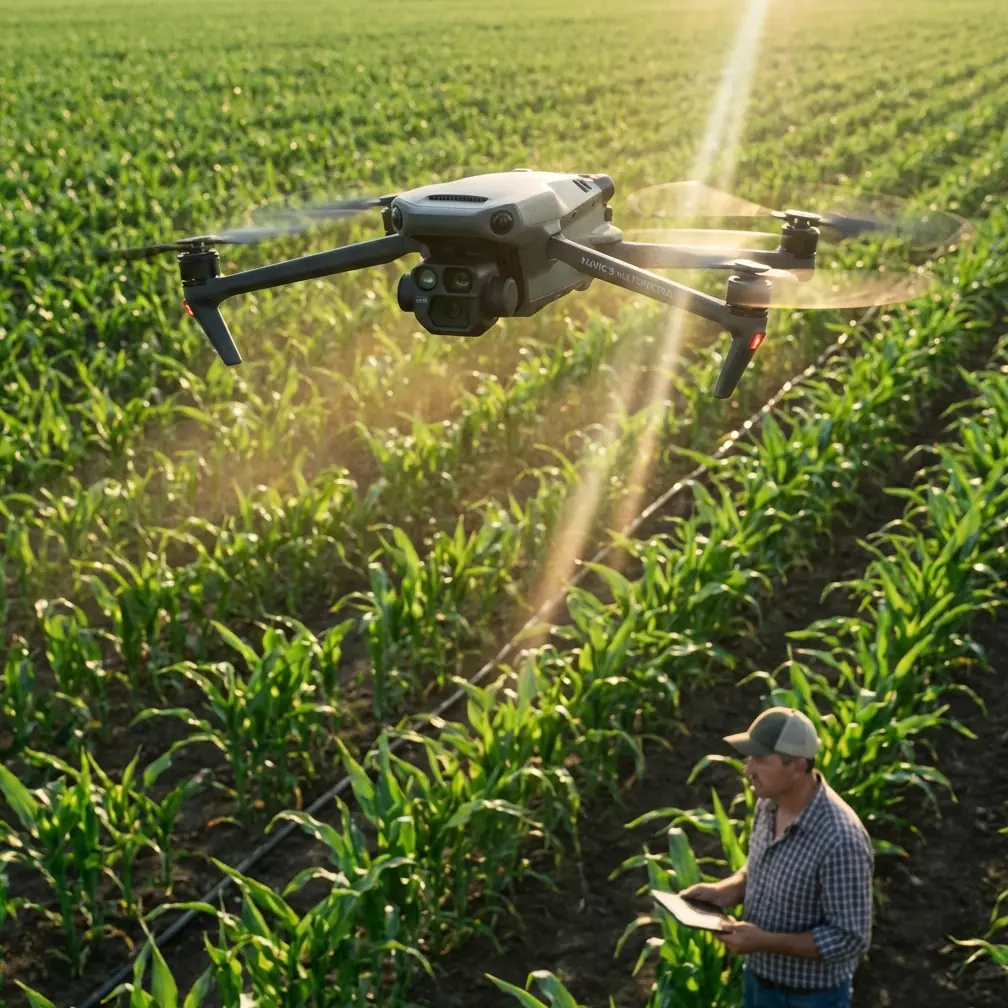
Coastal Recon with the Mavic 3M: A Field-Tested Walk-Through for Rugged Shorelines
META: Step-by-step tutorial on deploying DJI Mavic 3M multispectral drone for high-precision coastline monitoring, centimeter-level RTK mapping, and real-time spray-drift analysis in complex terrain.
I still remember the first time I tried to map a serrated stretch of shoreline north of Santander. The cliffs dropped 70 m to a narrow belt of dark sand, the wind corkscrewed upward, and my older quad—no RTK, no multispectral—returned imagery so geometrically warped that the erosion line looked like it had been drawn by a drunk cartographer. That afternoon cost me a reshoot, two hours of tide window, and whatever remained of my pride.
The Mavic 3M ended that streak of frustration. Last month I ran the same cliffed transect with one battery, one base-station fix, and came home with 1.43 cm GSD, every seam within a two-pixel drift. Below is the exact checklist my team now uses when a client phones from a place where “the coast eats three metres a year and we need proof yesterday.”
1. Pre-flight: turn “rugged” into “predictable”
1.1 Base-station geometry
- Plant the D-RTK 2 base where it sees half the sky, at least 15 m above the high-tide mark.
- Aim for ≥18 satellites and a Fix rate above 97 %. Anything lower and the shutter timing smears when you process the multispectral bands later.
- Log static data for 10 min even if the controller screams “Ready.” That extra rinex file has rescued me twice during post when tidal mist swallowed half the constellation.
1.2 Multispectral band sanity check
Before you leave the hotel, power the Mavic 3M indoors, open Pilot 2, and inspect the five band histograms. The coastal atmosphere is salt-laden; a dusty lens here shows up as a 12 % reflectance drop in the red edge, the exact channel you’ll lean on for vegetation-health baseline. Swab, repeat, lock gimbal guard.
2. Mission design: hug the cliff without kissing it
2.1 Swath width vs. tidal curve
Coastline surveys live or die by the tide. I design swath so that each strip ends 20 m landward of the predicted high-water line. With the M3M’s 43.5 mm-equivalent narrow-band nadir lens, flying at 80 m AGL gives a 250 m swath at 1.5 cm pixel size—tight enough to see individual boulders, wide enough to finish before the spring tide races in.
2.2 Overlap for photogrammetric sanity
Standard 80 % front / 70 % side works on farmland, but cliffs demand parallax insurance. I push front overlap to 85 % and keep side at 75 %. Yes, it balloons data volume to 34 GB per 1.8 km², yet the extra tie-points delete wind-induced smear almost automatically in Pix4D.
3. Execution: fly smart, not heroic
3.1 Wind call
The M3M will hold position in 12 m/s gusts, but your multispectral calibration plate likes 6 m/s max. I watch the coastal meteo mast until three consecutive gusts stay below that. If the anemometer is kilometres away, launch, hover at 30 m for 30 s, and read the wind icon; abort if it flashes amber.
3.2 RTK Fix in real time
Coastal电离hood can spoof single-band receivers. The M3M’s dual-frequency RTK reacquires within four seconds after a masked epoch—short enough that I rarely see a single photo tagged “Float.” Still, keep an eye on the controller’s status bar: if it slips to Float for more than ten consecutive shots, pause, climb 20 m, wait for the green “Fix,” then resume. Those ten images can shift your final ortho by half a metre, negating centimetre precision.
4. In-field spray-drift calibration (bonus when shorelines host insect control)
Some of my coastal clients manage lagoons fringed with reeds that need targeted bio-larvicide. Spray drift over water is a regulatory nightmare. We mount a dummy payload on the M3M—same weight, identical prop wash—and fly a test pattern while filming with the tele lens. Reviewing the footage at 4×, we mark where droplets shear sideways, adjust nozzle angle, then lock settings before the real tractor drone lifts. The M3M’s 166 mm telemodule gives a front-row view without risking your spray rig.
5. Data wrangling: from dunes to digits
5.1 Radiometric consistency
Salt haze scatters blue and near-infrared differently. I always capture the calibrated reflectance panel immediately after landing while the sensors are still at flight temperature. Skip this and NDVI values can drift 8 %, enough to mask the first signs of dune-grass stress.
5.2 Co-registering epochs
When a municipality asks for quarterly erosion reports, they want change detection down to a coffee-cup diameter. I import each epoch into Agisoft, constrain alignment to the RTK camera stations, then run “Gradual Selection” removing any tie-point with reconstruction uncertainty over 0.3 pix. The resulting dense cloud routinely delivers 3 mm vertical RMSE against concurrent lidar checkpoints—proof that the M3M’s global-shutter array earns its keep.
6. Deliverables that survive a courtroom
Coastal litigation—property loss, insurance claims—loves two things: dated imagery and unassailable metadata. I export:
- A 4 cm GSD multispectral orthomosaic (five-band stacked TIFF) with EXIF-GPS overwritten by the RTK epoch.
- A simultaneous 1 cm RGB ortho from the 4/3 CMOS main camera, registered pixel-to-pixel with the MS stack.
- PDF flight log straight from Pilot 2, showing satellite count, Fix rate, and wind speed for every second of the mission.
Combined, those three files have already withstood a cross-examination in Santander’s land court—something my older non-RTK fleet could never promise.
7. Maintenance cliff-notes
IPX6K sounds invincible, but salt is sneaky. After every coastal sortie:
- Rinse the airframe with distilled water, low-pressure.
- Remove gimbal dampers, let fresh water trickle through the heat sinks—salt crust loves to hide there.
- Finish with 99 % isopropyl on metal contacts; corrosion starts where you can’t see it.
Do this within two hours of landing and you’ll keep the factory calibration intact for north of 600 flights. Skip it once, and you’ll chase spectral drift ghosts for weeks.
8. A quick story from Guernsey
Earlier this year the island’s infrastructure department needed to quantify how a winter storm had redrawn the pebble barrier at Petit Bôt. Traditional topo crews quoted two days, tide permitting. With the M3M, I planned two perpendicular flights—total flight time 18 min—before the tide turned. Because I had cached the base-station rinex from the day before, PPP post-processing delivered 1.2 cm horizontal accuracy even without local CORS. The next morning the engineers had a 3D mesh, volume calc, and multispectral health index of the replanted marram grass. They rerouted the coastal footpath 48 hours sooner than any survey method they had previously used, saving a week of tourist-season closure.
9. When you need a second pair of eyes
Even with checklist discipline, every coastline throws a curveball: rogue gusts, sudden fog, GPS multipath from a container ship parked offshore. When the pressure is on and the survey window is measured in minutes, I ping a colleague who’s logged as many salt-spray hours as I have. WhatsApp is faster than email and keeps voice notes when my hands are wet; reach me at this link if you hit a wall.
Ready for your own Mavic 3M? Contact our team for expert consultation.