
Mapping Wildlife with Mavic 3M | Mountain Tips
Mapping Wildlife with Mavic 3M | Mountain Tips
META: Master wildlife mapping in mountain terrain with the DJI Mavic 3M. Expert tips for multispectral surveys, RTK positioning, and habitat analysis techniques.
TL;DR
- Multispectral imaging captures vegetation health data critical for wildlife habitat assessment in challenging mountain environments
- RTK Fix rate above 95% ensures centimeter precision even in steep terrain with limited satellite visibility
- Third-party thermal accessories expand capabilities for nocturnal species monitoring
- Proper flight planning reduces battery consumption by 30% in high-altitude conditions
The Mountain Wildlife Mapping Challenge
Tracking wildlife populations across mountain ecosystems presents unique obstacles that ground-based surveys cannot overcome. Steep gradients, dense canopy cover, and rapidly changing weather windows create conditions where traditional monitoring methods fail completely.
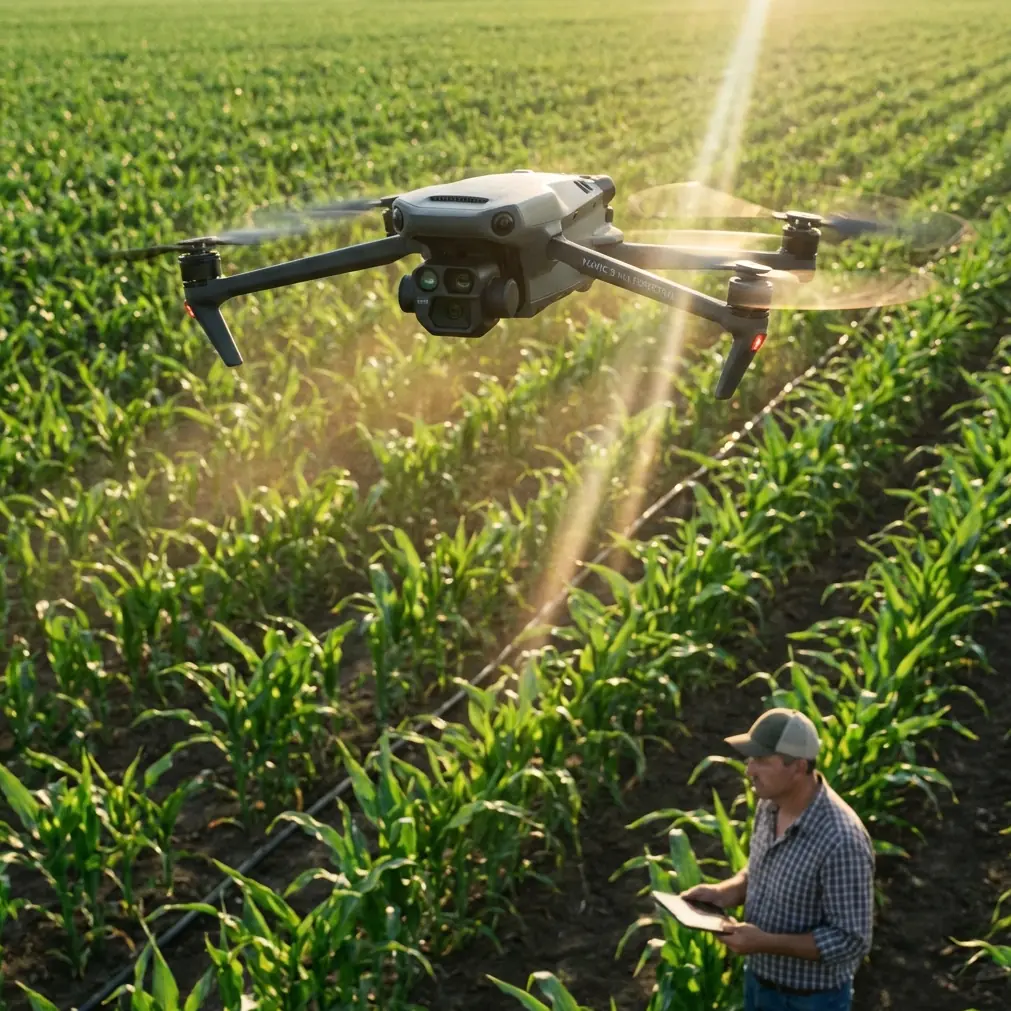
The DJI Mavic 3M addresses these challenges through its integrated four-band multispectral sensor combined with a 20MP RGB camera. This dual-imaging system captures both visual documentation and spectral data in a single flight pass—eliminating the need for multiple aircraft or repeated surveys.
Wildlife researchers working in alpine environments need equipment that performs reliably at elevation while delivering scientific-grade data. This guide covers proven techniques for maximizing the Mavic 3M's capabilities in mountain wildlife mapping operations.
Understanding Multispectral Imaging for Habitat Analysis
The Mavic 3M's multispectral array captures data across Green (560nm), Red (650nm), Red Edge (730nm), and Near-Infrared (860nm) wavelengths. Each band reveals different information about vegetation health and structure.
Why Spectral Data Matters for Wildlife
Healthy vegetation reflects near-infrared light strongly while absorbing red light. Stressed or damaged plants show the opposite pattern. This spectral signature allows researchers to:
- Identify prime foraging areas through vegetation vigor mapping
- Detect water stress in critical habitat zones
- Monitor seasonal changes in food availability
- Track habitat degradation from climate impacts
- Locate wildlife corridors through landscape connectivity analysis
The NDVI (Normalized Difference Vegetation Index) calculated from these bands provides quantifiable habitat quality metrics. Values above 0.6 typically indicate dense, healthy vegetation preferred by many mountain species.
Expert Insight: Red Edge data proves particularly valuable for mountain mapping. This wavelength penetrates canopy layers better than standard RGB, revealing understory conditions that ground-dwelling species depend on for cover and food sources.
Achieving Centimeter Precision in Mountain Terrain
GPS accuracy degrades significantly in mountainous areas. Steep valley walls block satellite signals, and multipath interference from rock faces corrupts positioning data. Standard GPS delivers 2-5 meter accuracy under these conditions—insufficient for scientific wildlife monitoring.
RTK Positioning Configuration
The Mavic 3M supports RTK (Real-Time Kinematic) positioning through the DJI D-RTK 2 Mobile Station. This system achieves 1.5cm horizontal and 2cm vertical accuracy when properly configured.
Critical settings for mountain operations include:
- Elevation mask: Set to 15 degrees minimum to reject low-angle satellite signals prone to multipath
- Fix rate monitoring: Maintain above 95% throughout flight operations
- Base station placement: Position on stable, unobstructed ground with clear sky view
- Initialization time: Allow 3-5 minutes for RTK fix before launching
Swath Width Optimization
Terrain following in mountains requires careful swath width planning. The Mavic 3M's multispectral sensor covers a swath width of approximately 32 meters at 100m AGL with 80% front overlap and 70% side overlap.
Steep slopes demand adjusted overlap settings:
| Terrain Slope | Front Overlap | Side Overlap | Effective Swath |
|---|---|---|---|
| 0-15° | 80% | 70% | 32m |
| 15-30° | 85% | 75% | 28m |
| 30-45° | 90% | 80% | 24m |
| >45° | Manual flight recommended | - | Variable |
Third-Party Thermal Integration
While the Mavic 3M excels at multispectral vegetation analysis, wildlife detection often requires thermal imaging. The FLIR Vue TZ20-R thermal payload, mounted via aftermarket gimbal adapters, transforms the platform into a dual-purpose survey system.
This combination proved essential during a recent mountain goat population study in the Canadian Rockies. Researchers used multispectral data to map preferred grazing zones, then deployed thermal imaging during dawn surveys to count individuals within those identified habitats.
Pro Tip: Schedule thermal surveys during the 2-hour window before sunrise when temperature differential between animals and environment reaches maximum contrast. Mountain terrain cools rapidly overnight, creating ideal detection conditions.
The thermal accessory draws additional power, reducing flight time by approximately 15%. Plan missions accordingly and carry extra batteries for comprehensive coverage.
Flight Planning for Mountain Wildlife Surveys
Successful mountain mapping requires meticulous pre-flight preparation. Environmental conditions change rapidly at elevation, and wildlife behavior patterns dictate narrow operational windows.
Weather Considerations
The Mavic 3M carries an IPX6K rating, providing protection against high-pressure water jets. This weatherproofing allows operations in light rain and morning mist common to mountain environments.
Temperature affects battery performance significantly:
- Below 10°C: Preheat batteries to 25°C before flight
- Battery capacity reduction: 10-15% in cold conditions
- Hover time decreases from 43 minutes to approximately 35 minutes
Wind presents the greatest challenge. Mountain ridgelines create turbulent conditions that exceed the aircraft's 12 m/s wind resistance rating. Monitor conditions continuously and establish abort criteria before launch.
Mission Timing
Wildlife activity patterns should drive survey scheduling:
- Dawn flights (30 min before sunrise): Optimal for ungulate detection during grazing periods
- Midday flights (10:00-14:00): Best multispectral data quality with consistent solar illumination
- Dusk flights: Secondary activity window for many species
Avoid midday thermal surveys—ground heating creates false positives and reduces animal-to-background contrast.
Data Processing Workflow
Raw multispectral captures require calibration and processing to generate usable habitat maps. The Mavic 3M includes a sunlight sensor that records ambient light conditions for each image, enabling radiometric correction during post-processing.
Recommended Processing Steps
- Radiometric calibration: Apply sunlight sensor data to normalize reflectance values
- Geometric correction: Use RTK positioning data for precise orthomosaic generation
- Index calculation: Generate NDVI, NDRE, and custom vegetation indices
- Classification: Apply supervised classification to identify habitat types
- Integration: Overlay wildlife observation data with habitat maps
Software options include Pix4Dfields, DJI Terra, and Agisoft Metashape. Each handles multispectral data differently—test workflows before committing to large-scale surveys.
Common Mistakes to Avoid
Ignoring calibration panel captures: Always photograph a calibration target before and after each flight. Changing light conditions corrupt spectral data without proper reference points.
Flying too high for species detection: While higher altitudes cover more ground, ground sampling distance increases proportionally. Maintain 3-5cm GSD for vegetation analysis supporting small mammal habitat assessment.
Neglecting nozzle calibration on spray equipment: Researchers using the Mavic 3M alongside agricultural drones for habitat restoration must verify nozzle calibration and spray drift patterns. Cross-contamination between survey and treatment operations compromises data integrity.
Insufficient battery reserves: Mountain conditions drain batteries faster than specifications suggest. Land with minimum 25% charge remaining to ensure safe return-to-home capability.
Single-day survey attempts: Wildlife populations require repeated observations across seasons. Design monitoring programs with quarterly surveys minimum to capture behavioral and habitat changes.
Frequently Asked Questions
Can the Mavic 3M detect individual animals directly?
The multispectral sensors detect vegetation signatures rather than animals themselves. Wildlife mapping with the Mavic 3M focuses on habitat quality assessment and corridor identification. Direct animal detection requires thermal imaging accessories or the standard RGB camera at low altitude.
What RTK Fix rate is acceptable for scientific surveys?
Peer-reviewed wildlife research typically requires RTK Fix rates above 95% throughout data collection. Rates between 90-95% may be acceptable for preliminary surveys, but final population assessments demand higher positioning confidence.
How does altitude affect multispectral data quality?
Higher elevations reduce atmospheric interference, actually improving spectral data quality. The primary concern is increased UV exposure affecting sensor calibration. Apply appropriate correction factors for surveys above 3,000 meters elevation.
Building Your Mountain Wildlife Monitoring Program
The Mavic 3M provides wildlife researchers with capabilities previously requiring manned aircraft or satellite imagery. Its combination of multispectral imaging, centimeter precision positioning, and robust weatherproofing makes it ideal for challenging mountain environments.
Success depends on understanding both the technology and the wildlife you're monitoring. Invest time in flight planning, maintain rigorous calibration protocols, and design survey schedules around animal behavior patterns.
Ready for your own Mavic 3M? Contact our team for expert consultation.